
Opinion
Philosophy Of the Under-World

“There is some soul of goodness in things evil Would men observingly distill it out” – King Henry V
A legal theory of imperfect obligation (thanks to Professor Ben Nwabueze) suggests that it is unrealistic to expect perfection in a state of imperfection. There is a wide difference between realism and illusion. Not long ago a traditional bone setter in Rumueme cautioned an accident victim who came to him for treatment, that: “you must choose between enduring the pains in having your bone set here, or going to an orthopedic hospital and have your leg amputated.” This is a good example of the principle of realism whose validity has a universal applicability. To find demands diligent seeking.
Nations and individuals still existing and operating in the woods cannot place themselves in the position of those who are out of the woods long ago. Rather, diligent efforts would be required, coupled with having to endure the pains and learn the lessons, involved in getting out of the wood. Although no nation or society is perfect or free from having criminals, it is obvious that the process of development involves struggling against retrogressive and tyrannical forces. The under-world represents the dark elements and anti-social forces which hold humanity ransom at all times, requiring illumination.
The task of observingly distilling out the soul of goodness in things evil, involves finding meanings in seeming contradictions and mysteries in life. The process demands separating the true from the false, sham from reality, the strong from the weak or the indolent from diligent ones, etc. We often meet such challenges in life, calling for the making of choices and exerting personal judgement in applications of our volition, daily. Unfortunately there are individuals and nations that rarely put up the necessary diligence required to address the challenges of life effectively.
Philosophy as a study of the nature and meaning of existence and the means of finding answers to challenges and perplexities includes epistemology and quality control measures in the issues of life. Jewish epistemology as contained in the Kabbalah provides realistic answers to seeming mysteries and contradictions in existence. No doubt, ignorance accounts for much of the questions that humans are unable to answer so far, because in reality there is no mystery in creation, but unexplored realms.
Encoded in the Jewish or Hebrew alphabet are keys for understanding various perplexing issues and questions which baffle the average human being, including crimes. Since a large number of people would not take the pains to distill out the soul of goodness in things apparently evil, ignorance would continue to intimidate humanity.
For example, what we call democracy is an illusion since humans are not equal. How can there be equality among unequals? How can human perceptions and understanding flow on the same wave length? Therefore, the under-world as a kingdom of unbalanced forces which the Jews call Kellipot, would not cease to exist so long as humans are imperfect. A part of the imperfection has to do with humanity stifling the gate-way to higher consciousness through the hyperactivity and domineering nature of sensory consciousness.
Can those who operate on the grossly limited level of sensory perception be on the same page with those who seek guidance from rarefied consciousness? The Jewish concept of pairs of opposites as an inescapable fact of life, demands that the existence of an under-world has an opposite counterpart. Humans operating in-between the two poles have a choice to remain put where they are or move up or downwards from where they are. Thus, it is the human volition which is a steering lever in the mechanism of evil or its opposite.
There is a recycling process in creation whose purpose is to provide opportunities for redemption, cleansing and salvation. In that process, personal experiences provide the spur and impetus for a change, while personal volition plays a vital role in the transition. The philosophy of the under-world is that the value of the pudding lies in the eating. The indolent nature of human beings demands that there be some force of compulsion to jolt those who are asleep into a state of activity, whether they like the shock or not.
Similarly, for those who long for heaven but ignore to accomplish the tasks they must address on earth, there are mechanism to frustrate and force them to bridge up gaps left behind on their trail. They stumble that run fast and similarly, those who romp in the under-world receive lashes, bruises and shocks in their kingdom, until they mend.
Dr. Amirize is a retired lecturer, Rivers State University, Port Harcourt.
Bright Amirize




Quote: “The Flamingos have conquered the world; Nigeria must now rise to its responsibility of nurturing the next generation of champions.”
Sometimes, sporting victories
More significantly, they
Umejiaku deserves special
Umejiaku received the award
Nigeria has now broken into
For too long, young girls in
But beyond the reward, this
As Nigerians celebrate this
By; Calista Ezeaku
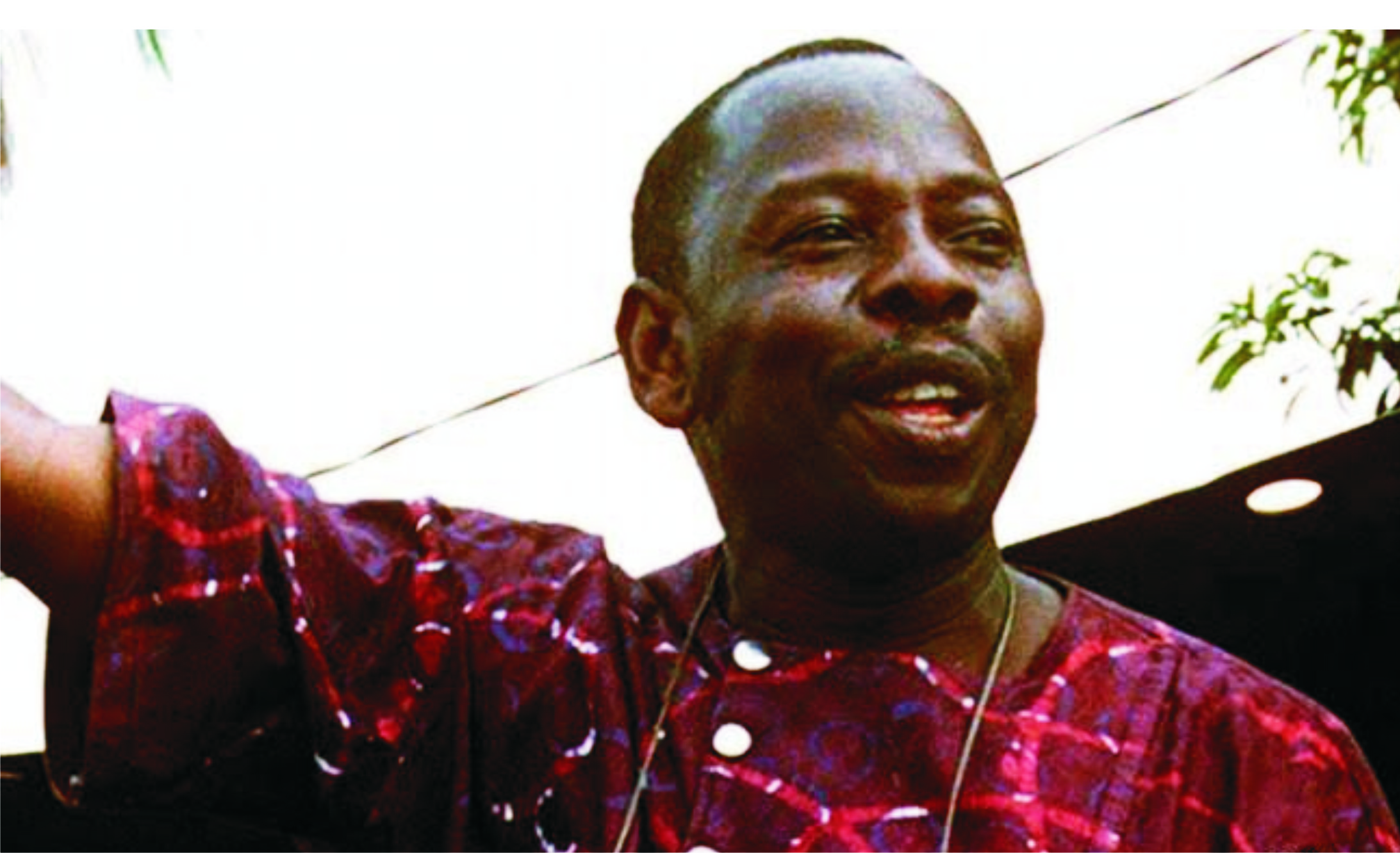
On November 10, 1995, the Nigerian military government of General Sani Abacha executed Ken Saro-Wiwa and eight other Ogoni leaders after a deeply controversial trial. Their deaths marked one of the darkest chapters in Nigeria’s history. At a time when fear silenced citizens and sycophancy flourished around military power, Saro-Wiwa chose to confront tyranny. Many Nigerians retreated into silence, while others praised the regime to secure favour. He knew the risks, yet refused to abandon a people whose land had been devastated by oil exploration and whose lives remained trapped in poverty. His courage arose from the conviction that public responsibility sometimes demands resistance to authority. Saro-Wiwa understood that speaking against a military government could lead to imprisonment or death.
Nonetheless, he believed the suffering of the Ogoni people demanded a courageous response. While oil was extracted from their land, they were left with polluted rivers, damaged farmland, declining livelihoods and an environment hostile to human survival. Fishing grounds and sources of livelihood were threatened, while the people struggled to secure basic amenities. The wealth beneath their soil brought neither adequate development nor a fair share of national resources. For him, silence in the face of injustice would have amounted to complicity. Through the Movement for the Survival of the Ogoni People (MOSOP), he organised a peaceful campaign that took the Ogoni question to the international community. MOSOP gave ordinary people an organised platform through which to express their grievances and insist on recognition.
The Ogoni Bill of Rights, presented to the Federal Government in 1990, demanded political autonomy, economic justice, environmental protection and control over the people’s resources. The campaign exposed the human and ecological costs of oil operations, particularly those associated with Shell, and challenged the apparent alliance between corporate interests and an unresponsive State. The Ogoni struggle became a defining expression of minority rights and environmental justice in Nigeria and Africa. Saro-Wiwa’s writings and mobilisation drew attention to communities treated as expendable because of their limited population and political influence. He argued that numerical strength should never determine a people’s value or rights.
A minority community does not become less deserving of justice because it cannot command electoral numbers or political power. In Nigeria, every ethnic group deserves dignity, protection and a fair opportunity to benefit from the commonwealth. Rather than respond to peaceful agitation with dialogue, the Abacha regime resorted to repression. Ogoni leaders were harassed, detained and killed; others fled into exile. The crisis intensified after four Ogoni chiefs were killed in May 1994. Saro-Wiwa and other MOSOP leaders were arrested, tried by a special tribunal and executed despite international appeals for clemency and serious concerns about the trial’s fairness. The executions drew worldwide condemnation and intensified scrutiny of Nigeria’s human-rights record and oil companies in the Niger Delta.
They demonstrated the danger of using State institutions to suppress peaceful demands. The proceedings remain a reminder of the need for judicial independence and due process. Saro-Wiwa’s courage rested on the conviction that justice must be pursued despite the cost. His method combined non-violent resistance, public education and grassroots organisation. His struggle recalled the civil-rights campaign of Martin Luther King Jr. and the power of peaceful mobilisation against injustice. Saro-Wiwa linked environmental degradation to political exclusion, economic exploitation and the denial of democratic rights. Oil-producing communities, he insisted, should not remain zones from which wealth is removed to develop other parts of the country.
Their people must benefit through roads, schools, healthcare, jobs and clean water. Resource extraction carries a duty to protect host communities. His argument extended to the structure of the Nigerian federation. He challenged a revenue-allocation system that made oil-producing communities bear the environmental and social costs of extraction without commensurate benefits. Like advocates of fiscal federalism, he believed resources should be managed and shared equitably. He envisaged a society in which no community would be disadvantaged by its size, ethnicity, political affiliation, culture or religion. His vision was a country bound together by justice and equal citizenship. Saro-Wiwa was also a gifted writer, dramatist and public intellectual.
Through books, essays, plays and television, he documented Nigerian society’s contradictions and challenged abuses of power. His popular television series, Basi and Company, demonstrated his creative range, while his leadership of the Association of Nigerian Authors encouraged writers to engage national questions. He believed literature should not be detached from society’s struggles. His pen exposed environmental injustice, political repression and the dangers of silencing courageous voices. He used storytelling, satire and drama to shape public consciousness and expose social contradictions. His literary achievements gave his activism wider reach and made the Ogoni experience part of national conversation. His commitment to the Ogoni people extended beyond the oil question.
During the Civil War, he worked to protect his vulnerable community. He urged younger generations to reject subservience and complacency and pursue change through lawful, peaceful means. Citizens, he believed, must not surrender their responsibility to challenge wrong doing. An injury to one community threatens the rights and security of all. The return to democratic government in 1999 and the establishment of the Niger Delta Development Commission, the Ministry of Niger Delta Affairs and the Hydrocarbon Pollution Remediation Project (HYPREP) are among developments that have kept the region’s demands in public view. Saro-Wiwa did not create these institutions, but his movement helped expose the urgency of intervention and sustain pressure for redress.
His death made it harder to ignore the Niger Delta’s environmental and political grievances. Yet, interventionist institutions do not prove that the original demands have been met. Their effectiveness depends on competent leadership, transparent spending, measurable outcomes and community participation. Yet, thirty-one years after his execution, the central concerns of the Ogoni struggle remain unresolved. The HYPREP-led clean-up has offered hope, but many residents await meaningful improvements. Questions persist about the programme’s pace, quality and transparency, and whether its benefits reach ordinary people. A clean-up should be judged not by ceremonies or contracts, but by restored land and waterways, safe drinking water, improved livelihoods and better public health.
It must include long-term monitoring to ensure treated sites remain safe. Residents deserve information about contamination, remediation methods and completion timelines. Reports that water projects in Gwara and Ebubu Communities, in Khana and Eleme Local Government Areas respectively, failed weeks after commissioning have raised further concerns. If confirmed, the failures would indicate weaknesses in supervision, procurement and quality control.
To be continued in our next edition.
Taneh Beemene
-
Business4 days ago
BSG Partiner American Coy To Invest $100m In Gas Processing
-

 Oil & Energy4 days ago
FG To Double Oil, Gas Reserves, Moves To Intensified fresh Exploration
-
Business4 days ago
Seme Customs Intercepts Live Pacific Ridley Sea Turtle
-
Sports3 days ago
Fernandes Turns Down Man Utd Offer
-
Business4 days ago
159m small businesses registered on database in three years – SMEDAN boss
-
Sports3 days ago
Rivers To Host National Table Tennis Championship
-
Maritime4 days ago
Nimasa,China MSA Sign Bilateral Maritime Agreement
-

 Sports3 days ago
Kenyans Win PH International Marathon, Cart Home $10,000