
Opinion
Still On Women’s Inheritance Right

It is a common knowledge that the Constitution of the Federal Republic of Nigeria stipulates that there should be no discrimination against women, a position that aligns with the country’s status as a signatory to various treaties that frown at gender discrimination. But the curtailment of the right of women to share in family property in some communities in Nigeria, somewhat places a serious indictment on the nation while posing a strong question mark on the hitherto constitutional stipulation of no discrimination against women.
In recent times, thanks to increased awareness, there has been an increase in the agitation for the enforcement of women’s rights. Consequently, courts are increasingly inundated with matters bordering on the enforcement of the rights of women, especially the right to own and inherit property.
Women’s rights do not mean insubordination but simply the enforcement of human rights of women, and human rights have been described as those basic claims which human beings as individuals or groups need to maintain a minimum standard of decent living, respect and worth.
Women’s rights are not an arbitrary creation, they are derived from the International Bill of Rights such as the United Nations Declaration of Human Rights and the International Convention on Economic, Social and Cultural Rights. Two common features of these rights are the principles of equality of all persons and non-discrimination based on the fact that all humans without exception need the basic freedoms and conditions.
Beclouded by inferiority complex, greed and myopia, some persons have decided not to recognise women as equals.
Equality as employed here denotes the recognition of everyone as being able and capable, not in the sense that there is a pre-existing struggle for supremacy. Women and men are distinct in their rights and play complementary roles, therefore, there is no need to struggle for dominance.
The major yardstick to measure equality in any society is how far all the components of that society enjoy the basic human rights and fundamental freedom. These rights which are reflected in Chapter IV of the Constitution of the Federal Republic of Nigeria, 1999, as Fundamental Rights, include the Right to Life, the Right to Dignity of the Human Person, Right to Freedom of Thought, Conscience and Religion, Right to Freedom from Discrimination, Right to Acquire and Own Property anywhere in Nigeria.
Despite these constitutional provisions and convention on the Elimination of All forms of Discriminations Against Women (CEDAW), women are not allowed to inherit or even purchase property in some parts of the country.
The constitution, in section 42, guarantees the right to freedom from discrimination yet people blatantly disregard this provision and trample on women’s rights.
It is still viewed as an aberration by many for a woman to own property or even aspire to hold some offices. Women who fight for their rights are abhorred and viewed as being foolishly re-calcitrant, likely to corrupt and poison the minds of other “decent” and “respectful” women. They are constantly denied and reminded of their place (the kitchen/background) whenever they dared to be heard.
Women who own properties, even in this 21st century, are perceived as vain and money-loving. A woman dares not dream of getting an inheritance from her parents. Also common is the dispossession of women by their husband’s family members after the death of their husbands. Even where there is a will, forgery is alleged in the bid to dispossess the woman. Though this tradition is condemned by many in the open, it is still unabatedly perpetrated in most parts of the country.
It is important to recall at this point, the solemn declaration on gender equality in Africa, which reaffirms the principle of gender equality as enshrined in Article 4(1) of the Constitutional Act of African Union. Member states which Nigeria is one, declared to actively promote the implementation of legislation to guarantee women’s land, property and inheritance rights including the right to housing.
The African Charter on Human and Peoples Rights ACHPR), which was domesticated in Nigeria under its Enforcement and Domestication Act Cap 10 1990, makes the charter enforceable in any court in Nigeria, making it mandatory on the various states of the federation to ensure the elimination of discrimination against women and also to protect the rights of women.
I think it is time to desist from paying lip service to women’s rights, implementation. After all, it is the obligation of government to promote and protect human rights (those of women inclusive). Nothing short of equal distribution of rights and obligations between men and women can engender lasting peace and full utilisation of our human resources.
Sylvia ThankGod-Amadi



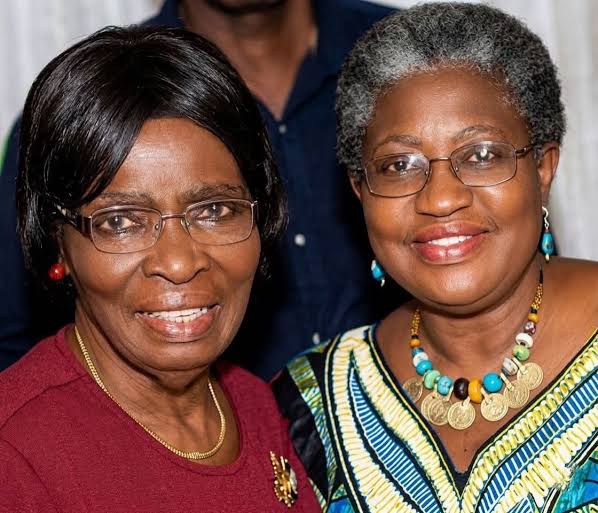
Quote “Professor Kamene Okonjo
Some women leave behind more t
Yet, to remember Professor Kam
Professor Okonjo was the belov
one of the most dramatic chapt
On December 14, 2012, the then
She leaves behind children, gr
Professor Kamene Okonjo deserv
By: Sylvia ThankGod-Amadi

Quote: An African who invokes
This is the concluding part
… Given the fact that I was
At the end of the visit by the
Back to my apartment, at abo
Under normal circumstances, yo
That all she asks is that Chie
For some reason that I do not
I believe that everyone in hu
Our ancestors have not gone fa
By: Jason Osai
The Federal Government’s approval of a N70,000 monthly transport intervention for public service workers for six months, beginning in November 2026, offers hope to employees struggling with the rising cost of living. The agreement with the Nigeria Labour Congress (NLC), reached at a conciliation meeting in Abuja on October 27, is intended to cushion transport costs and ease pressure on workers’ incomes. But for public servants in Rivers State, it raises a familiar question: will the State Government key into the intervention and ensure that its workers benefit? The agreement provides for N70,000 monthly across all levels, for six months. The Federal Government also approved peculiar allowance arrears effective from May 1, 2026, to be paid in three equal instalments beginning in November.
The parties agreed to reconvene after one month to assess implementation. Ultimately, the value of these resolutions will be measured not by announcements but by whether eligible workers receive the money. Transport costs consume a substantial share of many civil servants’ earnings before they can meet household needs. Support for commuting is therefore not a luxury or political favour; it is temporary assistance to help workers remain at their jobs without sinking further into hardship. For lower-paid employees, transport costs can turn modest salaries into a daily exercise in difficult choices and sacrifice.
The agreement also urges State and Local Governments to participate and unions to press for implementation. The federal agreement does not automatically guarantee that every State and Local Government employee will receive the support. State authorities must clarify how it will apply to their workforce, make the necessary arrangements and publish a payment timetable. Rivers State must approach the arrangement with urgency and transparency. The Government should State whether it will implement the intervention and when payments will begin. Any administrative or financial question should be addressed promptly with organised labour, not allowed to become excuses for delay.
The concern is sharpened by the earlier N35,000 monthly wage award introduced by the Federal Government in 2023 after petrol subsidy removal. It was intended as temporary relief pending a new national minimum wage. While several States negotiated and paid wage awards or related sums, implementation nationwide was uneven. Reports in 2024 indicated that many States had failed to pay the federal award, while others provided different amounts. In Rivers, labour and media reports raised concerns about implementation of the N35,000 award for State workers, amid separate announcements and arrangements concerning Local Government employees.
The wage award was meant to ease the immediate effects of subsidy removal, yet workers faced uncertainty over whether the promised relief would reach them. In February 2024, the Rivers State Government announced approval of the N35,000 award for local government workers, but subsequent reports showed that implementation across worker categories remained a concern. The lesson is clear: approval and implementation are not the same. A declaration at a meeting offers little comfort to a worker whose account does not reflect the promised payment. For workers who travel to their offices daily, the implications of delayed support are significant. Transportation expenses compete with food, rent, school fees, healthcare and other essential household needs.
As fares rise, employees may be forced to reduce spending on necessities or borrow to sustain their families. A timely transport intervention would therefore provide practical relief and demonstrate that government understands the economic pressures confronting its workforce. Its temporary nature makes prompt implementation even more important. It is fair to acknowledge that this transport intervention is a new agreement and that its administrative details may require clarification. Rivers State should not be condemned in advance for a failure that has not occurred. Nevertheless, the earlier experience gives workers legitimate grounds to seek assurances before the November commencement date. The State should avoid allowing uncertainty to persist until workers begin asking why the promised assistance has not arrived.
The NLC and unions in Rivers State should engage the State Government immediately and seek a written commitment, an implementation plan and a process for reporting missed payments. If clarification from the Federal Government is needed, the State should seek it without abandoning the goal of providing relief. Labour leaders must also keep members informed about progress and insist that any agreed arrangements are applied fairly and transparently. The Rivers State Government should treat this intervention as an opportunity to rebuild confidence. Timely support would show that workers’ welfare is more than a talking point and that the State recognises the economic realities confronting its employees.
Silence, delay or selective implementation, by contrast, would revive frustration over earlier relief measures and weaken trust between government and labour. Every month lost to administrative delay leaves workers facing the same transport burden without the intended assistance. The State should consult labour, publish arrangements and pay eligible workers on time. Rivers workers should not have to wonder whether federal relief will reach them. The Federal Government has announced the support; now the State must make its position clear. We hope the N70,000 monthly transport intervention will not follow the troubling path of the earlier wage award. Rivers State should learn from that experience and ensure that this time, relief is not merely promised but delivered.
Sylvia ThankGod-Amadi
-
Rivers2 days ago
NUJ Set To Attend UNIPORT’s 217th Inaugural Lecture
-
 News2 days ago
NJC Suspends Three Judges, Sanctions Eight Others
-
Politics2 days ago
Atiku Kicks-Off 2027 Campaign, Promises To Tackle Nigeria’s Challenges
-
 Featured2 days ago
APC Presidential Campaign Storms PH, ‘Morrow
-
News2 days ago
FG Explains Supply Disruption As Power Generation Drops To 3,659MW
-
Metro2 days ago
Port Harcourt Prepares For 10,000 Runners As International Marathon Returns
-

 News2 days ago
Bille Gas Leak: Coalition Tasks FG On Proactive Measures
-

 News2 days ago
IGP Orders Arrest, Prosecution Of Campaign Billboard Vandals