
Opinion
Obiano’s Second Mandate

The governor of Anambra State, Dr. Willie Obiano,
on March 17, renewed his oath of office for a second term following his landslide victory in the November 18, 2017 election. A mammoth crowd from within and outside the State witnessed the inauguration. By his laudable performance which largely, worked for him at the poll, Akpokuedike-Aguleri indeed deserves a second term.
Splendidly, a cursory look at his new cabinet will convince every doubting Thomas that the State is in a safe hand and the governor is determined if nothing else, to maintain the frequency. The presence of distinguished figures in the cabinet, including a raconteur and media guru, Don Adinuba as the Commissioner for Information, who earlier served in the Presidency as a Special Assistant to then Minister of Power, Engr. Barth Nnaji, is a clear indication that the “Light of the Nation” is practically on track and automated for people-oriented governance, luxuriant growth and excellence.
In the first term, Obiano overwhelmingly consolidated on the achievements of his two predecessors and took government to the next level. All hitherto abandoned towns substantially received sense of belonging particularly through road rehabilitation. Thus, the choices of the people since the return of democracy have tremendously paid off. It is remarkable that Ndi-Anambra have taken their destinies in their hands by untiringly ensuring that only adept leaders mount the podium as the governor of the State. It is, therefore, imperative to extend same approach to other elected offices in the State.
From 1999, the State has experienced diverse political metamorphosis which to a large extent is providential. Dr. Chinwoke Mbadinuju’s administration, by popular appraisal, was scored low; however, a holistic evaluation may submit that Mbadinuju contributed correspondingly albeit in a different dimension. Inarguably, his tenure was the prime era of godfathers ruling by proxy. And like many other States, the anti-democratic elements invaded Anambra for control of State resources with strong back-up from the Presidency then under Chief Olusegun Obasanjo. It was completely political bullying and supremacy combats between elected government officials and Abuja clique. Funny enough, Obasanjo, their arrowhead, is presently spearheading a coalition for good governance in Nigeria.
In any contest the clique showed up interests, it was do-or-die affairs. Oddly, all elective positions across the federation were always allotted at the Presidential Villa by imposition and submitted to the Returning Officers to announce accordingly. For governors, it was either complete compliance to sinister deals particularly on security votes and sensitive positions or face kangaroo impeachment. It was immaterial then if only six out of 17 lawmakers signed impeachment motions against the governor.
Beyond jokes, to become a governor, radical aerobics were sensibly necessary for any eventualities from the presidentially-backed self-acclaimed godfathers as their hostilities came in diverse violent dimensions over non-compliance to their orders. The concert was suitable for “Things Fall Apart extra-ordinary”.
Mbadinuju was the first casualty in the State with almost all appointees foisted on him. Amidst frustrations, the helpless Mbadinuju retired to faith-proclamations on the State; resorted to reprogramming the State with affirmative words and consequently, clairvoyantly changed the State’s original slogan: “Home for all” to “It shall be well with Anambra State”. Unwittingly, the citizenry, both the positive-minded and indecorous, hubristic characters, were daily declaring and reciting it, unconsciously sowing seeds of progress and luxuriant growth for the State.
Eventually, due to ceaseless squabbles, Mbadinuju wasn’t returned for a second term. He was replaced with Dr. Chris Ngige who then was dining and wining with the cabal. But no sooner that Ngige was declared the winner of the governorship election that he too faced serious crisis. His offence was that he unwaveringly took full charge of the State affair and sidelined the ‘godfathers’. Above all, he reneged on all hostile agreements over control of State machinery and treasury.
Strategically, Ngige expeditiously cleared a backlog of workers’ salary arrears and energetically embarked on unprecedented massive road constructions despite serious distractions from the opposition. It was, indeed, a positive drama. Suddenly, the Christian community that hitherto rejected him reversed and embraced him over his laudable performance. On the other hand, Mr. Peter Obi who was massively voted for as APGA’s candidate and battling for redress at the tribunal began to face apathy, thus encouraging Ngige with a pilfered mandate to ride on.
Along the line, the court’s gavel transferred the mantle to APGA and legitimacy crisis shifted to Obi on account of the high standard Ngige set in motion. To worsen Obi’s situation, the cabal conspiratorially impeached him and installed their man, Andy Ubah who immediately hit the brick wall. After Obi’s reinstatement by the apex court, he quintessentially espoused Ngige’s panache.
However, to prevent stealing someone’s thunder, Obi had to painstakingly differentiate his projects with signposts like “this road was constructed by Peter Obi” for people to see. It critically became a battle of exploits and feats.
The most distinctive feat that Obi recorded was that he maneuvered his way and became the then President Goodluck Jonathan’s man Friday and advantageously added value to his State. Thus, from Mbadinuju’s predictive slogan, the State progressed to the “Light of the Nation” as later renamed by Obi. Inarguably, the State, under Obi’s leadership, was a desideratum.
Obiano’s first term equally glowed superbly. Last year, Obiano remarkably approved the proposal for construction of export processing facility estimated at $150 million in Ogidi. Thus, it is indeed becoming well with Anambra State. As Obiano continues to navigate the State with clear blueprints and proficient workforce, the light, perceptively, will shine brighter and brighter. Congratulations, Ndi-Anambra!
Umegboro, a public affairs analyst, wrote from Abuja.




Quote: “The Flamingos have conquered the world; Nigeria must now rise to its responsibility of nurturing the next generation of champions.”
Sometimes, sporting victories
More significantly, they
Umejiaku deserves special
Umejiaku received the award
Nigeria has now broken into
For too long, young girls in
But beyond the reward, this
As Nigerians celebrate this
By; Calista Ezeaku
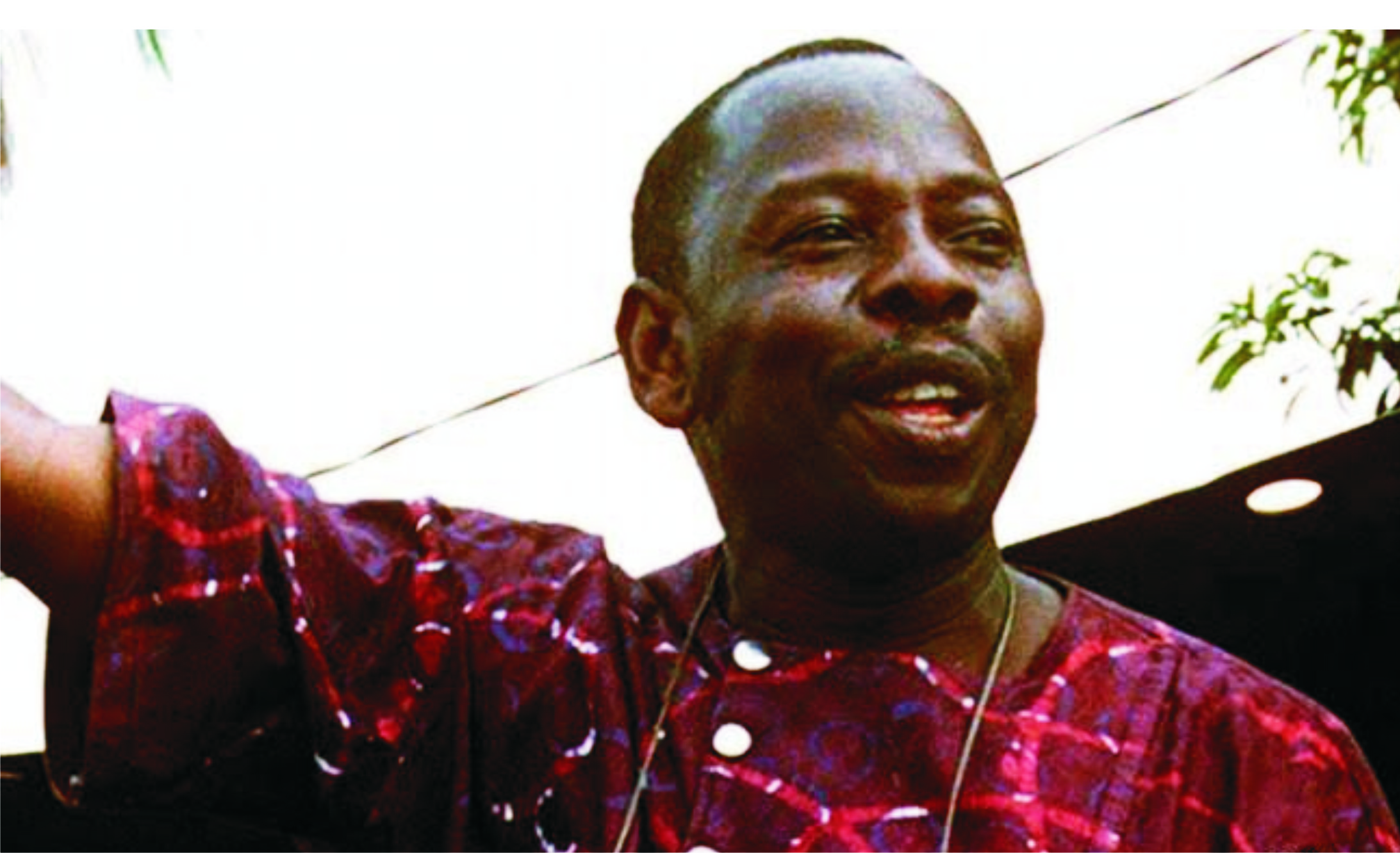
On November 10, 1995, the Nigerian military government of General Sani Abacha executed Ken Saro-Wiwa and eight other Ogoni leaders after a deeply controversial trial. Their deaths marked one of the darkest chapters in Nigeria’s history. At a time when fear silenced citizens and sycophancy flourished around military power, Saro-Wiwa chose to confront tyranny. Many Nigerians retreated into silence, while others praised the regime to secure favour. He knew the risks, yet refused to abandon a people whose land had been devastated by oil exploration and whose lives remained trapped in poverty. His courage arose from the conviction that public responsibility sometimes demands resistance to authority. Saro-Wiwa understood that speaking against a military government could lead to imprisonment or death.
Nonetheless, he believed the suffering of the Ogoni people demanded a courageous response. While oil was extracted from their land, they were left with polluted rivers, damaged farmland, declining livelihoods and an environment hostile to human survival. Fishing grounds and sources of livelihood were threatened, while the people struggled to secure basic amenities. The wealth beneath their soil brought neither adequate development nor a fair share of national resources. For him, silence in the face of injustice would have amounted to complicity. Through the Movement for the Survival of the Ogoni People (MOSOP), he organised a peaceful campaign that took the Ogoni question to the international community. MOSOP gave ordinary people an organised platform through which to express their grievances and insist on recognition.
The Ogoni Bill of Rights, presented to the Federal Government in 1990, demanded political autonomy, economic justice, environmental protection and control over the people’s resources. The campaign exposed the human and ecological costs of oil operations, particularly those associated with Shell, and challenged the apparent alliance between corporate interests and an unresponsive State. The Ogoni struggle became a defining expression of minority rights and environmental justice in Nigeria and Africa. Saro-Wiwa’s writings and mobilisation drew attention to communities treated as expendable because of their limited population and political influence. He argued that numerical strength should never determine a people’s value or rights.
A minority community does not become less deserving of justice because it cannot command electoral numbers or political power. In Nigeria, every ethnic group deserves dignity, protection and a fair opportunity to benefit from the commonwealth. Rather than respond to peaceful agitation with dialogue, the Abacha regime resorted to repression. Ogoni leaders were harassed, detained and killed; others fled into exile. The crisis intensified after four Ogoni chiefs were killed in May 1994. Saro-Wiwa and other MOSOP leaders were arrested, tried by a special tribunal and executed despite international appeals for clemency and serious concerns about the trial’s fairness. The executions drew worldwide condemnation and intensified scrutiny of Nigeria’s human-rights record and oil companies in the Niger Delta.
They demonstrated the danger of using State institutions to suppress peaceful demands. The proceedings remain a reminder of the need for judicial independence and due process. Saro-Wiwa’s courage rested on the conviction that justice must be pursued despite the cost. His method combined non-violent resistance, public education and grassroots organisation. His struggle recalled the civil-rights campaign of Martin Luther King Jr. and the power of peaceful mobilisation against injustice. Saro-Wiwa linked environmental degradation to political exclusion, economic exploitation and the denial of democratic rights. Oil-producing communities, he insisted, should not remain zones from which wealth is removed to develop other parts of the country.
Their people must benefit through roads, schools, healthcare, jobs and clean water. Resource extraction carries a duty to protect host communities. His argument extended to the structure of the Nigerian federation. He challenged a revenue-allocation system that made oil-producing communities bear the environmental and social costs of extraction without commensurate benefits. Like advocates of fiscal federalism, he believed resources should be managed and shared equitably. He envisaged a society in which no community would be disadvantaged by its size, ethnicity, political affiliation, culture or religion. His vision was a country bound together by justice and equal citizenship. Saro-Wiwa was also a gifted writer, dramatist and public intellectual.
Through books, essays, plays and television, he documented Nigerian society’s contradictions and challenged abuses of power. His popular television series, Basi and Company, demonstrated his creative range, while his leadership of the Association of Nigerian Authors encouraged writers to engage national questions. He believed literature should not be detached from society’s struggles. His pen exposed environmental injustice, political repression and the dangers of silencing courageous voices. He used storytelling, satire and drama to shape public consciousness and expose social contradictions. His literary achievements gave his activism wider reach and made the Ogoni experience part of national conversation. His commitment to the Ogoni people extended beyond the oil question.
During the Civil War, he worked to protect his vulnerable community. He urged younger generations to reject subservience and complacency and pursue change through lawful, peaceful means. Citizens, he believed, must not surrender their responsibility to challenge wrong doing. An injury to one community threatens the rights and security of all. The return to democratic government in 1999 and the establishment of the Niger Delta Development Commission, the Ministry of Niger Delta Affairs and the Hydrocarbon Pollution Remediation Project (HYPREP) are among developments that have kept the region’s demands in public view. Saro-Wiwa did not create these institutions, but his movement helped expose the urgency of intervention and sustain pressure for redress.
His death made it harder to ignore the Niger Delta’s environmental and political grievances. Yet, interventionist institutions do not prove that the original demands have been met. Their effectiveness depends on competent leadership, transparent spending, measurable outcomes and community participation. Yet, thirty-one years after his execution, the central concerns of the Ogoni struggle remain unresolved. The HYPREP-led clean-up has offered hope, but many residents await meaningful improvements. Questions persist about the programme’s pace, quality and transparency, and whether its benefits reach ordinary people. A clean-up should be judged not by ceremonies or contracts, but by restored land and waterways, safe drinking water, improved livelihoods and better public health.
It must include long-term monitoring to ensure treated sites remain safe. Residents deserve information about contamination, remediation methods and completion timelines. Reports that water projects in Gwara and Ebubu Communities, in Khana and Eleme Local Government Areas respectively, failed weeks after commissioning have raised further concerns. If confirmed, the failures would indicate weaknesses in supervision, procurement and quality control.
To be continued in our next edition.
Taneh Beemene
-
News4 days ago
RSG Reaffirms Commitment To STEM Education, Technological Advancement
-
Business5 days ago
‘NUJ, NPA’s Partnership Would Boost Port Producrivity, Economic Growth’
-

 News4 days ago
IGP Warns Police Officers Against Partisanship …Directs Regular Engagement With Journalists
-

 Oil & Energy1 day ago
FG To Double Oil, Gas Reserves, Moves To Intensified fresh Exploration
-
Business5 days ago
Fire Threat Interrupts Asaba Air Peace Flight
-
 News4 days ago
Customs To Deploy AI, Scanners Against Snuggling
-
Business1 day ago
BSG Partiner American Coy To Invest $100m In Gas Processing
-
Business1 day ago
Seme Customs Intercepts Live Pacific Ridley Sea Turtle