Connect with us

Opinion

Ambazonia, Separatists And Internet Democracy (I)

Published

on

A Biafra-like agitation for independence has been unfolding in neighbouring Republic of Cameroon since November 2016. The people of Northern and Southern Cameroons under the umbrella of the Southern Cameroons Ambazonia Consortium United Front (SCACUF) finally decided to affirm the independence of the English-speaking sections of Cameroon from the Republic.
Like the Indigenous People of Biafra, the Ambazonians as they have called themselves since 1984, are protesting against their alleged marginalization by the dominant Francophone Cameroon and the Paul Biya government in Yaounde.
They insist that whereas oil is found in the English-speaking South Western part of Cameroon, the central government has practically neglected the region, and the people have been turned into “slaves” on their own soil.
Like the Biafran movement in Nigeria, they have their own flag (white and blue) and a national anthem. The Cameroonian Anglophones claim that their struggle is non-violent and peaceful but they will insist on their independence, and the declaration of their own Republic.
They further argue that whereas French and English are the official languages of Cameroon, the central government has imposed French as the language to be spoken in Anglophone Cameroon. They insist on their right to speak English.
After World War 1, the League of Nations shared the geographical territory known as Cameroon between the French and the British. The latter administered its own share from Nigeria.
On October 1, 1960, Nigeria gained independence from Britain. British Cameroon had a choice between joining Nigeria or Cameroon. In a referendum conducted in 1961, the people of British Cameroon chose to join French-speaking Cameroon to form a Federation. But the planned federal system never really worked.
In 1972, Cameroon changed its name to the United Republic of Cameroon. In 1984, the word “United” was removed from the country’s name by the Paul Biya administration, thus, adopting the pre-unification name of French Cameroon and effectively raising fears of alienation among English-speaking Cameroonians.
Colonialism and its legacy may have been the foundation of many of the crises in post-colonial African states, but poor governance, ethnicity, competition over power and national resources, religion and sheer leadership incompetence have done worse damage.
Post-colonial African leaders have failed to act as statesmen but as new colonialists adopting in West Africa, the twin colonial policies of divide and rule and assimilation.
Cameroon has been a long-suffering country, first under former President Ahmadu Ahidjo and especially under 84-year old Paul Biya, who has been President for 35 years.
It is ironic that 56 years after the country became a Republic, English-speaking Cameroonians are fighting against the seeming attempt by their French-speaking compatriots to “assimilate” and “marginalize” them. The two Cameroons are fighting over the language of the colonialists, national resources, and power-relations.
On Sunday, October 1, 2017, Sisiku AyukTabe, Chairman of the Southern Cameroons Governing Council, formally declared the independence of Southern Cameroons or the Federal Republic of Ambazonia.
“We, the people of Southern Cameroons are slaves to no one”, he said, “Not now, not ever again! Today we reaffirm autonomy over our heritage and over our territory…It is time to tell Yaounde that enough is enough!”
The response from Yaounde has been characteristic. Weeks before the protests and the declaration of independence in Southern Cameroons, soldiers were sent to the region to shoot in the air, prevent rallies, and intimidate the people. Several  persons have so far been killed.
“This division will never happen”, says Cameroon’s Communications Minister, Issa Tchiooma Bakary, speaking for the central government. Just like IPOB and Nigeria? Yes.
Since the end of the Cold War, there has been a wave of nationalist agitations across the world resulting in self-determination, secession and partitions, and the emergence of new countries. But self-determination or secession is not an automatic process, and it is not in every instance that the protests result in the Nirvana that the separatists seek.
In Cameroon, the Biya administration must get off its high horse and engage the leaders of the separatist movement in dialogue. The international community must prevail on him to put an end to the abuse of human rights and the killings in Southern Cameroon. It is the refusal of the central government to address the grievances of the people of Southern Cameroon that has brought Cameroon to this moment.
To quote AyukTabe, again: “The union was always intended to be a union of two equals. Unfortunately, what our peace-loving people have experienced ever since is oppression, subterfuge, discrimination, violence, intimidation, imprisonment, forced occupation, cultural genocide and misappropriation of our natural resources by the leaders of the Republic of Cameroun.”
It is instructive to note the similarity between the expressed concerns of the Ambazonian movement and similar movements in recent times in other parts of the world, and the attitude of the governments in power.
In Spain (the Catalan secessionist movement), Nigeria (the Biafra movement) and Iraq (the Iraqi Kurdistan) – the Catalans have held a referendum to leave Spain, but the Spanish government says this is “unconstitutional.”
Biafrans want a referendum in Nigeria – the government says this is unconstitutional because Nigeria’s unity is not negotiable. The Kurds also want to get out of Iraq, but the central government is opposed to it on the grounds that the September 25 referendum is unilateral and unconstitutional!
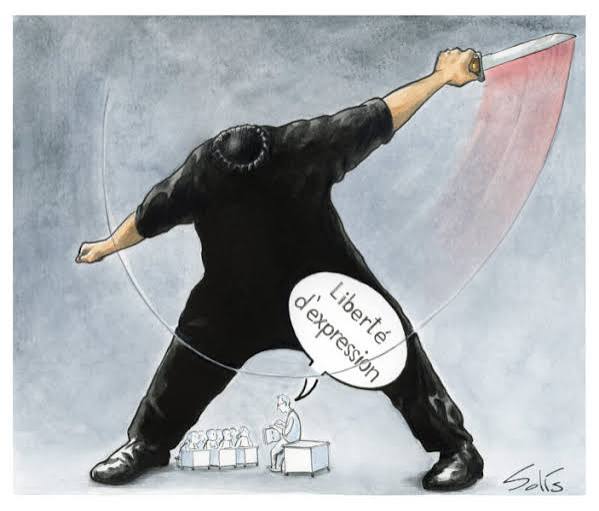
It is not just rhetoric that is involved, the military is deployed, violence is unleashed on separatists or critics of the extant union and the government. While these may seem to be traditional responses, the assault on the human rights of protesters now includes an increasingly important territory: the internet.
The internet is perhaps the most striking phenomenon of the century, in the manner in which it has extended the frontiers of human freedom and expression. It is the most modernist icon of globalisation and the borderlessness of space and time.

Abati, a Public Affairs Analyst, was Special Adviser on Media to former President Goodluck Jonathan.
The internet does not know fear. It is an irreverent tool of political mobilization, commerce and social networking. It is the public mind in motion, and the anonymity that it offers in certain forms makes it a strong instrument of revolt.
Elections can be won or lost, governments can be pulled down or popularized, through the mind of the internet. Given its power, reach, and impact, dictators are uncomfortable with the democracy of the internet which has proven to be much stronger than dictatorships, tyrants and intolerant governments. The relationship between the internet and authority has therefore been one of unease and distrust.
The result has been the attempt by intolerant governments and political figures to control the internet, shut it down or violate the rights of its users. China has an internet police that filters internet traffic.
In 2011, Egypt tried to stop the people’s revolution by shutting down the internet. Tunisia, Italy, North Korea, Syria, Iran, Libya, India, Bangladesh, Burma, Nepal, Maldives, Iraq are other countries where the internet has been censored in one form or the other or completely shut down.
The degree of civil society repression varies from one country to the other, but the excuse for abridging internet democracy could be as ridiculous as saying that the internet had to be shut down in order to prevent cheating in students’ examinations as has been the case in Iraq and Ethiopia.
Generally, shutting down the internet has become the new mode of repression and a standard response to dissent. African states and governments have joined the trend. In the last year alone, 11 African governments have shut down the internet in one form or the other.
These include the Democratic Republic of Congo (ostensibly to reduce the capacity to transmit “abusive messages,” but actually to stop the people from opposing President Joseph Kabila’s attempt to prolong his tenure); Gambia (a few days to the 2016 elections), Togo (to check protests against President Faure Gnassingbe, and the people’s request for multi-party elections and Presidential term-limits), Ethiopia, Gabon, Gambia, Egypt, Uganda, Zambia, Zimbabwe and Morocco.
In Nigeria, there has also been so much official discomfort with what is termed “hate speech” on social media platforms particularly whatsapp, instagram, blogs, and twitter. One lawmaker even proposed a Social Media Bill which criminalises internet democracy.
The worst anti-internet culprit so far in Africa would be in my view, not Egypt (where the revolution succeeded in spite of the repression) but Paul Biya’s Cameroon where intolerance and unpleasantness have been elevated to the level of state policy.
In January, the government of Cameroon shut down the internet in English-speaking parts of the country. This lasted for more than three months. This has again been repeated. It is unacceptable.
The cost of internet shutdowns is enormous and disruptive, and the gain for governments is so small. The free flow of information is breached, the targeting of specific regions as in Cameroun is discriminatory; the right to free speech is violated, along with other rights: association, choice, and freedom of thought.
The UN Human Rights Council in 2012, 2014 and again in July 2016, resolved that “the same rights that people have offline must also be protected online”, and all states must refrain from taking such measures that can violate internet freedom. The African Union Declaration on Internet Governance (Algiers, February 13, 2017) is on all fours with this UN Resolution. The UN should go further and impose sanctions on countries that violate internet freedom.
Worse, businesses suffer in the event of an internet shutdown. Internet services are accessed through broadbands provided by mobile telecom companies. When such companies are asked to shut down their services, they easily comply out of fear of being blackmailed by the government. They can be accused of supporting terrorism, for example! By co-operating, they incur losses, part of which they may eventually pass to their subscribers.
Similarly, with growing internet penetration in Africa, so many other businesses are dependent on the internet. Indeed, the internet is increasingly a shopping mall – for bloggers, advertisers, consultants and the average consumer of services. An internet shutdown in the light of this, undermines economic growth and development. Human dignity and relationships are also affected. The internet is a networking tool, so much so that many families depend on it for contact and interaction, and many individuals on it for survival.
Shutting down the internet rolls back the gains of the democratization process in Africa. African countries seeking growth and investment in the telecommunication sector, and within the economy generally shoot themselves in the foot when they seek to destroy such a significant tool.
Internet registries worldwide should sanction errant governments which deny their citizens access to the internet. Men of conscience and thought leaders should speak out against the growing trend of internet shutdown or violation by African governments.
In Nigeria, we must continue to discourage the government from ever contemplating any such misadventure. I am not in any way recommending, by this article a “sovereignty of the internet” in the sense in which John Perry Barlow, an internet activist spoke, when he issued “A Declaration of the Independence of Cyberspace” (1996). Rather, I urge the protection of the democracy of the internet and this democracy is about rights, obligations and the rule of law.
To return to the politics of imperialism and dissidence in Cameroon, Nigeria (for strategic reasons – the proposed Ambazonia being a buffer zone between Nigeria and Cameroon), ECOWAS and the African Union should intervene early to prevent an outbreak of social and humanitarian crisis, if not chaos in North West and South West Cameroon. The feuding parties should be encouraged to go to the negotiating table. What is going on in that country is as much a Cameroonian problem as it is a Nigerian problem.
Abati, a public affairs analyst, was Special Adviser on Media to former President Goodluck Jonathan


Continue Reading

Opinion

Monthly Environmental Sanitation Imperative 

Published

on

Quote: “A clean environment is not a government gift; it is a civic duty that protects our health, preserves our cities, and reflects our national character.”
For many Nigerians who grew up in the 1980s, 1990s, and early 2000s, the last Saturday of every month followed a familiar pattern. Roads were deserted, markets closed, and residents swept compounds, cleared gutters, cut overgrown weeds, and disposed off refuse. The monthly environmental sanitation exercise became a national ritual that promoted cleanliness, discipline, and civic responsibility. As an environment correspondent about two decades ago, I joined officials of the Rivers State Ministry of Environment on sanitation monitoring tours across Port Harcourt and surrounding communities. Although enforcement officers were sometimes accused of excesses, the exercise succeeded in creating public awareness about the importance of keeping our surroundings clean. Over time, however, the practice faded away in many states.
In its absence, indiscriminate dumping of refuse, blocked drainages and environmental neglect became increasingly common. Today, heaps of waste line roads, markets and motor parks, while gutters clogged with plastics contribute to perennial flooding. Given the mounting environmental challenges facing Nigerian cities, there is no better time to revive environmental sanitation. Its return is no longer a matter of nostalgia; it is a practical necessity for public health, environmental safety, and sustainable development. Poor sanitation remains a major cause of disease. Stagnant water and uncollected waste create breeding grounds for mosquitoes, flies and rodents, increasing the risk of malaria, cholera, typhoid and other infections. Floodwaters contaminated by refuse also expose communities to serious health hazards.
Rapid urbanisation has worsened the situation. Cities such as Lagos, Port Harcourt and Abuja are expanding faster than their waste management systems can cope. As populations grow, so does the volume of waste generated daily. Monthly sanitation exercises can help rebuild environmental consciousness. Beyond cleaning streets, they remind citizens that environmental cleanliness is a shared responsibility. They also offer an opportunity to educate children and young people about hygiene, public health and community participation. Critics argue that the old sanitation policy restricted movement and was sometimes abused by security personnel. Those concerns were valid, but they do not invalidate the concept itself. Rather than abandon it, governments should reform the programme to make it more humane, participatory and transparent.
That is why the recent decision by the Lagos State Government to reintroduce monthly sanitation deserves commendation. Even if participation is largely voluntary, the move sends a strong signal that environmental responsibility must be taken seriously. Other states should emulate this initiative. In Rivers State, the Rivers State Waste Management Agency has intensified efforts to improve waste collection and restore Port Harcourt’s reputation as the Garden City. Reintroducing monthly sanitation would complement these efforts and deepen public involvement. At the federal level, policies such as the Digital Waste Marketplace, the Plastic Waste Policy and the National Waste Management Network are commendable. However, environmental sanitation remains one of the most direct and visible ways to mobilise citizens toward cleaner communities.
The exercise, however, must be supported by efficient waste management infrastructure. Citizens cannot be expected to maintain clean surroundings if there are inadequate waste bins, irregular refuse collection, and limited recycling facilities. Governments at all levels should invest in modern waste management systems, properly fund sanitation agencies, and promote recycling programmes. Waste sorting should become standard practice to reduce the volume of refuse ending up in landfills and drainage channels. Countries such as Singapore, Sweden and South Korea have demonstrated that waste can become a valuable economic resource. Recycling industries in these countries create jobs while protecting the environment. Nigeria can adopt similar strategies and turn waste into wealth.
Environmental laws must also be enforced consistently. Regulations against illegal dumping exist in many states but are rarely implemented. Offenders should face penalties, but enforcement must be fair and free from extortion. Urban planning is another critical factor. Poor drainage systems, overcrowding and inadequate sewage infrastructure worsen sanitation problems. Governments must prioritise road construction, drainage maintenance and orderly urban development. Markets deserve particular attention. They generate enormous quantities of waste every day, yet many lack organised disposal systems. Local councils and market associations should work together to establish effective waste collection arrangements in commercial centres. Religious institutions, schools, traditional rulers and civil society groups also have important roles to play.
Environmental responsibility should be taught and reinforced as a social value. Community leaders can help change attitudes by consistently promoting cleaner habits. This issue is even more urgent in an era of climate change. Flooding, erosion and extreme weather events are already threatening many Nigerian communities. Poor waste disposal worsens these challenges by blocking waterways and reducing urban resilience. A clean environment also offers economic benefits. Well-maintained cities attract investors, tourists and businesses. Reduced disease outbreaks lower healthcare costs and improve productivity among workers and students. More importantly, cleanliness reflects national values. A nation that allows public spaces to deteriorate projects an image of disorder and neglect. Nigerians deserve cleaner streets, healthier neighbourhoods and safer communities.
Reviving environmental sanitation will not solve all environmental problems overnight, but it can serve as a powerful starting point. Combined with effective waste management, public education and stronger infrastructure, it can restore environmental consciousness across the country. Ultimately, environmental cleanliness is a shared responsibility. Government must provide leadership, infrastructure and enforcement, while citizens must demonstrate discipline and civic commitment. From disposing of household waste properly to keeping drains free of obstruction, every Nigerian has a role to play. If Nigeria is serious about protecting public health, reducing flooding and building livable cities, the return of monthly environmental sanitation is a step whose time has come.
By: Calista Ezeaku
Continue Reading

Opinion

God’s Intentionality in Ecological System

Published

on

Quote:”Every component of creation is interdependent, demonstrating that God designed nature as a balanced system in which each part contributes to the wellbeing of the whole”.
 
From the very first chapter of Scripture, the Bible presents a profound truth: creation was not accidental, random, or without meaning. The universe emerged from the deliberate counsel of an all-wise God who fashioned every aspect of life with purpose and precision. The heavens were stretched out by His command, the earth was carefully positioned, the seas were bounded, and every living creature was assigned a distinct role within a perfectly coordinated ecological system. When God surveyed His completed work, He pronounced it “very good,” affirming that creation was whole, harmonious, and exactly as He intended. The natural world remains a visible testimony to God’s intentionality. The sun provides warmth and energy at the right intensity to sustain life. The moon governs tides and seasons. Trees absorb carbon dioxide and release oxygen.
Rivers irrigate the land and quench thirst. Bees and butterflies pollinate crops. Birds disperse seeds. Animals maintain biodiversity. Every component of creation is interdependent, demonstrating that God designed nature as a balanced system in which each part contributes to the wellbeing of the whole. Nothing was made without significance, and nothing was left to chance. Among all created beings, humanity occupies a unique and privileged position. Unlike plants and animals, man was created in the image and likeness of God. This divine imprint endowed human beings with intelligence, moral consciousness, creativity, and the capacity for relationship with their maker. It also established mankind as the steward of creation. God granted humanity dominion over the earth, not as a license for reckless exploitation, but as a sacred trust to cultivate, protect, and preserve the world He had declared good.
Dominion, in God’s original intention, was to be exercised with wisdom, compassion, and responsibility. Human beings were meant to care for the land, use natural resources judiciously, and ensure that all forms of life flourished in accordance with divine order. The earth was to be managed as a trust from God, not plundered for selfish gain. Unfortunately, this divine mandate has been grossly misunderstood and widely abused. It is deeply regrettable that man has deviated so drastically from God’s original intention. Instead of stewardship, humanity has too often embraced greed. Instead of preservation, there has been exploitation. Instead of gratitude to the Creator, there has been reckless consumption and abuse of the environment. Across the world, forests are felled indiscriminately, rivers are contaminated, and fertile lands are stripped of their productivity.
 Species disappear as habitats are destroyed. Air pollution threatens public health, and climate change disrupts weather patterns and livelihoods. What God created as a life-supporting ecosystem is increasingly treated as a disposable commodity. In Nigeria, the consequences are especially painful. Oil spills in the Niger Delta have devastated farmlands, poisoned rivers, and destroyed fishing communities. Poor waste management clogs drains and contributes to flooding. Erosion eats away homes and roads. Illegal mining and logging scar the landscape. In many cases, communities suffer while those responsible evade justice. At the root of much of this destruction is corruption. Funds earmarked for environmental protection, sanitation, and erosion control are often diverted for personal enrichment. Regulatory agencies are compromised through bribery.
 Powerful individuals and corporations place profit above human welfare. Corruption thus becomes not only a moral failure but an assault on God’s creation. This environmental abuse is also a tragic expression of man’s inhumanity to man. When water is polluted, children fall sick. When farmlands are destroyed, farmers lose their means of survival. When rivers are contaminated, fishermen are plunged into poverty. When floods and erosion displace families, communities are torn apart. The burden of environmental degradation falls most heavily on the poor and vulnerable, while future generations inherit a diminished world. Yet, despite humanity’s failures, there remains hope for restoration. God’s purpose for creation has not changed. He still calls His people to responsible stewardship and righteous living. When individuals and nations return to God’s principles, they begin to view the earth not as an object to exploit, but as a sacred trust to preserve.
Responsible stewardship means protecting natural resources, planting trees, reducing pollution, disposing of waste properly, enforcing environmental laws, rejecting corruption, and treating others with justice and compassion. It requires governments to act with integrity, businesses to operate ethically, faith communities to teach creation care, and citizens to take personal responsibility for the environment. Creation care is therefore more than an environmental concern; it is a spiritual obligation. Our treatment of the earth and of one another reflects the sincerity of our reverence for God. To exploit nature, oppress the vulnerable, and enrich ourselves through corruption is to rebel against His purpose. To protect creation and uphold justice is to honor the Creator and participate in His original design. The world God made was declared “very good.” It is our solemn duty to ensure that our actions preserve rather than destroy that goodness.
By: Sylvia ThankGod-Amadi
Continue Reading

Opinion

Confronting National Development In Chinese Style

Published

on

Quote: “China’s rise was not a miracle. It was the result of deliberate planning, disciplined execution, and a national determination to make poverty reduction the foundation of national development.”
A short TikTok video by @ancientchinaforever recently offered a compelling summary of China’s remarkable transformation from one of the world’s poorest nations to a global economic powerhouse. In just a few minutes, it captured a lesson that developing countries like Nigeria cannot afford to ignore: meaningful development does not happen by chance. It is the product of vision, consistency, and a deliberate commitment to confronting poverty. In 1981, according to the World Bank, nearly 88 percent of China’s population lived in extreme poverty. The country was overwhelmingly rural, industrially weak, and lacking in modern infrastructure. Millions of people had limited access to quality healthcare, education, and basic social services. Yet China refused to accept poverty as its destiny. Its leaders made a strategic decision to treat poverty reduction as the starting point of national development.
 Rather than relying on slogans or isolated welfare programmes, they created a coordinated system that mobilised government institutions at every level toward one overriding goal: improving the living conditions of ordinary citizens.
This was the turning point in China’s history. Poverty alleviation became a national mission. Clear targets were established, responsibilities were assigned to provincial and local governments, and officials were evaluated based on measurable results. Data was used to identify poor households, monitor progress, and adjust strategies where necessary.In effect, China built what may be described as a national development machine.The first major reforms focused on agriculture. Through the household responsibility system, farmers were given greater control over their land and allowed to sell surplus produce after meeting government quotas.
 This policy created incentives for productivity and innovation. The results were dramatic. Agricultural output rose significantly, rural incomes increased, and millions were lifted out of poverty.With food security improving, China turned to industrialisation. The government established Special Economic Zones, most notably in Shenzhen, to attract foreign investment and promote export-driven manufacturing. What was once a small fishing community quickly transformed into one of the world’s leading industrial and technology hubs. Factories created millions of jobs, drawing workers from rural areas into expanding urban centres. China soon became the manufacturing capital of the world, producing electronics, textiles, machinery, and consumer goods for global markets.The revenue generated from industrial growth was reinvested in infrastructure and human development.
China understood that development requires more than factories. It demands modern infrastructure that connects people, goods, and markets. Massive investments were made in roads, railways, airports, seaports, electricity, and telecommunications.
Today, China’s high-speed rail system, modern cities, and efficient logistics networks stand as visible proof of decades of purposeful investment. Equally important was China’s commitment to education and healthcare.Schools were expanded, literacy improved, and vocational training equipped workers with the skills needed in a modern economy. Healthcare reforms reduced preventable diseases and protected families from being pushed deeper into poverty by medical costs.These investments ensured that economic growth translated into tangible improvements in living standards.
Another defining feature of China’s development model was policy continuity. Through successive Five-Year Plans, national priorities were clearly outlined and pursued over decades. While leaders changed, the core development agenda remained consistent. This stability encouraged investment, strengthened institutions, and allowed long-term projects to be completed. Unlike countries where each administration abandons the policies of its predecessor, China sustained a clear sense of direction.The results have been extraordinary. According to the World Bank, China has lifted more than 800 million people out of extreme poverty—the largest poverty reduction effort in human history. A broad middle class has emerged, and the country has become the world’s second-largest economy. Chinese companies such as Huawei Technologies and Alibaba Group now compete at the forefront of global innovation.
China’s journey has not been without challenges. Rapid industrialisation has contributed to environmental degradation, regional disparities, and demographic pressures. However, these challenges do not diminish the scale of its achievement. They underscore the complexity of transforming a nation of over one billion people. For Nigeria, China’s experience offers valuable lessons. First, poverty reduction must be treated as a strategic national priority rather than a campaign promise. Second, development requires long-term planning and policy continuity. Third, sustained investment in agriculture, infrastructure, education, and healthcare is essential. Fourth, institutions must be strengthened to ensure accountability and measurable outcomes. Finally, leadership must combine vision with disciplined execution. Nigeria is richly endowed with natural resources, entrepreneurial talent, and a youthful population.
What remains missing is a coherent and consistent development strategy that places national interest above politics. China’s transformation demonstrates that development is not a matter of luck. It is the outcome of clear priorities, effective institutions, and unwavering commitment. For countries still grappling with poverty and underdevelopment, China stands as compelling proof that when a nation confronts its challenges with strategic intent and collective discipline, extraordinary progress is possible.
 Sylvia ThankGod-Amadi
Continue Reading

Trending