Connect with us

Opinion

The Making Of A King In Ubeta

Published

on

Nature does not endow for nothing; so, to achieve success, whatever the goal, we must pay a price. Omniscience associates the people of Ubeta in Ahoada-West Local Government Area of Rivers State with spectacular circumstances which lie on their carpet of fate woven by nature. These include the discovery of ocean of gas buried in the bowel of Ubeta soil, the first academic professor in Ekpeye kingdom, Pius Judah Egbelu; the first Ubie man to be elected into the Green Chambers of the National Assembly, Prince Ezekwem Sam Eligwe (now late), and the first Ekpeye man to be appointed as Mayor of Port Harcourt, High Chief David Ayaugbokor (now late).
The people are convinced that these notable unique firsts are enough for them to hold their heads high among the communities in Ekpeye land.
An Ubeta man was a true brother to a fellow Ubeta man. Their uncommon belief in the Ubeta cause was a source of inspiration and envy to others. The founding fathers clamoured for unity and oneness – a rare force that gave rise to the appellation “akinima oriagbo”, which was anchored on brotherliness and love. They knew that patience and perseverance would urge them onward towards their goal.
But that was before oil and gas were discovered in Ubeta and which has today transformed into politics and paved way for strife, distrust, disharmony, chaos and bloodletting etc.
Facilities belonging to the Nigeria Liquified Natural Gas, Total E&P and Nigeria Agip Oil Company criss-cross the length and breadth of their land.
The rights and privileges of indigenes on the award of contracts, scholarship opportunities and skills acquisition programmes were usually diverted and converted by a few indigenes who served as cronies to some staff of these multinationals to steal Ubeta blind. The unrestrained indulgence of this few to accumulate and pocket what belongs to all has been the main brain in the agitation and bickerings. Those who qualify are deliberately denied available opportunities. It pains to watch the people groan in hunger and penury; hovering between hope and anxiety as they watch helplessly their wealth being violated and plundered by creepers.
Bear in mind that in today’s world, only enemies speak the truth, friends and lovers lie endlessly, caught in the web of duty and conceit.
Between 2001 and 2003, over 20 youths of Ubeta were killed in an induced crisis that consumed the community. Several buildings and habitations belonging to entities were destroyed. Indigenes fled on self exile. The community became desolate, widowed, lonely, heaving in agony and resignation. Blood flowed, never before heard in the history of the people. Sacred sites including churches were desecrated, homes looted and families decimated. As the community staggered in pains and wails, “the big monkey hand in the soup” wagged its tail and tongue in smiles.
A  poet, Bernard Shaw, was right after all when he said, “you see things, and you say; why? But I dream things that never were; and I say why not?”
Indeed, nothing captures the sharp disunity in Ubeta than the failed attempts to install a stable and enduring leadership for 26 years after the earthly passage of Chief Sam Eligwe in 1991. It is puzzling!! Elections into traditional stools in Ekpeye land are democratic, not hereditary and every legitimate Ekpeye son is a prince, but those with sound mind, quality intellect and opportunity are potential kings. But like the parable of the big man, any attempt to personalize any stool by infusing hereditary overtly or covertly opens avenues for friction.
Worried by the grave implications of not having an organized leadership, and convinced that those who struggled through slavery knew how extremely expensive it was to be voiceless, the Ubeta people gathered on Wednesday, April 26, 2017 (the cultural Udhie day), surmounted the hurdle and elected another (paramount ruler) Eze-Nwe-Ula of Ubeta, Chief Chimezie Nathaniel.
Petitions, court cases and threats of violence had tried to thwart the effort that was conceived over 15 months ago. It is now in the pages of history that Chief Monday Ezebulunwo’s reign (who succeeded Late Sam Eligwe) was marked with a long journey of internal wrangling. He was finally hurled out from office in 1998 for being steadfast.
Chief Napoleon Agihuo took over. Agihuo’s stay as paramount ruler was the proverbial war against a nine – headed snake; cutting off one head, quickly allows another to emerge. His tenure was the shortest ever in the history of our traditional clime. And so, ushered in another chief,  Kenneth Odoyi – a modest civil servant. Interest groups and litigations, accusations that spelt the importance of the office, characterized the era, and finally tore down his tenure.
In the ensuing uncertainties, one Goodlife Ebina pronounced himself paramount chief. It was reminiscent  of the Biblical account of “what inheritance have we in the son of Jesse, to your tents oh Israel”. There was insurrection, while the community was in limbo! In the early 70’s , two paramount rulers also reigned at the same time, Chief Sam Eligwe and Chief Friday William. Confusion, that is!
So, to stem the looming violence, after the clergy in Ekpeye land had intervened in October, 2014, Nna Frank – Jack, a Justice of Peace and journalist was appointed the Chairman of the community, heading both the traditional institution and community development initiatives.
Again, in just few weeks on saddle, turnings and turnings widened the gear. He left office in 2016. The then election planning committee was subsequently dissolved over inexplicable yet curious excuses, and another put in place. Much sacrifice was made, which nonetheless, marked the journey towards liberation.
The Eze Nwe-Ula stool is the rallying point of Ubeta people. It is, therefore, instructive for the new leadership in Ubeta  –  Chief Chimezie Nathaniel, the Eze-Nwe-Ula, Ubeta; Sir Julius Ojeme,  Chairman, Community Development Committee, and Innocent  Abali, Youth President,  to learn from the words of an author now buried in antiquities:  “to stumble twice against the same excuse is a disgrace”, hence “we are made wise not by the recollection of our past, but by the responsibility for our future”.
And so it is,  that the end of a fateful cycle which began in 1991 has joined its beginning, and an ancient evening heralding a new era. We need a collective approach to reposition Ubeta, where healing, forgiveness and equity may reign.
My prayerful thoughts shall envelop this giant stride. I thought, I heard voices chant, Amen!
Frank -Jack lives in  Port Harcourt.

 Nna Frank – Jack

Continue Reading

Opinion

Protecting Nigeria’s Democratic Space 

Published

on

Quote: “Democracy is not secured by the silence of opponents, but by their freedom to organise, speak and compete without fear. When intimidation replaces argument, the whole nation loses.”

As the 2027 general elections draw nearer, reports of attacks on opposition supporters, disrupted meetings and restrictions on political activities raise serious concerns about Nigeria’s democracy. From Akwa Ibom and Cross River to Enugu, Kaduna, Sokoto and Kebbi, recent developments test citizens’ freedom to organise and campaign. Each incident requires impartial investigation; together, they demand national attention. In Akwa Ibom, police ordered political parties and groups to suspend and reschedule rallies, meetings and processions approved for October 1, citing intelligence about possible security threats. The directive affected a planned two-million-man march in Uyo organised by the Obidient Movement in support of Nigeria Democratic Congress (NDC) presidential candidate, Peter Obi, and running mate, Rabiu Kwankwaso.

Organisers said they had prior approval and spent over N20 million mobilising supporters across the state’s 31 local government areas. Police described the measure as precautionary and applicable to all groups. Although public safety matters, restrictions must be necessary, proportionate and must not deny a fair platform to all and sundry. Cross River presented a disturbing picture on November 4. Peter Obi’s NDC convoy was reportedly attacked around Watt Market in Calabar, where suspected hoodlums threw stones and other objects at vehicles and supporters. Windscreens were damaged and supporters reportedly injured. Police confirmed the attack and arrested a 27-year-old suspect, while investigations continued. That day, tension also arose when NDC supporters and an APC group conducting a road walk converged around Metropolitan Hotel.

Police intervention reportedly prevented a wider confrontation. There were suggestions that the convoy’s  attack, arose from internal disagreements within the NDC. All that require impartial investigation. In Enugu, suspected armed hoodlums reportedly stormed an NDC ward meeting at Ndiuno-Obuoffia, Nkanu West, on September 12 and opened fire, injuring two attendees. That day, a separate Peoples Democratic Party gathering at Agbani was disrupted, with canopies and chairs destroyed. Police confirmed both incidents and ordered investigations, although they said organisers had not requested security coverage. The attackers’ political affiliation had not been established.

In Kaduna, the ADC accused security personnel and others of intimidating supporters during a September gathering. Police said tear gas was used only after protesters blocked a major road and public order deteriorated. These conflicting accounts make transparent inquiries essential. Sokoto and Kebbi have added to the alarm. Ahead of the ADC’s November 4 campaign rally in Sokoto, the party alleged its office was sealed, delegates’ accommodation disrupted and supporters subjected to hostility. The state government disputed key claims, citing a property dispute over the office and denying it directed hotels to reject ADC guests. Amnesty International reported that at least two suspected ADC supporters were allegedly shot along the Wurno-Sokoto Road and vehicles conveying supporters attacked in Tambuwal.

These claims require prompt verification and accountability where wrongdoing is established. On November 5, the ADC campaign convoy of Atiku Abubakar was attacked in Birnin Kebbi. Amnesty International said footage it reviewed showed armed men attacking vehicles, striking people with cutlasses, blocking roads and targeting journalists’ equipment. Cameras, tripods and recording tools were reportedly destroyed. The organisation warned that such violence threatens opposition parties’ rights to association and peaceful assembly. Coming a day after the Calabar attack, the incident reinforces the urgency of protecting political activities nationwide. These are not merely partisan disputes. Section 40 of the Constitution guarantees freedom of assembly and association, including the right to form or belong to a political party, while Section 39 protects expression.

These rights apply equally to government supporters and opponents. Democracy cannot flourish if only the powerful or popular can assemble. Public safety must not become a pretext for arbitrary restrictions. Governors must keep state institutions and security outfits neutral. Police and other agencies must protect lawful gatherings, prevent attacks and investigate allegations without fear or favour. Where threats exist, authorities should provide security and engage organisers rather than impose blanket restrictions. Political parties must discipline supporters, reject thuggery and avoid inflammatory language. The media and civil society should distinguish facts from allegations while demanding accountability. Political intimidation discourages participation, deepens distrust and drives voters into apathy. It can also create conditions for disputed results and violence.

No ambition, party or candidate is worth a Nigerian life. The 2027 elections must be a contest of ideas, competence and public service, not fear. Every attack should be investigated consistently, transparently and without political favour, perpetrators brought to justice and citizens’ rights protected. Safeguarding democratic space is not a favour to the opposition; it is a constitutional obligation owed to all Nigerians. The ballot must decide political contests, not thugs, threats or abuse of state power.

By: Sylvia ThankGod-Amadi


Continue Reading

Opinion

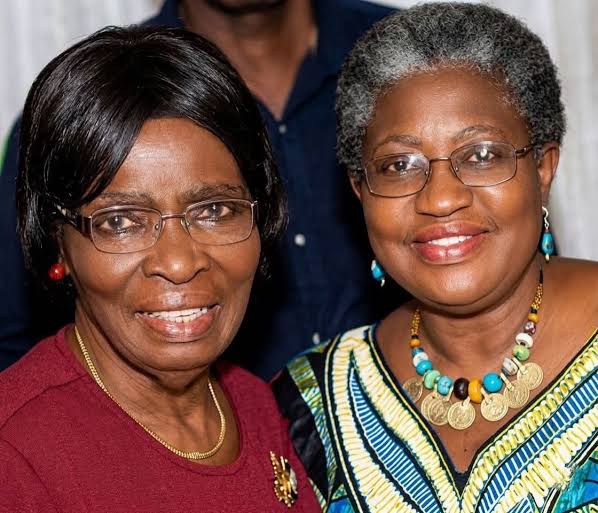
Professor Kamene Okonjo: A Life Beyond Motherhood 

Published

on

Quote “Professor Kamene Okonjo’s life was a testament to the power of scholarship, courage and service. Beyond raising a daughter who would attain global prominence, she distinguished herself as an accomplished sociologist, an advocate for women’s empowerment and a royal matriarch whose remarkable journey included surviving a kidnapping at 82. At 96, she leaves behind a legacy that transcends family ties and deserves enduring recognition.”

Some women leave behind more than a family name. They leave behind a legacy of intellectual accomplishment, courage, service and commitment to humanity that deserves to be celebrated long after their departure. Professor Kamene Okonjo, the renowned sociologist, women’s rights advocate and mother of Dr Ngozi Okonjo-Iweala, Director-General of the World Trade Organisation (WTO), was one such woman. Professor Okonjo died on Friday, October 23, 2026, at the age of 96. Her death was announced on Sunday October 25, 2026 by the Umu Obi Obahai Royal Family of Ogwashi-Uku Kingdom in Delta State. Her passing has drawn tributes to a life distinguished by academic excellence, dedication to family, community service and the advancement of women. 

Yet, to remember Professor Kamene Okonjo merely as the mother of one of Nigeria’s most internationally recognised women would be to tell only a part of her story. She was an accomplished academic whose contributions to sociology earned her recognition beyond Nigeria. Her lifelong interest in women’s rights and empowerment reflected a conviction that women deserved opportunities to develop their abilities and contribute meaningfully to society. Her life demonstrated that a woman could combine professional distinction with family responsibilities and traditional obligations without allowing one aspect of her identity to diminish the others. She occupied a place in the academic community while remaining a respected figure within the royal institution of Ogwashi-Uku.

Professor Okonjo was the beloved wife of the late Professor Chukwuka Okonjo, a distinguished scholar and former Obi of Ogwashi-Uku. Their marriage lasted 66 years, representing decades of companionship, family building and shared responsibilities. Together, they raised children who made their own contributions to society, including Dr Ngozi Okonjo-Iweala, who served as Nigeria’s Finance Minister before becoming the first woman and first African to lead the WTO. Her daughter’s international accomplishments have naturally brought additional attention to the family. However, the late professor’s own scholarly achievements and advocacy for women’s advancement deserve recognition in their own right. The achievements of children may bring honour to their parents, but they should never obscure the individual contributions of those parents.

one of the most dramatic chapters of her life occurred in december 2012, when she was 82 years old. On December 9, 2012, Professor Okonjo was kidnapped in Delta State, an incident that attracted national and international attention. Her abduction was particularly disturbing because of her advanced age and the public position occupied by her daughter, who was then serving as Nigeria’s Finance Minister under President Goodluck Jonathan. Reports at the time indicated that her abductors demanded a substantial ransom. The incident also generated widespread concern about insecurity in the Niger Delta and the vulnerability of citizens to kidnapping. For five days, the family endured uncertainty over her whereabouts and safety. The situation became a major national concern, with security agencies intensifying efforts to secure her release.

On December 14, 2012, the then Delta State Governor, Emmanuel Uduaghan, confirmed that Professor Okonjo had been released. According to reports, she was dropped off near her residence. The governor attributed her release to pressure from security operatives, although the precise circumstances surrounding the incident remained unclear. Her release brought relief to her family and the wider public. At 82, she had survived an ordeal that exposed the frightening reality of kidnapping in Nigeria. Her experience remains a reminder that insecurity does not discriminate by age, social standing or family background. Nearly 14 years later, Professor Okonjo’s death at 96 closes a remarkable chapter in the story of a woman whose life encompassed scholarship, motherhood, royal responsibilities and personal resilience.

She leaves behind children, grandchildren and great-grandchildren, as well as a legacy that extends beyond her immediate family. The royal family described her as a woman of exceptional intellect, humility, compassion and grace. These qualities, alongside her academic achievements and commitment to women’s empowerment, form an important part of her enduring contribution.  Her passing also offers an opportunity to reflect on the often-overlooked contributions of women whose influence may be overshadowed by the public achievements of their relatives. Behind many prominent Nigerians are parents, mentors and family members whose sacrifices, values and personal accomplishments helped shape their own journeys.

Professor Kamene Okonjo deserves to be remembered not simply because she was the mother of a globally influential woman, but because she was herself a scholar, an advocate and a woman who lived through extraordinary circumstances with dignity. At 96, she had completed a long journey marked by intellectual distinction, family devotion and service. Her story reminds younger generations that a meaningful life is measured not only by longevity or public recognition, but also by the knowledge imparted, the people encouraged and the causes advanced. As the Okonjo family and Ogwashi-Uku Kingdom mourn their matriarch, her life offers a fitting lesson: true legacies are built through years of purposeful living, and their influence continues long after their authors have departed. May her soul rest in perfect peace.

By:  Sylvia ThankGod-Amadi

Continue Reading

Opinion

On Ancestrial Worship: My Take

Published

on

Quote: An African who invokes the spirits of his ancestors is branded an idolater, yet Christians invoke Abraham, Isaac and Jacob in prayer. Why is one tradition revered while the other is condemned?”  

This is the concluding part of this story, published first in our October 30, 2026 edition. 

… Given the fact that I was the chairman of the Sports Committee of Rivers State School of Basic Studies (SBS no Captain Elechi Amadi Polytechnic CEAP) and the Commissioner of Youths and Sports was billed to flag off the school games that day, I could not join them on the trip. It was in view of the above reality that I planned the return trip to Owerri for Wednesday. Resultantly, I asked them to keep the date since Chief Abasi was part of the process, knew the venue and had the details of the contract. They pulled off the short driveway and I waved them goodbye;  I watched the beautiful and effervescent Auntie Alice, the  diligent and organized Chief AM Abasi and the very dutiful driver roll out of the gates of SBS compound on the journey to Owerri.

At the end of the visit by the Honorable Commissioner and the hectic day of the flag off, I retired to my apartment. At about 7.30pm, the phone rang, I picked and it was the unmistakable voice of Chief Ranami Abah; he sounded relieved. In some excitement, he said “Ehe, Jason, you people are back”. I answered in the negative and explained why I did not travel with them. In a voice laden with worries, he narrated all the efforts he had made to reach them and wondered if I could Mr. Nwaorgu. Unfortunately, I only had Nwaorgu’s office number and didn’t know if he had a phone at home. I quickly drove to Chief’s house where his friends had gathered. HE Melford Okilo, HRH Ere, Dr. LongJohn etc. were there and thoughts went in every direction.

Back to my apartment, at about 1am, a dog barked in the direction of the school gate. In the stillness of the night, the bark echoed and reverberated across the campus. Shortly thereafter, another dog barked and then another and, in what came across as a relay, the  barks came towards the direction of my area of the compound. As soon as the next-door neighbor’s dog stopped barking, there was an eerie sign of non-human presence in my bedroom.  Christy, my spouse, sat up quickly in bed and nervously said “I can perceive Auntie Alice’s perform”. At that, I sat up immediately and having had OBE at Georgetown University Medical Center, Washington DC in May 1975, I knew that consciousness survives the death of the human body. With the eerie presence coupled with Christy’s observation, I spoke thus: “Auntie Alice, you can see and hear us but we can neither see  nor hear you.

Under normal circumstances, you should not see us the way we are now. You have left your body in what we refer to as death but you know that your spirit is still alive. By coming close to us, you could hurt us without meaning to. So, go on in your new setting. I promise to ensure that Chief gives you a befitting burial”. At that point, the air of strange presence cleared, the dog next door barked and the relay of barks commenced in reverse order until the dog at the gate barked. In total shock, Christy looked at me with wide eyes and, in Ogbia dialect, she nervously muttered a sentence that included a word that means “wizard”. By the way, Auntie Alice had visited me once and, in a very pensive mood, told me that she knows that she will die before Chief.

That all she asks is that Chief should give her a befitting burial. Christy and I sat frozen; it was obvious to us that Auntie Alice had died. What about Chief Abasi and the driver? Our thoughts went wild in every direction until we fell asleep. The next morning, Christy and I went to Chief’s house where his friends and relatives had gathered; the atmosphere was dreary and everybody wore a long face and talked In whispers. Christy and I knew something they didn’t but we kept it to ourselves. At about 8.30am, I put a call across to Mr. Nwaorgu and the chilling truth came out: Chief Abasi and Auntie Alice did not keep the appointment; not on Wednesday neither on Thursday. A search party, which Chief insisted on leading, set off on the route of the journey.

For some reason that I do not recollect now, I was not part of the party. As the search party found out, at Umuapu, the blue Peugeot 504 rammed into a stationery truck. Auntie Alice and Chief Abasi died on the spot; the driver, who survived the collision, died on the way to the hospital at Owerri.  Today, I recollect vividly that throughout that experience, I did not pray to God or to Him through Jesus Christ not to talk of the Virgin Mary of Catholicism. This is not to say that I do not believe in God; I do without any reservation whatsoever. I even pride myself saying that I believe in God more that a majority of the Clergies and Clerics that abound in institutional religion. However, I consider the issue of Jesus being “the only begotten Son of God” through whom I must pray, as preposterous and anti-Christ.

I believe that everyone in humanity is  directly connected to the Divine. Therefore, we do not need any intermediary, not the priest, Jesus, Imam or whoever to connect with the Source if only we keep clean this Temple of God, which our soul occupies for now.  In the universality of the ministry of Jesus, he did not claim divinity and an object to be worshiped, NO!!! Rather, he gave humanity an effectual template through which to strive and achieve what he achieved and even more. Hear him “Verily, verily, I say unto you, He that believeth on me, the works that I do shall he do also; and greater works than these shall he do” (John 14:12)   Osai and his son Lazarus heard my cry and, I believe, played a role in the mystery of the narrative; Auntie Alice listened to me and heeded my advice.

Our ancestors have not gone far from us. They exist in another dimension from which they see and influence our daily lives in this dimension in the multiplicity of dimensions in God’s creation. Metaphorically and allegorically, Jesus referred to this as “many mansions in my father’s house (John 14:2). My advise to the reader is thus: in your daily prayer to God, feel free to invoke the spirit of your ancestors; they are here with us and they know and understand our problems and feel for us much more than Abraham, Isaac and Jacob. With a clean heart, mind and hand; with absolute belief in God and with a spirit of gratitude and contentment you command your circumstance. “He that hath ears to hear, let him hear”.

By: Jason Osai

Continue Reading

Trending