
Opinion
Encouraging Workers Through Incentives

The mere mention of the word “incentive”, brings to mind, things that motivate or encourage someone to do something or more of what he does. It is synonymous with words such as inducement, stimulus, motivation etc. In short, incentives are payments or concession to stimulate greater output or investment.
In some quarters, a regular and prompt payment of a worker’s wage could serve as a worthy incentive. In other clime, monetary gift provided to an employee based on performance, could be considered a way to entice the employee to continue delivering positive results.
The discretion of what could be good enough to serve as a motivational device for a desired action or behaviour remains the employer’s. But ultimately, they are tools managers or employers of labour use to encourage productivity. Suffice it to say that the study of incentive is central to economic activities.
Thus, only stagnant entrepreneurs or employers would refuse to adopt incentive plan, as only such could have the advantage of seeing their bottom line rise in direct proportion to overall output.
However, it only takes a manager who appreciates the worth of his assets to treasure same. No worthy farmer would see the importance of his implement and refuses to sharpen it for better performance. Same goes to many employers of labour in Nigeria.
Many of them have failed not because they did not have the money to grow their business but because they either did not know how to use their workers for better results, or they refused to acknowledge them as the greatest assets at their disposal.
In his salute of Nigerian workers over their resilience amid tough economic challenges, Chairman, Governing Board of the Niger Delta Development Commission (NDDC), Senator Victor Ndoma-Egba, said, “workers the world over, are undoubtedly the greatest assets of every nation”.
In the same vein, as Nigerian workers joined the global comradeship to commemorate this year’s May Day, the President of the Nigerian Senate, Dr. Bukola Saraki, described Nigerian workers as pillars and driving force of the nation.
I believe the duo did not pass their remarks on grounds of flattery, but in acknowledgement of the human capital as the bedrock upon which development revolves and thrives.
Apart from verbal applause, those who acknowledge the worth of their workers as their greatest asset, appreciate them periodically. From regular appraisal that leads to promotion and increase in wage, training programs, oversee tours, to prompt payment of wages, the worker sees an enabling environment to work.
This is why administrators and managers of human resources who crave for success in their callings, invest highly in human capital in recognition of their unquantifiable role towards the well-being of the organisation or society that employs their services.
From the small and medium enterprises that contribute over 47 per cent to Nigeria’s Gross Domestic Product (GDP), to the civil servants who are the engine room of the government, down to the unregistered business owners who work to make living for themselves and their families, it is difficult to quantify their contributions to the sustainability of the nation’s economy. Their efforts, therefore, can only be appreciated by creating an investment as well as work friendly atmosphere that will bring out the best in them. This measure will also go a long way to create industrial harmony.
The Nigerian worker is faced with the challenge of a rather depreciating salary in the face of a rising cost of living in the country. His morale is further dampened by the mere thought of the rigours of processing his retirement documents and the fear of not having his pension and gratuity paid as at when due. Because of the inability of his employer to implement his incremental in the course of his job, he sees no enthusiasm in his job.
Luckily, the Federal Government recently raised the hope of Nigerian workers with the recommendation of a 29-member minimum wage committee that will work out modalities for a new minimum wage that would bring relief to the workforce. Recall that this same committee was set up a year ago with no tangible result so far. However, it is hoped that something concrete comes out of the new committee.
There is no doubt that it is the workers’ contribution to the economy that keeps the nation moving forward. They are the life wire of the country. Therefore, if Nigerian workers be seen as the goose that lays the golden egg, then they deserve better treatment.
Sylvia ThankGod-Amadi



Quote: “Democracy is not
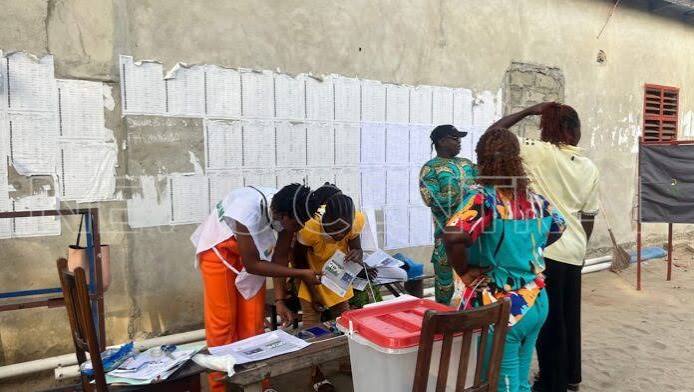
As the 2027 general elections
Organisers said they had
Police intervention
In Kaduna, the ADC accused
These claims require prompt
These rights apply equally to
No ambition, party or
By: Sylvia ThankGod-Amadi
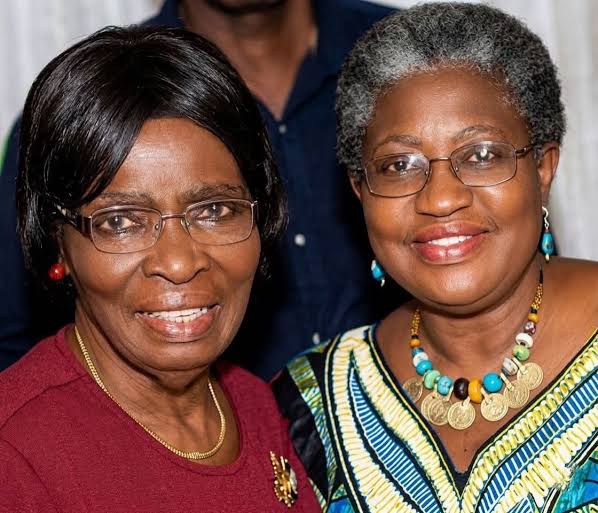
Quote “Professor Kamene Okonjo
Some women leave behind more t
Yet, to remember Professor Kam
Professor Okonjo was the belov
one of the most dramatic chapt
On December 14, 2012, the then
She leaves behind children, gr
Professor Kamene Okonjo deserv
By: Sylvia ThankGod-Amadi

Quote: An African who invokes
This is the concluding part
… Given the fact that I was
At the end of the visit by the
Back to my apartment, at abo
Under normal circumstances, yo
That all she asks is that Chie
For some reason that I do not
I believe that everyone in hu
Our ancestors have not gone fa
By: Jason Osai
-
Rivers3 days ago
NUJ Set To Attend UNIPORT’s 217th Inaugural Lecture
-

 News3 days ago
NJC Suspends Three Judges, Sanctions Eight Others
-
Politics3 days ago
Atiku Kicks-Off 2027 Campaign, Promises To Tackle Nigeria’s Challenges
-

 News5 hours ago
Army Recovers X Account After Hack Attempt
-
 Featured3 days ago
APC Presidential Campaign Storms PH, ‘Morrow
-
News3 days ago
FG Explains Supply Disruption As Power Generation Drops To 3,659MW
-
Metro3 days ago
Port Harcourt Prepares For 10,000 Runners As International Marathon Returns
-

 News3 days ago
Bille Gas Leak: Coalition Tasks FG On Proactive Measures