
Oil & Energy
CSOs Task Stakeholders On Oil Sector Repositioning

Civil Society Organizations (CSOs) in the oil and gas sector in Nigeria rose up from a one-day capacity training in Port Harcourt, the Rivers State Capital, with resolution calling on the Federal Government, oil company operators, oil host communities and other stakeholders to take urgent steps aimed at repositioning things for sustainable development of the sector .
The groups called for openness, transparency and community participation in the way and manner licensing of oil blocks and contracts are being awarded.
Picking holes with the secrecy surrounding awards of licences and contracts they said the situation created so much doubt and loss of confidence in the system as such has contributed in acrimony and restiveness amongst stakeholders.
They also called for reasonable end time lag for gas flaring and the need to extend the on-going UNEP clean-up exercise in Ogoni to other parts of the oil-rich Niger Delta, noting that most parts of the region suffer huge environmental degradation occasioned by oil exploitation activities.
According to them, restricting the clean-up exercise to Ogoni would not solve the environmental pollution in the region, adding that the evacuation of dried well and other oil installations should equally be extended to the illegal oil refineries since leaving such illegal platforms would continue to generate more pollution to the environment.
Other areas considered included, provision of alternative livelihood to people of the host communities whose means of economic survival, farming and fishing, had been destroyed, urgent implementation of the modular refineries promised and the need to involve host communities.
They blamed the crises and underdevelopment issues to fraudulent practices in the sector and emphasized that only transparent practices with adherence to global standard would bring about sustainability in the sector.
The groups noted further that transparent metering system in oil and gas should be urgently introduced to stop the large-scale fraudulent practices which had denied the country so much funds for her development.
One of the resource persons and Senior Project Officer, Environmental Centre for Oil Spills Dr. Benjamin Ubleble, said poor governance system in the nation’s oil and gas sector was responsible for the numerous social, health, environmental and economic challenges facing the nation and called for transparency in order to reposition things in the sector.
In his own submission, Senior Project Officer, Civil Society Legislative Advocacy Centre (CISLAC), Mr. Kolawole Banwo, stressed the need for urgent passing into law of the Petroleum Industry Governance and Institutional Framework Bill (PIGB) to ginger confidence in the stakeholders.
He advocated for a bill that would promote investment drive to optimise revenue generation and smooth operation.
Coordinate of the programme, Peter Egbule, commended the participants and urged them to remain responsible advocates of non-tribal, non-religions interest, stressing that it is only open mindedness, devoid of selfish interest that could help the system.
He also enjoined them to strive beyond good decision and ideas but to take actions in order to make the needed impact.
Chris Oluoh



By Felicity Bradstock for Oilprice.com 16
The State Commissioner for Works (Rural Roads) and Public Information, Charles Aniagwu, disclosed this at a press conference in Asaba, weekend, noting that the initiative was part of wider reforms aimed at opening up the power sector to private investors.
Aniagwu, who was accompanied by the Executive Assistant to the Governor on New Media, Felix Ofou, said the state was exploring alternative sources of electricity to support businesses, households and communities while reducing pressure on the national grid.
He said the government was particularly interested in exploiting Delta’s abundant natural gas resources for power generation, pointing to the Kwale Free Trade Zone, which is part of the state’s special economic zone, as a major opportunity for investors.
According to him, prospective investors were taken to the zone during the state’s recent economic summit to enable them to assess the availability of gas as a key raw material for electricity generation. ComparePower Rates
The commissioner explained that generating more electricity locally would not only increase supply in Delta but also free up power on the national grid for use by other consumers.
Aniagwu cited the 8.5MW Independent Power Plant located behind the state secretariat in Asaba as an example of what could be achieved through alternative power sources.
He said the facility had enabled the secretariat complex to operate independently of the national grid, thereby making the electricity that would otherwise have been consumed there available to other users.
He added that the planned 120MW partnership with Supply Power would further strengthen the state’s electricity supply capacity and provide a more reliable power base for small and medium-sized enterprises.
Aniagwu said the state government was also intervening in areas traditionally regarded as the responsibility of electricity distribution companies because inadequate power supply could no longer be allowed to constrain economic development. LearnQuantum Physics
He identified the extension of the electricity grid from Abraka towards the Ndokwa axis as one of the interventions being undertaken to connect more communities to electricity.
The commissioner, however, raised concerns over the burden placed on communities that are often required to provide transformers and other electricity infrastructure, only for distribution companies to take over the facilities and subsequently collect electricity bills without adequately accounting for the investments made by the communities.
He said the state would continue to support efforts aimed at energising communities, noting that improved electricity supply would stimulate businesses, create jobs and help tackle social problems associated with unemployment and idleness.
On regulation, Aniagwu said the government was working with the Ministry of Energy and a committee set up to develop an appropriate regulatory framework for the state’s emerging power sector. SwitchEnergy Plans
He said the proposed energy commission would be responsible for regulating new electricity producers, determining appropriate tariffs and overseeing distribution networks.
The commissioner stressed that liberalising the sector required effective regulation to protect consumers and investors, adding that decisions on power distribution infrastructure, including the use of overhead or underground lines, must take into account the peculiarities and safety requirements of each location.
He warned that power expansion without adequate regulation could expose residents to electrocution and other hazards, stressing the need to protect electricity infrastructure while ensuring consumers were not subjected to unfair pricing.
Aniagwu said the state government’s broader objective was to build an efficient and sustainable electricity market driven by private investment and capable of powering businesses, households and communities across Delta State.
-

 Sports4 days ago
Nigerian Trio Target Titles At PFL Africa Finals
-
 Education4 days ago
FCE Yola Graduates 3,555 Teachers , Seeks Upgrade to University
-
 Niger Delta4 days ago
Diri Restates Stance On Lagos-Calabar Coastal Highway
-

 Niger Delta4 days ago
C’River, NUJ Pay Tribute To Late Guardian Editor
-
 News4 days ago
NDLEA Recovers Tons Of Illicit Drug Consignments In Nine States
-
 Opinion4 days ago
Checking Voter Apathy In Nigeria’s Electoral Process
-
 Politics4 days ago
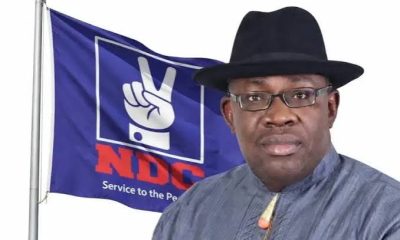
2027: DICKSON’S EX-ALLY VOWS TO WORK AGAINST NDC INTEREST IN BAYELSA
-
Opinion5 hours ago
Ancestorial Worship: My Take (1)