
Opinion
Of Import Bans And Investment Realities

In the wake of
Nigeria’s economic woes, the leadership of the Federal Republic of Nigeria did not need any diviner to educate it on the need to diversify its economy as an easier approach to tackling its problem.
Prominent among possible sectors of interest in the diversification agenda was agriculture, a choice that was not based only on its affordability in operations, but also on the premise that it is one venture patronized by many, especially at the grassroot. It has the potential if adequately harnessed, to impact positively on the economy in quite a very short period, while relieving Nigerian populace of the repression caused by the fallen crude oil price.
In what seemed like a swift move, the government quickly placed a ban on the importation of frozen poultry foods, predicating it on grounds of risk to health of Nigerian consumers. Thus, the former NAFDAC Director-General, Dr Paul Orhii said “the risk in the products comes as a result of substances that can predispose one to kidney, liver and lung diseases, as well as certain types of cancer and drug resistant, bacterial infections, among others”.
Orhii was not alone in his thought, other medical experts confirmed that consumption of imported frozen poultry products could be a silent killer because they may not show symptoms before attacking their victims. Dr Tito Adebanjo, an expert in Animal Medicine, said the use of formalin, a chemical used to embalm corpses and other dangerous substances to preserve poultry products is indeed harmful to health.
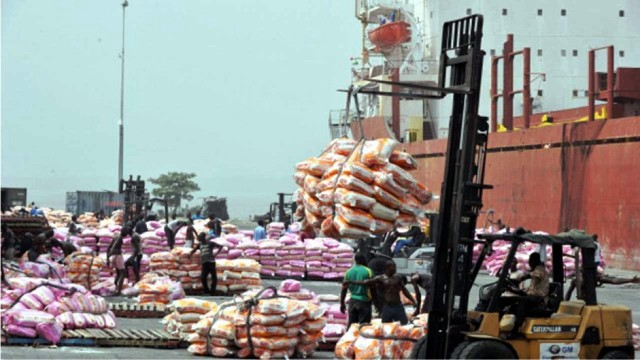
Nonetheless, underneath the health implications of these products in question, the importation also was viewed to impede local poultry production as farmers have to contend with low market demand for their products basically because the imported is not only cheaper in cost, it is already processed and quite easy for consumers to handle. For this reason, about 50 million Nigerians are reported to eat imported chicken, turkey, and fishes on daily basis.
The percentage of Nigerians that patronizes these imported frozen foods should bother the government and our policy makers to rise a little above making policies without putting checks in place to achieve its workability.
The fact that the public may not be aware of the magnitude of the health harzards resulting from consuming meat containing drug residue, does not exonerate them from the adverse effect and so must be of serious concern to those who know even better.
However, every policy is subject to periodic evaluation to assess its level of achievement and to know what next step to take. The banning of the importation of frozen poultry products in Nigeria by the Federal Government, may be of no effect if conscious efforts are not made to check and evaluate its level of implementation as well as its impact on both the economy for which it hitherto boosted and the health of the Nigerian populace.
Again, aside the realization of the health implications of these products, the fact that the foods are consistently smuggled in, and massively consumed, irrespective of the purported ban, indicates that there is obviously a wide gap in the local market that needs to be bridged according to John Ayodele, an investment analyst.
Much as the ban on importation of frozen poultry products opens a window of investment opportunity for the local market, the Nigerian government should be sincerely willing to help the local farmers reposition the economy. It therefore means that there is every necessity to strategise and come up with more proactive measures to make things work which must start without delay.
Ordinarily, the ideal should have been to equip the local farmers before the decision to ban. However, it is quite glaring that farming in subsistent measure is not the solution to bridging this obvious gap. Hence, there is the need to invest in slaughtering and de-feathering machinery, packaging and storage facilities which only a handful of Nigerian farmers can afford, those who are privileged to be in government perhaps. What then becomes of the rest 90% of farmers who do not have the financial muscle to achieve this feat, remains a puzzle.
I am, therefore, of the opinion that closing the borders is a step in the right direction but would amount to a misplaced priority if no concrete measure is taken to bridge the gap so created by our preference for imported foods.
Making the local market boom no doubt would also save the custom personnel at the borders the temptation to contend with smugglers.
Sylvia ThankGod-Amadi




Quote: “Ogoniland does not
The latest attack by Chief
Instead, the gathering and
The proposal for a unified
The question should be: who
It is easy to criticise
The people are looking beyond
onest people can reach
Society must therefore

Quote: “Privilege should
There is an old saying that
While motivations cannot
A person who benefits from a
This is why citizens should
We must not assume that
By: Michael Abraham

Quote:”Although the Federal
The recent outburst by the
The senator also alleged
They connect ports, airports,
To address these challenges,
Rwanda and Morocco, for
FERMA should also prioritize
Many Nigerians have asked
-

 News5 days ago
RSG Targets Nine Million Residents in Mosquito Net Distribution Campaign
-

 Oil & Energy5 days ago
Aiyedatiwa Signs New Electricity Bill
-

 Maritime5 days ago
Marine Minister Commends President Tinubu On NPERA Bill Assent
-

 Oil & Energy5 days ago
NLNG Commissions Research And Innovation Centre In RSU
-

 News5 days ago
KenPoly Holds Eight Convocations, August 29
-

 News5 days ago
RSG Begins Another Phase of Projects Commissioning Today
-

 News5 days ago
RMAFC Completes Revenue Sharing Review, Proposes New Pay
-

 Maritime5 days ago
NAGAFF Petitions IGP Over Alleged Maritime Police Harassment