
Opinion
Economy:Agriculture As a Panacea

Since 1999 when Nigeria returned to democratic path,
not much has been recorded in terms of democratic dividends. That was probably the reason the electorate believed that somebody had to take the political burden of making change in Nigeria.
General Muhammadu Buhari (rtd) pushed himself forward for the necessary change, with the promise to clearing the path for Nigeria to join the league of countries which can boast of the best economic climate in the world.But since the present government came into power, we have not seen the change promised us by President Buhari and his All Progressives Congress (APC).
The cost of living is going beyond the reach of an average Nigerian, while electricity supply has been epileptic even in the face of high tariff. The ruling All Progressives Congress (APC) has not developed any economic policy different from the one left by the Peoples Democratic Party (PDP) that ruled for sixteen years of abject poverty.
The price of oil which is the mainstay of the nation’s economy has dropped sharply on the international market, while the four refineries which are obsolete with corrupt officials are still producing below capacity.
The government is obviously aware of these problems; but the solutions to most of them lie in long term infrastructural changes, the privatisation of the oil refineries, and high investment in agriculture which will ease the poverty being experienced.
For example, when Nigeria became independence in 1960, its GDP stood at N2493.4m with a contribution of 64% from agriculture, forestry and fishing sectors to the economy.
It is significant to note that agriculture recorded tremendous self-sustaining growth and expansion before crude-oil called black gold became main foreign exchange earner. Revenue from agriculture was appropriately used at regional levels to build landmark social and economic infrastructure and for provision of basic services like education, health, water and electricity supply.
Institutions like University of Ife, now Obafemi Awolowo University (OAU), Liberty Stadium, Ibadan, Cocoa House, and Nigerian Broadcasting and Television Services in the Western Region; Ahmadu Bello University, Zaria in the North; University of Nigeria Nsukka, in the Esatern Nigeria were not built with foreign loans, but proceeds from cocoa, groundnut , cotton, rubber and palm oil.
The situation changed immediately we discovered oil in Bayelsa State.The government forgot agriculture.
Strategically, trade is the power house of growth. It creates employment, improves trade balances, lower the prices of goods and generates sources of income through tariffs and tax revenues for the government and the people.
The essence of my argument is that we need to re-evaluate our developmental strategies, so that it will ensure political stability in the long run if our economy is not based on crude oil only.
It is on record that in Nigeria, our common enemies are corruption and insecurity. These challenges are the biggest threat to the nationhood.
One must acknowledge President Buhari’s sincerity in trying to clean the Augean Stable left by previous governments. Unfortunately, most of the people around Buhari are wasting his good intention, because they are stakeholders in the previous administrations.
The truth is that the APC has failed to meet the bench marks of good governance and the growth of Nigeria’s struggling economy. Buhari’s constant travelling to solicit for foreign investors and assistance has not yielded any dividends to the ailing economy.
As nothing can be achieved in a state of anarchy, the prevailing state of insecurity in the country is such that if it continues, no meaningful development can be achieved in the country. Worst, communities which hitherto shared good and conducive neighborliness are now at war with one another due to disputes over land.
The recent persistent attack on communities, killing, kidnapping of indigenous people by Fulani herdsmen, etc have hugely created an atmosphere of insecurity to lives and property. A circumstance of this nature cannot give rise to social and economic growth of the nation.
It pains me how a country that calls itself a giant of Africa with more than enough mineral resources and fertile land brings hardship and abject poverty to the majority of its citizens.
It is time for a new thinking and a new economic order that must lift us from the cycle of poverty and inequality. We need to fight poverty with new socio-economic approach by investing in agriculture and promotion of new trade.
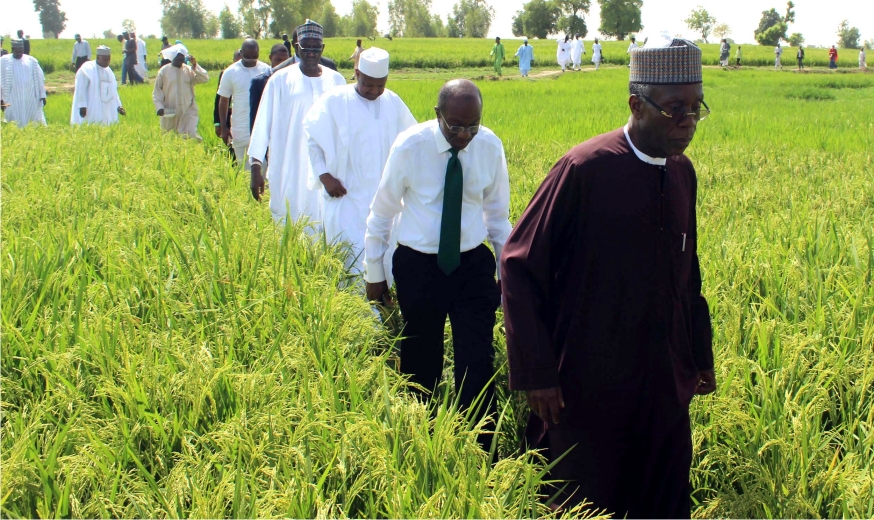
Since the country’s economy has taken a different turn, I urge Nigerians to join hand with the present administration to make agriculture the number one priority in its development efforts. The aim is to eliminate the present large food deficit by increasing production and thus improving the nutritional levels of all Nigerians.
The government needs to raise rural income and also provide a base for the country’s industrial growth by stepping up production of agricultural raw materials to meet Nigeria’s need and to have surplus for export with renewed vigour to build a country which is united , strong, viable and free, so that generation of Nigerians will live a much better life.
Karibo-Nelson writes from Port Harcourt.
Jinbobaraye Karibo-Nelson




Quote: “The Flamingos have conquered the world; Nigeria must now rise to its responsibility of nurturing the next generation of champions.”
Sometimes, sporting victories
More significantly, they
Umejiaku deserves special
Umejiaku received the award
Nigeria has now broken into
For too long, young girls in
But beyond the reward, this
As Nigerians celebrate this
By; Calista Ezeaku
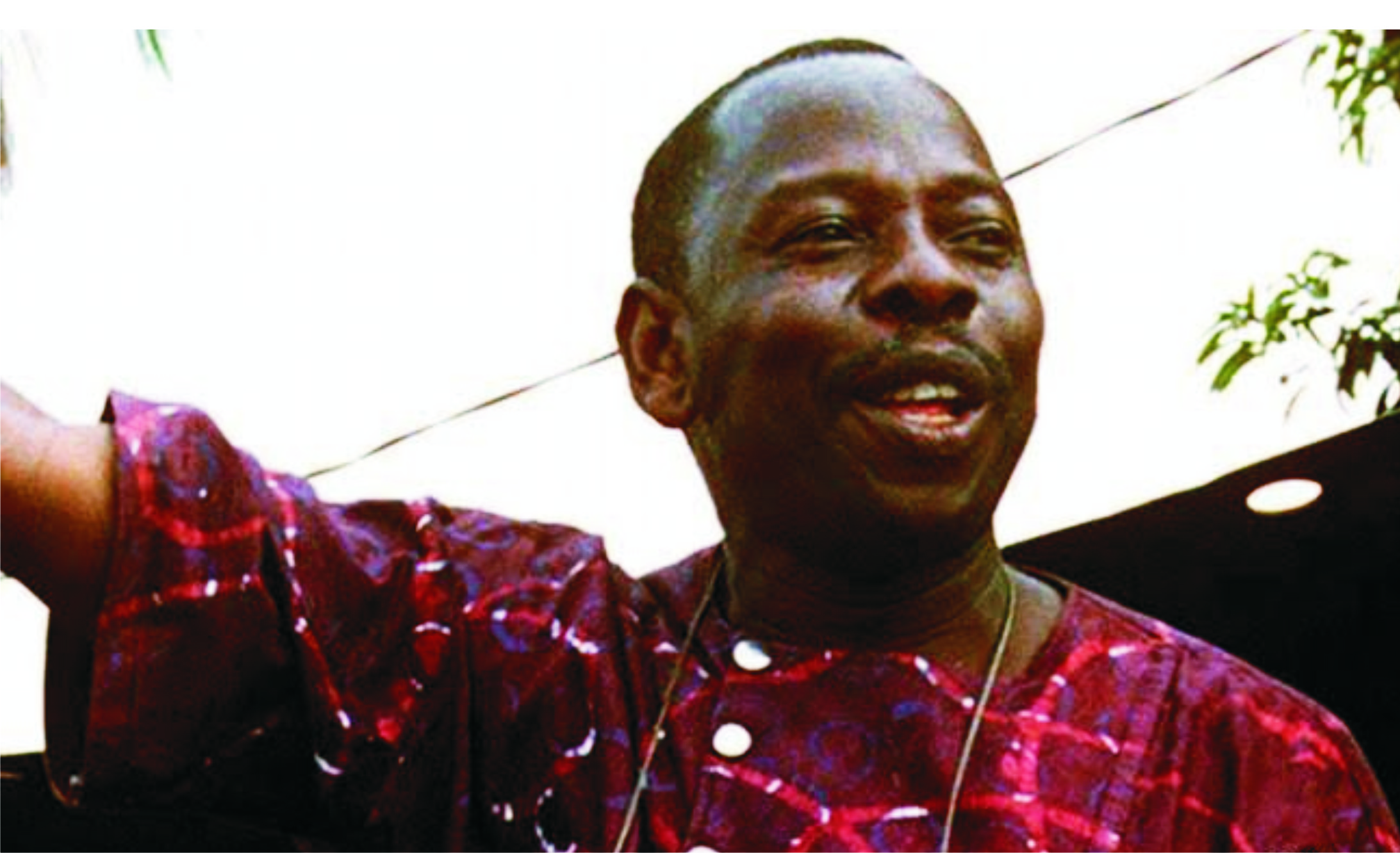
On November 10, 1995, the Nigerian military government of General Sani Abacha executed Ken Saro-Wiwa and eight other Ogoni leaders after a deeply controversial trial. Their deaths marked one of the darkest chapters in Nigeria’s history. At a time when fear silenced citizens and sycophancy flourished around military power, Saro-Wiwa chose to confront tyranny. Many Nigerians retreated into silence, while others praised the regime to secure favour. He knew the risks, yet refused to abandon a people whose land had been devastated by oil exploration and whose lives remained trapped in poverty. His courage arose from the conviction that public responsibility sometimes demands resistance to authority. Saro-Wiwa understood that speaking against a military government could lead to imprisonment or death.
Nonetheless, he believed the suffering of the Ogoni people demanded a courageous response. While oil was extracted from their land, they were left with polluted rivers, damaged farmland, declining livelihoods and an environment hostile to human survival. Fishing grounds and sources of livelihood were threatened, while the people struggled to secure basic amenities. The wealth beneath their soil brought neither adequate development nor a fair share of national resources. For him, silence in the face of injustice would have amounted to complicity. Through the Movement for the Survival of the Ogoni People (MOSOP), he organised a peaceful campaign that took the Ogoni question to the international community. MOSOP gave ordinary people an organised platform through which to express their grievances and insist on recognition.
The Ogoni Bill of Rights, presented to the Federal Government in 1990, demanded political autonomy, economic justice, environmental protection and control over the people’s resources. The campaign exposed the human and ecological costs of oil operations, particularly those associated with Shell, and challenged the apparent alliance between corporate interests and an unresponsive State. The Ogoni struggle became a defining expression of minority rights and environmental justice in Nigeria and Africa. Saro-Wiwa’s writings and mobilisation drew attention to communities treated as expendable because of their limited population and political influence. He argued that numerical strength should never determine a people’s value or rights.
A minority community does not become less deserving of justice because it cannot command electoral numbers or political power. In Nigeria, every ethnic group deserves dignity, protection and a fair opportunity to benefit from the commonwealth. Rather than respond to peaceful agitation with dialogue, the Abacha regime resorted to repression. Ogoni leaders were harassed, detained and killed; others fled into exile. The crisis intensified after four Ogoni chiefs were killed in May 1994. Saro-Wiwa and other MOSOP leaders were arrested, tried by a special tribunal and executed despite international appeals for clemency and serious concerns about the trial’s fairness. The executions drew worldwide condemnation and intensified scrutiny of Nigeria’s human-rights record and oil companies in the Niger Delta.
They demonstrated the danger of using State institutions to suppress peaceful demands. The proceedings remain a reminder of the need for judicial independence and due process. Saro-Wiwa’s courage rested on the conviction that justice must be pursued despite the cost. His method combined non-violent resistance, public education and grassroots organisation. His struggle recalled the civil-rights campaign of Martin Luther King Jr. and the power of peaceful mobilisation against injustice. Saro-Wiwa linked environmental degradation to political exclusion, economic exploitation and the denial of democratic rights. Oil-producing communities, he insisted, should not remain zones from which wealth is removed to develop other parts of the country.
Their people must benefit through roads, schools, healthcare, jobs and clean water. Resource extraction carries a duty to protect host communities. His argument extended to the structure of the Nigerian federation. He challenged a revenue-allocation system that made oil-producing communities bear the environmental and social costs of extraction without commensurate benefits. Like advocates of fiscal federalism, he believed resources should be managed and shared equitably. He envisaged a society in which no community would be disadvantaged by its size, ethnicity, political affiliation, culture or religion. His vision was a country bound together by justice and equal citizenship. Saro-Wiwa was also a gifted writer, dramatist and public intellectual.
Through books, essays, plays and television, he documented Nigerian society’s contradictions and challenged abuses of power. His popular television series, Basi and Company, demonstrated his creative range, while his leadership of the Association of Nigerian Authors encouraged writers to engage national questions. He believed literature should not be detached from society’s struggles. His pen exposed environmental injustice, political repression and the dangers of silencing courageous voices. He used storytelling, satire and drama to shape public consciousness and expose social contradictions. His literary achievements gave his activism wider reach and made the Ogoni experience part of national conversation. His commitment to the Ogoni people extended beyond the oil question.
During the Civil War, he worked to protect his vulnerable community. He urged younger generations to reject subservience and complacency and pursue change through lawful, peaceful means. Citizens, he believed, must not surrender their responsibility to challenge wrong doing. An injury to one community threatens the rights and security of all. The return to democratic government in 1999 and the establishment of the Niger Delta Development Commission, the Ministry of Niger Delta Affairs and the Hydrocarbon Pollution Remediation Project (HYPREP) are among developments that have kept the region’s demands in public view. Saro-Wiwa did not create these institutions, but his movement helped expose the urgency of intervention and sustain pressure for redress.
His death made it harder to ignore the Niger Delta’s environmental and political grievances. Yet, interventionist institutions do not prove that the original demands have been met. Their effectiveness depends on competent leadership, transparent spending, measurable outcomes and community participation. Yet, thirty-one years after his execution, the central concerns of the Ogoni struggle remain unresolved. The HYPREP-led clean-up has offered hope, but many residents await meaningful improvements. Questions persist about the programme’s pace, quality and transparency, and whether its benefits reach ordinary people. A clean-up should be judged not by ceremonies or contracts, but by restored land and waterways, safe drinking water, improved livelihoods and better public health.
It must include long-term monitoring to ensure treated sites remain safe. Residents deserve information about contamination, remediation methods and completion timelines. Reports that water projects in Gwara and Ebubu Communities, in Khana and Eleme Local Government Areas respectively, failed weeks after commissioning have raised further concerns. If confirmed, the failures would indicate weaknesses in supervision, procurement and quality control.
To be continued in our next edition.
Taneh Beemene
-
Business2 days ago
BSG Partiner American Coy To Invest $100m In Gas Processing
-
 Oil & Energy2 days ago
FG To Double Oil, Gas Reserves, Moves To Intensified fresh Exploration
-
Business2 days ago
Seme Customs Intercepts Live Pacific Ridley Sea Turtle
-
Sports2 days ago
Fernandes Turns Down Man Utd Offer
-
Business2 days ago
159m small businesses registered on database in three years – SMEDAN boss
-
Sports2 days ago
Rivers To Host National Table Tennis Championship
-
Maritime2 days ago
Nimasa,China MSA Sign Bilateral Maritime Agreement
-

 Sports2 days ago
Kenyans Win PH International Marathon, Cart Home $10,000