
Opinion
Averting Doctors’ Strike

Should no action be taken,
resident doctors all over the country will in the next five days embark on a nationwide strike. This is sequel to some days of warning strike already carried out and a day solidarity strike taking place today.
According to the President, National Association of Resident Doctors (NARD), Dr Muhammadu Askira, the strike became imminent given government’s sloppiness in addressing critical issues confronting members of the association. He said despite all assurances, government failed to meet their demands which include payment of salary arrears of resident doctors working in some states, immediate payment of December salaries of doctors in some federal hospitals, implementation of entry steps for house officers, among others.
It is unfortunate that every now and then, doctors and other workers in the health sector down tools to press for one demand or the other. The most worrisome thing is the level of suffering patients in public hospitals are subjected to whenever the industrial actions take place.
They are usually abandoned to their fate leading to the death of many while others resort to patronising private hospitals where the cost is usually exorbitant and mostly out of the reach of low income earners.
But the question that must be asked is, why must government wait for doctors and other workers to go on protest before carrying out its responsibilities to the workers? Some of the resident doctors, according to NARD President, have not been paid for up to six months, yet they are expected to carry out their functions diligently. How possible is that? Not only are the incentives not there, the state of the facilities and the environment is very appalling.
I am not trying to stand in the gap for the striking doctors, but the truth is that our health sector needs urgent attention. A few days ago, President Muhammadu Buhari travelled to the United Kingdom to rest and seek medical help. In the words of the Special Adviser to the President on Media and Publicity, Femi Adesina, “President Muhammadu Buhari will take 10 days off and travel to London to rest. During the holiday, he will see ear, nose and throat specialist for a persistent ear infection. The President was examined by his personal physician and an ENT specialist in Abuja and was treated. Both Nigerian doctors recommended further evaluation purely as a precaution”.
Expectedly, many people have taken on the president for travelling for “mere ear infection”, saying the case is not beyond medical practitioners in the country. But how many of these critics, if given the opportunity and going by the poor state of our health facilities and poor attitude of the personnel, will not jet out for an ailment as minor as headache.
The problem did not start today. It has become more or less a norm. Almost all past presidents and their wives travelled abroad for medical treatment. Some came back alive while a few died there. Many well-to-do Nigerians travel to various countries of the world daily, seeking medical attention because evidently, our health sector is in shambles.
The equipments for proper diagnosis are hardly there even in most private hospitals in the country. Yes, we may have the best brains, but how often are they trained to update themselves with the latest developments in the field of medicine?
One constant demand of resident doctors is research grant which will help them in carrying out research for the benefit of the health sector, yet government hardly considers this as important.
Some have argued that the fact that the president’s own doctors recommended that he should travel out of the country for proper evaluation says a lot about the state of our health sector. Incidentally, the President’s doctors are not alone, as some of their colleagues sometimes plainly advise their patients to seek medical help abroad because their cases cannot be handled here in the country. Some hospitals even go to the extent of advertising Indian hospitals and you ask yourself when will this whole thing end? Is it that Indians have better brains than us?
On the contrary, Nigerians have proven to be among the best brains in the world. They excel in all fields of endeavour. Many people who have travelled abroad for medical treatment especially in America and Europe have narrated how they were attended to by Nigerian doctors. And when they asked them why they can’t come back to Nigeria to help Nigerians, they said they cannot cope with all the limitations and problems faced by doctors in the country which inhibit their growth.
So, it’s high time government at various levels invested in the health sector. Recently, the Vice President of the West African Region of the Commonwealth Medical Association, Osaho Enabulele, criticized the current administration for not allocating enough funds for the health sector in this year’s budget.
According to him, Buhari in his election campaign, promised to allocate 15% of the national budget to health but has failed to keep to his promise. This, he said, explains why after a year in office, the health sector remains unappreciated.
The truth is that the health sector needs adequate funding. Nothing short of this will save our dying health sector. Nigeria is rich enough to afford world class hospitals and well trained personnel to cater for our health needs. This will definitely reduce the high rate of medical tourism and in turn save money for the country.
Some analysts have posited that with the strategic location of Nigeria, with standard hospitals, people from other West African countries will be trooping to the country to seek medical attention instead of going to India, Europe and America.
It is also important that our government prioritises the welfare of doctors and other health workers. We cannot afford to have our medical facilities shut down every now and then just because one group of the health workers or the other is on strike.
To revive our health sector and bring it to an appreciable standard, government, doctors, heath workers and other stakeholders must play their various roles. Most importantly, we need proper planning and well-articulated federal policy on health.
Calista Ezeaku



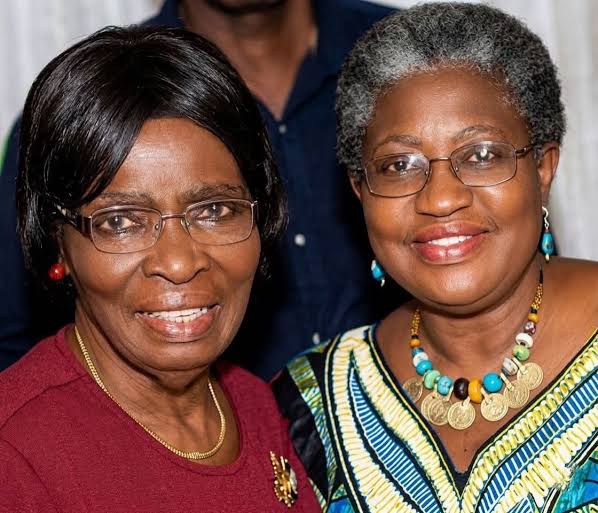
Quote “Professor Kamene Okonjo
Some women leave behind more t
Yet, to remember Professor Kam
Professor Okonjo was the belov
one of the most dramatic chapt
On December 14, 2012, the then
She leaves behind children, gr
Professor Kamene Okonjo deserv
By: Sylvia ThankGod-Amadi

Quote: An African who invokes
This is the concluding part
… Given the fact that I was
At the end of the visit by the
Back to my apartment, at abo
Under normal circumstances, yo
That all she asks is that Chie
For some reason that I do not
I believe that everyone in hu
Our ancestors have not gone fa
By: Jason Osai
The Federal Government’s approval of a N70,000 monthly transport intervention for public service workers for six months, beginning in November 2026, offers hope to employees struggling with the rising cost of living. The agreement with the Nigeria Labour Congress (NLC), reached at a conciliation meeting in Abuja on October 27, is intended to cushion transport costs and ease pressure on workers’ incomes. But for public servants in Rivers State, it raises a familiar question: will the State Government key into the intervention and ensure that its workers benefit? The agreement provides for N70,000 monthly across all levels, for six months. The Federal Government also approved peculiar allowance arrears effective from May 1, 2026, to be paid in three equal instalments beginning in November.
The parties agreed to reconvene after one month to assess implementation. Ultimately, the value of these resolutions will be measured not by announcements but by whether eligible workers receive the money. Transport costs consume a substantial share of many civil servants’ earnings before they can meet household needs. Support for commuting is therefore not a luxury or political favour; it is temporary assistance to help workers remain at their jobs without sinking further into hardship. For lower-paid employees, transport costs can turn modest salaries into a daily exercise in difficult choices and sacrifice.
The agreement also urges State and Local Governments to participate and unions to press for implementation. The federal agreement does not automatically guarantee that every State and Local Government employee will receive the support. State authorities must clarify how it will apply to their workforce, make the necessary arrangements and publish a payment timetable. Rivers State must approach the arrangement with urgency and transparency. The Government should State whether it will implement the intervention and when payments will begin. Any administrative or financial question should be addressed promptly with organised labour, not allowed to become excuses for delay.
The concern is sharpened by the earlier N35,000 monthly wage award introduced by the Federal Government in 2023 after petrol subsidy removal. It was intended as temporary relief pending a new national minimum wage. While several States negotiated and paid wage awards or related sums, implementation nationwide was uneven. Reports in 2024 indicated that many States had failed to pay the federal award, while others provided different amounts. In Rivers, labour and media reports raised concerns about implementation of the N35,000 award for State workers, amid separate announcements and arrangements concerning Local Government employees.
The wage award was meant to ease the immediate effects of subsidy removal, yet workers faced uncertainty over whether the promised relief would reach them. In February 2024, the Rivers State Government announced approval of the N35,000 award for local government workers, but subsequent reports showed that implementation across worker categories remained a concern. The lesson is clear: approval and implementation are not the same. A declaration at a meeting offers little comfort to a worker whose account does not reflect the promised payment. For workers who travel to their offices daily, the implications of delayed support are significant. Transportation expenses compete with food, rent, school fees, healthcare and other essential household needs.
As fares rise, employees may be forced to reduce spending on necessities or borrow to sustain their families. A timely transport intervention would therefore provide practical relief and demonstrate that government understands the economic pressures confronting its workforce. Its temporary nature makes prompt implementation even more important. It is fair to acknowledge that this transport intervention is a new agreement and that its administrative details may require clarification. Rivers State should not be condemned in advance for a failure that has not occurred. Nevertheless, the earlier experience gives workers legitimate grounds to seek assurances before the November commencement date. The State should avoid allowing uncertainty to persist until workers begin asking why the promised assistance has not arrived.
The NLC and unions in Rivers State should engage the State Government immediately and seek a written commitment, an implementation plan and a process for reporting missed payments. If clarification from the Federal Government is needed, the State should seek it without abandoning the goal of providing relief. Labour leaders must also keep members informed about progress and insist that any agreed arrangements are applied fairly and transparently. The Rivers State Government should treat this intervention as an opportunity to rebuild confidence. Timely support would show that workers’ welfare is more than a talking point and that the State recognises the economic realities confronting its employees.
Silence, delay or selective implementation, by contrast, would revive frustration over earlier relief measures and weaken trust between government and labour. Every month lost to administrative delay leaves workers facing the same transport burden without the intended assistance. The State should consult labour, publish arrangements and pay eligible workers on time. Rivers workers should not have to wonder whether federal relief will reach them. The Federal Government has announced the support; now the State must make its position clear. We hope the N70,000 monthly transport intervention will not follow the troubling path of the earlier wage award. Rivers State should learn from that experience and ensure that this time, relief is not merely promised but delivered.
Sylvia ThankGod-Amadi
-
Rivers2 days ago
NUJ Set To Attend UNIPORT’s 217th Inaugural Lecture
-
 News2 days ago
NJC Suspends Three Judges, Sanctions Eight Others
-
Politics2 days ago
Atiku Kicks-Off 2027 Campaign, Promises To Tackle Nigeria’s Challenges
-
 Featured2 days ago
APC Presidential Campaign Storms PH, ‘Morrow
-
News2 days ago
FG Explains Supply Disruption As Power Generation Drops To 3,659MW
-
Metro2 days ago
Port Harcourt Prepares For 10,000 Runners As International Marathon Returns
-
 News2 days ago
Bille Gas Leak: Coalition Tasks FG On Proactive Measures
-

 News2 days ago
IGP Orders Arrest, Prosecution Of Campaign Billboard Vandals