
Opinion
When Labour Unions Go Comatose

Historically, trade union
ism came into being as a result of workers protest over their maltreatment and underpayment by their employers. This development gave rise to the establishment of the International Labour Organisation (ILO) in 1919 with the treaty of Versailles which stands for the promotion of peace and justice.
Subsequently, various labour organisations sprang up in many countries with the main purpose of protecting members’ interests and improving wages, hours and working conditions for all. Many of these organizations also carried out the responsibility of mobilizing people against bad government as well as galvanizing the people towards participation in governance.
Here in our country, the Nigeria Labour Congress (NLC) and the Trade Union Congress (TUC) have in the past championed the course of the workers effectively.
Many past leaders of NLC like the current Governor of Edo State, Comrade Adams Oshiomole ensured that the welfare of Nigerian workers was well protected. They fought against any anti-people policy or programme of the government.
Today, this strong leadership quality is lacking in the Labour unions, both at the federal and state levels. That loud voice that speakes for numerous vioceless workers in the country is no longer being heard, especially since the inception of the current administration.
Many workers, both in the private and public sectors, are groaning due to harsh working conditions, yet nobody speaks for them. Workers in many states are being owed salaries and allowances for several months; some workers’ salaries are being slashed for no justifiable reason; some have been unjustly treated by their employers, still the reaction of the NLC has been deafening silence.
In 2012, when the immediate past administration of President Goodluck Jonathan increased petrol price from N65 per litre to N141 per litre, the organised labour mobilized workers for protest which lasted for about two weeks, forcing the government to make a u-turn. The pump price was later reduced to N97 per litre. Incidentally, for several months now, there has been acute fuel scarcity in the country. The product has reached a record price of N300.00 per litre, subjecting workers to untold hardship. What have the labour leaders done to address this?
The Ayuba Wabba led faction of NLC two months ago threatened to order workers to down tools if the fuel scarcity persisted. Today, the statusquo hasn’t changed. What has labour done?
The naira is daily being pummelled by the dollar, leading to the astronomical increase of prices of goods in the market. For instance, a bag of rice that sold for N9,000.00 last December now goes for N18,000.00, not to talk of electronic gadgets and other goods, both imported and home made. What effort has Labour made to ensure that the naira is strengthened? Or do they think the solution to the problem is an increase in minimum wage as currently being advocated?
Honestly, when I read the story on the demand for wage increase from the current N18,000.00 to N56,000.00 by one NLC faction and N90,000 by another faction, I was amused. I could not imagine how the labour leaders believed a wage increase in this present economic quagmire is a panacea to the workers economic dilemma. Time was when the minimum wage was N4,500.00 or even less, but workers lived comfortable on that because the value of the Naira was still high, the cost of living relatively low and the purchasing power of the naira was high.
Shouldn’t the NLC therefore, be canvassing for policies and programmes that will improve the economy and strengthen the naira instead of asking that workers’ pockets be stuffed with thousands of worthless papers?
Again, as many people have asked, how realistic and reasonable is the NLC demand? Was the demand made with the conviction that a positive result will be gotten irrespective of the economic downturn? Or did the leaders of the apex union just draw peoples’ attention to their irrelevant existence?
This question has to be asked because many states are still grappling with the N18,000 minimum wage approved over five years ago. While many states are yet to implement it, the few that have started find it difficult to continue payment, thus they approach the Federal Government for bail out. How conveniently can these states pay N56,000.00 or N90,000.00 minimum wage when they cannot pay N18,000.00?
Of course, the Labour law states that wages for workers should be reviewed after every five years but can we truly say that the country can shoulder that burden now? So, I think our Labour leaders should try and be more reasonable in their demand. While it is the desire of every worker that the economy improves and workers start receiving living wages, NLC leaders should start addressing weightier issues that have been ignored for so long. They should rise to the responsibility of protecting workers. There are several companies who take workers for granted. Workers toil everyday to meet up with their official duties, many of them depend solely on wage that their suffering can earn and at the end of the month they are denied that for no justifiable reason.
These are the burdens one expects the leadership of the Nigeria labour to lift from workers’ shoulders. Only this way can they prove that they have workers’ interest at heart not by merely asking for wage increase.
Calista Ezeaku



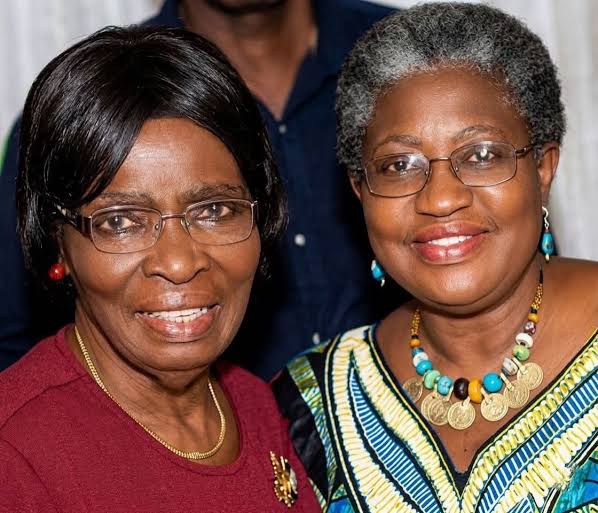
Quote “Professor Kamene Okonjo
Some women leave behind more t
Yet, to remember Professor Kam
Professor Okonjo was the belov
one of the most dramatic chapt
On December 14, 2012, the then
She leaves behind children, gr
Professor Kamene Okonjo deserv
By: Sylvia ThankGod-Amadi

Quote: An African who invokes
This is the concluding part
… Given the fact that I was
At the end of the visit by the
Back to my apartment, at abo
Under normal circumstances, yo
That all she asks is that Chie
For some reason that I do not
I believe that everyone in hu
Our ancestors have not gone fa
By: Jason Osai
The Federal Government’s approval of a N70,000 monthly transport intervention for public service workers for six months, beginning in November 2026, offers hope to employees struggling with the rising cost of living. The agreement with the Nigeria Labour Congress (NLC), reached at a conciliation meeting in Abuja on October 27, is intended to cushion transport costs and ease pressure on workers’ incomes. But for public servants in Rivers State, it raises a familiar question: will the State Government key into the intervention and ensure that its workers benefit? The agreement provides for N70,000 monthly across all levels, for six months. The Federal Government also approved peculiar allowance arrears effective from May 1, 2026, to be paid in three equal instalments beginning in November.
The parties agreed to reconvene after one month to assess implementation. Ultimately, the value of these resolutions will be measured not by announcements but by whether eligible workers receive the money. Transport costs consume a substantial share of many civil servants’ earnings before they can meet household needs. Support for commuting is therefore not a luxury or political favour; it is temporary assistance to help workers remain at their jobs without sinking further into hardship. For lower-paid employees, transport costs can turn modest salaries into a daily exercise in difficult choices and sacrifice.
The agreement also urges State and Local Governments to participate and unions to press for implementation. The federal agreement does not automatically guarantee that every State and Local Government employee will receive the support. State authorities must clarify how it will apply to their workforce, make the necessary arrangements and publish a payment timetable. Rivers State must approach the arrangement with urgency and transparency. The Government should State whether it will implement the intervention and when payments will begin. Any administrative or financial question should be addressed promptly with organised labour, not allowed to become excuses for delay.
The concern is sharpened by the earlier N35,000 monthly wage award introduced by the Federal Government in 2023 after petrol subsidy removal. It was intended as temporary relief pending a new national minimum wage. While several States negotiated and paid wage awards or related sums, implementation nationwide was uneven. Reports in 2024 indicated that many States had failed to pay the federal award, while others provided different amounts. In Rivers, labour and media reports raised concerns about implementation of the N35,000 award for State workers, amid separate announcements and arrangements concerning Local Government employees.
The wage award was meant to ease the immediate effects of subsidy removal, yet workers faced uncertainty over whether the promised relief would reach them. In February 2024, the Rivers State Government announced approval of the N35,000 award for local government workers, but subsequent reports showed that implementation across worker categories remained a concern. The lesson is clear: approval and implementation are not the same. A declaration at a meeting offers little comfort to a worker whose account does not reflect the promised payment. For workers who travel to their offices daily, the implications of delayed support are significant. Transportation expenses compete with food, rent, school fees, healthcare and other essential household needs.
As fares rise, employees may be forced to reduce spending on necessities or borrow to sustain their families. A timely transport intervention would therefore provide practical relief and demonstrate that government understands the economic pressures confronting its workforce. Its temporary nature makes prompt implementation even more important. It is fair to acknowledge that this transport intervention is a new agreement and that its administrative details may require clarification. Rivers State should not be condemned in advance for a failure that has not occurred. Nevertheless, the earlier experience gives workers legitimate grounds to seek assurances before the November commencement date. The State should avoid allowing uncertainty to persist until workers begin asking why the promised assistance has not arrived.
The NLC and unions in Rivers State should engage the State Government immediately and seek a written commitment, an implementation plan and a process for reporting missed payments. If clarification from the Federal Government is needed, the State should seek it without abandoning the goal of providing relief. Labour leaders must also keep members informed about progress and insist that any agreed arrangements are applied fairly and transparently. The Rivers State Government should treat this intervention as an opportunity to rebuild confidence. Timely support would show that workers’ welfare is more than a talking point and that the State recognises the economic realities confronting its employees.
Silence, delay or selective implementation, by contrast, would revive frustration over earlier relief measures and weaken trust between government and labour. Every month lost to administrative delay leaves workers facing the same transport burden without the intended assistance. The State should consult labour, publish arrangements and pay eligible workers on time. Rivers workers should not have to wonder whether federal relief will reach them. The Federal Government has announced the support; now the State must make its position clear. We hope the N70,000 monthly transport intervention will not follow the troubling path of the earlier wage award. Rivers State should learn from that experience and ensure that this time, relief is not merely promised but delivered.
Sylvia ThankGod-Amadi
-
Rivers1 day ago
NUJ Set To Attend UNIPORT’s 217th Inaugural Lecture
-
 News1 day ago
NJC Suspends Three Judges, Sanctions Eight Others
-
Politics1 day ago
Atiku Kicks-Off 2027 Campaign, Promises To Tackle Nigeria’s Challenges
-
 Featured1 day ago
APC Presidential Campaign Storms PH, ‘Morrow
-
News1 day ago
FG Explains Supply Disruption As Power Generation Drops To 3,659MW
-
Metro1 day ago
Port Harcourt Prepares For 10,000 Runners As International Marathon Returns
-
Politics1 day ago
APC Chieftain Canvasses Support For Tinubu Rally In Port Harcourt
-
 News1 day ago
Bille Gas Leak: Coalition Tasks FG On Proactive Measures