
Opinion
The Unfulfilled Promises

“Desperate”,
“Frustration”, “Unfortunate”, these are some of the words used by many people to describe the action of some youth in Kano State who visited their National Assembly representatives with anger last week.
The youth numbering about 1,000 reportedly burnt down the residence of Senator Kabiru Gay, in Gaya Local Government Area of the State and the campaign office and poultry farm of the House of Representatives member from the area, Alhaji Abdullahi Mahmoud over alleged failure of the two politicians to fulfil the promises they made to them during the electioneering campaigns in 2015.
To some, that was a bold step to take to compelling our politicians to be responsible and accountable to the people who elected them. Before and during elections, these politicians besiege the people, making all kinds of promises. They promise to build bridges even where none is needed only to end up not fulfilling them.
A famous lawyer and social commentator, Mr Liborous Oshoma succinctly describes their attitude thus, “Nigerian politicians, like their counterparts in other African countries capitalize on the gullibility and vulnerability of the average person in the country to make promises during campaigns simply because such promises are not scrutinized and tested for possibility of being fulfilled by the people.
“That is why you hear slogans like, ‘we would turn the country to a massive construction site, we will provide access road to every community’ and the people, without asking for modalities and possibilities will chorus, “yea”.
From the federal to the state to the local government level, the situation is the same- politicians deceive and lie to the people. A would-be counselor will promise free education to all the students in his community, promise to tar all their roads even when he is not capable of doing so. Governorship candidates will vow to improve the living standard of the people, bring quality development to the state, only for him to end up enriching himself and his cohorts when he assumes office. The same goes with lawmakers both at the state and federal levels and indeed, almost all politicians.
In Nigeria today, there is anger and bitterness. You listen to phone in programmes on radio stations and you hear people pour out their anger over worsening condition of living in the country. Of course, some realize that there is global economic melt down, but they are not pleased that nearly one year after President Mohammadu Buhari and the ruling political party promised the people “change”, it has been hardship all the way.
During 2015 election campaigns, Buhari promised to solve the problem of unemployment in the country and create one million new jobs annually. While the citizens wait for the fulfillment of this promise, some who have jobs are being fired everyday as many companies lay off their staff due to the harsh economy. People that were previously employed, have now joined unemployed persons.
Buhari also pledged that if elected he would fight to strengthen the country’s economy. He is constantly quoted to have said that he would ensure that the naira was equal to the dollar in value though he was denied. Unfortunately, instead of this promise materializing, the value of naira has continued to dwindle. Today, a dollar goes for N350,00.00. Expectedly, this has affected the cost of virtually everything in the market, our’s being a consuming nation instead of a producing one.
To worsen the situation, instead of tackling the problem of perennial fuel scarcity as he promised, Nigerians witnessed the worst fuel scarcity in the history of the country in the past three months. Fuel was sold for as high as N350.00. People spent hours at petrol stations in search of fuel. Today, the official pump price of fuel has been increased to N145.00 from N86.50k. This is against the promised reduction of the price to N40.00. The contentious subsidy on petroleum products has also been removed. This has brought untold hardship to the citizens though government keeps assuring that the decision is in the best interest of all and sundry.
The APC’s presidential candidate further promised improved power supply, rescue of abducted Chibok girls, eradication of corruption, stopping insurgency and many more. On the issue of curbing Boko Haram insurgency, many have praised the effort of the federal government but have also wondered why adequate measures are not taken to check the wanton killing of innocent Nigerians by Fulani herdsmen terrorizing farming communities across the country.
Some people are of the opinion that it is still early to judge the president, saying the present government inherited a lot of rot in the system and should be given a little time to clear the mess. While we wait patiently for this to be done and for the APC-led government to take us to the promised land, it is advisable that certain palliative measures be taken to cushion the effect of the fuel price increase and the subsidy removal on the citizens. If nothing is done urgently, the last week’s incident in Kano might be the beginning of many Nigerians who might take it out on politicians who have failed to make life less miserable for them. Yet these politicians are living large.
Our leaders must learn to be responsible enough to keep to their words. Why make promises you can’t keep?
Calista Ezeaku



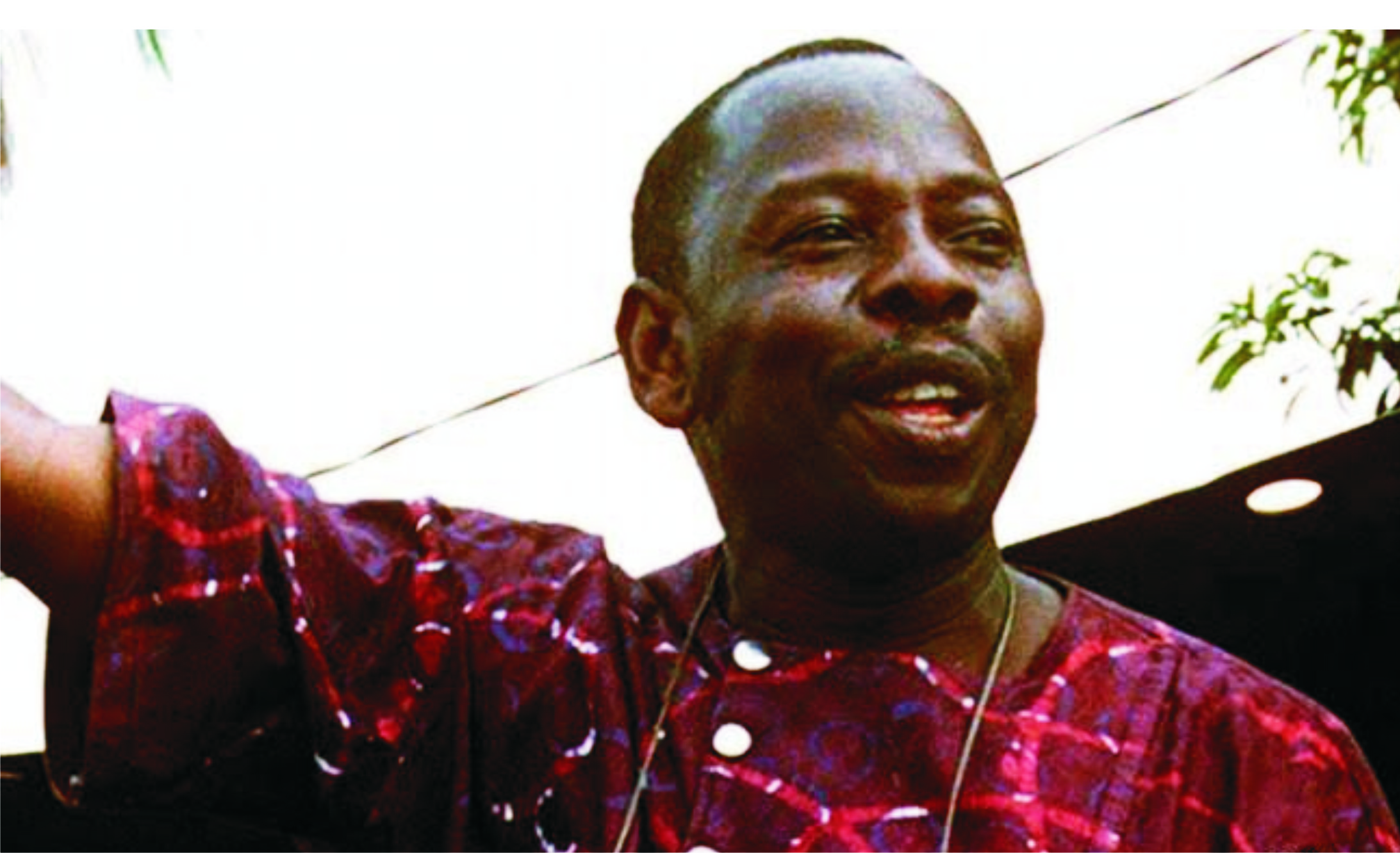
On November 10, 1995, the Nigerian military government of General Sani Abacha executed Ken Saro-Wiwa and eight other Ogoni leaders after a deeply controversial trial. Their deaths marked one of the darkest chapters in Nigeria’s history. At a time when fear silenced citizens and sycophancy flourished around military power, Saro-Wiwa chose to confront tyranny. Many Nigerians retreated into silence, while others praised the regime to secure favour. He knew the risks, yet refused to abandon a people whose land had been devastated by oil exploration and whose lives remained trapped in poverty. His courage arose from the conviction that public responsibility sometimes demands resistance to authority. Saro-Wiwa understood that speaking against a military government could lead to imprisonment or death.
Nonetheless, he believed the suffering of the Ogoni people demanded a courageous response. While oil was extracted from their land, they were left with polluted rivers, damaged farmland, declining livelihoods and an environment hostile to human survival. Fishing grounds and sources of livelihood were threatened, while the people struggled to secure basic amenities. The wealth beneath their soil brought neither adequate development nor a fair share of national resources. For him, silence in the face of injustice would have amounted to complicity. Through the Movement for the Survival of the Ogoni People (MOSOP), he organised a peaceful campaign that took the Ogoni question to the international community. MOSOP gave ordinary people an organised platform through which to express their grievances and insist on recognition.
The Ogoni Bill of Rights, presented to the Federal Government in 1990, demanded political autonomy, economic justice, environmental protection and control over the people’s resources. The campaign exposed the human and ecological costs of oil operations, particularly those associated with Shell, and challenged the apparent alliance between corporate interests and an unresponsive State. The Ogoni struggle became a defining expression of minority rights and environmental justice in Nigeria and Africa. Saro-Wiwa’s writings and mobilisation drew attention to communities treated as expendable because of their limited population and political influence. He argued that numerical strength should never determine a people’s value or rights.
A minority community does not become less deserving of justice because it cannot command electoral numbers or political power. In Nigeria, every ethnic group deserves dignity, protection and a fair opportunity to benefit from the commonwealth. Rather than respond to peaceful agitation with dialogue, the Abacha regime resorted to repression. Ogoni leaders were harassed, detained and killed; others fled into exile. The crisis intensified after four Ogoni chiefs were killed in May 1994. Saro-Wiwa and other MOSOP leaders were arrested, tried by a special tribunal and executed despite international appeals for clemency and serious concerns about the trial’s fairness. The executions drew worldwide condemnation and intensified scrutiny of Nigeria’s human-rights record and oil companies in the Niger Delta.
They demonstrated the danger of using State institutions to suppress peaceful demands. The proceedings remain a reminder of the need for judicial independence and due process. Saro-Wiwa’s courage rested on the conviction that justice must be pursued despite the cost. His method combined non-violent resistance, public education and grassroots organisation. His struggle recalled the civil-rights campaign of Martin Luther King Jr. and the power of peaceful mobilisation against injustice. Saro-Wiwa linked environmental degradation to political exclusion, economic exploitation and the denial of democratic rights. Oil-producing communities, he insisted, should not remain zones from which wealth is removed to develop other parts of the country.
Their people must benefit through roads, schools, healthcare, jobs and clean water. Resource extraction carries a duty to protect host communities. His argument extended to the structure of the Nigerian federation. He challenged a revenue-allocation system that made oil-producing communities bear the environmental and social costs of extraction without commensurate benefits. Like advocates of fiscal federalism, he believed resources should be managed and shared equitably. He envisaged a society in which no community would be disadvantaged by its size, ethnicity, political affiliation, culture or religion. His vision was a country bound together by justice and equal citizenship. Saro-Wiwa was also a gifted writer, dramatist and public intellectual.
Through books, essays, plays and television, he documented Nigerian society’s contradictions and challenged abuses of power. His popular television series, Basi and Company, demonstrated his creative range, while his leadership of the Association of Nigerian Authors encouraged writers to engage national questions. He believed literature should not be detached from society’s struggles. His pen exposed environmental injustice, political repression and the dangers of silencing courageous voices. He used storytelling, satire and drama to shape public consciousness and expose social contradictions. His literary achievements gave his activism wider reach and made the Ogoni experience part of national conversation. His commitment to the Ogoni people extended beyond the oil question.
During the Civil War, he worked to protect his vulnerable community. He urged younger generations to reject subservience and complacency and pursue change through lawful, peaceful means. Citizens, he believed, must not surrender their responsibility to challenge wrong doing. An injury to one community threatens the rights and security of all. The return to democratic government in 1999 and the establishment of the Niger Delta Development Commission, the Ministry of Niger Delta Affairs and the Hydrocarbon Pollution Remediation Project (HYPREP) are among developments that have kept the region’s demands in public view. Saro-Wiwa did not create these institutions, but his movement helped expose the urgency of intervention and sustain pressure for redress.
His death made it harder to ignore the Niger Delta’s environmental and political grievances. Yet, interventionist institutions do not prove that the original demands have been met. Their effectiveness depends on competent leadership, transparent spending, measurable outcomes and community participation. Yet, thirty-one years after his execution, the central concerns of the Ogoni struggle remain unresolved. The HYPREP-led clean-up has offered hope, but many residents await meaningful improvements. Questions persist about the programme’s pace, quality and transparency, and whether its benefits reach ordinary people. A clean-up should be judged not by ceremonies or contracts, but by restored land and waterways, safe drinking water, improved livelihoods and better public health.
It must include long-term monitoring to ensure treated sites remain safe. Residents deserve information about contamination, remediation methods and completion timelines. Reports that water projects in Gwara and Ebubu Communities, in Khana and Eleme Local Government Areas respectively, failed weeks after commissioning have raised further concerns. If confirmed, the failures would indicate weaknesses in supervision, procurement and quality control.
To be continued in our next edition.
Taneh Beemene

The National Youth Service Corps (NYSC) was established in 1973, after the Nigerian Civil War, to promote national unity, reconciliation and integration. By deploying graduates beyond their States of origin, its founders hoped to encourage understanding among Nigeria’s diverse peoples and help rebuild a divided country. However, the difficulties confronting corps members and their families now demand a comprehensive review. For many graduates, national service has become a period of uncertainty, financial pressure and exposure to risks. Parents who have spent years financing their children’s education must still find money for transportation, camp necessities, accommodation, feeding and other expenses. The monthly allowance may provide some relief, but often cannot meet the cost of living, especially where the place of primary assignment offers no accommodation or support.
Security is another serious concern. Corps members may be posted to communities affected by kidnapping, communal violence, insurgency or other threats. Government cannot eliminate every danger, but it must assess locations, provide reliable security information and avoid deployments where safety cannot reasonably be assured. National service should promote patriotism, not expose graduates to preventable harm. There is also the problem of securing meaningful places of primary assignment. A graduate trained in engineering may perform duties unrelated to engineering; a journalist may spend the year in an office with no opportunity to practise journalism. Graduates in agriculture, health, education and other specialised fields may likewise be assigned routine tasks that contribute little or nothing to their professional growth. Some depend on personal contacts or incur expenses to obtain suitable placements.
A year is significant for a young graduate entering a competitive labour market. National service should not be merely a compulsory waiting period before the search for employment begins. It should help bridge the gap between academic learning and practical work. The time has therefore come to review the structure of NYSC, not necessarily abolish it. I propose that the one-year programme should become vocational and professionally oriented. Graduates should, as far as practicable, be posted to institutions where they can gain supervised experience in their fields of study. Teachers should serve in schools; health graduates in suitable health facilities; engineers in technical organisations and public works departments; agricultural graduates in farms and extension services; and communication graduates in media and public information establishments.
NYSC should partner with ministries, state and local governments, private companies, professional bodies, universities, hospitals, schools and credible organisations to identify genuine training opportunities. Each member should have defined duties, a supervisor and clear learning objectives. At the end of the year, each should receive a record of duties performed and competencies acquired. The reform must also address remuneration and welfare. Corps members should receive fair pay that reflects the demands of their placements, while host organisations should provide reasonable support where possible. Government must establish transparent funding arrangements so that the new system does not become another burden imposed on employers or parents. Transport or accommodation assistance should be considered for difficult postings.
Graduates seeking jobs after service would have more than a discharge certificate: they would possess practical experience, workplace discipline and demonstrable skills. Employers would gain access to young people who have received supervised preparation. However, professional relevance should not erase the scheme’s founding objective of national integration. Inter-State deployment can remain, provided it is balanced with security, suitable placements and the availability of basic facilities. Where a safe and meaningful placement cannot be guaranteed outside a graduate’s State, an alternative should be considered. Orientation and community development activities can continue to promote cultural exchange, citizenship and service.
The Federal Government and NYSC management should convene consultations involving corps members, parents, universities, employers, security agencies and State Governments. Decisions should be based on evidence and the experiences of serving and former corps members. NYSC was created to help rebuild a nation divided by war. Its ideals remain important, but institutions must adapt to changing realities. Success should not be measured only by the number of graduates mobilised or certificates issued. It should also be measured by the skills acquired, the contribution made and whether young Nigerians complete their service safely and with dignity. It can better preserve the scheme’s founding ideals while meeting today’s economic and professional needs. A vocationally driven; adequately remunerated NYSC would turn national service from a costly obligation into a bridge between education, employment and national development. The purpose should not simply be to occupy graduates for twelve months, but to prepare them to work, serve and contribute meaningfully to Nigeria’s future.
Sylvia ThankGod-Amadi
Quote: “Democracy is not
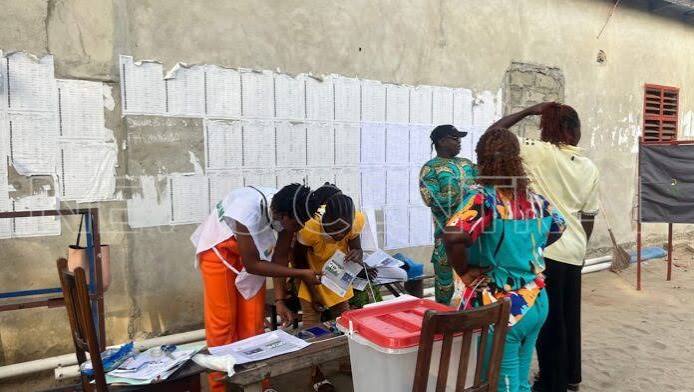
As the 2027 general elections
Organisers said they had
Police intervention
In Kaduna, the ADC accused
These claims require prompt
These rights apply equally to
No ambition, party or
By: Sylvia ThankGod-Amadi
-
News3 days ago
RSG Reaffirms Commitment To STEM Education, Technological Advancement
-
Business3 days ago
‘NUJ, NPA’s Partnership Would Boost Port Producrivity, Economic Growth’
-
 News3 days ago
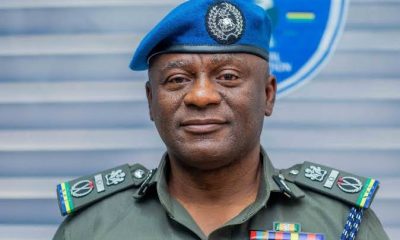
IGP Warns Police Officers Against Partisanship …Directs Regular Engagement With Journalists
-
Business3 days ago
Fire Threat Interrupts Asaba Air Peace Flight
-
 News3 days ago
Customs To Deploy AI, Scanners Against Snuggling
-
Business3 days ago
Fish Production Deficit, A Major Investment Opportunity – Minister
-
 Politics3 days ago
2027: INEC Begins Deployment Of Non-Sensitive Materials
-
Sports3 days ago
CAF Awards 2026 Gets A New Date