
Opinion
The Rape Of A Nation

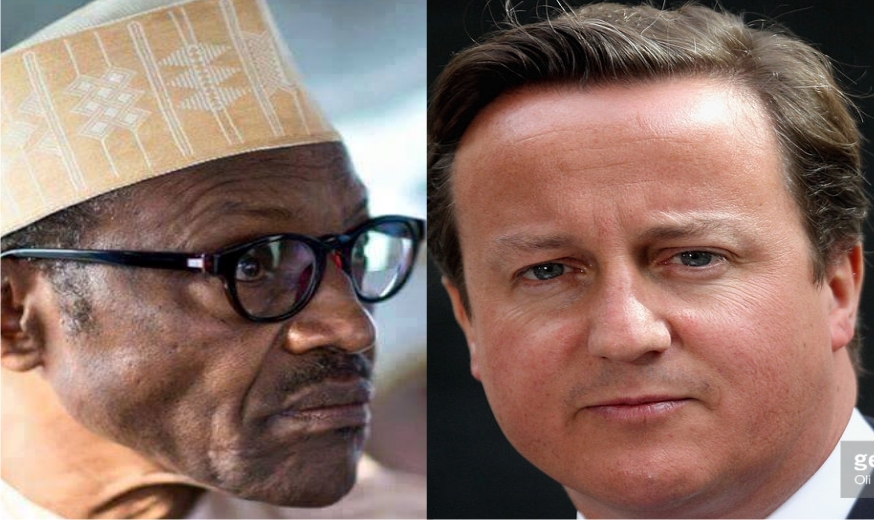
When the British
Prime Minister, David Cameroon recently described Nigeria as “fantastically corrupt,” not many Nigerians were able to swallow the bitter truth. There is no doubt that the country had been, before now, riddled with corrupt practices. That is why Nigerians are today confronted with shocking revelations of how their fatherland has been raped and impoverished by successive governments.
From the time of General Ibrahim Badamosi Babangida to that of President Goodluck Ebele Jonathan, the story of rapacious greed had remained the same. There had been no clear cut policy direction but an obsessive squandermania and primitive accumulation of our commonwealth by our self-acclaimed leaders.
Unfortunately, Nigeria had poked holes in her vanity by declaring herself as Africa’s largest democracy. Nonetheless, Nigeria’s democracy leaves much to be desired. It is a country where the few affluent ones roll in luxury, the rich in splendor while the poor wallow in squalor. It is a country predicated on stupendous iniquitous inequality.
Today, the world’s 6th largest producer of crude oil has become a nation peopled with beggars. Little wonder that President Muhammadu Buhari is globe-trotting in search of alchemy for Nigeria’s economic malaise. My sympathy is for the incumbent president who has found for himself the tall order of clearing the Augean Stable.
Pathetically, our president must realise that the fight against corruption is an uphill task in a country where corruption has become a way of life. In our state government houses, on the streets, schools, ivory towers, in every nook and cranny, corruption occupies an important position. Indeed corruption walks abroad.
The corrupt people are all over the country, even walking the corridors of power at Aso Rock village. My prayer for the president is that the hunter must be careful, lest he becomes the hunted. While I sympathize with him in his puritanical quest, my advice for him is that he should not allow the jaded sensibilities of corrupt officials to becloud his vision for Africa’s largest democracy.
It took decades to get to this level of rot through the greed and avarice of ravenous wolves that have stolen the nation’s reins of power. It will certainly take some time to get out of the woods. However, according to Prof.Ola Rotimi in his novel, “The Gods Are Not to Blame’ ‘not to do something is to be crippled fast.” It is only in that perspective that one will appreciate the herculean task of clearing the Augean Stable.
A writer once described Nigeria as a fallen house. It is the bitter truth, and the debris of a fallen nation will continually kick us in the face. Jaundiced people who poke tribal sentiments at every thorny national issue will hardly understand that the anti-corruption war by the present administration is intended to liberate the nation from the shackles of underdevelopment.
A horrifying conflict is engendered when a single man, archetypal protagonist finds himself pitted against ferocious forces of an evil society. It is a re-enactment of the works of famous Green tragedians where evil prevails over good. My most strenuous objection is that the purge should not leave out sacred cows. It is our hope that the present purgation will elicit catharsis so that our country can be safe from ravenous wolves and vultures.
It is sad to recall the sordid years of General Ibrahim Badamosi Babangida and the disappearance of the Gulf War windfall. We may not also forget the Abacha loot and his proclivity for evil. What about Baba’s library project and the recent Jonathan’s arms deal that is currently being probed by the Buhari administration? The list is endless. Where and how are we going to start the purgation of this country of the nauseating avalanche of corruption that has piled over the years?
While I sympathize with President Buhari over the state of the economy, I want to urge him to brace up and do the needful to ameliorate the sufferings of the masses. This is because the recent increase in price of fuel and the poor power supply have exacerbated the pains of the masses. Austerity measure must therefore wear a human face. Part of the recovered loot from past administrations should be used to address infrastructural decay and provide employment for the teeming population of unemployment youth.
Chidi Enyie



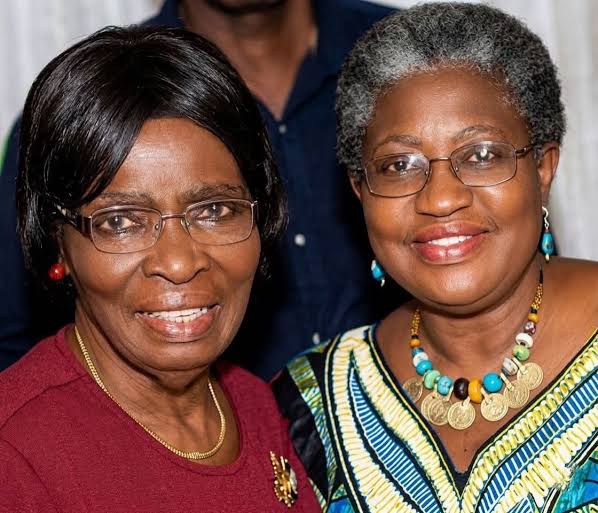
Quote “Professor Kamene Okonjo
Some women leave behind more t
Yet, to remember Professor Kam
Professor Okonjo was the belov
one of the most dramatic chapt
On December 14, 2012, the then
She leaves behind children, gr
Professor Kamene Okonjo deserv
By: Sylvia ThankGod-Amadi

Quote: An African who invokes
This is the concluding part
… Given the fact that I was
At the end of the visit by the
Back to my apartment, at abo
Under normal circumstances, yo
That all she asks is that Chie
For some reason that I do not
I believe that everyone in hu
Our ancestors have not gone fa
By: Jason Osai
The Federal Government’s approval of a N70,000 monthly transport intervention for public service workers for six months, beginning in November 2026, offers hope to employees struggling with the rising cost of living. The agreement with the Nigeria Labour Congress (NLC), reached at a conciliation meeting in Abuja on October 27, is intended to cushion transport costs and ease pressure on workers’ incomes. But for public servants in Rivers State, it raises a familiar question: will the State Government key into the intervention and ensure that its workers benefit? The agreement provides for N70,000 monthly across all levels, for six months. The Federal Government also approved peculiar allowance arrears effective from May 1, 2026, to be paid in three equal instalments beginning in November.
The parties agreed to reconvene after one month to assess implementation. Ultimately, the value of these resolutions will be measured not by announcements but by whether eligible workers receive the money. Transport costs consume a substantial share of many civil servants’ earnings before they can meet household needs. Support for commuting is therefore not a luxury or political favour; it is temporary assistance to help workers remain at their jobs without sinking further into hardship. For lower-paid employees, transport costs can turn modest salaries into a daily exercise in difficult choices and sacrifice.
The agreement also urges State and Local Governments to participate and unions to press for implementation. The federal agreement does not automatically guarantee that every State and Local Government employee will receive the support. State authorities must clarify how it will apply to their workforce, make the necessary arrangements and publish a payment timetable. Rivers State must approach the arrangement with urgency and transparency. The Government should State whether it will implement the intervention and when payments will begin. Any administrative or financial question should be addressed promptly with organised labour, not allowed to become excuses for delay.
The concern is sharpened by the earlier N35,000 monthly wage award introduced by the Federal Government in 2023 after petrol subsidy removal. It was intended as temporary relief pending a new national minimum wage. While several States negotiated and paid wage awards or related sums, implementation nationwide was uneven. Reports in 2024 indicated that many States had failed to pay the federal award, while others provided different amounts. In Rivers, labour and media reports raised concerns about implementation of the N35,000 award for State workers, amid separate announcements and arrangements concerning Local Government employees.
The wage award was meant to ease the immediate effects of subsidy removal, yet workers faced uncertainty over whether the promised relief would reach them. In February 2024, the Rivers State Government announced approval of the N35,000 award for local government workers, but subsequent reports showed that implementation across worker categories remained a concern. The lesson is clear: approval and implementation are not the same. A declaration at a meeting offers little comfort to a worker whose account does not reflect the promised payment. For workers who travel to their offices daily, the implications of delayed support are significant. Transportation expenses compete with food, rent, school fees, healthcare and other essential household needs.
As fares rise, employees may be forced to reduce spending on necessities or borrow to sustain their families. A timely transport intervention would therefore provide practical relief and demonstrate that government understands the economic pressures confronting its workforce. Its temporary nature makes prompt implementation even more important. It is fair to acknowledge that this transport intervention is a new agreement and that its administrative details may require clarification. Rivers State should not be condemned in advance for a failure that has not occurred. Nevertheless, the earlier experience gives workers legitimate grounds to seek assurances before the November commencement date. The State should avoid allowing uncertainty to persist until workers begin asking why the promised assistance has not arrived.
The NLC and unions in Rivers State should engage the State Government immediately and seek a written commitment, an implementation plan and a process for reporting missed payments. If clarification from the Federal Government is needed, the State should seek it without abandoning the goal of providing relief. Labour leaders must also keep members informed about progress and insist that any agreed arrangements are applied fairly and transparently. The Rivers State Government should treat this intervention as an opportunity to rebuild confidence. Timely support would show that workers’ welfare is more than a talking point and that the State recognises the economic realities confronting its employees.
Silence, delay or selective implementation, by contrast, would revive frustration over earlier relief measures and weaken trust between government and labour. Every month lost to administrative delay leaves workers facing the same transport burden without the intended assistance. The State should consult labour, publish arrangements and pay eligible workers on time. Rivers workers should not have to wonder whether federal relief will reach them. The Federal Government has announced the support; now the State must make its position clear. We hope the N70,000 monthly transport intervention will not follow the troubling path of the earlier wage award. Rivers State should learn from that experience and ensure that this time, relief is not merely promised but delivered.
Sylvia ThankGod-Amadi
-
Rivers5 days ago
Don Seeks Repositioning Of Tech Education For Dev
-

 Education5 days ago
PAMO MEDICAL UNIVERSITY -Nullifies Arrest warrant on VC
-
 Education5 days ago
IAUE MOVES TO END GHOST WORKERS SYNDROME AS 400 NEW NON-TEACHING STAFF UNDERGO MANDATORY ETHICS TRAINING
-
Rivers1 day ago
NUJ Set To Attend UNIPORT’s 217th Inaugural Lecture
-
 News24 hours ago
NJC Suspends Three Judges, Sanctions Eight Others
-

 Politics5 days ago
2027: RIVERS GUBER CANDIDATES SIGN CHARTER TO PRIORITIZE CITIZENS’ DEMANDS
-
 Politics5 days ago
Atiku Demands INEC Officials’ Probe Over Alleged Voters’ Register Manipulation
-
Politics5 days ago
2027: Attack Electoral Officials, Face Full Weight Of Law, INEC Warns