Connect with us

Environment

Implementing Climate Change Agreement

Published

on

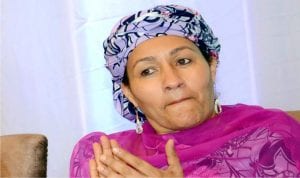
Minister of Environment, Amina Mohammed

Minister of Environment, Amina Mohammed

Does Nigeria and the
rest of the international community have the political will to implement the Paris agreement  on climate change?
The question was  raised by a cross section of participants at recent climate change conference in Port Harcourt.
The conference was organised by Alliance Françoise, Port Harcourt, to create awareness on the impact of climate change on the society.
It would be recalled that over 171 world leaders had met in New York, United States of America, 22 April 2016 to sign the Paris Agreement on Climate Change. Agency reports had it that France was the first to sign the Agreement.
It was formed by Marshall Islands, Mauru, Palau, Somalia, State of Palestine, Barbados, Belize and Fiji.
Other signatories include Greenada, Saint Fitts and Nevis, Samoa, Tuualu Maldives, Saint Lucia, Maurtius, Peru, Democratic Republic of Congo, Bulvia Brazil, China, Canada and Italy.
Other countries are expected to sign the Agreement between now and October this year.
The Port Harcourt seminar was attended by cross section of dignitaries from both the public and private sectors.
Specifically at the event were representatives of the Institute of Pollution Studies, Rivers State University of Science and Technology (RSUST), Port Harcourt Centre for Conflict and Gender Studies, University of Port Harcourt, and the Centre for Development and Support Initiatives (CEDSI).
Also in attendance are the Rivers State Commissioner for Agriculture, Mrs Onimim Jacks representatives of the Ministries of Environment, Culture and Tourism, Information / Communication and Youth Development.
A documentary with The Theme: “No where to Run: Nigeria Climate And Environmental  crisis” opened discussions at the conference.
The state commissioner for Agriculture, Mrs Onimim Jacks said that climate change poses a serious challenge to the state especially in the area of Agriculture.She said that the delay in the coming of the rains this year led to the suspension of planting activities by farmers in the state.
The commissioner added that because of the adverse effects of climate change on the state, her ministry is now encouraging more tree programmes across the state.“We are losing our forest resources to desert encroachment. Agriculture is one of the major causes of climate change because we have to deforest.
“We have to find a midway on how best to grow our feed” she said.
Also speaking, the Director Centre for Conflict and Gender Studies, University of Port Harcourt, Dr Fidelis Allen, querried the rationale behind the refusal of the Federal Government to critically examine some aspects of the draft policy in climate change which is already before the Ministry of Environment.
The university don insisted that the government, the petroleum industry and those involved in local refining of fuel need to respect our existence by being able to respond to climate change.
According to him, since the petroleum industry contributes more than 70 percent to climate change, the low urban industry must be made attractive to investors.
On his part, Dr Tubonimi Ideriah of the Institute of Pollution Studies, Rivers State University of Science and Technology (RSUST), Port Harcourt said that coastal communities are gradually sinking owing to the rising level of sea water.
He said that even people in the North are also experiencing the increasing rate of desert encroachment, adding that the situation should serve as a wake up call to the relevant  Authroites to the something.
The university don who described this year as the hottest in recent times, called for drastic measurers to check deforestation.
Dr Ideriah also called on the government to wakeup to its responsibilities of implementing all laws relating to conservation in the country.
“There are enough laws, but the will to implement them is the problem” he said.
The country Director of the Centre for Development and and Support Initiatives (CEDSI), Mrs Mina Ogbanga querried the rationale behind the non domestication of the agreement by Nigerian Government.
Mrs Ogbanga said that the aspect of the Agreement which talked about the reduction of global temperature below 1.5 per cent must be imbibed by all countries.
She said that the increasing level of heart being experienced these days shows that the temperature is getting out of hand.
She also called for measures to address coastal erosion and flooding.
Speaking to newsmen, a director in the state Ministry of Information Communication, Mr Paulinus Nsirim said that what is needed at the moment is action.
He said that the era of talkshop should be gone for good, stressing that both Governments and members of the civil society must begin to act now to protect the environment from destruction.
The Director Alliance Francaise, Port Harcourt, Mrs Helene Geneuu Okutue, said that the Port Harcourt office of Alliance Francaise is the second to organize the climate change conference in the country.
She said that the conference was to create the needed awareness on the impact of climate change with a view to funding solutions to it.
The conference which participants said was coming at the right time, however observed that so long as industrialized countries such as the United States of America, Great Britain, China, Canada, Australia, amongst others, continue to rely on the fossil fuel industry to power their industries, the political will to implement the agreement will be lacking.
In all, the impact of climate change is here and the government must act now.


Continue Reading

Environment

NICOLD Urges Private Investment, Innovation To Strengthen Dam Safety

Published

on

The Nigerian Committee on Large Dams (NICOLD) has called for increased private-sector  investment and sustained training of young engineers to strengthen dam safety and  management in Nigeria.
The committee’s President, Dr Johnson Adewumi, made the call at its 2026 National Conference and Annual General Meeting (AGM) in Abuja recently.
The conference was themed “Sustainable Dams for Water, Energy and Climate Resilience”.
Adewumi said the conference provided a platform for engineers, policymakers, researchers and other stakeholders to exchange knowledge and develop solutions to challenges in dam engineering.
He said while the public sector was responsible for policy development, private organisations had a critical role in translating policies into practical programmes and projects.
He urged more companies to partner with NICOLD, noting that the committee brought together professionals involved in dam engineering and technology.
Adewumi said NICOLD had organised seven training sessions on dam operations and maintenance with sponsorship from partners, including Mainstream Energy Solutions and DeCrown West Africa Company, whose contributions he acknowledged.
The president stressed the need to equip younger engineers with skills in dam design, construction, operation and management to sustain professional expertise and prevent infrastructure failures.
He said NICOLD was promoting knowledge transfer from experienced professionals to younger engineers, adding that continuous training was necessary to prepare them for future responsibilities.
Adewumi, who said he was 75, noted that experienced professionals had a duty to mentor younger engineers and ensure the transfer of technical knowledge.
He said dams remained vital to water security, food production, hydropower generation and flood control, adding that reservoirs also supported irrigation, livestock production, industrial activities and public water supply.
He called for the adoption of modern technologies, research and innovation to improve dam monitoring, structural assessments and maintenance.
Earlier, the Minister of Water Resources and Sanitation, Prof. Joseph Utsev, called for stronger collaboration and investment to improve dam safety, hydropower generation and water resources management.
Utsev, represented by the Acting Permanent Secretary of the ministry, Ali Dallah, said sustainable dam development was essential to water security, agricultural production, energy generation and flood management.
He identified the Sustainable Power and Irrigation for Nigeria (SPIN) Project, implemented with Federal Ministry of Power and World Bank support, as a key initiative to strengthen dam safety, modernise irrigation and promote hydropower.
The minister said effective dam management required regular inspections, structural assessments, preventive maintenance and timely rehabilitation to identify risks and protect infrastructure.
He also warned that changing hydrological conditions and extreme weather events posed challenges to dam design and operations, making climate resilience necessary throughout the development and management of dams.
Utsev said the ministry, through the Nigeria Hydrological Services Agency, was strengthening hydrological data collection, flood forecasting and early warning systems.
He said the Annual Flood Outlook provided information to support flood preparedness, reservoir management and decisions by relevant stakeholders.
Also speaking, Irrigation and Drainage expert, Mr Matthew Offie, called for the reassessment of existing dams using current climate data to ensure their safety and functionality.
Offie said many dams were designed using historical hydrological data that might no longer reflect prevailing climate conditions.
He cited changing rainfall patterns, erratic flooding and prolonged droughts in parts of the country as reasons for updating hydrological assessments.
He recommended retaining the original engineering principles of existing dams while incorporating current climate data into their operation and management.
Offie said satellite information and emerging technologies could make such assessments more affordable and accessible.
He said his conference paper examined cost-effective approaches to hydrological assessment, drawing on lessons from more than 40 years of professional experience to recommend solutions and avoid repeating past project failures.
The National Emergency Management Agency reported that floods affected 315,762 people, displaced 113,367 and killed 231 across 25 states and 86 local government areas as of September 2025.
The floods also damaged 46,304 farmlands.
The Nigerian Electricity Regulatory Commission reported that hydropower plants generated 3,081.88 gigawatt-hours of electricity in the first quarter of 2025, compared with 3,029.07 gigawatt-hours in the preceding quarter.
Changing rainfall patterns and extreme weather events also highlight the need to incorporate current climate data into dam planning, operation and maintenance to reduce risks and sustain water and energy supplies.
Continue Reading

Environment

HYPREP Seeks CSOs’ Support To Prevent Repollution In Ogoniland

Published

on

The Hydrocarbon Pollution Remediation Project (HYPREP) has urged Civil Society Organisations (CSOs) to intensify community campaigns against illegal artisanal refining, unsustainable fishing and activities threatening environmental restoration in Ogoniland.
Prof. Nenibarini Zabbey, Project Coordinator of HYPREP, made the call in an interview with the  News men made available to Tide on Wednesday after receiving a coalition of CSOs in Port Harcourt.
The coalition visited Rivers to assess cleanup project sites and evaluate progress made in the implementation of the Ogoni environmental restoration programme.
Zabbey said sustaining the achievements of the cleanup required more than remediation, emphasising that communities must collectively protect restored ecosystems against renewed pollution and environmentally harmful activities.
He identified sensitisation on sustainable fishing, responsible mangrove harvesting and campaigns against illegal artisanal refining as critical areas where CSOs could support environmental protection efforts.
According to him, the return of aquatic organisms, including different crab species, to restored water bodies indicates ecological recovery, but their survival depends on responsible environmental practices.
He urged stronger collaboration in promoting ecotourism, carbon stock assessment, climate finance and alternative livelihoods, particularly following the designation of Ogoni mangrove wetlands as an internationally important Ramsar Site.
The coordinator said the designation placed a collective responsibility on stakeholders to preserve the wetlands’ ecological character while exploring sustainable  economic opportunities to reduce pressure on natural resources.
He expressed optimism that collaboration with CSOs would strengthen community engagement, expand environmental advocacy and prevent activities capable of reversing the gains recorded through restoration efforts.
Zabbey subsequently presented a project status briefing, highlighting achievements and ongoing interventions across HYPREP’s thematic areas and outlining progress recorded in the cleanup programme.
The CORDAID Strategic Partnership comprises CSOs advocating environmental protection, good governance and institutional development, with a longstanding commitment to the full implementation of the Ogoni cleanup programme.
Speaking on behalf of the coalition, Tolese Olatinwo, Consultant to CORDAID, described the visit as encouraging, recalling the partnership’s five-year advocacy for environmental restoration and alternative livelihoods.
He said the partnership had consistently advocated community participation in the cleanup programme and the release of funds for HYPREP, expressing satisfaction with visible project interventions.
Olatinwo said the delegation was pleased with the progress observed at project sites, adding that the coalition would review its previous advocacy scorecard and establish fresh objectives.
Similarly, Dr Emem Okon, Executive Director of Kabetkache Centre for Women Development and member of the Strategic Partnership, commended women’s inclusion and livelihood interventions under the project.
Okon recalled that her organisation had conducted a livelihood needs assessment for women and advocated greater female participation in the Ogoni cleanup process and related interventions.
She said the coalition would develop a new pathway of change, focusing on community sensitisation, environmental advocacy and campaigns against illegal artisanal refining across affected communities.
The coalition, comprising CSOs from different parts of Nigeria, also commended HYPREP for progress in mangrove restoration, shoreline cleanup, potable water provision and public  health interventions.
The groups applauded increased women’s participation in project activities, describing the interventions as important steps towards improving environmental conditions and supporting affected communities across Ogoniland.
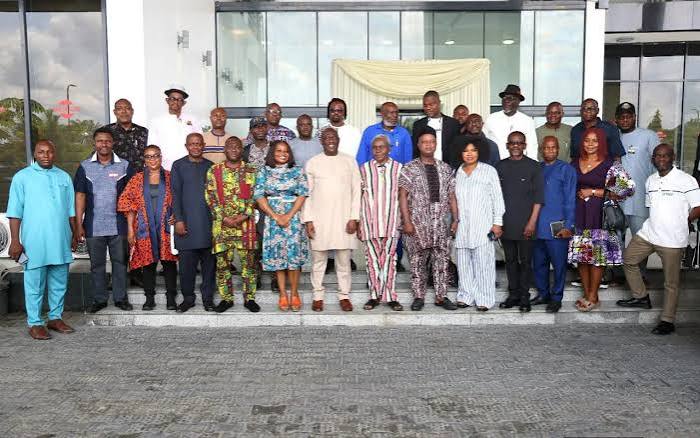
The delegation assessed the K-Dere Water Facility, Ogoni Specialist Hospital and mangrove restoration site in Bomu, where members also participated in symbolic mangrove planting activities.
Continue Reading

Environment

DBN Inaugurates $275m Climate Finance To Boost Nigerian MSMEs

Published

on

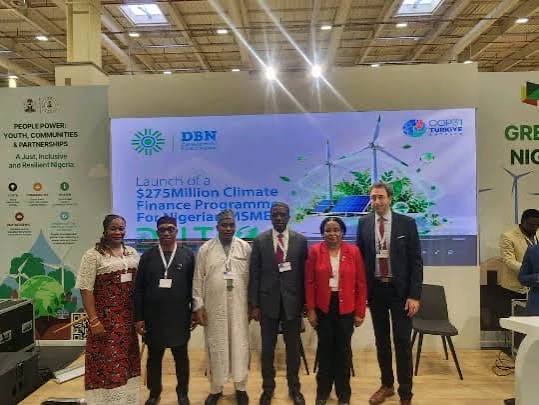
The Development Bank of Nigeria (DBN) has inaugurated a 275-million-dollar  climate finance programme to support Micro, Small and Medium Enterprises (MSMEs).
The aim according to the bank is to adopt clean energy solutions, strengthen climate resilience and expand sustainable business operations.
The programme, known as the DBN Enterprise Lending for Transition and Adaptation (DELTA), is also designed to bridge the  financing gap facing Nigerian businesses seeking to  invest in renewable energy-efficient technologies and climate-resilient agriculture.
DBN Managing Director and Chief Executive Officer (CEO), Dr Tony Okpanachi said this on the sidelines of the 31st United Nations Climate Change Conference (COP31) in
Antalya, Türkiye on Friday.
Okpanachi said climate change was already affecting Nigerian businesses through unpredictable weather patterns, disruptions to production and supply chains, and rising energy costs.
He said the initiative represented an expansion of DBN’s mandate of addressing financing challenges facing productive and underserved enterprises, with a renewed focus on climate-related investments.
He explained that the programme would combine lending, risk-sharing mechanisms and technical assistance to address barriers such as high upfront investment costs, collateral constraints, inadequate credit facilities and limited project preparation capacity.
According to him, the facility will support businesses to replace expensive diesel-powered generators with solar energy, invest in efficient irrigation systems and strengthen agricultural production against increasingly unpredictable rainfall.
He said DBN would commit its own resources to the programme and collaborate with the Green Climate Fund (GCF) and other development partners to mobilise additional capital, technical expertise and risk-sharing instruments.
Okpanachi added that the success of DELTA would be measured not merely by the size of its financing facility but by its impact on businesses through lower energy costs, increased productivity, stronger resilience and sustainable economic growth.
In his welcome address, the Minister of Finance and Coordinating Minister of the Economy, Mr Taiwo Oyedele,
described the initiative as an important step towards translating Nigeria’s climate commitments into practical financial solutions.
Oyedele was represented by the Deputy Director, IERD, in the ministry, Mr Abubakar Matazu.
Oyedele said climate change was an economic, fiscal and development challenge for Nigeria, with growing implications for agricultural productivity, food security, energy access, infrastructure and livelihoods.
He said the 275-million-dollar programme, including a 100-million-dollar contribution from GCF, is expected to expand access to affordable, and long-term financing for MSMEs.
According to him, it is also to benefit approximately 1.3 million people and reduce greenhouse gas emissions by an estimated 4.5 million tonnes of carbon dioxide equivalent.
The minister said the Federal Government remained committed to creating an enabling fiscal, policy and institutional environment to mobilise climate finance and attract private-sector investment.
He said that development finance institutions such as DBN had a critical role in connecting international climate funding with local businesses through accessible financing opportunities.
Dr Omotenioye Majekodunmi, the Director-General,  National Council on Climate Change (NCCC), said MSMEs were also emerging as key drivers of climate solutions through the adoption of renewable, energy-efficient technologies and climate-resilient business practices.
Majekodunmi who was represented by
the Head of Climate Finance at the National Council on Climate Change (NCCC), Mrs Benny Ejiofor, described MSMEs as both highly vulnerable to climate change and important drivers of climate solutions.
Majekodunmi said the facility would make climate finance accessible beyond large corporations, extending opportunities to small businesses, farmers and young entrepreneurs.
She cited examples of market women acquiring solar-powered freezers, entrepreneurs developing electric vehicle businesses and farmers adopting climate-smart agricultural practices.
She urged financial institutions to increase green lending, while encouraging MSMEs to embrace sustainable business practices and climate-resilient operations.
“In spite of being among the most vulnerable to climate change impacts, including floods, droughts, and rising energy costs, they are key drivers to achieving Nigeria’s climate solutions.
“It is a great honour to welcome you all to this landmark event on behalf of the D-G NCCC, the inauguration of the  Climate Finance Facility for Small and Medium Enterprises by the Development Bank of Nigeria.
“Today is not just another inauguration, today, we are opening a new door of opportunity for the thousands of small businesses that power our economy.
“We all know that MSMEs are the backbone of Nigeria,they create jobs, they feed families, and they drive innovation.
“But we also know that they are the most vulnerable to climate change, to floods, to drought, to rising energy costs, yet, they are also the solution.”
Similarly, the Director of Climate Change, Rural Development and Infrastructure Division ,GIZ, Mr Alexander Haack, said the organisation would provide technical assistance to complement the  financial support under the programme.
Haack said GIZ’s experience in facilitating access to  finance and strengthening the capacity of small businesses and financial institutions would help improve the bankability of climate-related projects.
He noted that GIZ’s interventions would include training businesses in bookkeeping and financial management, as well as supporting financial institutions to develop targeted financial products for sectors often considered risky.
During a panel discussion on the programme, the Executive Director and Chief Financial Officer, Finance and Corporate Services, DBN, Mrs Ijeoma Ozulumba, expressed optimism that the facility would attract additional partners and generate a strong pipeline of climate-focused projects.
Ozulumba said DBN was working towards ensuring that the programme’s implementation gathered momentum ahead of COP32, scheduled to hold in Ethiopia in 2027.
Also contributing, the Founder and Chief Empathy Officer of Glean Sustainable Renewable Solutions Ltd., Mr Dele Awosika, emphasised the need to identify viable businesses and develop pilot projects that would demonstrate the programme’s potential to attract further investments.
Awosika identified opportunities in climate-resilient crop production and low-carbon agricultural practices, including rice and cassava production, as areas requiring technical expertise and targeted financing.
The DELTA programme is expected to strengthen Nigeria’s climate finance ecosystem by connecting international funding, development finance institutions and private-sector investments with businesses working towards a low-carbon and climate-resilient economy, Awosika said.
Continue Reading

Trending