Connect with us

Opinion

Checking The Tendencies Of Overweight

Published

on

One aspect of living
that is actually taking some tolls from humans, but yet to attract the much needed attention or emphasis as to its negative tendencies is the issue of overweight. Although writers may have dropped one or two lines on matters of overweight, yet much is to be showcased as concerning its devastating activities on its victims.
From time to time, the public is being exposed to jingles and adverts on ravaging ailments; the way and how to go about their containments, this of course does not go without huge financial involvement. Why? Because, it is believed that no amont of money spent in maintaining life is worth the life itself. Hence, no matter the cost, the importance of maintaining a healthy living cannot be over emphasised.
Over times, most women and ladies had thought that one way to gain the public’s approval of their look is by appearing robust and weighty. To achieve this, many have undertaken some forms of feeding regime that could facilitate an eventual robust posture, a dieting programme which no doubt emphasises foods high in carbohydrate and starch. Ofcourse junk foods, soft drinks and candies coupled with a lifestyle devoid  of physical exercise, can only bring about a hasty invitation to overweight.
Perhaps, it should be told that overweight is not a form of beauty and cannot be considered a mechanism for attraction to would-be admirers. It is rather about having more body fat than is optimally healthy, which is most often facilitated by self administration of appetite boosters leaving its users hungry and drowsy.
Globally, excess weight has reached epidemic proportion, studies have shown that more than one billion adults were either overweight or robust in 2003 and in 2013, the number increased to more than two billion across all ages. With no check in place, you can imagine what the number would be in this 2015. Meanwhile, research indicates that it has the danger of hampering the agility of the brain.
Be that as it may, it is obvious that no sane human would want to be overweight, but from a wish for a little boost, arises the possibility for an unguarded touch, giving room for the unexpected. What is needful is an outright overhaul of our mentality and attitude towards our natural look.
The holy Bible presents the human being as a perfect creation of the most high. Hence, the need to let people know that there is a reason for their respective and peculiar looks has become imperative. Human attempts at boosting their physiques have left much to be desired. It has caused more harm than good, as some have not only turned overweight, but have in addition, incurred some health challenges. Why? The quest to look good and attractive.
Apart from the obvious physical discomfort and ailments that accompany overweight, there can also be a deep-seated-psychological trauma, usually characterised by a pervading sense of low-esteem, insecurity or inferiority complex that many overweight have to contend with.
Going by the fact that once the mistake is made it is difficult to reverse, it becomes necessary to view this craze-to-be-fat syndrome as an anomaly that needs to be corrected and possibly nibbed in the bud.
The use of enlightenment campaigns, or any other form of public education that could be effective at reaching the grassroots, especially the women and girls can be of help in this regard.
They need to be told that from age 40, there is a greater tendency to become overweight at the slightest provocation which ofcourse parades some medical implications. This is largely due to the fact that from age 40, the digestive system slows down leaving the body no less likely to engage in any physical activity that would encourage speedy burning of fat.
Diseases such as heart-related cases, high blood pressure, frequent muscular pains and spasm, diabetes, boneache etc are cases associated with overweight.
Although some cases of overweight have been linked to genetical inheritance, or to the agitation of some hormones due to child birth the arousal of our conscieousness towards the danger of two-much fat in the body is very important.
Whether it is a natural factor or self inflicted one, looking out for the signs of overweight and administering its antidotes in good time will go a long way in checking it.
For people between 50 and 60, adopting and maintaining healthy habits such as staying off oily foods, alcohol, sugary foods and fried foods is advisable. Foods should rather be grilled, boiled or steamed instead of being fried.
Without mincing words, a healthy body requires a minimum amount of fat for proper functioning of the hormonal, reproductive and immune systems as thermal insulation, as shock absorption for sensitive areas and as energy for future use. The accumulation of two-much storage fat can impair movement, flexibility and even alter the appearance of the body.
Therefore, since “prevention “is said to be better than cure,”  why not maintain a good eating habit and exercise regularly for a healthy living?


Sylvia ThankGod-Amadi

Continue Reading

Opinion

One Attack Too Many 

Published

on

Quote: “Ogoniland does not need leaders competing over who can destroy another’s platform; it needs leaders competing over who can create more opportunities, empower youths and build a better future.”

The latest attack by Chief Gani Topba on the President of KAGOTE and Chief Executive Officer of Giolee Global Resources Ltd, Chief Lesi Maol, appears to have opened another troubling chapter in the politics of leadership and influence in Ogoniland. While disagreements are inevitable, the frequency and manner of attacks directed at individuals or organisations contributing to Ogoni development should concern every stakeholder. The concluded extraordinary meeting of Ogoni stakeholders in Bori was convened to deliberate on challenges confronting the people, including insecurity, farmers-herders clashes, youth disunity, education and development. It also considered harmonising the numerous youth organisations operating across Ogoniland under a strong and representative umbrella capable of giving Ogoni youths a more coordinated voice. One would have expected such an initiative to attract constructive contributions, especially from those with reservations about it.

Instead, the gathering and its organisers have come under criticism, raising a fundamental question: what exactly is wrong with Ogoni stakeholders coming together to discuss problems affecting their people? If there are legitimate concerns about the meeting, its organisers or resolutions, such concerns should be supported by facts and subjected to constructive engagement rather than personalised attacks. Leadership is demonstrated through service, sacrifice, participation and results. If Chief Gani Topba believes the stakeholders’ meeting was unnecessary or lacked legitimacy, nothing prevents him from convening another meeting and demonstrating that he can attract traditional rulers, professionals, academics, clergy and youths. Different approaches to development should therefore be allowed to compete on their merits.

The proposal for a unified youth platform should equally not be presented as an attempt to silence Ogoni youths. Rather, it should be examined against the reality of numerous organisations claiming to represent different segments of Ogoni youths. Too many competing organisations can create confusion, weaken collective bargaining power and make it difficult for genuine concerns affecting young people to receive coordinated attention. A credible umbrella body, if properly constituted and broadly accepted, could strengthen the voice of Ogoni youths and provide an organised platform for employment, education, skills acquisition, security and governance. Ogoniland has experienced enough institutional fragmentation. Its history contains painful lessons about divisions that allow personal interests, leadership struggles and competing platforms to overshadow collective objectives. The present generation should learn that destroying institutions one does not control damages society.

The question should be: who benefits when Ogoni youths remain divided and every attempt at unity is interpreted as rivalry? Against this background, KAGOTE deserves objective scrutiny rather than blanket condemnation. Any organisation with influence must be accountable, but accountability is different from a campaign aimed at delegitimising initiatives associated with its leadership. Chief Lesi Maol’s activities through KAGOTE and Giolee Global Resources Ltd have attracted attention in areas including skills development, education, youth empowerment and community support. Such interventions should be assessed on their impact and encouraged where they serve the public good. Those who believe Chief Maol is not doing enough should not stop at criticism. They should show Ogoni what they can do better. Where are the alternative skills programmes? Where are the educational interventions? Where are the youth empowerment schemes? Where are the community development initiatives?

It is easy to criticise someone who is building; it is harder to mobilise resources and sustain programmes that benefit ordinary people. This is not to suggest that Chief Maol or KAGOTE should be immune from criticism. No leader or institution should be beyond scrutiny, and legitimate questions about accountability must be welcomed. But responsible criticism should be based on facts, evidence and alternative ideas. Personal attacks and attempts to destroy initiatives simply because their leadership is not controlled by particular interests cannot provide the solutions Ogoniland needs. What is unfolding is bigger than one meeting, one statement or even two individuals. It reflects a broader contest over influence and leadership. If anyone believes KAGOTE is taking Ogoni in the wrong direction, the response is to present a better direction. If anyone believes Lesi Maol is not doing enough, the answer is to demonstrate what more can be done. Ogoni does not need leaders competing over who can destroy another’s platform; it needs leaders competing over who can create opportunities, improve education, promote security, empower youths and contribute to development.

The people are looking beyond rhetoric. They are examining records, observing programmes and measuring results. No individual owns the permanent right to speak for Ogoni or determine which organisation must survive or collapse. Ogoni must replace the politics of personal control with a culture of ideas, service, accountability and measurable achievement. Differences should produce better alternatives, not destruction. Every Ogoni leader and stakeholder should ask whether his actions are strengthening the region or deepening divisions. Ogoni needs people who can build bridges, institutions, opportunities and hope. Those who genuinely love Ogoni should support what is good, correct what is wrong and offer better alternatives. The future of Ogoni will not be secured by destroying its builders, but by encouraging more people to build.

onest people can reach different conclusions based on different experiences and information. Public debate should therefore remain respectful, evidence-based and open to correction. Truth is strengthened by honest examination, not insults, suspicion or personal attacks. The phrase “Truth has no agenda” carries a powerful message. Truth does not belong to any political party, ethnic group, religion or ideology. It cannot be permanently owned or manipulated by those in power. Governments change, institutions rise and fall, and public opinion shifts, but truth remains indifferent to popularity.The real test of character comes when speaking honestly threatens influence, privilege or personal advantage. It is easy to defend justice when there is nothing to lose. It is far more difficult when the truth may cost us something. That is when conscience must rise above convenience.

Society must therefore cultivate a culture where integrity is valued more than comfort and accountability is welcomed rather than feared. Leaders should learn to accept criticism without hostility, while citizens should express disagreement responsibly. Progress becomes difficult when honest questions are treated as acts of disloyalty. Ultimately, every society must choose the future it desires. A nation built on silence cannot sustain justice, while a community where comfort consistently outweighs conscience risks making injustice ordinary. But people committed to truth, even when inconvenient, lay the foundation for stronger institutions, trustworthy leadership and lasting progress. The call is not to condemn those who succeed or to glorify perpetual criticism. It is to remember that privilege should never silence principle, influence should never replace integrity, and personal gain should never outweigh the public good. Truth has no hidden agenda. It seeks neither applause nor favour. It simply asks to be spoken, defended and lived. When truth is silenced by comfort, everyone eventually pays the price.

By:  King Onunwor
Continue Reading

Opinion

When Comfort Silences The Truth  

Published

on

Quote: “Privilege should never silence principle, influence should never replace integrity, and personal gain should never outweigh the public good.”

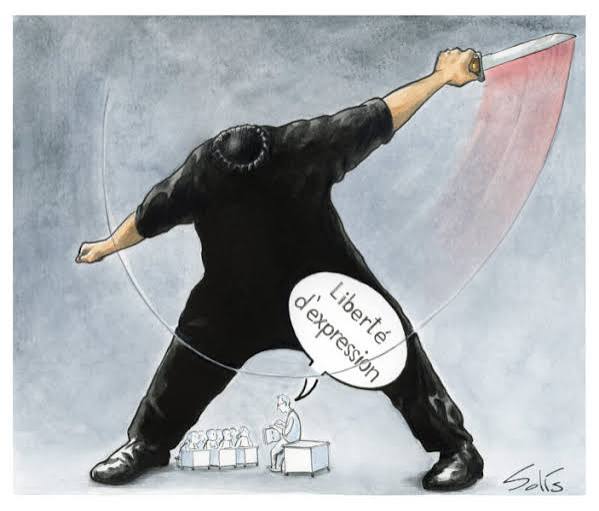
There is an old saying that truth does not fear investigation. Genuine truth neither depends on applause nor seeks permission to exist. It remains constant whether celebrated or rejected, defended or ignored. Yet, in today’s society, truth often competes with comfort, convenience, loyalty and personal interest. This raises an important question: Can a person remain objective after beginning to benefit from the very system he once criticised? Throughout history, reform movements have been driven by courageous individuals willing to challenge injustice despite personal risks. Their commitment to truth sometimes cost them popularity, comfort, freedom and even their lives. History has also recorded instances where influential voices became quieter after receiving appointments, promotions, contracts, political favours or other advantages.

While motivations cannot always be known, such patterns remind us that personal benefit can sometimes influence public conviction. Human beings naturally seek security, stability and opportunities for themselves and their families. There is nothing wrong with success or advancement. The concern arises when personal comfort replaces public responsibility, or privilege becomes a reason to ignore problems affecting others. One of the greatest dangers facing society is not only corruption or poor governance but the normalisation of silence. Systems rarely collapse overnight. They deteriorate gradually when people who know better decide that speaking the truth is no longer worth the personal cost. Every society therefore depends on citizens willing to ask difficult questions, demand accountability and defend justice, regardless of who benefits or feels uncomfortable.

A person who benefits from a broken system may become less inclined to challenge it. This is not true of everyone, and individuals should not be judged without evidence. Many principled people continue to advocate reform while working within imperfect institutions. Nevertheless, personal interests can sometimes soften criticism, dilute conviction or redirect attention from uncomfortable realities.Perhaps the greatest threat to truth is not open opposition but quiet compromise. Censorship is easy to recognise; silence purchased through convenience is harder to detect. When people gradually stop asking questions, demanding transparency or defending principles they once considered important, society should ask whether something has changed. Perspectives may genuinely evolve with new information, but incentives can also influence what people say—or choose not to say.

This is why citizens should not place blind trust in personalities. Ideas, principles and actions should be examined independently. Loyalty to individuals must never exceed loyalty to truth. Political affiliation, professional status, financial success or social influence should not exempt anyone from accountability. A healthy democracy depends on independent thinking, not unquestioning allegiance.The responsibility to speak truth does not belong only to journalists, activists, judges, religious leaders or opposition politicians. It belongs to every citizen. The teacher who refuses to manipulate facts, the public servant who rejects corruption, the business owner who acts with integrity, the parent who teaches honesty and the young person who chooses principle over popularity all contribute to a more just society. However, defending truth also requires humility.

We must not assume that everyone who disagrees with us has been compromised.

By: Michael  Abraham

Continue Reading

Opinion

Poor Federal Roads: The Oshiomhole’s  Outburst

Published

on

Quote:”Although the Federal Ministry of Works is responsible for road construction and rehabilitation while the Federal Roads Maintenance Agency (FERMA) oversees maintenance, road maintenance has consistently taken a back seat”

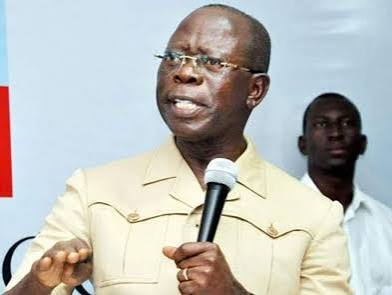
The recent outburst by the lawmaker representing Edo North Senatorial District, Senator Adams Oshiomhole, over the deplorable condition of federal roads in Edo and Delta states has once again drawn national attention to one of Nigeria’s most persistent infrastructure challenges. During Senate plenary last Wednesday, Oshiomhole criticized the Minister of Works, David Umahi, accusing the Federal Ministry of Works of neglecting major federal highways in Edo and Delta while prioritizing new road projects. According to him, the government should focus on rehabilitating existing roads that have become impassable before embarking on new construction. He identified the Benin-Warri, Benin-Asaba, Benin-Auchi and Auchi-Okene highways as strategic economic corridors that have deteriorated to alarming levels, making travel difficult for commuters and motorists while increasing the cost of transporting goods and services.

The senator also alleged that road projects affecting Edo and Delta states were repeatedly omitted from budgetary provisions and that some interventions were only undertaken following directives from President Bola Tinubu. Ironically, the Federal Government has consistently reiterated its commitment to reconstructing and rehabilitating federal roads across the country. The Minister of Works has repeatedly assured Nigerians that the government is deploying reinforced concrete technology to build more durable highways capable of withstanding the country’s climatic conditions. Despite these assurances, vast sections of federal road across the country remain in deplorable condition. The consequences are enormous. Federal highways serve as the backbone of the nation’s economy, carrying more than 90 per cent of passengers and freight.

They connect ports, airports, industrial centres, state capitals and agricultural belts, facilitating the movement of food, fuel, cement and manufactured goods. When these roads fail, the entire economy suffers. Although the Federal Ministry of Works is responsible for road construction and rehabilitation while the Federal Roads Maintenance Agency (FERMA) oversees maintenance, road maintenance has consistently taken a back seat. The result is a recurring cycle in which newly completed roads quickly deteriorate while existing ones are left to collapse. The economic consequences are severe. Bad roads increase transportation costs, contribute to food inflation, delay the movement of goods from ports to markets, increase vehicle maintenance expenses and lead to avoidable road crashes that claim countless lives every year.

To address these challenges, the Federal Government has introduced initiatives such as the Highway Development and Management Initiative (HDMI), which seeks to attract private investment into road maintenance through concessions and tolling. While the initiative holds promise, public acceptance will depend largely on visible improvements in road quality and transparent management of toll revenues. Similarly, the Road Infrastructure Tax Credit Scheme is designed to encourage companies to finance the reconstruction of strategic highways in exchange for tax credits. While the scheme has shown promise, its ability to address road infrastructure challenges equitably across the country remains to be seen. Other countries facing similar infrastructure challenges have demonstrated that sustainable road management requires a different approach.

Rwanda and Morocco, for instance, have prioritized dedicated road maintenance funds, performance-based contracts that reward quality rather than kilometers constructed, and policies that allocate a significant proportion of road budgets to maintenance instead of new construction. Nigeria can draw useful lessons from these experiences. Maintenance funding should be increased and protected because preventive maintenance is far cheaper than complete reconstruction. Public-private partnerships should be expanded with adequate safeguards, transparent tolling policies and independent monitoring. Development finance institutions should support contractors with affordable financing to minimize disruptions caused by delayed government payments. Road designs should withstand heavier rainfall and flooding, while compensation and right-of-way issues must be resolved before projects begin to avoid unnecessary delays.

FERMA should also prioritize durable, high-quality road maintenance over the shoddy repairs that have become all too common. Ultimately, Nigerians are not asking for perfect roads; they simply want roads that are safe, durable and properly maintained. While new highways are desirable, a well-maintained five-kilometer stretch is often far more valuable to road users than a much longer road that quickly falls into disrepair. The media, civil society, the National Assembly and Nigerians must continue to hold the government accountable by monitoring road projects and demanding better results. Good roads are not a privilege but a right of every citizen. With tax credit schemes, concessions and other funding mechanisms already in place, what is now required is political will, transparency and consistent implementation. However, Senator Oshiomhole’s criticism also invites legitimate public reflection. 

Many Nigerians have asked what the condition of these same federal roads was during his eight-year tenure as Governor of Edo State. Several governors, including those of Rivers State at different times, undertook repairs on critical federal roads within their states and subsequently sought reimbursement from the Federal Government. It is therefore fair to ask whether similar interventions were pursued during Oshiomhole’s administration. Public officials, whether serving or former, should be judged by the same standard. Constructive criticism is essential in a democracy, but it carries greater weight when matched by a demonstrable record of action. Nigerians expect those entrusted with public office to address pressing challenges while they have the authority to do so, rather than becoming vocal critics only after leaving office

By:  Calista Ezeaku
Continue Reading

Trending