
Opinion
Before Buhari’s Age Becomes A Curse

Senior citizens should be treated with respect. It is in our
values to revere and respect old people and not to make jokes of them no matter the situation. We are not operating a culture where old age is seen as a crime and the old ones confined in homes where others care for them; it is in our culture that we care for our old people at home, when they could no longer be actively operational.
In that line, the United Nations recognized the importance of old age and formulated ideas to develop policy that would adhere to the aging populations across the globe with a margin that old age begins at 60. This body has even started celebrating the International Day of Older Persons in October. The international body set this aside to acknowledge the contributions that over the 60-line has made to the society.
In 1998 World Day of Older Persons, Kofi Annan as UN Secretary General, declared in his message for, “a society for all ages is a society which, far from caricaturing older people as retired and infirm, considers them on the contrary as agents and beneficiaries of development”. This disclosure was made after an “International Plan of Action on Ageing” was created at the World Assembly on Ageing held by the United Nations in Vienna, Austria, from 26 July to 6 August 1982, and lingers to this day as international tip of suggestion.
However, in the Nigerian politics, as we can observe that General Muhammadu Buhari joined the ring to contest the presidential race, many are wont to saying that he is a man of above 70 and has nothing to contribute in the politics of 21st Century. The way and manner that those in this line of thought are handling Buhari’s age, makes old age to sound like a curse and not actually a blessing.
Even some persons who are above the UN’s 60-line join the bandwagon to castigate Buhari for his age. These people forget the known, tested and proven fact that everything old tests fine: Old wine tests fine, old wood burns well, old friends can be trusted. And Buhari may not be exempted!
In a pontifical council for the laity document, titled, “The Dignity of Older People
and their Mission in the Church and in the World”, sees the likes of Buhari as those in the “third age”. And they are a large slice of the world’s population. Such people are still important to the everyday activities of their societies even though that they may have retired from active employment, but they have tremendous inner resources that the society will benefit from. This is why they are not a curse but referred to as “young old”.
Much as we know, old people are always helpful in a given society to stop selfish, combatant, complex, arrogance, self-centered, envious, competitive… traits that are associated with youths. In Igbo, it is proverbial that why every compound must have an old person is to avert children from catching vulture and mistake it for kite. Old people are good at experience, advising the society around them on financial matters and other traditional rituals among their peoples.
It is incongruous to castigate Buhari because of his age in politics; he should be appraised for taking such a line when many of his ilks are whiling away their time in gossip. In a comment on Yahoo about four years ago, one Barbara Gettinger Stewart, said that it has always seemed to her that foolish young people become foolish old people. However, just by virtue of living a long time, even old foolish people pick up a bit of experience that the younger generation can use.
She continued, saying that people who have lived a long time can remember things that no longer exist; such as typing papers using carbon paper and white out. Adults were feared to an extent, even beloved ones. She said that as she approaches 70, she found herself understanding more and more about those who came before, even some who were quite foolish during their lives. She concludes: All humans have intrinsic worth and the scale goes on from there.
Another commentator said that wherever the Old people are there they take care of the kids, provide them with the inputs of their experience, knowledge and emotional value of family and groom the children as a good, obedient and bright children and Law abiding future citizen. There is an intangible string of emotional attachment among them. When they are happy in the family, they are happy outside and spread happiness to others as well.
This treatise is to support Buhari’s age and not actually his person or political ambition. What this means is that we have to understand aging from the biological point of view as well as from the cultural point of view. In our clime, we celebrate the aging process and respect our elders. We should stop making disgusting comments about our aging people, otherwise we are sloping into Western cultures.
According to “7 Cultures That Celebrate Aging And Respect Their Elders”, youth in the West is fetishized and the elderly are commonly removed from the community and relegated to hospitals and nursing homes; aging can become a shameful experience. Physical signs of human aging tend to be regarded with distaste, and aging is often depicted in a negative light in popular culture, if it is even depicted at all.
From the Christian perspective, a Billy Graham said that the Scripture is filled with examples of men and women whom God used late in life, often with great impact – men and women who refused to use old age as an excuse to ignore what God wanted them to do. Buhari maintains the maxim by one Aldous Huxley, which suggests that the secret of genius is to carry the spirit of the child into old age, which means never losing your enthusiasm.
It was obvious that Buhari lived a cautious youthful age, because according to Maurice Chevalier: A comfortable old age is the reward of a well-spent youth. Instead of it bringing sad and melancholy prospects of decay, it would give us hopes of eternal youth in a better world.
In summary, according to WikiHow, elderly people are now who you will one day become. Respecting their wisdom, knowledge, grace and fortitude should come second nature to younger generations but it isn’t always the case. Sometimes we need reminding of why it is so important to respect our elders for what they have to impart to us that will help ease our journey through life. They should always be respected like you want them to respect you.
Onwumere is a poet who resides in Port Harcourt.
Odimegwu Onwumere



There is growing need for urgent and sustained attention to the severe economic hardship confronting millions of Nigerians. Across the country, the ordinary citizen is increasingly finding it difficult to cope with the demands of daily living. For many households, survival has become a struggle, as the rising cost of essential goods and services continues to erode incomes and diminish the purchasing power of families. What was once considered a manageable cost of living has become an overwhelming burden for workers, traders, artisans, students and other vulnerable members of society. One of the most visible manifestations of this hardship is the astronomical increase in food prices. Staple commodities such as rice, garri, beans, yam, cooking oil and other basic necessities have become increasingly unaffordable.
Families that once managed to provide three meals daily are now compelled to reduce their food consumption, compromise on nutritional quality or skip meals altogether. The situation is particularly troubling for low-income earners whose salaries have remained largely inadequate to meet the escalating cost of household needs. Food is not a luxury; it is a basic human necessity. Therefore, when a significant proportion of the population struggles to afford what should ordinarily be within reach, it raises serious questions about the effectiveness of economic policies and the government’s commitment to citizens’ welfare. Transportation has equally become a major source of financial pressure. Following the removal of fuel subsidy, petrol prices increased considerably, triggering corresponding increases in transport fares and the cost of moving goods and services.
Workers now spend a substantial portion of their monthly earnings commuting to and from their workplaces. Traders and small-scale entrepreneurs face higher operational costs as transporting merchandise from markets to their shops becomes increasingly expensive. The consequences extend to the education sector. Some school children are compelled to trek considerable distances because their parents cannot afford daily transportation fares. This situation not only exposes children to physical exhaustion and possible security risks but also threatens their punctuality, concentration and overall educational experience. No child should have to choose between attending school and the financial limitations of the family. Unemployment further compounds the economic crisis.
Thousands of graduates leave tertiary institutions every year with hopes of securing meaningful employment, only to encounter a labour market with limited opportunities. Many remain unemployed for years, while others accept jobs that offer little financial security. The situation is particularly discouraging for young people who have invested time, resources and energy in acquiring education but cannot translate their qualifications into productive livelihoods.Small businesses and artisans are also bearing the consequences of the harsh economic environment. The high cost of raw materials, electricity, transportation and other operational expenses has forced many entrepreneurs to reduce their activities or shut down completely. Businesses that should ordinarily provide employment and stimulate economic growth are instead struggling to remain afloat.
This development creates a damaging cycle in which business closures increase unemployment, reduce household incomes and further weaken consumer spending. The social implications of prolonged economic hardship cannot be ignored. When people are unable to meet basic needs despite working hard, frustration, desperation and hopelessness can take root. Young people who cannot find legitimate means of livelihood may become vulnerable to criminal activities, drug abuse, human trafficking and other social vices. Although poverty does not automatically lead to crime, widespread economic deprivation can create conditions that make social instability more difficult to contain. It is particularly painful that Nigeria, a country endowed with enormous natural resources, fertile agricultural land and an energetic, intellectually capable population, continues to experience such widespread economic distress.
The country’s potential for agricultural productivity, industrial development and employment generation remains enormous. What is required is the political will, institutional efficiency and consistent policy implementation to translate these advantages into improved living conditions. The Federal Government must therefore intensify efforts to address the situation through practical and sustainable interventions. Agriculture deserves particular attention. Farmers should have access to affordable fertilisers, improved seedlings, modern equipment, agricultural financing and adequate security on their farms. Strengthening local food production and distribution will help increase supply, reduce dependence on expensive imports and moderate food prices.
Equally important is the need to create an enabling environment for businesses to thrive. Small and medium-scale enterprises should receive accessible loans, tax relief where appropriate, reliable electricity and other forms of institutional support. Such interventions will encourage entrepreneurship, protect existing jobs and create new employment opportunities, particularly for young Nigerians. Government must also strengthen social protection programmes and ensure that palliatives reach their intended beneficiaries. Assistance should not exist merely in official announcements, policy documents or television broadcasts. It must be transparent, verifiable and accessible to genuinely vulnerable households in both rural communities and urban centres.
Ultimately, economic policies must be evaluated by their impact on the lives of ordinary citizens. Macroeconomic indicators may provide useful information about the direction of the economy, but they cannot replace the lived experiences of families struggling to afford food, pay transport fares and keep their businesses open. Nigerians are not asking for luxury or privileges. They are asking for an economy in which honest work can provide a decent living, businesses can survive, children can attend school without undue hardship and families can afford their basic necessities. The government must treat this expectation as a responsibility, not a favour. The time for urgent, people-centred action is now.
Favour Umunnakwe
Umunnakwe is an intern with The Tide Newspaper.
In a democracy, political power is never expected to operate without scrutiny. Those entrusted with public authority must be answerable to the people, while those outside government have a legitimate responsibility to question, challenge and offer alternatives to the policies and decisions of those in power. This is the essence of opposition. It is an indispensable feature of democratic governance, providing the counterweight that prevents political authority from becoming absolute. Opposition, therefore, is not simply the existence of political parties outside government. It is an institutional responsibility to provide checks and balances, promote accountability, protect democratic values and offer alternative approaches to governance. Its relevance lies not in the ability to discredit the ruling party but in its capacity to ensure that the government remains responsive to the needs and aspirations of the people.
Since Nigeria’s return to democratic rule in 1999, the country’s political landscape has witnessed changes in leadership, party dominance, defections and shifting political alliances. Through these developments, opposition parties have remained an important part of the democratic process. However, the quality of opposition is as important as its existence. A country may have several political parties, but where they lack clear ideologies, credible leadership and the capacity to interrogate government policies constructively, democratic competition becomes weak. What, then, should opposition do? First, it must hold government accountable. This involves scrutinising public expenditure, questioning questionable decisions, demanding transparency and drawing attention to policies that undermine public welfare. Where government fails to fulfil its promises, opposition parties should demand explanations and insist on corrective measures. This responsibility is particularly important in Nigeria, where citizens continue to contend with economic hardship, insecurity, unemployment and the rising cost of living.
Second, opposition must provide alternatives. Criticism without constructive proposals is insufficient. Political parties seeking to replace an incumbent government must demonstrate that they possess the ideas, competence and leadership capacity to govern differently and better. They must develop policies that address the country’s challenges and communicate practical solutions to the electorate. Opposition should not merely identify problems; it should demonstrate how those problems can be resolved. Third, opposition serves as a safeguard against authoritarian tendencies. Democracy thrives where dissent is tolerated, fundamental rights are protected and institutions operate independently. By questioning the exercise of executive power and defending constitutional provisions, opposition parties help preserve the democratic space. Their role becomes particularly significant when government actions threaten freedom of expression, political participation and the rule of law.
However, opposition is not synonymous with hostility, obstruction or political desperation. It does not mean rejecting every government policy simply because it originates from the ruling party. When government makes decisions that advance the public interest, responsible opposition should acknowledge and support them. Equally, disagreement must be expressed through lawful and democratic channels, not violence, intimidation, misinformation or attempts to destabilise legitimate institutions. The growing conversations around political alliances and opposition cooperation ahead of the 2027 general elections also provide an opportunity to examine the character of opposition in Nigeria. Collaboration among political parties can strengthen democratic competition, particularly where fragmented opposition forces struggle to challenge a dominant ruling party. Nevertheless, alliances must be built on shared principles, coherent programmes and a genuine commitment to national development.
A coalition formed solely to dislodge an incumbent or distribute political offices may offer little assurance of better governance. Opposition parties must also put their own houses in order. They cannot credibly demand transparency and internal democracy from the ruling party while practising imposition, exclusion and intolerance within their organisations. Their leaders must demonstrate integrity, discipline and respect for democratic procedures. Nigerians need alternatives that inspire confidence, not merely familiar politicians changing party platforms in pursuit of personal advantage. The ruling party, on its part, must understand that criticism is not an act of treason. Opposition leaders, civil society organisations, journalists and ordinary citizens must be allowed to express legitimate disagreements without intimidation or harassment. Government must recognise that the right to dissent is constitutionally protected and that the strength of democracy is demonstrated by its ability to accommodate competing opinions.
Ultimately, opposition is about responsibility, not bitterness; accountability, not antagonism; and national interest, not personal ambition. It is an essential democratic institution that keeps government on its toes, widens political choices and ensures that public power remains subject to scrutiny. Nigeria needs an opposition that is courageous enough to challenge wrongdoing, responsible enough to acknowledge good governance and visionary enough to offer credible alternatives. Equally, it needs a government secure enough to welcome scrutiny and humble enough to correct its mistakes. That is what opposition is, and that is what democratic governance requires.
Sylvia ThankGod-Amadi

Quote: “The Flamingos have conquered the world; Nigeria must now rise to its responsibility of nurturing the next generation of champions.”
Sometimes, sporting victories
More significantly, they
Umejiaku deserves special
Umejiaku received the award
Nigeria has now broken into
For too long, young girls in
But beyond the reward, this
As Nigerians celebrate this
By; Calista Ezeaku
-
News4 days ago
Parents Protest Scholarship Scheme Suspension At PAMO Varsity
-
 News4 days ago
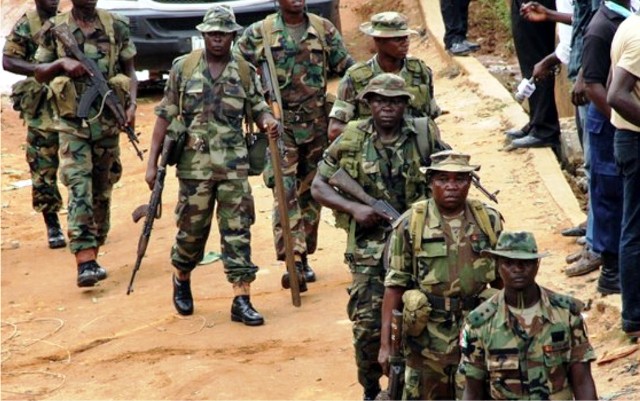
US Hails Nigerian Military For Rescuing 125 Kidnap Victims
-
News1 day ago
Bayelsa Boat Mishap: Tinubu Donates N250m As Death Toll Hits 29
-
News1 day ago
Odu Pays Tribute To Late Chinwah, Describes Him As Courageous, Selfless Academic
-
Business4 days ago
Reps Raise Alarm Over N2trn Agricultural Loan Diversion
-

 Featured4 days ago
Presidents Xi, Trump, Putin Commit To Global Stability, Denuclearisation
-
Politics4 days ago
ADC Faults INEC’s Alleged Limited Capacity To Upload Election Result On IREV
-
Politics4 days ago
Tinubu Expands 2027 Campaign Tour To 19 States