
Opinion
Of Ebola And Boko Haram (II)

Their thinking is that the world will not pay
proper attention to the deadly virus until it gets to Nigeria, being the most populous black nation on earth. Hence, ECOWAS invited Sawyer for a conference in Nigeria and Liberia cleared him to attend, not minding that he was on observation of Ebola virus. Again, I saw Sawyer’s death in Nigeria as a honourable one. Had he died quietly in Liberia, no one would have heard about Patrick Sawyer and much about Ebola, as we have heard and known it now.
By choosing to die in Nigeria, Mr. Sawyer had no doubt immortalised himself and saved many people in Africa who would have ignorantly contracted the virus. Today, indeed the attention of Nigeria, Africa and the world on Ebola virus disease is unprecedented. Also, precautionary measures are being taken. I heard that the trees harbouring bats and other birds dropping faeces on visitors’ cars in the Presidential Villa, Abuja are now cut-off. Courtesy of late Patrick Sawyer.
My only regret, however, is the death of a female doctor, Ms. Adadevoh who battled to save Sawyer’s life and later discovered that he was suffering with Ebola virus, and quickly quarantined him. And of course other health workers infected by their close contact with Sawyer. May God save their lives for working to save other peoples’ lives.
Boko Haram insurgency in Nigeria began in 2008 or thereabout in Borno State, North East, Nigeria by one Yesuf who started by brain washing the youth of the area with strange and doubtful Islamic doctrines, which resulted to pockets of crises here and there. Yesuf was arrested and later killed. Since then, Nigeria has not known peace as the organisation has turned into full blown terrorism and have murdered thousands of people.
I agree with Nigeria’s Minister of Health, Prof. Onyebuchi Chukwu that Sawyer’s action has placed unnecessary stress on Nigeria, considering the stress the nation is passing through over Boko Haram insurgency in the North East, Nigeria.
Meanwhile, the basic things to do to prevent the spread of Ebola are keeping good hygiene and sanitation, avoiding physical contact with Ebola infected patients or persons, regular washing of hands, keeping away from infected animals and eating of bush meats, touching of infected dead persons, ensuring that Ebola infected persons are isolated etc.
Ebola symptoms are weakness, diarrhea, stomach pain, headache, fever, vomiting, depression, red eyes, cold, confusion, cough, sore throat, chest pain, joints and muscles pain, internal and external bleeding etc. 21 days are Ebola virus incubation period. These are Ebola deadly weapons against human race.
I wish the Federal Government could deploy great Ebola to Boko Haram, or Ebola would on its own walk boldly and majestically to Sambisa forest or wherever their camp may be to engage them in the battle of supremacy. By the time Ebola deploys five of its deadly weapons like weakness, diarrhea, dislocation of joint and muscles, excruciating pain, they will surrender and let Nigeria be, and of course give Borno and the neighbouring states a breathing space.
President Goodluck Jonathan and Governor Babatunde Fashola of Lagos state should be commended for their bold and prompt steps taken to prevent the spread of Ebola virus in Nigeria. Late Dr. Stella Ameyo Adadevoh, the daughter of Prof. Babatunde Kwaku Adadevoh and great grand daughter of Nigerian Nationalist, Late Herbert Macaulay should be commended and honoured for diagnosing Sawyer as an Ebola virus infected patient and quarantined him. Dr. Adadevoh sacrificed her life to save Nigerians.
It is sad and regrettable that Rivers State Government has chosen Oduoha-Emohua, my community as a quarantine (isolation) centre of the Ebola virus infected patients. It is indeed sad that Ebola virus disease discovered in faraway Democratic Republic of Congo now has a camp for its victims in Oduoha-Emohua. Well, I pray that God will also choose Oduoha-Emohua as a healing centre of the universe for all ailments and diseases. Afterall, our ancestors prided Oduoha-Emohua as a hospitable community; and it has been known as such to this day. Could that be the reason for siting an Ebola centre in Oduoha-Emohua? To God be the glory. Concluded.
Ogbuehi, a journalist and social commentator, wrote in from Port Harcourt.
Prince Ike Ogbuehi



There is growing need for urgent and sustained attention to the severe economic hardship confronting millions of Nigerians. Across the country, the ordinary citizen is increasingly finding it difficult to cope with the demands of daily living. For many households, survival has become a struggle, as the rising cost of essential goods and services continues to erode incomes and diminish the purchasing power of families. What was once considered a manageable cost of living has become an overwhelming burden for workers, traders, artisans, students and other vulnerable members of society. One of the most visible manifestations of this hardship is the astronomical increase in food prices. Staple commodities such as rice, garri, beans, yam, cooking oil and other basic necessities have become increasingly unaffordable.
Families that once managed to provide three meals daily are now compelled to reduce their food consumption, compromise on nutritional quality or skip meals altogether. The situation is particularly troubling for low-income earners whose salaries have remained largely inadequate to meet the escalating cost of household needs. Food is not a luxury; it is a basic human necessity. Therefore, when a significant proportion of the population struggles to afford what should ordinarily be within reach, it raises serious questions about the effectiveness of economic policies and the government’s commitment to citizens’ welfare. Transportation has equally become a major source of financial pressure. Following the removal of fuel subsidy, petrol prices increased considerably, triggering corresponding increases in transport fares and the cost of moving goods and services.
Workers now spend a substantial portion of their monthly earnings commuting to and from their workplaces. Traders and small-scale entrepreneurs face higher operational costs as transporting merchandise from markets to their shops becomes increasingly expensive. The consequences extend to the education sector. Some school children are compelled to trek considerable distances because their parents cannot afford daily transportation fares. This situation not only exposes children to physical exhaustion and possible security risks but also threatens their punctuality, concentration and overall educational experience. No child should have to choose between attending school and the financial limitations of the family. Unemployment further compounds the economic crisis.
Thousands of graduates leave tertiary institutions every year with hopes of securing meaningful employment, only to encounter a labour market with limited opportunities. Many remain unemployed for years, while others accept jobs that offer little financial security. The situation is particularly discouraging for young people who have invested time, resources and energy in acquiring education but cannot translate their qualifications into productive livelihoods.Small businesses and artisans are also bearing the consequences of the harsh economic environment. The high cost of raw materials, electricity, transportation and other operational expenses has forced many entrepreneurs to reduce their activities or shut down completely. Businesses that should ordinarily provide employment and stimulate economic growth are instead struggling to remain afloat.
This development creates a damaging cycle in which business closures increase unemployment, reduce household incomes and further weaken consumer spending. The social implications of prolonged economic hardship cannot be ignored. When people are unable to meet basic needs despite working hard, frustration, desperation and hopelessness can take root. Young people who cannot find legitimate means of livelihood may become vulnerable to criminal activities, drug abuse, human trafficking and other social vices. Although poverty does not automatically lead to crime, widespread economic deprivation can create conditions that make social instability more difficult to contain. It is particularly painful that Nigeria, a country endowed with enormous natural resources, fertile agricultural land and an energetic, intellectually capable population, continues to experience such widespread economic distress.
The country’s potential for agricultural productivity, industrial development and employment generation remains enormous. What is required is the political will, institutional efficiency and consistent policy implementation to translate these advantages into improved living conditions. The Federal Government must therefore intensify efforts to address the situation through practical and sustainable interventions. Agriculture deserves particular attention. Farmers should have access to affordable fertilisers, improved seedlings, modern equipment, agricultural financing and adequate security on their farms. Strengthening local food production and distribution will help increase supply, reduce dependence on expensive imports and moderate food prices.
Equally important is the need to create an enabling environment for businesses to thrive. Small and medium-scale enterprises should receive accessible loans, tax relief where appropriate, reliable electricity and other forms of institutional support. Such interventions will encourage entrepreneurship, protect existing jobs and create new employment opportunities, particularly for young Nigerians. Government must also strengthen social protection programmes and ensure that palliatives reach their intended beneficiaries. Assistance should not exist merely in official announcements, policy documents or television broadcasts. It must be transparent, verifiable and accessible to genuinely vulnerable households in both rural communities and urban centres.
Ultimately, economic policies must be evaluated by their impact on the lives of ordinary citizens. Macroeconomic indicators may provide useful information about the direction of the economy, but they cannot replace the lived experiences of families struggling to afford food, pay transport fares and keep their businesses open. Nigerians are not asking for luxury or privileges. They are asking for an economy in which honest work can provide a decent living, businesses can survive, children can attend school without undue hardship and families can afford their basic necessities. The government must treat this expectation as a responsibility, not a favour. The time for urgent, people-centred action is now.
Favour Umunnakwe
Umunnakwe is an intern with The Tide Newspaper.
In a democracy, political power is never expected to operate without scrutiny. Those entrusted with public authority must be answerable to the people, while those outside government have a legitimate responsibility to question, challenge and offer alternatives to the policies and decisions of those in power. This is the essence of opposition. It is an indispensable feature of democratic governance, providing the counterweight that prevents political authority from becoming absolute. Opposition, therefore, is not simply the existence of political parties outside government. It is an institutional responsibility to provide checks and balances, promote accountability, protect democratic values and offer alternative approaches to governance. Its relevance lies not in the ability to discredit the ruling party but in its capacity to ensure that the government remains responsive to the needs and aspirations of the people.
Since Nigeria’s return to democratic rule in 1999, the country’s political landscape has witnessed changes in leadership, party dominance, defections and shifting political alliances. Through these developments, opposition parties have remained an important part of the democratic process. However, the quality of opposition is as important as its existence. A country may have several political parties, but where they lack clear ideologies, credible leadership and the capacity to interrogate government policies constructively, democratic competition becomes weak. What, then, should opposition do? First, it must hold government accountable. This involves scrutinising public expenditure, questioning questionable decisions, demanding transparency and drawing attention to policies that undermine public welfare. Where government fails to fulfil its promises, opposition parties should demand explanations and insist on corrective measures. This responsibility is particularly important in Nigeria, where citizens continue to contend with economic hardship, insecurity, unemployment and the rising cost of living.
Second, opposition must provide alternatives. Criticism without constructive proposals is insufficient. Political parties seeking to replace an incumbent government must demonstrate that they possess the ideas, competence and leadership capacity to govern differently and better. They must develop policies that address the country’s challenges and communicate practical solutions to the electorate. Opposition should not merely identify problems; it should demonstrate how those problems can be resolved. Third, opposition serves as a safeguard against authoritarian tendencies. Democracy thrives where dissent is tolerated, fundamental rights are protected and institutions operate independently. By questioning the exercise of executive power and defending constitutional provisions, opposition parties help preserve the democratic space. Their role becomes particularly significant when government actions threaten freedom of expression, political participation and the rule of law.
However, opposition is not synonymous with hostility, obstruction or political desperation. It does not mean rejecting every government policy simply because it originates from the ruling party. When government makes decisions that advance the public interest, responsible opposition should acknowledge and support them. Equally, disagreement must be expressed through lawful and democratic channels, not violence, intimidation, misinformation or attempts to destabilise legitimate institutions. The growing conversations around political alliances and opposition cooperation ahead of the 2027 general elections also provide an opportunity to examine the character of opposition in Nigeria. Collaboration among political parties can strengthen democratic competition, particularly where fragmented opposition forces struggle to challenge a dominant ruling party. Nevertheless, alliances must be built on shared principles, coherent programmes and a genuine commitment to national development.
A coalition formed solely to dislodge an incumbent or distribute political offices may offer little assurance of better governance. Opposition parties must also put their own houses in order. They cannot credibly demand transparency and internal democracy from the ruling party while practising imposition, exclusion and intolerance within their organisations. Their leaders must demonstrate integrity, discipline and respect for democratic procedures. Nigerians need alternatives that inspire confidence, not merely familiar politicians changing party platforms in pursuit of personal advantage. The ruling party, on its part, must understand that criticism is not an act of treason. Opposition leaders, civil society organisations, journalists and ordinary citizens must be allowed to express legitimate disagreements without intimidation or harassment. Government must recognise that the right to dissent is constitutionally protected and that the strength of democracy is demonstrated by its ability to accommodate competing opinions.
Ultimately, opposition is about responsibility, not bitterness; accountability, not antagonism; and national interest, not personal ambition. It is an essential democratic institution that keeps government on its toes, widens political choices and ensures that public power remains subject to scrutiny. Nigeria needs an opposition that is courageous enough to challenge wrongdoing, responsible enough to acknowledge good governance and visionary enough to offer credible alternatives. Equally, it needs a government secure enough to welcome scrutiny and humble enough to correct its mistakes. That is what opposition is, and that is what democratic governance requires.
Sylvia ThankGod-Amadi

Quote: “The Flamingos have conquered the world; Nigeria must now rise to its responsibility of nurturing the next generation of champions.”
Sometimes, sporting victories
More significantly, they
Umejiaku deserves special
Umejiaku received the award
Nigeria has now broken into
For too long, young girls in
But beyond the reward, this
As Nigerians celebrate this
By; Calista Ezeaku
-
Business5 days ago
BSG Partiner American Coy To Invest $100m In Gas Processing
-

 Oil & Energy5 days ago
FG To Double Oil, Gas Reserves, Moves To Intensified fresh Exploration
-
Business5 days ago
Seme Customs Intercepts Live Pacific Ridley Sea Turtle
-
News19 hours ago
Parents Protest Scholarship Scheme Suspension At PAMO Varsity
-
 News17 hours ago
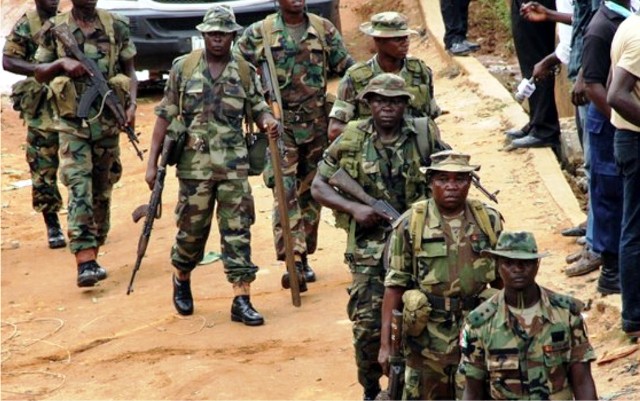
US Hails Nigerian Military For Rescuing 125 Kidnap Victims
-
Sports5 days ago
Fernandes Turns Down Man Utd Offer
-
Business5 days ago
159m small businesses registered on database in three years – SMEDAN boss
-
Sports5 days ago
Rivers To Host National Table Tennis Championship