
Opinion
Labour Unions And National Development

An organisation which I consider inevitable and
contributes to national development is labour or unionism. A viable labour union aids the growth, progress and development of any organisation.
Professor Allen Walter Read in the New International Webster’s Comprehensive Dictionary describes labour as “physical or mental exertion, particularly for some useful or desired end, toil, work. The working class collectively, dealing with the welfare of wage earners, especially in regard to wages, working conditions and opportunities for employment, to do work, toil strive to accomplish a work or purpose.
Unionism everywhere promotes unity of purpose and action. To this end, Nze Bernadette sees unionism as the principle or policy of forming or adhering to a union. A labour union is therefore an organisation of workers who have bonded together to achieve common goals such as protecting the integrity of its trade, achieving higher pay, ensuring job security for its members and better working conditions.
Bernadette in a paper presented at a training workshop at Federal University of Technology, (FUTO), Owerri, asserted that “nations are interconnected as never before with increased globalisation promising faster growth, higher standard of living and vast opportunities.”
Unionism has addressed most threatening social, economic and political problems for national development. This is in line with the origin of trade unionism which has been traced to the Industrial Revolution when the lack of skilled manpower necessary to perform many specialised jobs gave undue advantage to the employers leading to the maltreatment and under payment of many workers. This led to protest by workers which eventually resulted in the formation of trade unions. Pope Leo XII supported the action of workers and demanded that workers be granted certain rights and safety regulations.
Following this development, the International Labour Organisation (ILO) was established in 1919 with the Treaty of Versailles which stands for the promotion of peace and justice.
Importantly, while trade unionism was making tremendous effort towards national development, some employers of labour do not appreciate such effort, rather they saw labour union as a threat. This affected the relationship that existed between labour and employers.
The labour movement in Nigeria began in 1912 under the Colonial Civil Service Union (CCSU). It was headed by Henry Liebert, an immigrant from Ivory Coast. After the amalgamation of Nigeria in 1914, the Nigeria Civil Service Union (NCSU) agitated for workers’ welfare by carrying a 40 day strike action which was led by late Michael Imoudu. This strike action was successful.
Active trade unionism began with the successful strike action by NCSU in 1945. Workers began to call for the establishment of trade unions until the nation attained independence in 1960. Post-Independence era witnessed a sudden upsurge of trade unions in the country. This led to the establishment of human rights groups as well as social activists. These groups have been fighting all kinds of oppressive regimes including the military.
Trade unions have contributed so much to national development. The Nigeria Labour Congress (NLC), for instance, has been fighting governments over bad policies. The union has contributed to the enthronement of social justice as well. Since the NLC was founded, several labour unions have been established. For instance, we have labour unions like the Trade Union Congress (TUC), Nigeria Union of Journalists (NUJ), Nigeria Union of Teachers (NUT) etc. Many of the unions in the country are affiliates of NLC.
Given the way labour unions were established in the country, it behoves them to contribute to national development. Unions should be seen as the voice of the people. Part of their responsibility is to mobilise against bad government as well as promote the welfare of workers. Also, it is duty of labour unions to mobilise the people towards participation in governance. These are enormous tasks which if properly carried out by labour in the country, will lead to good governance.
Employers of labour should stop seeing labour unions as organisations that are out to sabotage their efforts. Rather they have to be seen as partners in progress. If labour unions and employers work in synergy and harness the opportunities that are available to them, national development will be promoted unhindered. Ominyanwa wrote from Port Harcourt
Goddey Ominyanwa




Quote: “The Flamingos have conquered the world; Nigeria must now rise to its responsibility of nurturing the next generation of champions.”
Sometimes, sporting victories
More significantly, they
Umejiaku deserves special
Umejiaku received the award
Nigeria has now broken into
For too long, young girls in
But beyond the reward, this
As Nigerians celebrate this
By; Calista Ezeaku
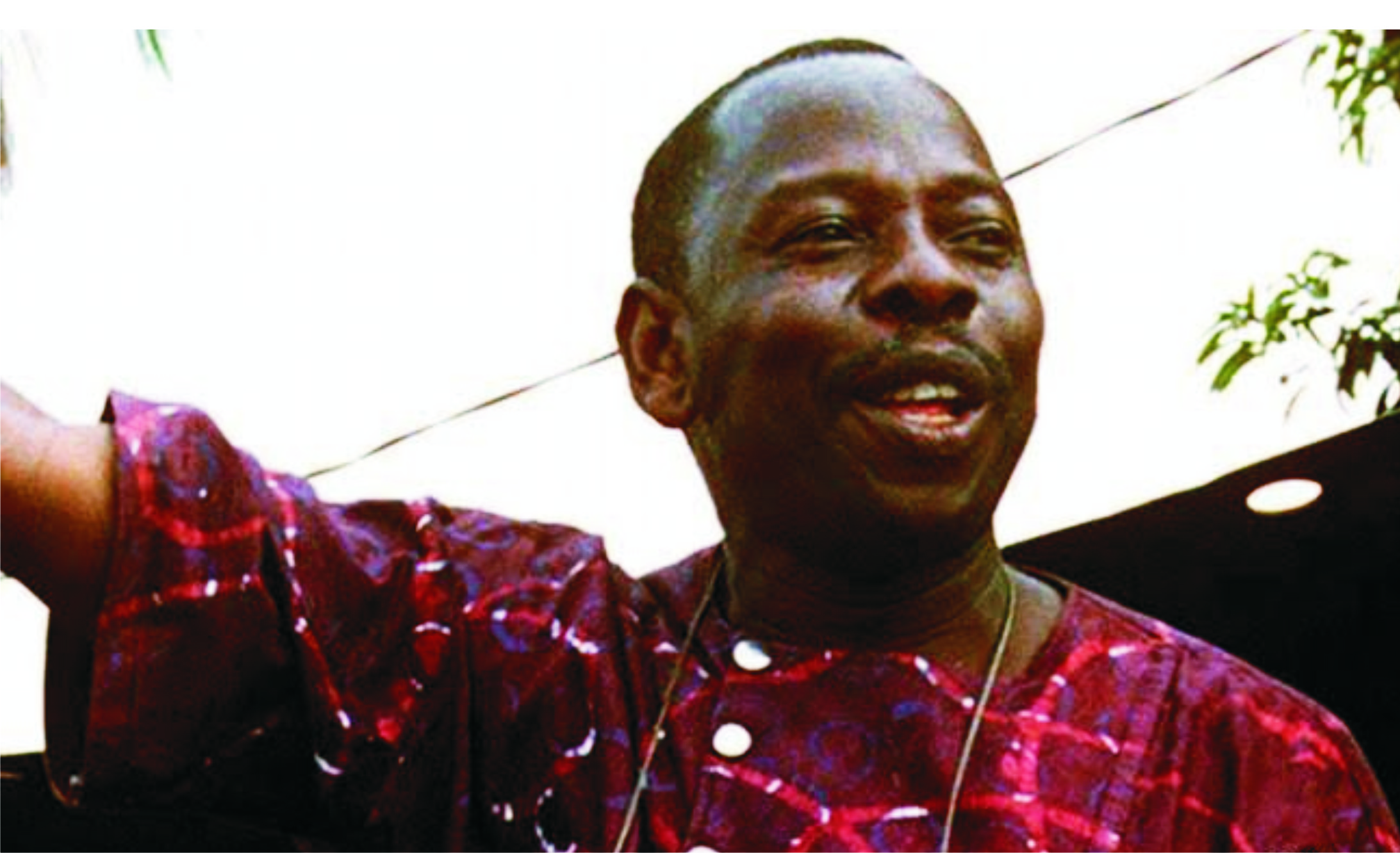
On November 10, 1995, the Nigerian military government of General Sani Abacha executed Ken Saro-Wiwa and eight other Ogoni leaders after a deeply controversial trial. Their deaths marked one of the darkest chapters in Nigeria’s history. At a time when fear silenced citizens and sycophancy flourished around military power, Saro-Wiwa chose to confront tyranny. Many Nigerians retreated into silence, while others praised the regime to secure favour. He knew the risks, yet refused to abandon a people whose land had been devastated by oil exploration and whose lives remained trapped in poverty. His courage arose from the conviction that public responsibility sometimes demands resistance to authority. Saro-Wiwa understood that speaking against a military government could lead to imprisonment or death.
Nonetheless, he believed the suffering of the Ogoni people demanded a courageous response. While oil was extracted from their land, they were left with polluted rivers, damaged farmland, declining livelihoods and an environment hostile to human survival. Fishing grounds and sources of livelihood were threatened, while the people struggled to secure basic amenities. The wealth beneath their soil brought neither adequate development nor a fair share of national resources. For him, silence in the face of injustice would have amounted to complicity. Through the Movement for the Survival of the Ogoni People (MOSOP), he organised a peaceful campaign that took the Ogoni question to the international community. MOSOP gave ordinary people an organised platform through which to express their grievances and insist on recognition.
The Ogoni Bill of Rights, presented to the Federal Government in 1990, demanded political autonomy, economic justice, environmental protection and control over the people’s resources. The campaign exposed the human and ecological costs of oil operations, particularly those associated with Shell, and challenged the apparent alliance between corporate interests and an unresponsive State. The Ogoni struggle became a defining expression of minority rights and environmental justice in Nigeria and Africa. Saro-Wiwa’s writings and mobilisation drew attention to communities treated as expendable because of their limited population and political influence. He argued that numerical strength should never determine a people’s value or rights.
A minority community does not become less deserving of justice because it cannot command electoral numbers or political power. In Nigeria, every ethnic group deserves dignity, protection and a fair opportunity to benefit from the commonwealth. Rather than respond to peaceful agitation with dialogue, the Abacha regime resorted to repression. Ogoni leaders were harassed, detained and killed; others fled into exile. The crisis intensified after four Ogoni chiefs were killed in May 1994. Saro-Wiwa and other MOSOP leaders were arrested, tried by a special tribunal and executed despite international appeals for clemency and serious concerns about the trial’s fairness. The executions drew worldwide condemnation and intensified scrutiny of Nigeria’s human-rights record and oil companies in the Niger Delta.
They demonstrated the danger of using State institutions to suppress peaceful demands. The proceedings remain a reminder of the need for judicial independence and due process. Saro-Wiwa’s courage rested on the conviction that justice must be pursued despite the cost. His method combined non-violent resistance, public education and grassroots organisation. His struggle recalled the civil-rights campaign of Martin Luther King Jr. and the power of peaceful mobilisation against injustice. Saro-Wiwa linked environmental degradation to political exclusion, economic exploitation and the denial of democratic rights. Oil-producing communities, he insisted, should not remain zones from which wealth is removed to develop other parts of the country.
Their people must benefit through roads, schools, healthcare, jobs and clean water. Resource extraction carries a duty to protect host communities. His argument extended to the structure of the Nigerian federation. He challenged a revenue-allocation system that made oil-producing communities bear the environmental and social costs of extraction without commensurate benefits. Like advocates of fiscal federalism, he believed resources should be managed and shared equitably. He envisaged a society in which no community would be disadvantaged by its size, ethnicity, political affiliation, culture or religion. His vision was a country bound together by justice and equal citizenship. Saro-Wiwa was also a gifted writer, dramatist and public intellectual.
Through books, essays, plays and television, he documented Nigerian society’s contradictions and challenged abuses of power. His popular television series, Basi and Company, demonstrated his creative range, while his leadership of the Association of Nigerian Authors encouraged writers to engage national questions. He believed literature should not be detached from society’s struggles. His pen exposed environmental injustice, political repression and the dangers of silencing courageous voices. He used storytelling, satire and drama to shape public consciousness and expose social contradictions. His literary achievements gave his activism wider reach and made the Ogoni experience part of national conversation. His commitment to the Ogoni people extended beyond the oil question.
During the Civil War, he worked to protect his vulnerable community. He urged younger generations to reject subservience and complacency and pursue change through lawful, peaceful means. Citizens, he believed, must not surrender their responsibility to challenge wrong doing. An injury to one community threatens the rights and security of all. The return to democratic government in 1999 and the establishment of the Niger Delta Development Commission, the Ministry of Niger Delta Affairs and the Hydrocarbon Pollution Remediation Project (HYPREP) are among developments that have kept the region’s demands in public view. Saro-Wiwa did not create these institutions, but his movement helped expose the urgency of intervention and sustain pressure for redress.
His death made it harder to ignore the Niger Delta’s environmental and political grievances. Yet, interventionist institutions do not prove that the original demands have been met. Their effectiveness depends on competent leadership, transparent spending, measurable outcomes and community participation. Yet, thirty-one years after his execution, the central concerns of the Ogoni struggle remain unresolved. The HYPREP-led clean-up has offered hope, but many residents await meaningful improvements. Questions persist about the programme’s pace, quality and transparency, and whether its benefits reach ordinary people. A clean-up should be judged not by ceremonies or contracts, but by restored land and waterways, safe drinking water, improved livelihoods and better public health.
It must include long-term monitoring to ensure treated sites remain safe. Residents deserve information about contamination, remediation methods and completion timelines. Reports that water projects in Gwara and Ebubu Communities, in Khana and Eleme Local Government Areas respectively, failed weeks after commissioning have raised further concerns. If confirmed, the failures would indicate weaknesses in supervision, procurement and quality control.
To be continued in our next edition.
Taneh Beemene
-
News4 days ago
RSG Reaffirms Commitment To STEM Education, Technological Advancement
-
Business4 days ago
‘NUJ, NPA’s Partnership Would Boost Port Producrivity, Economic Growth’
-
 News4 days ago
IGP Warns Police Officers Against Partisanship …Directs Regular Engagement With Journalists
-

 Oil & Energy20 hours ago
FG To Double Oil, Gas Reserves, Moves To Intensified fresh Exploration
-
Business4 days ago
Fire Threat Interrupts Asaba Air Peace Flight
-
 News4 days ago
Customs To Deploy AI, Scanners Against Snuggling
-
Business4 days ago
Fish Production Deficit, A Major Investment Opportunity – Minister
-
Sports4 days ago
CAF Awards 2026 Gets A New Date