
Opinion
Dimensions Of Unemployment

Sometime last year, I
was at the Rivers State University of Science and Technology, RSUST, Port Harcourt, for the convocation ceremony of a cousin. While the ceremony lasted, what went through my mind was entirely different.
I was hoping my cousin truly understood what she was graduating into. I was equally sure she didn’t do a deep reflection on the unemployment situation in Nigeria. If she had, the boundless joy she expressed at the occasion would have been punctuated intermittently.
Each time I think about the unemployment situation in the country, I am often intrigued. I sympathise with those who graduate from higher institutions expecting to get employments that are non-existent. Some of them ask themselves the essence of being graduates when there are no jobs out there.
With a population of over 160 million, endowed with enormous natural resources, Nigeria prides itself as the most populous country in Africa and the second largest economy in the continent. Sadly, however, years of unbridled corruption, mismanagement and waste have hindered economic growth.
Consequently, the nation’s resources are unutilized leading to unemployment and poverty which threatens the attainment of the Millennium Development Goals, MDGs, in the country. Graduate unemployment has become so pronounced in the last few decades that there appears to be no abatement in sight.
The situation is made worse by the upsurge in the output from tertiary institutions and the inelastic absorptive capacity of the labour market for the services of university and polytechnic graduates. Then the job-seeking graduate’s plight is worsened by employers’ demand for years of experience. The poser is how will experience come without first securing a job?
Given the prevailing problem, many persons are under-employed and are paid what I call ‘starvation allowance’. This class of people is still looking for more gainful employment, thus giving no room to the inexperienced job seekers. To worsen the situation, to be employed nowadays one is expected to have a god father commonly referred to as ‘man know man’.
According to a recent World Bank statistics on the unemployment situation in Nigeria, youth unemployment rate is 38 percent, but realistically, 80 percent of Nigerian youths are unemployed, and this includes secondary school graduates who mostly dwell among the rural populace.
Also, records from the National Bureau of Statistics show that 24 percent of labour force is unemployed. This translates to about 40 million Nigerians. And given the fact that the figure goes up every year, there is need for everyone to be concerned.
What, however, complicates the matter is the number of graduates the nation’s universities churn out annually. The figure has been put at 300,000. How can this army of unemployed persons be absorbed when there is no corresponding number of industries in the country and available jobs are hardly enough to absorb the teeming population?
Recently, a federal agency advertised for recruitment and the mammoth crowd that came for interview was beyond control, resulting in the death of some of the applicants. Similarly, another federal agency advertised 25 vacant positions. Because of the incident that occurred at the sister agency, applicants were asked to apply online. In the end, over 125,000 applications were received.
The dimension unemployment has taken in the country is alarming. Recently, the Finance Minister, Dr. Ngozi Okonjo-Iweala, declared that the situation was causing her sleepless nights. I don’t think that the minister is alone in experiencing the nightmare. Several Nigerians do as well.
As it stands now, no one knows how long this situation will continue. In scamming for the very few available jobs, many youths have fallen to the activities of fraudsters. Some of them have been duped or compromised while others have taken recourse to crime. Unfortunately, some government agencies are involved in defrauding helpless job seekers by extorting from them in the guise of paying for application forms.
The President as well as state governors has been assuring Nigerians of improvement in job creation, especially during electioneering. When will those promises be fulfilled or are they mere deceit in order to win elections?
If concerted steps are not taken to end this menace, the results are quite obvious. We must all be prepared to pay the price, as the nation risks the recruitment of jobless youths into the army of oil thieves, insurgents, militants, kidnappers and of course armed robbers. Then we shall have no hiding place.
Arnold Alalibo




Quote: “The Flamingos have conquered the world; Nigeria must now rise to its responsibility of nurturing the next generation of champions.”
Sometimes, sporting victories
More significantly, they
Umejiaku deserves special
Umejiaku received the award
Nigeria has now broken into
For too long, young girls in
But beyond the reward, this
As Nigerians celebrate this
By; Calista Ezeaku
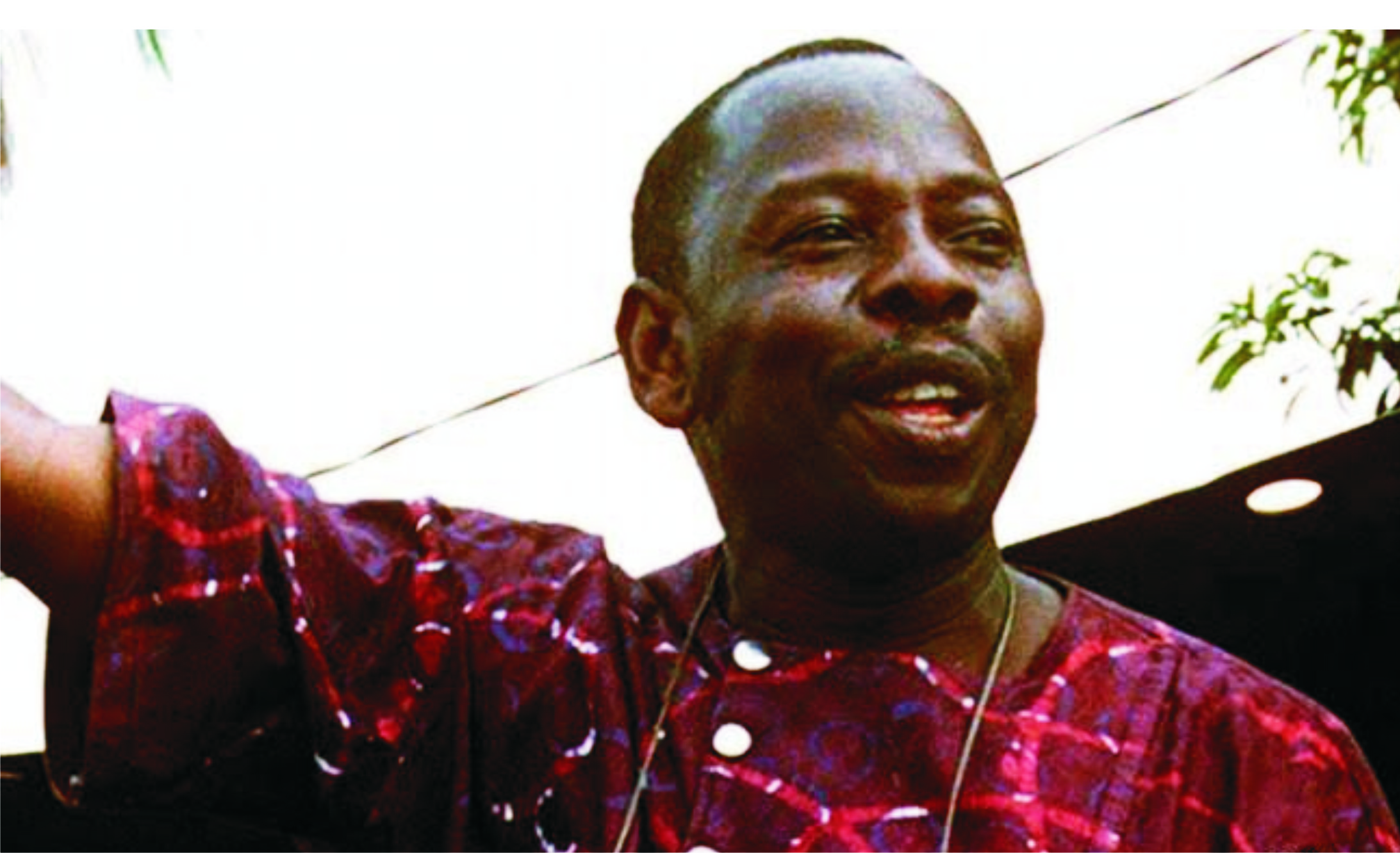
On November 10, 1995, the Nigerian military government of General Sani Abacha executed Ken Saro-Wiwa and eight other Ogoni leaders after a deeply controversial trial. Their deaths marked one of the darkest chapters in Nigeria’s history. At a time when fear silenced citizens and sycophancy flourished around military power, Saro-Wiwa chose to confront tyranny. Many Nigerians retreated into silence, while others praised the regime to secure favour. He knew the risks, yet refused to abandon a people whose land had been devastated by oil exploration and whose lives remained trapped in poverty. His courage arose from the conviction that public responsibility sometimes demands resistance to authority. Saro-Wiwa understood that speaking against a military government could lead to imprisonment or death.
Nonetheless, he believed the suffering of the Ogoni people demanded a courageous response. While oil was extracted from their land, they were left with polluted rivers, damaged farmland, declining livelihoods and an environment hostile to human survival. Fishing grounds and sources of livelihood were threatened, while the people struggled to secure basic amenities. The wealth beneath their soil brought neither adequate development nor a fair share of national resources. For him, silence in the face of injustice would have amounted to complicity. Through the Movement for the Survival of the Ogoni People (MOSOP), he organised a peaceful campaign that took the Ogoni question to the international community. MOSOP gave ordinary people an organised platform through which to express their grievances and insist on recognition.
The Ogoni Bill of Rights, presented to the Federal Government in 1990, demanded political autonomy, economic justice, environmental protection and control over the people’s resources. The campaign exposed the human and ecological costs of oil operations, particularly those associated with Shell, and challenged the apparent alliance between corporate interests and an unresponsive State. The Ogoni struggle became a defining expression of minority rights and environmental justice in Nigeria and Africa. Saro-Wiwa’s writings and mobilisation drew attention to communities treated as expendable because of their limited population and political influence. He argued that numerical strength should never determine a people’s value or rights.
A minority community does not become less deserving of justice because it cannot command electoral numbers or political power. In Nigeria, every ethnic group deserves dignity, protection and a fair opportunity to benefit from the commonwealth. Rather than respond to peaceful agitation with dialogue, the Abacha regime resorted to repression. Ogoni leaders were harassed, detained and killed; others fled into exile. The crisis intensified after four Ogoni chiefs were killed in May 1994. Saro-Wiwa and other MOSOP leaders were arrested, tried by a special tribunal and executed despite international appeals for clemency and serious concerns about the trial’s fairness. The executions drew worldwide condemnation and intensified scrutiny of Nigeria’s human-rights record and oil companies in the Niger Delta.
They demonstrated the danger of using State institutions to suppress peaceful demands. The proceedings remain a reminder of the need for judicial independence and due process. Saro-Wiwa’s courage rested on the conviction that justice must be pursued despite the cost. His method combined non-violent resistance, public education and grassroots organisation. His struggle recalled the civil-rights campaign of Martin Luther King Jr. and the power of peaceful mobilisation against injustice. Saro-Wiwa linked environmental degradation to political exclusion, economic exploitation and the denial of democratic rights. Oil-producing communities, he insisted, should not remain zones from which wealth is removed to develop other parts of the country.
Their people must benefit through roads, schools, healthcare, jobs and clean water. Resource extraction carries a duty to protect host communities. His argument extended to the structure of the Nigerian federation. He challenged a revenue-allocation system that made oil-producing communities bear the environmental and social costs of extraction without commensurate benefits. Like advocates of fiscal federalism, he believed resources should be managed and shared equitably. He envisaged a society in which no community would be disadvantaged by its size, ethnicity, political affiliation, culture or religion. His vision was a country bound together by justice and equal citizenship. Saro-Wiwa was also a gifted writer, dramatist and public intellectual.
Through books, essays, plays and television, he documented Nigerian society’s contradictions and challenged abuses of power. His popular television series, Basi and Company, demonstrated his creative range, while his leadership of the Association of Nigerian Authors encouraged writers to engage national questions. He believed literature should not be detached from society’s struggles. His pen exposed environmental injustice, political repression and the dangers of silencing courageous voices. He used storytelling, satire and drama to shape public consciousness and expose social contradictions. His literary achievements gave his activism wider reach and made the Ogoni experience part of national conversation. His commitment to the Ogoni people extended beyond the oil question.
During the Civil War, he worked to protect his vulnerable community. He urged younger generations to reject subservience and complacency and pursue change through lawful, peaceful means. Citizens, he believed, must not surrender their responsibility to challenge wrong doing. An injury to one community threatens the rights and security of all. The return to democratic government in 1999 and the establishment of the Niger Delta Development Commission, the Ministry of Niger Delta Affairs and the Hydrocarbon Pollution Remediation Project (HYPREP) are among developments that have kept the region’s demands in public view. Saro-Wiwa did not create these institutions, but his movement helped expose the urgency of intervention and sustain pressure for redress.
His death made it harder to ignore the Niger Delta’s environmental and political grievances. Yet, interventionist institutions do not prove that the original demands have been met. Their effectiveness depends on competent leadership, transparent spending, measurable outcomes and community participation. Yet, thirty-one years after his execution, the central concerns of the Ogoni struggle remain unresolved. The HYPREP-led clean-up has offered hope, but many residents await meaningful improvements. Questions persist about the programme’s pace, quality and transparency, and whether its benefits reach ordinary people. A clean-up should be judged not by ceremonies or contracts, but by restored land and waterways, safe drinking water, improved livelihoods and better public health.
It must include long-term monitoring to ensure treated sites remain safe. Residents deserve information about contamination, remediation methods and completion timelines. Reports that water projects in Gwara and Ebubu Communities, in Khana and Eleme Local Government Areas respectively, failed weeks after commissioning have raised further concerns. If confirmed, the failures would indicate weaknesses in supervision, procurement and quality control.
To be continued in our next edition.
Taneh Beemene
-
News4 days ago
RSG Reaffirms Commitment To STEM Education, Technological Advancement
-
Business4 days ago
‘NUJ, NPA’s Partnership Would Boost Port Producrivity, Economic Growth’
-
 News4 days ago
IGP Warns Police Officers Against Partisanship …Directs Regular Engagement With Journalists
-

 Oil & Energy15 hours ago
FG To Double Oil, Gas Reserves, Moves To Intensified fresh Exploration
-
Business4 days ago
Fire Threat Interrupts Asaba Air Peace Flight
-
 News4 days ago
Customs To Deploy AI, Scanners Against Snuggling
-
Business4 days ago
Fish Production Deficit, A Major Investment Opportunity – Minister
-
Sports4 days ago
CAF Awards 2026 Gets A New Date