
Opinion
Helping Local Poultry Curb Protein Deficiency (1)

The third National Devel
opment plan in Nigeria (1975-1980) envisaged accelerated agricultural growth as being essential for future nutritional growth and emphasized the need for qualitative rather than quantitative food output. This was followed by the publication of a national food balance sheet by the Federal Ministry of Agriculture and Natural Resources which revealed the critical extent of essential foods deficiencies in the country. The target was the improvement of production management, the breeding and feathering of livestock as well as the provision of veterinary services.
From the period of the third National Development plan till date, the dream of attaining the required nutritional growth for the Nigerian populace had remained a far cry as outputs of animal products still fall below the minimum nutritional requirements.
Poultry, which involves the domestication of birds (fowls, turkeys, ducks and geese) kept for egg or meat production, is the quickest source of meat and its production process involves the least hazardous and arduous in relation to other livestock enterprise. Hence, increased poultry production is one of the surest and quickest ways of bridging the animal protein intake gap between the developing countries of the world and in Nigeria most importantly.
Although the task of bridging this protein intake gap appears formidable in view of the present economic and technological constraints besetting the livestock industry, its importance and the need to make it a reality must not be overlooked.
Known for its significant contribution to human nutrition and economic development, the poultry sector according to Alabi and Osifo, 2014 constitutes more than 57% of the total livestock production in Nigeria with many going into it for either meat, egg or both production.
With an ever increasing population of Nigeria the poultry industry has not been able to meet up the animal protein need of the populace with all the potentiality of providing the protein need of man. Many people still find it difficult to eat an egg in a year against the recommended average of 240 eggs in a year per person.
This indicates that despite several actions by both the government and few individuals, the chronic deficiency in qualitative food output still yearns for solution.
However, talking about solution, the problem of insufficient supply of hatchable eggs and day-old-chicks must be addressed. It has been observed that at certain periods of the year, hatchable eggs and day-old-chicks (DOC) go out of supply even with substantial amount of import, a situation that subjects peasant poultry farmers to booking for order and waiting for weeks without result.
Worst still, when these orders are eventually made available, almost all the farmers end up brooding birds at the same time and the result is an eventual egg glot in the market. Therefore, egg production calendar is now marked by glot and scarcity periods, as a result of irregular supply of the source of chicks and eggs.
For farmers in Rivers State, what can be a worse experience and set back than lack of adequate qualitative feed appropriate to the ages of the birds? While farmers in the West and North, who have the privilege of proximity to source of raw material are at liberty to formulate their feeds to desired standards, the Rivers State farmers see it as a very critical factor in poultry management as they remain at the mercy of the commercial feed producers from the west who are more concerned about their profit even when the quality of the feeds can undermine the health and laying abilities of birds.
Moreso, the transportation cost of these feeds from the west to Port Harcourt, in no small measure, increases their cost of production high above what farmers from other states incure. The result is that the Rivers State farmer is unable to compete favourably with his counterparts elsewhere and Port Harcourt becomes a dumping ground for poultry products from neighbouring states which must be sold before products from within due to a down ward slash in the price of the outside products, because of cost advantage.
A provision of a feed mill that will formulate a standard feed to serve the farmers within the state will be a great boost to the local industry.
Apart from the afore-mentioned, the problem of the poultry farmer in Rivers State, could be purely managerial and skill-based. According to G.T. Williams, “Modern economic pressures are such that no one could contemplate a future in farming until he first acquires a reliable up-to-date knowledge in every aspect of animal husbandary”.
Like every field of endeavour, poultry farming is one sector which requires more than any other, a careful application of managerial expertise, if one’s capital investment is to be safeguarded and profitable returns expected.
The usual orientation of backyard poultry predominant in the western region of Nigeria has left many with the psyche that poultry business is an all-comers affairs, that could be started at any time without adequately counting the cost of commitment.
This has not just led to the abrupt abortions of many such ventures, but had in most cases devasted some homes who had put in fortunes, probably their retirement benefits just to make ends through poultry farming.
The later therefore, poses great concern as to the right attitude towards poultry farming.
Like some philosophers would say, potential masters are known by good stewardship. Suffice it to say that the proof of the pudding is in the eating. The steps taken towards the realization of a goal, would either guarantee or now the achievement of the eventual goal. If the thought of G.T. Williams be anything to go by, then, how much knowledge of the business have been acquired?
Obviously, the level of acquaintance any potential business man should have with his business of choice must go beyond the mere spelling and pronunciation of such business names as is the case with many, this of course, is not a condemnation of partnership in business where supposed experts are co-opted to build a business.
To many potential retirees, it is “poultry farming after retirement”, that is no less a noble idea but the need to guard one’s loins against the storms becomes imperative especially when huge, life savings is involved.
Sylvia ThankGod-Amadi




Quote: “The Flamingos have conquered the world; Nigeria must now rise to its responsibility of nurturing the next generation of champions.”
Sometimes, sporting victories
More significantly, they
Umejiaku deserves special
Umejiaku received the award
Nigeria has now broken into
For too long, young girls in
But beyond the reward, this
As Nigerians celebrate this
By; Calista Ezeaku
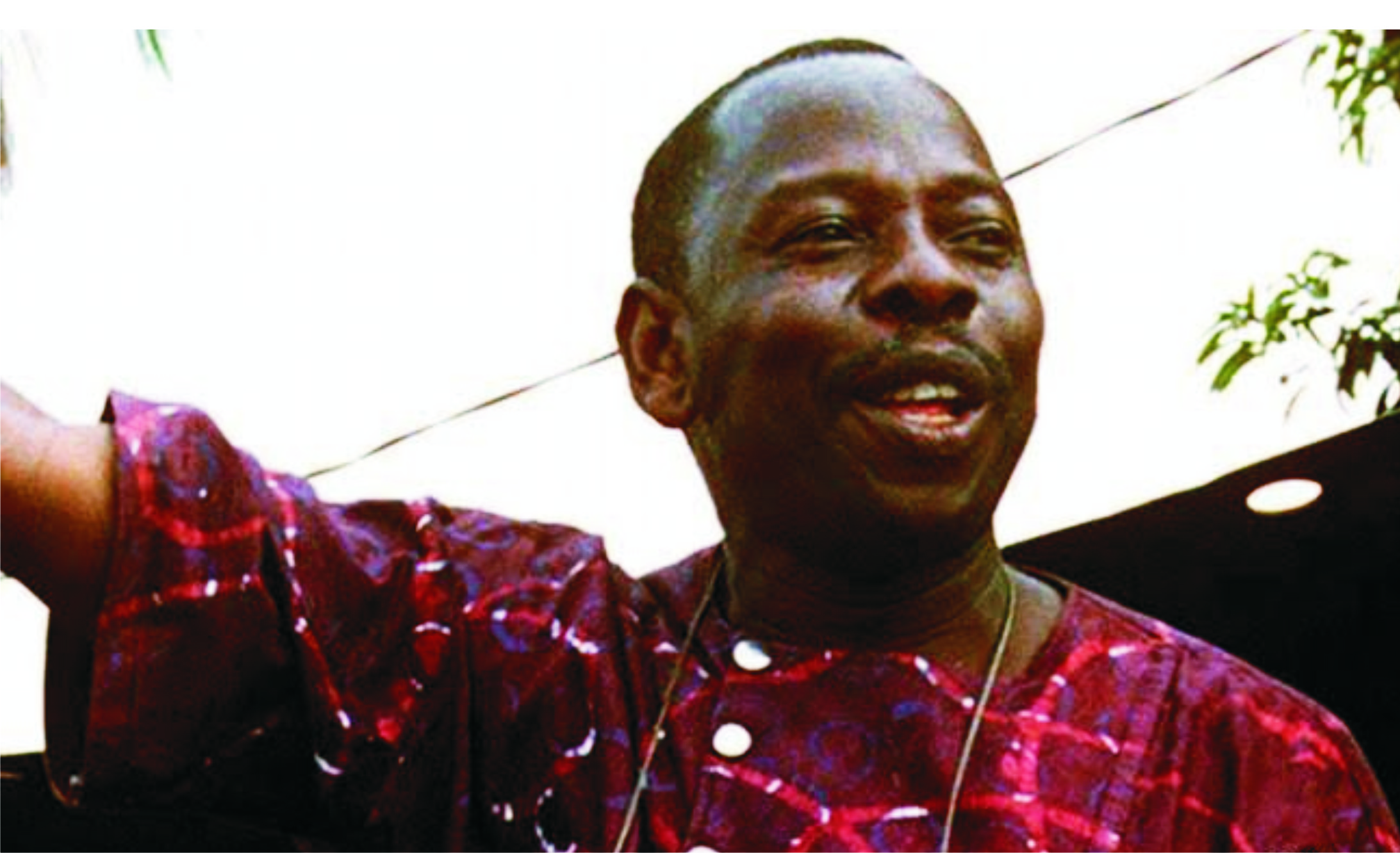
On November 10, 1995, the Nigerian military government of General Sani Abacha executed Ken Saro-Wiwa and eight other Ogoni leaders after a deeply controversial trial. Their deaths marked one of the darkest chapters in Nigeria’s history. At a time when fear silenced citizens and sycophancy flourished around military power, Saro-Wiwa chose to confront tyranny. Many Nigerians retreated into silence, while others praised the regime to secure favour. He knew the risks, yet refused to abandon a people whose land had been devastated by oil exploration and whose lives remained trapped in poverty. His courage arose from the conviction that public responsibility sometimes demands resistance to authority. Saro-Wiwa understood that speaking against a military government could lead to imprisonment or death.
Nonetheless, he believed the suffering of the Ogoni people demanded a courageous response. While oil was extracted from their land, they were left with polluted rivers, damaged farmland, declining livelihoods and an environment hostile to human survival. Fishing grounds and sources of livelihood were threatened, while the people struggled to secure basic amenities. The wealth beneath their soil brought neither adequate development nor a fair share of national resources. For him, silence in the face of injustice would have amounted to complicity. Through the Movement for the Survival of the Ogoni People (MOSOP), he organised a peaceful campaign that took the Ogoni question to the international community. MOSOP gave ordinary people an organised platform through which to express their grievances and insist on recognition.
The Ogoni Bill of Rights, presented to the Federal Government in 1990, demanded political autonomy, economic justice, environmental protection and control over the people’s resources. The campaign exposed the human and ecological costs of oil operations, particularly those associated with Shell, and challenged the apparent alliance between corporate interests and an unresponsive State. The Ogoni struggle became a defining expression of minority rights and environmental justice in Nigeria and Africa. Saro-Wiwa’s writings and mobilisation drew attention to communities treated as expendable because of their limited population and political influence. He argued that numerical strength should never determine a people’s value or rights.
A minority community does not become less deserving of justice because it cannot command electoral numbers or political power. In Nigeria, every ethnic group deserves dignity, protection and a fair opportunity to benefit from the commonwealth. Rather than respond to peaceful agitation with dialogue, the Abacha regime resorted to repression. Ogoni leaders were harassed, detained and killed; others fled into exile. The crisis intensified after four Ogoni chiefs were killed in May 1994. Saro-Wiwa and other MOSOP leaders were arrested, tried by a special tribunal and executed despite international appeals for clemency and serious concerns about the trial’s fairness. The executions drew worldwide condemnation and intensified scrutiny of Nigeria’s human-rights record and oil companies in the Niger Delta.
They demonstrated the danger of using State institutions to suppress peaceful demands. The proceedings remain a reminder of the need for judicial independence and due process. Saro-Wiwa’s courage rested on the conviction that justice must be pursued despite the cost. His method combined non-violent resistance, public education and grassroots organisation. His struggle recalled the civil-rights campaign of Martin Luther King Jr. and the power of peaceful mobilisation against injustice. Saro-Wiwa linked environmental degradation to political exclusion, economic exploitation and the denial of democratic rights. Oil-producing communities, he insisted, should not remain zones from which wealth is removed to develop other parts of the country.
Their people must benefit through roads, schools, healthcare, jobs and clean water. Resource extraction carries a duty to protect host communities. His argument extended to the structure of the Nigerian federation. He challenged a revenue-allocation system that made oil-producing communities bear the environmental and social costs of extraction without commensurate benefits. Like advocates of fiscal federalism, he believed resources should be managed and shared equitably. He envisaged a society in which no community would be disadvantaged by its size, ethnicity, political affiliation, culture or religion. His vision was a country bound together by justice and equal citizenship. Saro-Wiwa was also a gifted writer, dramatist and public intellectual.
Through books, essays, plays and television, he documented Nigerian society’s contradictions and challenged abuses of power. His popular television series, Basi and Company, demonstrated his creative range, while his leadership of the Association of Nigerian Authors encouraged writers to engage national questions. He believed literature should not be detached from society’s struggles. His pen exposed environmental injustice, political repression and the dangers of silencing courageous voices. He used storytelling, satire and drama to shape public consciousness and expose social contradictions. His literary achievements gave his activism wider reach and made the Ogoni experience part of national conversation. His commitment to the Ogoni people extended beyond the oil question.
During the Civil War, he worked to protect his vulnerable community. He urged younger generations to reject subservience and complacency and pursue change through lawful, peaceful means. Citizens, he believed, must not surrender their responsibility to challenge wrong doing. An injury to one community threatens the rights and security of all. The return to democratic government in 1999 and the establishment of the Niger Delta Development Commission, the Ministry of Niger Delta Affairs and the Hydrocarbon Pollution Remediation Project (HYPREP) are among developments that have kept the region’s demands in public view. Saro-Wiwa did not create these institutions, but his movement helped expose the urgency of intervention and sustain pressure for redress.
His death made it harder to ignore the Niger Delta’s environmental and political grievances. Yet, interventionist institutions do not prove that the original demands have been met. Their effectiveness depends on competent leadership, transparent spending, measurable outcomes and community participation. Yet, thirty-one years after his execution, the central concerns of the Ogoni struggle remain unresolved. The HYPREP-led clean-up has offered hope, but many residents await meaningful improvements. Questions persist about the programme’s pace, quality and transparency, and whether its benefits reach ordinary people. A clean-up should be judged not by ceremonies or contracts, but by restored land and waterways, safe drinking water, improved livelihoods and better public health.
It must include long-term monitoring to ensure treated sites remain safe. Residents deserve information about contamination, remediation methods and completion timelines. Reports that water projects in Gwara and Ebubu Communities, in Khana and Eleme Local Government Areas respectively, failed weeks after commissioning have raised further concerns. If confirmed, the failures would indicate weaknesses in supervision, procurement and quality control.
To be continued in our next edition.
Taneh Beemene
-
Business3 days ago
BSG Partiner American Coy To Invest $100m In Gas Processing
-
 Oil & Energy3 days ago
FG To Double Oil, Gas Reserves, Moves To Intensified fresh Exploration
-
Business3 days ago
Seme Customs Intercepts Live Pacific Ridley Sea Turtle
-
Sports3 days ago
Fernandes Turns Down Man Utd Offer
-
Business3 days ago
159m small businesses registered on database in three years – SMEDAN boss
-
Sports3 days ago
Rivers To Host National Table Tennis Championship
-
Maritime3 days ago
Nimasa,China MSA Sign Bilateral Maritime Agreement
-

 Sports3 days ago
Kenyans Win PH International Marathon, Cart Home $10,000