
Opinion
Meeting Nigeria’s Housing Needs

One of the basic needs
of man is shelter. Every human in the world needs shelter in order to have peaceful living. It is a constitutional right of Nigerians as provided in section 16(1)(d) of the 1999 constitution under the Fundamental Objectives and Directive Principles of State Policy. There it is categorically stated that the State should provide suitable and adequate shelter for its citizens.
Unfortunately, suitable and adequate shelter today seems to be the absolute right of the upper class citizens in the country as majority of middle and low income earners who constitute the bulk of the population still see it as a mirage.
Research has shown that a majority of Nigerian citizens living in cities and urban areas actually live in ghettos, shanties and squalid accommodation, lacking basic amenities. Rural dwellers also have the same ugly story due to lack of basic social amenities in these areas.
Recently, the World Bank estimated that the cost of bridging Nigeria’s 17 million housing deficit is N59.5 trillion, underlining the vast and untapped investment potentials of the country’s real estate sector.
The World Bank’s figure was not too far from that of the Federal Mortgaged Bank of Nigerian (FMBN), which had estimated about N56 trillion to be able to adequately meet the housing needs of Nigerians. That amount according to the Managing Director of FMBN, Mr Gimba Ya’u Komo, was based on conservative calculation which tagged the cost of building one house at N3.5 million.
Existing housing stock in Nigeria is so dismal despite claims by government to be making efforts to surmount the problem. Government has at different periods and at various levels incorporated diverse policies aimed at affordable housing into its economic development plans. One of the most recent is the drive towards “housing for all” as contained in the National Housing Policy, which aimed at providing affordable housing for all. This has so far been realised only on paper, even as the initial target date for accomplishing it was 2000-2014 years ago.
Again, the Federal Government in 2010, established the Federal Ministry of Lands, Housing and Urban Development with a clear mandate to initiate modalities to ensure provision of adequate and affordable housing for the Nigerian citizenry both in rural and urban areas. Can we say this ministry is meeting up with the mandate even as statistics show that the number of Nigerians without shelter continues to soar? What of the Federal and States Housing Authorities whose main duty is provision of houses for the citizens. What have they really been doing?
While some blame inability of past governments’ effort to yield needed results on corruption and lack of willingness by government agencies to tackle housing problems, others say politicisation of housing has been the major set back.
Experts have also identified the Land Use Act of 1978 which rests ownership of land in State Governments, and a cumbersome property registration process barrier to housing development and home ownership leading to the country’s huge hosuing deficit. They posit that until the Act is reviewed or amended, improved housing development will continue to be a pipe-dream.
I also want to agree with the opinion that poor government policies are responsible for the inability of Nigerians, especially civil servants to build or own their own homes. Many civil servants after putting in several years in service cannot boast of even a bungalow because of bottlenecks hindering them from accessing loans from the National Housing Fund which they contributed to. People who had desired to acquire houses often time were required to pay 100% cash. The question is: how many civil servants who rely solely on their legitimate income can afford that?
It was therefore, heartwarming reading a story on the effort of Lagos State government towards providing homes under a comfortable mortgage plan for the residents of the State. According to the report, Lagos State government a few days ago announced that it had completed 1,104 homes for the residents with another 3,156 units at various stages of construction and intends to start more at different parts of the State.
The State Governor, Babatunde Fashola during the launching of the project disclosed that the projects had been fully funded from the taxes that the people had paid as monthly internally generated revenue (IGR) and is aimed at ensuring that a large number of ordinary middle class and working class people procure homes in Lagos and the owners will be given over a period of not less than 10 years to pay for the homes under a mortgage scheme.
I think more state governors and even local government chairmen should borrow a leaf form the Lagos experience. Housing should be a major concern of any government. Any responsible government ought to pride in its ability to provide housing for its population.
The Federal Government’s dream of providing adequate shelter for its citizenry under Vision 20:2020 can only be achieved when relevant agencies of government evolve better planning to meet the housing needs of Nigerians. This include, facilitating creation of an enabling environment for easy and low cost mortgage facilities for ordinary Nigerians; viable long term mortgage lending scheme and review of the Land Use Act. And most importantly, reduction of high cost of building materials.
Calista Ezeaku




Quote: “The Flamingos have conquered the world; Nigeria must now rise to its responsibility of nurturing the next generation of champions.”
Sometimes, sporting victories
More significantly, they
Umejiaku deserves special
Umejiaku received the award
Nigeria has now broken into
For too long, young girls in
But beyond the reward, this
As Nigerians celebrate this
By; Calista Ezeaku
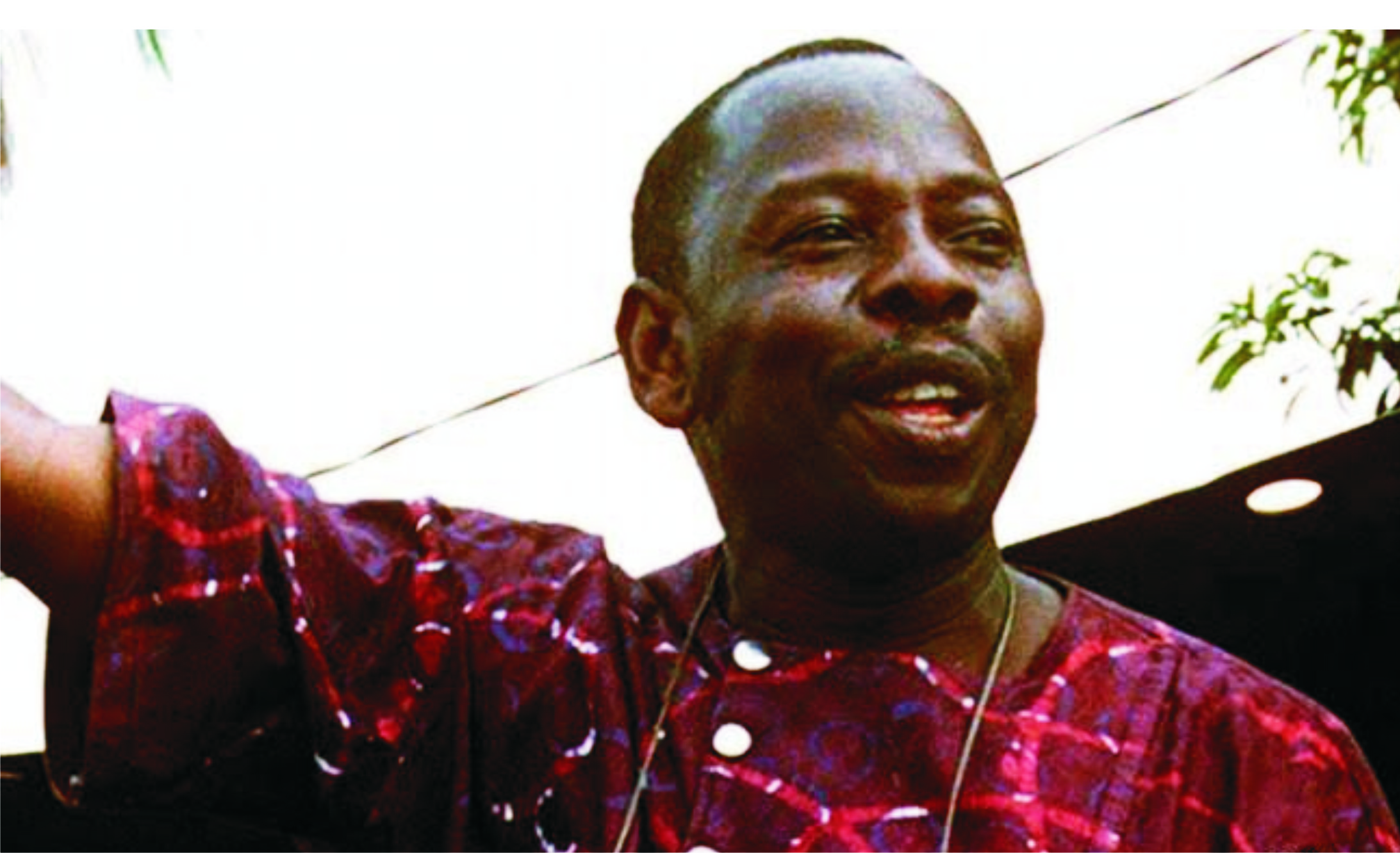
On November 10, 1995, the Nigerian military government of General Sani Abacha executed Ken Saro-Wiwa and eight other Ogoni leaders after a deeply controversial trial. Their deaths marked one of the darkest chapters in Nigeria’s history. At a time when fear silenced citizens and sycophancy flourished around military power, Saro-Wiwa chose to confront tyranny. Many Nigerians retreated into silence, while others praised the regime to secure favour. He knew the risks, yet refused to abandon a people whose land had been devastated by oil exploration and whose lives remained trapped in poverty. His courage arose from the conviction that public responsibility sometimes demands resistance to authority. Saro-Wiwa understood that speaking against a military government could lead to imprisonment or death.
Nonetheless, he believed the suffering of the Ogoni people demanded a courageous response. While oil was extracted from their land, they were left with polluted rivers, damaged farmland, declining livelihoods and an environment hostile to human survival. Fishing grounds and sources of livelihood were threatened, while the people struggled to secure basic amenities. The wealth beneath their soil brought neither adequate development nor a fair share of national resources. For him, silence in the face of injustice would have amounted to complicity. Through the Movement for the Survival of the Ogoni People (MOSOP), he organised a peaceful campaign that took the Ogoni question to the international community. MOSOP gave ordinary people an organised platform through which to express their grievances and insist on recognition.
The Ogoni Bill of Rights, presented to the Federal Government in 1990, demanded political autonomy, economic justice, environmental protection and control over the people’s resources. The campaign exposed the human and ecological costs of oil operations, particularly those associated with Shell, and challenged the apparent alliance between corporate interests and an unresponsive State. The Ogoni struggle became a defining expression of minority rights and environmental justice in Nigeria and Africa. Saro-Wiwa’s writings and mobilisation drew attention to communities treated as expendable because of their limited population and political influence. He argued that numerical strength should never determine a people’s value or rights.
A minority community does not become less deserving of justice because it cannot command electoral numbers or political power. In Nigeria, every ethnic group deserves dignity, protection and a fair opportunity to benefit from the commonwealth. Rather than respond to peaceful agitation with dialogue, the Abacha regime resorted to repression. Ogoni leaders were harassed, detained and killed; others fled into exile. The crisis intensified after four Ogoni chiefs were killed in May 1994. Saro-Wiwa and other MOSOP leaders were arrested, tried by a special tribunal and executed despite international appeals for clemency and serious concerns about the trial’s fairness. The executions drew worldwide condemnation and intensified scrutiny of Nigeria’s human-rights record and oil companies in the Niger Delta.
They demonstrated the danger of using State institutions to suppress peaceful demands. The proceedings remain a reminder of the need for judicial independence and due process. Saro-Wiwa’s courage rested on the conviction that justice must be pursued despite the cost. His method combined non-violent resistance, public education and grassroots organisation. His struggle recalled the civil-rights campaign of Martin Luther King Jr. and the power of peaceful mobilisation against injustice. Saro-Wiwa linked environmental degradation to political exclusion, economic exploitation and the denial of democratic rights. Oil-producing communities, he insisted, should not remain zones from which wealth is removed to develop other parts of the country.
Their people must benefit through roads, schools, healthcare, jobs and clean water. Resource extraction carries a duty to protect host communities. His argument extended to the structure of the Nigerian federation. He challenged a revenue-allocation system that made oil-producing communities bear the environmental and social costs of extraction without commensurate benefits. Like advocates of fiscal federalism, he believed resources should be managed and shared equitably. He envisaged a society in which no community would be disadvantaged by its size, ethnicity, political affiliation, culture or religion. His vision was a country bound together by justice and equal citizenship. Saro-Wiwa was also a gifted writer, dramatist and public intellectual.
Through books, essays, plays and television, he documented Nigerian society’s contradictions and challenged abuses of power. His popular television series, Basi and Company, demonstrated his creative range, while his leadership of the Association of Nigerian Authors encouraged writers to engage national questions. He believed literature should not be detached from society’s struggles. His pen exposed environmental injustice, political repression and the dangers of silencing courageous voices. He used storytelling, satire and drama to shape public consciousness and expose social contradictions. His literary achievements gave his activism wider reach and made the Ogoni experience part of national conversation. His commitment to the Ogoni people extended beyond the oil question.
During the Civil War, he worked to protect his vulnerable community. He urged younger generations to reject subservience and complacency and pursue change through lawful, peaceful means. Citizens, he believed, must not surrender their responsibility to challenge wrong doing. An injury to one community threatens the rights and security of all. The return to democratic government in 1999 and the establishment of the Niger Delta Development Commission, the Ministry of Niger Delta Affairs and the Hydrocarbon Pollution Remediation Project (HYPREP) are among developments that have kept the region’s demands in public view. Saro-Wiwa did not create these institutions, but his movement helped expose the urgency of intervention and sustain pressure for redress.
His death made it harder to ignore the Niger Delta’s environmental and political grievances. Yet, interventionist institutions do not prove that the original demands have been met. Their effectiveness depends on competent leadership, transparent spending, measurable outcomes and community participation. Yet, thirty-one years after his execution, the central concerns of the Ogoni struggle remain unresolved. The HYPREP-led clean-up has offered hope, but many residents await meaningful improvements. Questions persist about the programme’s pace, quality and transparency, and whether its benefits reach ordinary people. A clean-up should be judged not by ceremonies or contracts, but by restored land and waterways, safe drinking water, improved livelihoods and better public health.
It must include long-term monitoring to ensure treated sites remain safe. Residents deserve information about contamination, remediation methods and completion timelines. Reports that water projects in Gwara and Ebubu Communities, in Khana and Eleme Local Government Areas respectively, failed weeks after commissioning have raised further concerns. If confirmed, the failures would indicate weaknesses in supervision, procurement and quality control.
To be continued in our next edition.
Taneh Beemene
-
Business4 days ago
BSG Partiner American Coy To Invest $100m In Gas Processing
-

 Oil & Energy4 days ago
FG To Double Oil, Gas Reserves, Moves To Intensified fresh Exploration
-
Business4 days ago
Seme Customs Intercepts Live Pacific Ridley Sea Turtle
-
Sports4 days ago
Fernandes Turns Down Man Utd Offer
-
Business4 days ago
159m small businesses registered on database in three years – SMEDAN boss
-
Sports4 days ago
Rivers To Host National Table Tennis Championship
-
Maritime4 days ago
Nimasa,China MSA Sign Bilateral Maritime Agreement
-

 Sports4 days ago
Kenyans Win PH International Marathon, Cart Home $10,000