
Opinion
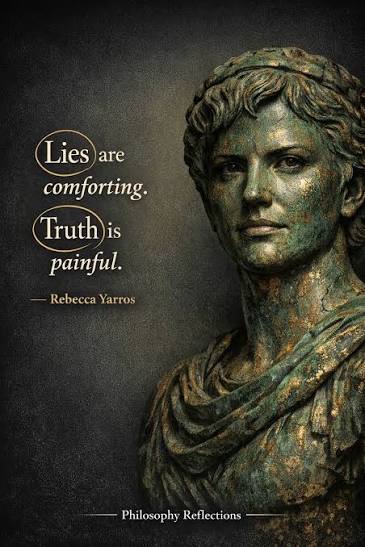
The Truth About Deceit

Not long ago, I was supposed to meet a former
student for breakfast. But that week I paid little attention to my calendar and totally forgot the appointment. About 90 minutes after we were supposed to meet, it dawned on me what I had done, and I called the student. He was forgiving, assuming that I must have overslept after a long semester. I had a split second to decide whether I would allow his assumption to stand. By saying nothing, I could let him think I had just overslept. I could make up another story. Or, I could come clean and tell him I had simply forgotten him.
I sensed an inner tug to lie or, more precisely, to allow him to believe an untruthful account of the event. Some might call it a “little white lie,” which means a lie that we rationalize as insignificant. But it would have been deceptive, whatever I called it. Not that I have never lied, but in this case, I resisted the inclination to deceive. I have been consciously working on telling the truth. I have become convinced recently that learning to live a fully honest life is one of the most difficult moral challenges I face. And yet, it is hardly talked about in the churches I know.
Jesus taught us that we should let our yes be yes and our no, no (Matt. 5:37). He prohibited using oaths, because he knew that taking oaths for really important speech threatens to render (or unveil) our everyday speech as less than truthful. He attacked those who had turned the ancient Jewish oath system into a manipulative casuistry that subverted rather than promoted truth. Instead, he said, those who seek to please God should practice truth-telling all the time. Why We Lie Paul Griffiths wrote, “Adults who don’t lie are more than original: They’re almost non-existent.
“Why do we so often not tell the truth? Many times, we lie because we are unwilling to face the consequences of the truth. Most lies are pitiful efforts to protect our pride. We lie because we fear being shamed or embarrassed. Our fragile reputations and even more fragile egos must be protected at all costs. And so, pitifully and too cheaply, we sell out the truth. Sometimes, we lie because we have already done wrong. We have slipped into the darkness rather than remaining in the light, and we do not wish our deeds to be exposed (John 3:19-20). So our lies are cover-ups for our sins and often only delay and worsen the day of their exposure.
At times, we lie because we believe it is justified to accomplish our urgent goals. This happens every day in politics and commerce. We have grown accustomed to it. But sometimes, it happens in Christian activism and church life as well. We want to win “by any means necessary.” Sometimes, we construct ingenious rationalizations for our deceptiveness or draw fine-grained distinctions that don’t really hold water. We might manage to avoid articulating a falsehood while still allowing another person to believe something untrue. This is not honesty, and we dare not take false comfort in the distinction.
Or perhaps, we deceive by holding back the whole truth. So when your spouse asks, “Did you view pornography this afternoon?,” you say, “No, I did not.” Your statement is technically true, but you watched pornography the night before, and that, as you well know, is what the question was intended to discover. Christians must put away hair-splitting legalisms, ingenious rationalizations, and dubious casuistry. If we want to follow Jesus, then we must retrain ourselves to put away deceit, guile, duplicity, dissembling, misleading, exaggeration, and, outright lying.
Instead, we must learn to dwell in truth, like “the God of truth” (Ps. 31:5) and like Jesus, who is “full of grace and truth” (John 1:14). It is not just that God speaks the truth, but also that he is true. He is reliable in keeping his covenant, commitments. One aspect of God’s being true is that his words are true. The same attribute should characterize us. Disciples of Jesus Christ know the truth (1 John 2:21), tell the truth (John 19:35), “belong to the truth” (1 John 3:19), love “in the truth” (2 John 1:1), and walk in the truth (2 John 1:4).
Truth is not simply something that is believed or even spoken. Rooted in faith and trust in God, truth is a way of being, a path that is followed, and a place that one inhabits. Truth is a commitment of each individual and of the entire Christian community, verified by our actions—beginning with, but not limited to, the words that come out of our mouths. So, we should all learn how to speak the truth no matter how difficult it is, and no matter whose ox is gored. We should all grow up in Christ Jesus to surmount all forms of deception and deceits.
Dr Akpogena, writes from Port Harcourt.
Lewis Akpogena



Quote: “Ogoniland does not
The latest attack by Chief
Instead, the gathering and
The proposal for a unified
The question should be: who
It is easy to criticise
The people are looking beyond
onest people can reach
Society must therefore
Quote: “Privilege should
There is an old saying that
While motivations cannot
A person who benefits from a
This is why citizens should
We must not assume that
By: Michael Abraham
Quote:”Although the Federal
The recent outburst by the
The senator also alleged
They connect ports, airports,
To address these challenges,
Rwanda and Morocco, for
FERMA should also prioritize
Many Nigerians have asked
-

 News4 days ago
RSG Targets Nine Million Residents in Mosquito Net Distribution Campaign
-

 Oil & Energy4 days ago
Aiyedatiwa Signs New Electricity Bill
-

 Maritime4 days ago
Marine Minister Commends President Tinubu On NPERA Bill Assent
-

 Oil & Energy4 days ago
NLNG Commissions Research And Innovation Centre In RSU
-

 News4 days ago
KenPoly Holds Eight Convocations, August 29
-

 News4 days ago
RSG Begins Another Phase of Projects Commissioning Today
-

 News4 days ago
RMAFC Completes Revenue Sharing Review, Proposes New Pay
-

 Maritime4 days ago
NAGAFF Petitions IGP Over Alleged Maritime Police Harassment