
Opinion
What Hope For The Nigerian Child?

Children are the gift from God. This expression
aptly explains why couples who are yet to get this blessing from God in their marriage constantly besiege God for the gift. They can go extra mile to have children. In the old African communal setting, a child may be born to a particular family, but the child belongs to the entire community as every member of that community is bound in conscience to ensure the social, physical, economic, and spiritual well being, growth and development of the child.
For the igbo people, south eastern Nigeria, the importance of the child is expressed in the kind of names like Nwadiuto meaning child is sweet, Nwabueze meaning child is king etc.
The Holy Father, Pope Francis XVI says this about children “children are gift from God to humanity, and they must be the object of particular concern on the part of their families, the church, society and governments, for they are source of renewed life”
In trying to safeguard the future of the children often referred to as the leaders of tomorrow, Nigerian leaders adopted and ratified the United Nations Conventions on the rights of the child, as well the African Union Charter on the rights and welfare of the child. The act states that children have rights and that their confidence and self esteem are to be restored and improved upon. It provides that children with some form of disability should enjoy the same rights and privileges as other children and also ensures that they are adequately protected in order to boost their self confidence. These are what ought to be. What then is?
The child’s right act which was passed into law in 2003 would have provided all that is needed to put the Nigerian child in a comparative advantage over their fellow children from other parts of the world, but it has continued to suffer from poor education and enlightenment of the rural populace where majority of the children are found. It is predicted that even at end of 2013, 10 years after the passage of the child’s right act into law, the 36 states will not have passed the act. What this portends is that children are been harassed, molested, abused by adults without them knowing that they have rights that should be protected and without any form of protection for them.
It is common feature on the major streets of our cities, how children are used for all kinds of dehumanizing activities including hawking in the traffic during school hours, street begging, etc. Other children are used for house helps in many homes and in such homes, they are denied formal education, they are made to work so hard and eat very little and in some cases they are subjected to sexual molestation by their supposed boss. Given the high level of poverty in the land, and estimated 1 million Nigerian children are on the streets across the country,and government provision for the homeless children had remained grossly inadequate.
Before now, child abuse and child labour was majorly associated with children who are not living with their biological parents, but today, with the constant sky rocketing cost of living and most parents not being able to meet their daily needs, children are now being co-opted to enhance the chances of putting food on the table for the family.
Another aspect of what is for the Nigerian child is the illicit exposure to the recent developments in the information technology. Many parents saturate their homes with internet enabled phones and computers. All these are illicit because many of the contents are not suitable for children, and if the children must use the internet, they should be supervised by their parents to ensure that their morality is not destroyed as that is the greatest form of child abuse. Many Nigerian children whose parents live in the city, and are civil servants, workers in the private sector as well as individual business owners, are constantly abusing their children by leaving the nurturing of their children in the hands of house helps while they go in search of “better life for the children”.
This is why it becomes pertinent to ask, what is the government’s plan for the thousands of children of school age roaming about in many cities in the northern part of Nigeria? How can parents and guardians who use children for all sorts of economic activities be brought to book? What can the government do to ensure that the moral foundation of the children are adequately taken care of as it is the only way to ensure a better future for the society?
Kingsley, resides in Lagos.
By Izejiobi Kingsley



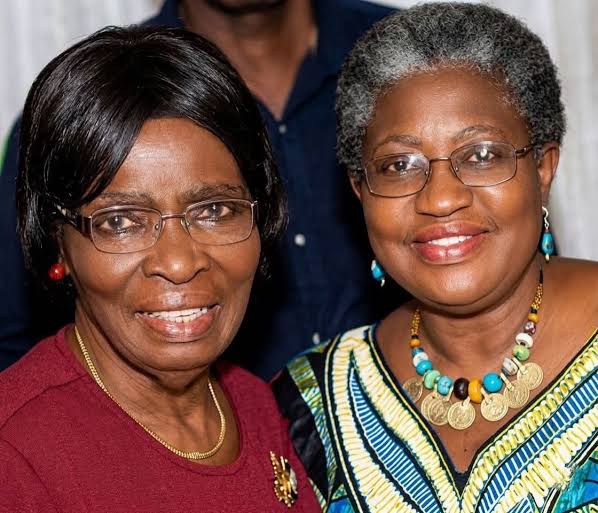
Quote “Professor Kamene Okonjo
Some women leave behind more t
Yet, to remember Professor Kam
Professor Okonjo was the belov
one of the most dramatic chapt
On December 14, 2012, the then
She leaves behind children, gr
Professor Kamene Okonjo deserv
By: Sylvia ThankGod-Amadi

Quote: An African who invokes
This is the concluding part
… Given the fact that I was
At the end of the visit by the
Back to my apartment, at abo
Under normal circumstances, yo
That all she asks is that Chie
For some reason that I do not
I believe that everyone in hu
Our ancestors have not gone fa
By: Jason Osai
The Federal Government’s approval of a N70,000 monthly transport intervention for public service workers for six months, beginning in November 2026, offers hope to employees struggling with the rising cost of living. The agreement with the Nigeria Labour Congress (NLC), reached at a conciliation meeting in Abuja on October 27, is intended to cushion transport costs and ease pressure on workers’ incomes. But for public servants in Rivers State, it raises a familiar question: will the State Government key into the intervention and ensure that its workers benefit? The agreement provides for N70,000 monthly across all levels, for six months. The Federal Government also approved peculiar allowance arrears effective from May 1, 2026, to be paid in three equal instalments beginning in November.
The parties agreed to reconvene after one month to assess implementation. Ultimately, the value of these resolutions will be measured not by announcements but by whether eligible workers receive the money. Transport costs consume a substantial share of many civil servants’ earnings before they can meet household needs. Support for commuting is therefore not a luxury or political favour; it is temporary assistance to help workers remain at their jobs without sinking further into hardship. For lower-paid employees, transport costs can turn modest salaries into a daily exercise in difficult choices and sacrifice.
The agreement also urges State and Local Governments to participate and unions to press for implementation. The federal agreement does not automatically guarantee that every State and Local Government employee will receive the support. State authorities must clarify how it will apply to their workforce, make the necessary arrangements and publish a payment timetable. Rivers State must approach the arrangement with urgency and transparency. The Government should State whether it will implement the intervention and when payments will begin. Any administrative or financial question should be addressed promptly with organised labour, not allowed to become excuses for delay.
The concern is sharpened by the earlier N35,000 monthly wage award introduced by the Federal Government in 2023 after petrol subsidy removal. It was intended as temporary relief pending a new national minimum wage. While several States negotiated and paid wage awards or related sums, implementation nationwide was uneven. Reports in 2024 indicated that many States had failed to pay the federal award, while others provided different amounts. In Rivers, labour and media reports raised concerns about implementation of the N35,000 award for State workers, amid separate announcements and arrangements concerning Local Government employees.
The wage award was meant to ease the immediate effects of subsidy removal, yet workers faced uncertainty over whether the promised relief would reach them. In February 2024, the Rivers State Government announced approval of the N35,000 award for local government workers, but subsequent reports showed that implementation across worker categories remained a concern. The lesson is clear: approval and implementation are not the same. A declaration at a meeting offers little comfort to a worker whose account does not reflect the promised payment. For workers who travel to their offices daily, the implications of delayed support are significant. Transportation expenses compete with food, rent, school fees, healthcare and other essential household needs.
As fares rise, employees may be forced to reduce spending on necessities or borrow to sustain their families. A timely transport intervention would therefore provide practical relief and demonstrate that government understands the economic pressures confronting its workforce. Its temporary nature makes prompt implementation even more important. It is fair to acknowledge that this transport intervention is a new agreement and that its administrative details may require clarification. Rivers State should not be condemned in advance for a failure that has not occurred. Nevertheless, the earlier experience gives workers legitimate grounds to seek assurances before the November commencement date. The State should avoid allowing uncertainty to persist until workers begin asking why the promised assistance has not arrived.
The NLC and unions in Rivers State should engage the State Government immediately and seek a written commitment, an implementation plan and a process for reporting missed payments. If clarification from the Federal Government is needed, the State should seek it without abandoning the goal of providing relief. Labour leaders must also keep members informed about progress and insist that any agreed arrangements are applied fairly and transparently. The Rivers State Government should treat this intervention as an opportunity to rebuild confidence. Timely support would show that workers’ welfare is more than a talking point and that the State recognises the economic realities confronting its employees.
Silence, delay or selective implementation, by contrast, would revive frustration over earlier relief measures and weaken trust between government and labour. Every month lost to administrative delay leaves workers facing the same transport burden without the intended assistance. The State should consult labour, publish arrangements and pay eligible workers on time. Rivers workers should not have to wonder whether federal relief will reach them. The Federal Government has announced the support; now the State must make its position clear. We hope the N70,000 monthly transport intervention will not follow the troubling path of the earlier wage award. Rivers State should learn from that experience and ensure that this time, relief is not merely promised but delivered.
Sylvia ThankGod-Amadi
-
Rivers4 days ago
Don Seeks Repositioning Of Tech Education For Dev
-

 Education4 days ago
PAMO MEDICAL UNIVERSITY -Nullifies Arrest warrant on VC
-
Niger Delta4 days ago
PANDEF Seeks 50% Oil Derivation Allocation Increase
-

 Education4 days ago
IAUE MOVES TO END GHOST WORKERS SYNDROME AS 400 NEW NON-TEACHING STAFF UNDERGO MANDATORY ETHICS TRAINING
-

 News4 days ago
Fresh Ebola Scare As NCDC Records Two Cases
-
News4 days ago
Customs Partners EFCC, NDLEA, Others To Tackle Money Laundering, Terrorism Financing
-

 Politics4 days ago
2027: RIVERS GUBER CANDIDATES SIGN CHARTER TO PRIORITIZE CITIZENS’ DEMANDS
-
 Politics4 days ago
2027: South-East Govs Insist On Tinubu’s Re-election