
Opinion
Same Sex Marriage: What Nigerians Say

Mr. Barisua Samuel Mkpe – Public Affairs Analyst
The French President, legalised gay marriage some weeks ago, making France the 14th country in the world that has legalised gay marriage. In my opinion, I think these things are done by the supposedly developed countries for political reasons. They are not done for cultural nor religious reasons.
At any point in time when they are drawing closer to election years and they want to solicit support from the populace, because they have realised that in these countries, the homo-sexual population is increasing geometrically by the day and they need their votes, they will go ahead to legalise gay marriage for political reasons.
Coming down to Africa, I have said it time and time again that Africa used to be a culturally committed people. Most of the things we copy from the western world are alien to us and what they are doing is cultural globalisation, using their culture to penetrate our space and make us to do what our parents and our fore-fathers never used to do.
Talking about world leaders like David Cameron and Barak Obama supporting gay marriage, and even threatening to withdraw aids to developing economies, it’s still world politics. And I thank God that African nations and their leaders have stamped their feet on the ground to tell them “go to hell with your aid, we can do without your aid. We’ll do what is good as far as our culture permits”.
So for once, I think I have seen the House of Representatives do what the generality of the people want. Hitherto, we had seen situations where they came out with legislations that are anti-people, unpopular legislations.
But on the issue of legalising gay marriage or otherwise, they have done well. I even think fourteen years prison term is lenient. I believe that human beings are supposed to be higher animals in terms of our thoughts and all of that. If animals and insects know that there are male and female species in their own kingdom, then human beings too should know that when God took a rib out of Adam, He did not use it to produce another man, in Genesis chapter two. He used it to produce a woman, ( a man with a womb), to comfort Adam.
So even scripturally, there is no way a man can comfort a man. It is a woman that was created to help and comfort the man.
On the argument in some quarters that out-lawing gay marriage will infringe on peoples’ freedom of association, some times I think we misunderstand what freedom of association means. If the people are coming together for a common vision, no body stops them from going ahead to assemble and pursue their vision and their goal. But when two adults come together in a society where the young ones are expectedly looking up to the senior ones for morals and all of that, it would amount to a polluted society if the young ones see their so called parents doing what is dirty, uncivilised and unacceptable in our society.
I have always posed this challenge to those who claim they are champions of gay rights, if you are involved in same – sex marriage, don’t adopt a child, reproduce your kind in that marriage, because the perfect will of God for man as regards marriage is to go into the world and multiply.
So if Barak Obama and David Cameron want to prove to the world that they passionately love homosexuality, they should divorce their wives and get married. When the two of them get married, they would have shown the world that they are examples for gay – marriage.
Barr. Chuks Obimba – Lawyer.
Personally, I think the actions of the National assembly are commendable. The origin of same sex marriage dates back to the time of Sodom and Gormorah.
That word sodomy is derived from the word Sodom, a city God destroyed because they were involved in homesexuality and it is one issue that God hates. It is not sane, it is strange for a man and a man to co-habit sexually.
So it is quite commendable for the law makers to have out – lawed it. And I think the proposed 14 years jail term is adequate. We must dare to be different from other nations.
I also believe that in some of these Islamic nations, such issue cannot be raised at all. I think Nigeria must strive as a nation to become independent. If Britain withdraws aids to Nigeria, because of this issue, it may spur us to become more independent to start walking on our own. Afterall, we cannot continue to depend on some of these foreign aids. Nigeria has a lot of intelligent persons. We are endowed both naturally and physically, we can do something on our own. The issue of same – sex marriage is strange and it must be deprecated.
I think there is an extent to which we should have our liberty. Every liberty that is not curtailed will tend to excess use. So, everybody should have a liberty but there are occasions one’s liberty should be curtailed.
So to me, the issue of legalising gay marriage has nothing to do with freedom of association. If we must associate with one another, there has to be a limitation to such association. So, I believe that illegalising gay marriage does not infringe on any person’s right. There could be certain traits that are in – born, which must be checked. That is the essence of law. If somebody picks up a gun and tells you that he has a penchant towards violence, you will not ask him to go and start killing people because he has a penchant toward violence. So if someone says he is not attracted to the opposite sex, I don’t think it is proper and valid for us to go ahead with what he is doing. There must be a law.
Every nation is different and every nation has a law that guides its conduct. For instance in Europe, there is no death sentence to murder cases, but in Nigeria if someone kills another unlawfully, the person certainly, will go for it.
So, I commend the boldness of the National Assembly in outlawing same-sex marriage.
In 1997, I heard Obama define marriage as a union between a man and a woman. That was when he was campaigning. Now, it is not proper for a man to approbate and at the same time re-approbate. The same Obama that said that same – sex – marriage is strange, is now campaigning for the adoption of same-sex marriage. I believe that the issue of same-sex marriage is strange and it should be highly deprecated, abhord.
Hon. Gbosidam Prince Agbara – Politician
First of all, I thank the person who moved the motion against same – sex marriage in the House. Same sex marriage is not Nigerian custom and there’s no how Nigeria can adopt it. I am an Ogoni man, and in Ogoniland, I have not witnessed when a woman marries another woman. What our custom permits is for a woman who could not bear children for her husand to marry another woman for her husband. But that a woman will sleep with a woman, or a man sleeps with another man, it is not done! If such practice is legalised; it will destroy this country.
Therefore, I support the House of Representatives not to allow that kind of marriage happen in Nigeria because it will tarnish the image of Nigeria. Britain and other world powers should realise that Nigeria is an independent country. We have a President. we have members of the National Assembly, they make laws for us, not Britain, not America. So, if Britain wants to withdraw its aids to Nigeria, over this issue, let them go ahead. Nigeria will still stand. Even the President will not accept that. In Ogoniland a woman cannot marry a woman and sleep with her, we’ll kill you immediately. So we don’t support that. All these borrowed Western ways of life is what is killing us today. Before in Rivers State, women tie wrappers and wear skirts. All this low waist, trouser and what have you, weren’t there. They were borrowed from the Western world and that is what is killing us today. If you go to the schools you see women exposing their breasts and other parts of their bodies, and if we should legalise same – sex marriage, it will be the worst. You will start seeing women and men romancing themselves in the public. We should try and make this country a perfect country, a respected place where we live.
Rev. Fr. Bartholomow Uzoma – Priest.
I think the lawmakers are responding to the isssues of the moment because the issue of same-sex marriage has become topical in the past few years. I don’t even know why people are going for this same-sex marriage. I’m yet to know the justification, what is unusual, what is abnormal is what people are beginning to clamour for. Much as I know as a person, same – sex marriage is unnatural, abnormal, unusual. So, that law makers are beginning to rise up to the occasion means that they are listening to people and they are willing to condemn what is wrong.
I’m not moved by what the western world is doing. We all know that the family system has collapsed in the western world and the family is the hope of the society and that tendency is now coming down to us. Yes granted, the world is a global village and we are being influenced by what happens in other areas. It is not everything that happens there that we must borrow. Already the family system is in crisis, bringing same sex marriage into already existing crisis, we cannot manage it.
So I think the lawmakers are rising up to save our society and I wouldn’t like to dance to the popular opinion of the Western world.
They can withdraw their aids from Nigeria, and what about it.? Nigeria will not die. Let them withdraw it and there will always be a way out. Our lives do not depend on them. Our lives depend on God. If they have been giving us aids and Nigeria is still like this, then what have they achieved so far?
All of us know the state of things in Nigeria, what can we boast of, is it the economy, is it moral life, is it education, is it power, what do we have in this country?
So what is the aid they have been giving to us and of what use has aid been to us. Let them withdraw it. Let us know we are on our own and then go back to the drawing board and pray God to help us to know how to manage our country, Nigeria and how to make things better for us. Infact they are part of those confusing us in this country.
They colonised Nigeria. Have we ever been the same since then? Before the contact with the British, there was a stage of development in this country, no matter how slow it was. And with that contact, the whole thing was changed and we are no longer the Africans we used to be, we are not Europeans. We are at a confused stage. And they are bringing that confusion now to the marital system. So far, you can see, our culture has been able to put together the family system. Same –sex marriage is not for a family. A man and a man cannot form family. So it’s all about people satisfying their illicit sexual urge and desire.
Well, I may not subscribe to jail term for offenders because in Nigeria the prisons do not reform people. People go to prisons and they become worse than they were before they went to prison. The mere fact that the law prohibits it means that it is not going to be allowed and you can’t go to the court and say you want to get married to a male if you are one for example!.
The court won’t allow it. If so if two men decided to misbehave and have sex, well, people do all sorts of things under the cover of darkness and it remains at that level.
So that right that permits man and man to go into marriage also affects the right of the family. People have right to become armed robbers, They want to rob as a means of livelihood, why do we stop them? Why will the law stop them from robbing because that’s what makes them happy? So we should give them right to rob bank, government, to kill people because that’s what makes them happy.
Those involved in same – sex marriage often claim they can adopt. Whose child will they adopt? If we are saying let us approve same – sex marriage, okay, no problem, but whose child will they adopt? It is inhuman for any body involved in same – sex marriage to adopt somebody else’s child. A child is mearnt to be brought up within the context of a family – male and female, father and mother. So adopting a child means denying that child the right to exist within the family of a father and a mother.
So they are also infringing on the right of another person. So they have no right to adopt. Okay, let us say everybody should go into gay marriage, women marry women, men marry men, then the society will fizzle out graudually.
The bible says God made them male and female. So this same – sex marriage is anti-God. It’s a revole against the order of creation. It is a protest against God also.
Mrs Gina Sampson – a teacher.
Of course, no normal human being will support same – sex marriage. So the law makers did the right thing by out – lawing it. Homosexuality is a problem that has been in our society for a long time, though they do it secretly. People are lured into it right from their secondary school days. In my school days, it was called “supe”. Different groups have different names for it. So parents should monitor their children and know the kind of friends they keep. I have also heard that some women, especially the married ones indulge in lesbianism either because their husbands are never there for them or their husbands cannot satisfy them sexually. And instead of keeping male sex partners which the society frowns at, they sleep with their fellow women. Some go into it for monetary and material gains. So for me, illegalizing same – sex marriage is good, because we need to sanitize our society.



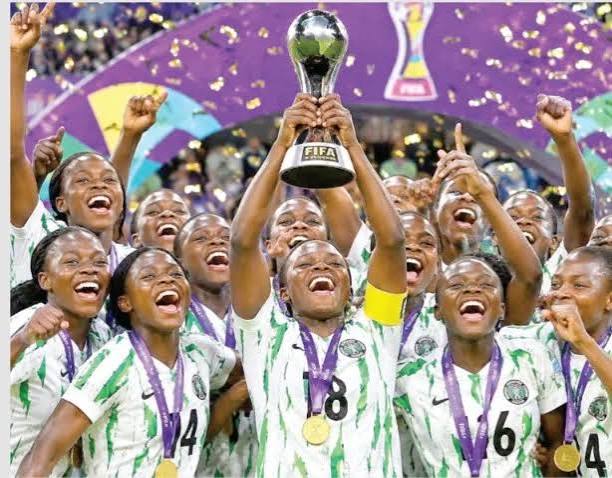
Quote: “The Flamingos have conquered the world; Nigeria must now rise to its responsibility of nurturing the next generation of champions.”
Sometimes, sporting victories
More significantly, they
Umejiaku deserves special
Umejiaku received the award
Nigeria has now broken into
For too long, young girls in
But beyond the reward, this
As Nigerians celebrate this
By; Calista Ezeaku
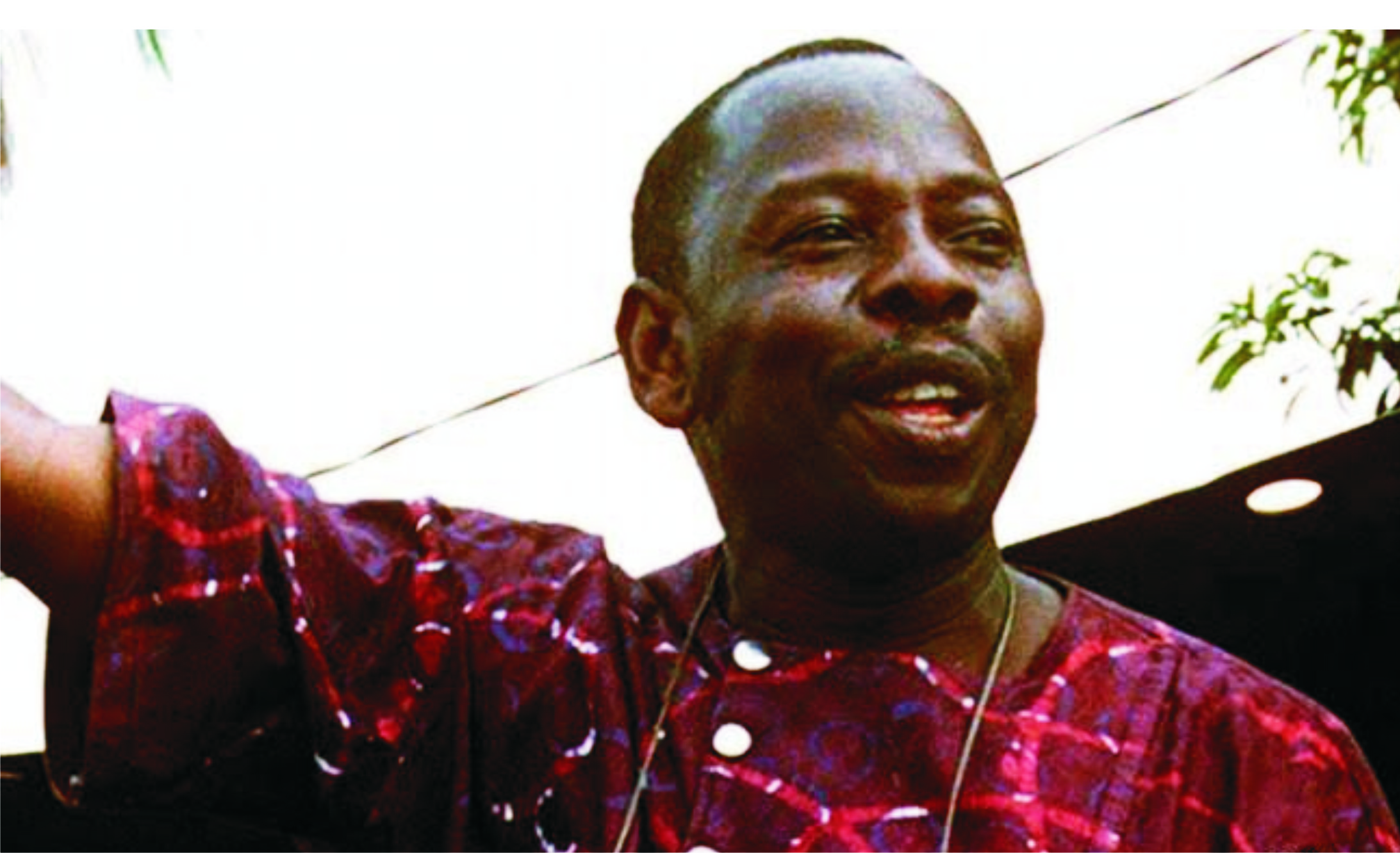
On November 10, 1995, the Nigerian military government of General Sani Abacha executed Ken Saro-Wiwa and eight other Ogoni leaders after a deeply controversial trial. Their deaths marked one of the darkest chapters in Nigeria’s history. At a time when fear silenced citizens and sycophancy flourished around military power, Saro-Wiwa chose to confront tyranny. Many Nigerians retreated into silence, while others praised the regime to secure favour. He knew the risks, yet refused to abandon a people whose land had been devastated by oil exploration and whose lives remained trapped in poverty. His courage arose from the conviction that public responsibility sometimes demands resistance to authority. Saro-Wiwa understood that speaking against a military government could lead to imprisonment or death.
Nonetheless, he believed the suffering of the Ogoni people demanded a courageous response. While oil was extracted from their land, they were left with polluted rivers, damaged farmland, declining livelihoods and an environment hostile to human survival. Fishing grounds and sources of livelihood were threatened, while the people struggled to secure basic amenities. The wealth beneath their soil brought neither adequate development nor a fair share of national resources. For him, silence in the face of injustice would have amounted to complicity. Through the Movement for the Survival of the Ogoni People (MOSOP), he organised a peaceful campaign that took the Ogoni question to the international community. MOSOP gave ordinary people an organised platform through which to express their grievances and insist on recognition.
The Ogoni Bill of Rights, presented to the Federal Government in 1990, demanded political autonomy, economic justice, environmental protection and control over the people’s resources. The campaign exposed the human and ecological costs of oil operations, particularly those associated with Shell, and challenged the apparent alliance between corporate interests and an unresponsive State. The Ogoni struggle became a defining expression of minority rights and environmental justice in Nigeria and Africa. Saro-Wiwa’s writings and mobilisation drew attention to communities treated as expendable because of their limited population and political influence. He argued that numerical strength should never determine a people’s value or rights.
A minority community does not become less deserving of justice because it cannot command electoral numbers or political power. In Nigeria, every ethnic group deserves dignity, protection and a fair opportunity to benefit from the commonwealth. Rather than respond to peaceful agitation with dialogue, the Abacha regime resorted to repression. Ogoni leaders were harassed, detained and killed; others fled into exile. The crisis intensified after four Ogoni chiefs were killed in May 1994. Saro-Wiwa and other MOSOP leaders were arrested, tried by a special tribunal and executed despite international appeals for clemency and serious concerns about the trial’s fairness. The executions drew worldwide condemnation and intensified scrutiny of Nigeria’s human-rights record and oil companies in the Niger Delta.
They demonstrated the danger of using State institutions to suppress peaceful demands. The proceedings remain a reminder of the need for judicial independence and due process. Saro-Wiwa’s courage rested on the conviction that justice must be pursued despite the cost. His method combined non-violent resistance, public education and grassroots organisation. His struggle recalled the civil-rights campaign of Martin Luther King Jr. and the power of peaceful mobilisation against injustice. Saro-Wiwa linked environmental degradation to political exclusion, economic exploitation and the denial of democratic rights. Oil-producing communities, he insisted, should not remain zones from which wealth is removed to develop other parts of the country.
Their people must benefit through roads, schools, healthcare, jobs and clean water. Resource extraction carries a duty to protect host communities. His argument extended to the structure of the Nigerian federation. He challenged a revenue-allocation system that made oil-producing communities bear the environmental and social costs of extraction without commensurate benefits. Like advocates of fiscal federalism, he believed resources should be managed and shared equitably. He envisaged a society in which no community would be disadvantaged by its size, ethnicity, political affiliation, culture or religion. His vision was a country bound together by justice and equal citizenship. Saro-Wiwa was also a gifted writer, dramatist and public intellectual.
Through books, essays, plays and television, he documented Nigerian society’s contradictions and challenged abuses of power. His popular television series, Basi and Company, demonstrated his creative range, while his leadership of the Association of Nigerian Authors encouraged writers to engage national questions. He believed literature should not be detached from society’s struggles. His pen exposed environmental injustice, political repression and the dangers of silencing courageous voices. He used storytelling, satire and drama to shape public consciousness and expose social contradictions. His literary achievements gave his activism wider reach and made the Ogoni experience part of national conversation. His commitment to the Ogoni people extended beyond the oil question.
During the Civil War, he worked to protect his vulnerable community. He urged younger generations to reject subservience and complacency and pursue change through lawful, peaceful means. Citizens, he believed, must not surrender their responsibility to challenge wrong doing. An injury to one community threatens the rights and security of all. The return to democratic government in 1999 and the establishment of the Niger Delta Development Commission, the Ministry of Niger Delta Affairs and the Hydrocarbon Pollution Remediation Project (HYPREP) are among developments that have kept the region’s demands in public view. Saro-Wiwa did not create these institutions, but his movement helped expose the urgency of intervention and sustain pressure for redress.
His death made it harder to ignore the Niger Delta’s environmental and political grievances. Yet, interventionist institutions do not prove that the original demands have been met. Their effectiveness depends on competent leadership, transparent spending, measurable outcomes and community participation. Yet, thirty-one years after his execution, the central concerns of the Ogoni struggle remain unresolved. The HYPREP-led clean-up has offered hope, but many residents await meaningful improvements. Questions persist about the programme’s pace, quality and transparency, and whether its benefits reach ordinary people. A clean-up should be judged not by ceremonies or contracts, but by restored land and waterways, safe drinking water, improved livelihoods and better public health.
It must include long-term monitoring to ensure treated sites remain safe. Residents deserve information about contamination, remediation methods and completion timelines. Reports that water projects in Gwara and Ebubu Communities, in Khana and Eleme Local Government Areas respectively, failed weeks after commissioning have raised further concerns. If confirmed, the failures would indicate weaknesses in supervision, procurement and quality control.
To be continued in our next edition.
Taneh Beemene
-
Business4 days ago
BSG Partiner American Coy To Invest $100m In Gas Processing
-

 Oil & Energy4 days ago
FG To Double Oil, Gas Reserves, Moves To Intensified fresh Exploration
-
Business4 days ago
Seme Customs Intercepts Live Pacific Ridley Sea Turtle
-
Sports3 days ago
Fernandes Turns Down Man Utd Offer
-
Business4 days ago
159m small businesses registered on database in three years – SMEDAN boss
-
Sports3 days ago
Rivers To Host National Table Tennis Championship
-
Maritime4 days ago
Nimasa,China MSA Sign Bilateral Maritime Agreement
-

 Sports3 days ago
Kenyans Win PH International Marathon, Cart Home $10,000