
Sports
Olympic Games As Development Index

The Olympic Games, no doubt, is the highest sporting
competition worldwide.
Pierre De Coubertin is widely revered as the father and
founder of Modern Olympics since 1896.
Evidence abounds that the Olympic Games as a global sporting
competition is held after every four (4) year interval in a major city of a
developed economy.
A victory recorded in any event at the Olympics is highly
honoured because for one to win a laurel at the Olympic Games one has to compete
with the best athletes across the globe.
For a nation to be a contender of note at the Olympic Games
means to lead on the medals table consistently.
Interestingly, a close examination of leaders on the Olympic
medals table in the past thirty (30) years, for instance, evinces a fascinating
outcome, particularly as it affects the first ten countries on the overall
medals table.
One thing is clear; an unbiased evaluation of the Olympic
Medals Table in the past 30 years shows the dominance of the group of eight
industrialised nations popularly referred to as the G-8 among the top ten on
medals table.
It is worthy of mention that the G-8 nations include the
United States of America, United Kingdom, Russia, France, Germany, Italy, Japan
and Canada.
These groups of industrialised nations are also regarded as
the Developed Economies of the world.
Worthy of note also is the fact that the five (5) permanent
members of the Security Council of the United Nations form the nucleus of the
G-8.
They include China, France, Russia, the United Kingdom and
USA. As if that is not enough, the hosting rights is largely awarded to the
continents of Europe and North America and anytime the hosting right is granted
a nation outside the shores of Europe and North America, experience has shown
that an emerging economy might have been identified by the organisers, the
International Olympic Committee, IOC.
This emerging economy is dominated by the Asian tigers where
China, Japan, North and South Korea belong.
Today, another emerging economy so identified in the world
is Brazil and the city of Rio De Janeiro already has been awarded the hosting
right for the Olympic Games in 2016 while Pyeongchang in the Gangwon province
of South Korea will host the Olympic Games afterwards.
This observation has prompted many analysts to see the
Olympic Games as an economic growth indicator or a development index.
Similarly, after the First and Second World Wars, it does
appear that the developed economies comprising the five (5) permanent members
of the United Nations Security Council do not go to wars to exhibit greatness
and supremacy but to the Olympic Games.
Again, the dominance of these nations among the top ten (10)
countries on the medals table in the past thirty (30) years is a testament to the fact that the Olympics is
not just a sporting arena.
In which case, the Olympic Games have become the third world
war where developed economies, no longer, exhibit supremacy with guns and
ammunition but leadership through the acquisition of laurels as shown on the
Olympic Games medals table.
These developed economies are closely followed on the medals
table by the bailed out economies of Greece, Portugal and Spain before the
third world economies where Africa belongs.
It is pertinent to observe that, South Africa which is the
largest economy in Africa led on the London 2012 Olympic Games Medals Table
with three gold medals more than any other African State.
According to
Professor Willy Okowa, a Professor of Development Economics with the University
of Port Harcourt “The economy has a role to play. Those societies that have
huge economic output, such as USA, China, Japan, have behind their economic
success “organisation” and proper “administration of resources”.
Professor Okowa concluded that: Credible institutions would
have been created over the years to drive the economy, pointing out that it is
this organisation and strong institutions that sport has taken advantage of to
lead other economies at the Olympics.
In his submission, a professor of Economic History with the
University of Port Harcourt, Professor Ben Naanen described the Olympics Games
as a “theatre of social war and any nation participating in Olympic Games must
participate with the spirit of war”.
In his words, Dr Hycenth Amakiri Ajie, a Senior Lecturer in
Economics also with the University of Port Harcourt says, “Performance at the
Olympic Games reflects the state of economy”.
Professor Okowa earlier cited, emphasised that “societies
that have successfully built up their economies clearly have superior
organisation to those societies that are yet to do so”.
Truly, Africa nations must strive to improve their economies
to benefit from superior organisation and adequate resources from the organised
private sector, as government alone cannot provide all the needed funds for
sports including the Olympic Games.
Unfortunately, poor organisation weak institutions, poor
funding of sporting events as well as lack of good governance have caused many
African athletes to seek greener pastures in European nations, USA, Canada and
the Caribbeas.
Nigeria’s Christiana Ohuruogwu and Mo. Farrah of Somali
represented Great Britain and won laurels for
them, while some Cameroonian and athletes from Democratic Republic of
Congo defected during the London 2012 Summer Games.
Funny enough, the poor performance of African Countries and
defection of African athletes seemed to justify the Euro-centric views about
the continent which before now were largely considered as racist.
This is why in the affairs of nations, the Olympic Games is
largely considered by Afro-centric scholars as an avenue for Africa to prove
Euro-centric scholars wrong.
Thus, Nigeria’s
dismal performance at the just concluded London 2012 Olympic Games
remains a sad commentary.
This is because Nigeria is described as Africa’s “Big
Brother” and its absence on the 2012 London Olympics Medals table remains a
concern.
For instance, the flag of the Nation – Green White Green was
not flown throughout the games and the national anthem was not sung at anytime
during the Games because no athletes won laurels.
The winning of six gold, five silver and two bronze medals
at the recently concluded 2012 Paralympics, therefore, is a worthy consolation
indeed.
On the other hand, players of the Falconet who represented
Nigeria in FIFA U-20 Women World Cup in Japan and their technical crew got N1
million each and N1.2 million for coaches respectively.
In other African Countries, victorious athletes at the
Olympic Games received similar cash awards and accolade, while some athletes have
won various endorsements which will translate into the improvement of their
economic status.
As President Goodluck Jonathan ordered for restructuring of
the sports sector, it is pertinent that the proposed National Sports Retreat
expected to articulate the way forward, will consider a gamut of factors that
are not only sports related to achieve success.
This is absolutely necessary because Nigeria as a nation
cannot fail in security of lives and property, education, health, good
governance and electricity supply and do well alone at the Olympic Games. It is
not realistic.
The education sector where schools sports is strategic must
be restructured at all levels for a better outing at the Olympics, while
scholarship should be given to potential athletes, in school, be they in
secondary or tertiary institutions of learning.
Critical stakeholders in sports administration must exhibit
discipline and be frugal in the management of scarce resources.
In this regard, the anti-graft agencies such as EFCC must tackle
corruption in the polity including the sports sector.
As Professor Ben Naanen put it, “victory at the Olympic
Games is a function of proper training, equipment, support and public morals
while nations participating in Olympics must compete with the spirit of war”.
Adequate remuneration and reward for victorious athletes are
key to restoring confidence in the nation and boost morale of citizens. This is
why the recent Naira rain on the 2012 Paralympians and award of National Honour
by President Goodluck Jonathan is commendable.
Nigerians and indeed Africans must not justify the view that
unless one moves to Europe and USA one cannot excel in any field of endeavour.
Finally, Nigeria must set long term target and prepare ahead
so as to win big in the Olympics and in turn justify the nation’s “big brother
status in African diplomacy”.
Sika is a journalist with Radio Rivers, Port Harcourt.
Baridorn Sika



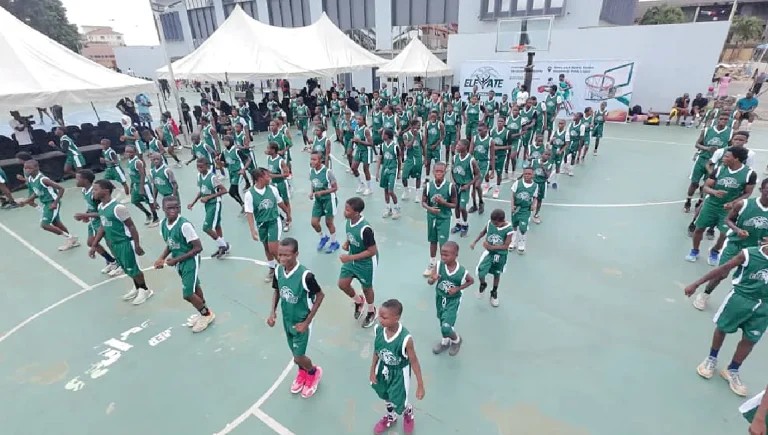
Young basketball players have been urged not to sacrifice their education for sporting ambitions, as stakeholders at the third Elevate Basketball Clinic stressed the need for young athletes to develop both on and off the court.
The call was the thematic preoccupation of the clinic held on Saturday at the Rowe Park Sports Centre, Yaba, Lagos, where hundreds of participants were taken through basic basketball skills and drills.
The third edition of the clinic, organised by Elevate Basketball Academy in partnership with the Lagos State Basketball Association, brought together hundreds of youngsters, mostly under the age of 16.
Founder and sponsor of the clinic, Akinwande Oshodi, said the initiative was designed to use basketball as a vehicle for youth empowerment while helping participants understand the values required to succeed in life.
“The end game is to elevate basketball and it’s about empowering the youth through basketball. It’s not just about the game, it’s about life, helping the students to understand what it takes to be successful,” Oshodi said.
Oshodi, who is Lagos-born but based in the United States, also disclosed plans to establish a foundation focused on basketball and athletics while creating opportunities for educational enrichment.
“This year, we are planning on tracking statistics so we can share with our sponsors what we have been doing over the last three years,” he added.
Oshodi’s mother, Bosede Ode, a sports nurse who worked with the Lagos State Government at Rowe Park, also stressed the importance of combining sporting development with academic pursuits.
“I’m very encouraged that more girls are in sports than what it used to be. I just want to encourage them to focus on not just sports but their education as well,” Ode said.
Ode said her son’s experience had reinforced the importance of education, recalling that an injury prevented him from pursuing basketball professionally but that his education had helped him build a life beyond the sport.
“I always tell my son about the importance of education, he had an injury which prevented him from playing professionally, but with education, that is helping him through life and giving back to the society. When he was small, he played basketball through school and I’ve always encouraged him,” she added.
The message was also reflected in the experience of one of the participants, Abdulkareem Abdulraheem, who attended the clinic for the second consecutive year.
Abdulraheem said the progress he observed among participants compared to last year had motivated him to keep improving, adding that he also makes time for his academics despite training regularly.
“The motivation is high. Last year I saw some people that were learning how to bounce the ball. This year, I’m seeing people play more and that is motivating me to never give up,” he said.
“For me, I train like three times a week and I make enough time for my academics as well, and that is one of the teachings of this clinic.”
Coordinator Gbade Olatona said the initiative was also aimed at using basketball to nurture discipline, leadership and responsible citizenship among young people.
Since its launch in 2024, the initiative has sought to position basketball as more than a competitive sport, using the game as a platform for mentorship, character development and creating opportunities for young people.
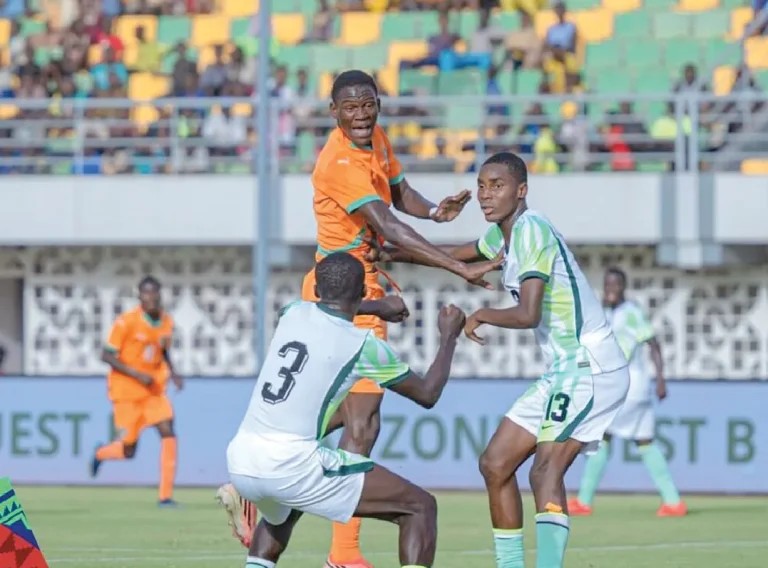
Nigeria’s Golden Eaglets will miss both the 2027 U-17 Africa Cup of Nations and the 2027 FIFA U-17 World Cup after they were eliminated from the 2026 WAFU-B U-17 Championship following a 1-1 draw with Ivory Coast in Ouagadougou on Saturday.
The result in their second Group B match at the Stade du 4 Août left the five-time world champions bottom of the table with a solitary point from two games, ending their hopes of qualification.
The Golden Eaglets needed a victory after losing 2-1 to Niger Republic in their opening match last Wednesday, but they could not find the result required to stay alive in the competition.
Nigeria fell behind in the 16th minute when Alex Fousseni scored for Ivory Coast, leaving head coach Eboboritse Uwejamomere’s side with an uphill task.
The young Nigerians continued to push for an equaliser and were rewarded in the 84th minute, when Abiodun John levelled the scores to set up a tense finish. Despite their late efforts, they could not find a winner.
Niger Republic finished top of Group B with four points, while Ivory Coast took second place with two points.
The failure to progress means Nigeria will miss the U-17 AFCON for the third consecutive edition, having also failed to qualify for the 2025 and 2026 tournaments, both hosted by Morocco. The North African country will also host the 2027 edition.
The disappointment extends to the global stage, as the team will miss the FIFA U-17 World Cup for the fourth consecutive edition. The Golden Eaglets last took part in the tournament in 2019.

Former Ajax defender Frank de Boer has urged supporters to be patient with Super Eagles striker Tolu Arokodare, saying the forward should simply be allowed to play.
De Boer was speaking about the early excitement around the Nigerian at Ajax. He did not compare Arokodare to Marco van Basten or Patrick Kluivert. He used the two former Ajax strikers as an example of how Dutch fans tend to judge every new forward.
“We are used to comparing a striker to Van Basten and Kluivert, but I have also seen a few times that he is technically gifted and that you can make very good use of him. I have seen some great things. So just let him play,” De Boer told Tidesports source, via Ajax Showtime.
Arokodare joined Ajax from Wolverhampton Wanderers in the summer on a season-long loan with an option to buy, after a difficult spell in the Premier League.
He has scored seven goals and provided two assists in 11 appearances across all competitions, despite starting only six of those games.
The 25-year-old played the full 90 minutes of Ajax’s UEFA Conference League game away to Hajduk Split on Thursday but did not score.
De Boer, who played for Ajax and the Netherlands, also said the club could get more from Arokodare by delivering crosses from the flanks, which would suit his game in the penalty area.
-

 News42 minutes ago
NDLEA Recovers Tons Of Illicit Drug Consignments In Nine States
-

 News43 minutes ago
Rivers Community Raises Alarm Over Alleged Security Invasion
-

 News41 minutes ago
IGP Proposes 200% Gratuity, Pension For Retired Officers
-

 News43 minutes ago
Ebola: NCDC Approves N100,000 Weekly Payment For Contacts
-
 News43 minutes ago
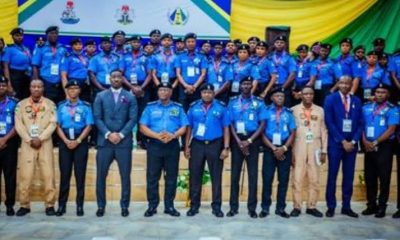
2027 Elections: Police Begin Training Of 10,000 Officers
-
 News43 minutes ago
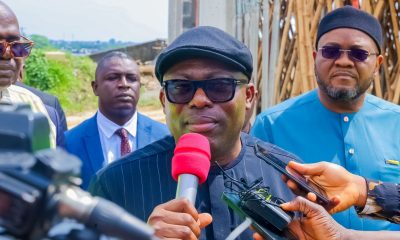
Creek Road Market ‘ll Be Completed By Jan 2027 -Fubara
-
 News37 minutes ago
Rivers CJ Declines NBA’s Request For Court-Free Days For Law Week Celebration
-
 News37 minutes ago
Bayelsa debunks Nembe-Brass bridge collapse rumour