
Oil & Energy
Time To Implement Local Content Act 2010

A visit to Nigeria airports, especially the Port Harcourt International Airport, Omagwa shows an influx of so-called foreign experts into the country almost on daily basis. When asked who they are and where they are going, the answer is always, “they are expatriates coming for one oil company or another. With this observation, one is poised to ask whether the oil companies in the country are actually working in consonance with the Nigerian Oil and Gas Industry Content Development Act, 2010.
President Goodluck Jonathan in September 2010 inaugurated the Governing Council of the Nigerian Content Development and Monitoring Board (NCDMB) during which he charged the board to ensure that its activities impacted on the oil and gas sector. He said the initiative must count on indigenous capacity development in the oil and gas industry. With the inauguration, the NCDMB was fully equipped to commence operations to meet the expectation of Nigerians in the gradual but sustainable implementation of the Nigerian Content Act.
The Nigerian Oil and Gas Industry Content Development Act, 2010 aims to provide for the development of Nigerian content in the Nigerian oil and gas industry, Nigerian content plan, supervision, coordination, monitoring and implementation of Nigerian content and for related matters. Enacted by the National Assembly of Nigeria, the Act, not withstanding anything to the contrary contained in the Petroleum Act, which shall apply to all matters pertaining to Nigerian content in respect of all operations or transactions, carried out in or connected with the Nigerian oil and gas industry.
And among other matters, all regulatory authorities, operators, contractors, subcontractors, alliance partners and other entities involved in any project, operation, activity or transaction in the Nigerian oil and gas industry shall consider Nigeria content as an important element of their overall project development and management philosophy for project execution.
The Executive Secretary of the NCDMB, Mr Ernest Nwapa on Thursday at the 2012 Nigerian Oil and Gas (NOG) conference in Abuja explained that the implementation of the Nigerian Oil and Gas Industry Content Development (NOGIC) Act was geared to bring Nigerian jobs back home. Mr Nwapa said the board would ensure that all technology required to develop the local content was deployed to the country to create greater opportunities for Nigerians, pointing out that the emphasis of the Federal Government with the implementation of the Act was not only to retain the bulk of the annual oil and gas industry spend in the country, but ultimately to create employment for millions of Nigerians on the back of oil and gas industry operations.
He noted that most countries around the world were currently working towards bringing back jobs for their nationals in the wake of the global economic crisis and urged all stakeholders to support this agenda of the Federal Government. According to Nwapa, keeping the cost of production reasonable and meeting work schedules are critical to national revenue.
With the caliber of members of the Governing Council of the Nigerian Content Development and Monitoring Board head by the Minister of Petroleum Resources, Mrs Diezani Alison-Madueke, one would have thought that the Act should have by now been strictly enforced for compliance by oil and gas companies in the country. The Act if properly enforced will propel Nigeria into becoming one of the world’s industrialised economies in the next decade.
Nigeria needs to urgently address the issue of local capacity in the oil and gas industry so as to take advantage of expected investments and guard against the repeat of past mistakes where most goods and services used in the industry were imported, while facilities that were built suffered from inadequate after sales service support. The preference for importing almost all the goods and services used by the industry from abroad is steadily eliminating opportunities to develop human and infrastructural capacity, thereby impoverishing our people and stultifying national economic development.
We must ensure that our implementation efforts do not fail and we must be consistent and unwavering in order to transform our industry from an importer of goods and services to an industry that can source its key imputs from local resources. The oil and gas industry can generate manufacturing activities to support its operations and employment and domicile significant proportions of its derivatives as well as trap commensurate revenue in Nigeria to develop the fabrication yards, shipyards and manufacturing plants to industrialise our economy.
Major cities like Lagos, Abuja, Port Harcourt, Kano, Jos, to mention just a few, like the proverbial honeybee, easily attract prospective foreigners into the country so must and many foreign experts who appear to have literarily struck gold in the country capitalise on the quest of industries for them to simply hijack available positions meant for indigenes. These industries, particularly the oil multinationals refuse to know that Nigerians also have the right skills that are high on demand.
An immigration official who did not want his name on print because he had no authority to speak on the issue, revealed to journalists that the office receives hundreds of applications from prospective foreigners seeking temporary permits in the country on daily basis. His words: “In recent time, we have been receiving a deluge of applications form would-be expatriates seeking work permits. What we do when such applications come, under the circumstance, is to do thorough background checks and treat each ease on its merit”.
Investigations have revealed that foreigners appear to dominate key sectors of the country’s economy such as oil and gas, energy and power, construction, telecommunications, real estate, banking and finance, among others. The Vice Chairman, Broron Group of Companies, Mr Henry Ojogho, a conglomerate with interest in oil and gas, telecommunications, energy and power, in an interview disclosed that foreigners still dominate most businesses in the country today. Specifically citing the oil and gas industry, ojogho said that the country has the right local experts for most of these jobs.
He was, however, quick to admit that there are lots of handicaps militating against the capacity of local experts to deliver on the job when compared to their peers abroad. “In Nigeria, I can tell you in all honesty that we have expertise that can compete favourably with their counterparts abroad but they are hamstrung by the lack of capacity. What do you make of a professional involved in seizure engineering who has no equipment to do these jobs?, he stressed.
The President of the Association of consulting Architect of Nigeria Architect Roti Delano,in another interview decried what he described as the “invasion of foreign architecture” in the country. He said: “We have had other foreign architects working in the country but the problem we are having now is the incursion of foreign architects practicing illegally in Nigeria. Some clients engage these people in ignorance and we know of clients, who when this is drawn to their attention, reverse the situation”.
Delano continued: “It is not only the clients that are encouraging foreign people coming to practice illegally in Nigeria, we have instances where the Federal Government engages foreign architects to work illegally in Nigeria. Part of the problems we are going through now is trying to make our clients realise that the Nigerian architects”. He recalled that when President Olusegun Obasanjo was Head of the Military Government in the 1970s and the country was building the second generation universities at the time, all the projects went to Nigerian artchitects provided they showed they have the technical expertise.
The cost of engaging a local architect or expert in any field is a fraction of what you pay the foreign person. Several studies have shown that in about 37 countries, Nigerian professionals earn the least pay while the Federal Government pays a lot of money for consultancy services for those coming from abroad. The government flies them in an pays them heavily for what other Nigerians here can do in a lesser time than the foreigner can achieve. The government must look into this.
Expenditure in the industrial sector of the country must transcend returns in terms of revenue and also translate to local capacity, increased technological growth, jobs for Nigerians, assets and develop critical facilities and infrastructure to support performance of work scopes in Nigeria.
It is now necessary for the Governing Council of the Nigerian Content Development and Monitoring Board to develop partnership between local and international companies, government, and gas companies and the private sector of the economy and create linkage with all sectors of the economy, local banks and global financing institutions to create the enabling environment for local capacity building. There must be developments in our supply chain management, the integration of government programmes such as Small and Medium Enterprises, training by the Petroleum Training and Development Fund (PTDF), Industrial Training Fund (ITF), National Office for Technology Acquisition and Promotion (NOTAP), to build local capabilities across board and transfer the technological experience inherent in the oil and gas industry to other sectors like transportation, construction, telecommunications, power, defence, maritime among others.
The NCDMB should create access to funds by leveraging the reforms in the banking sector to design interventions that support local companies with low interests and long-term loans. The board should also sensitise indigenes of oil producing communities on government’s genuine intentions to empower their youths, protect the environment, secure lives and property and ensure their participation in economic activities to maintain the tranquil environment required to support productive industry activities.
Shedie Okpara





-

 News4 days ago
RSG Targets Nine Million Residents in Mosquito Net Distribution Campaign
-

 Oil & Energy4 days ago
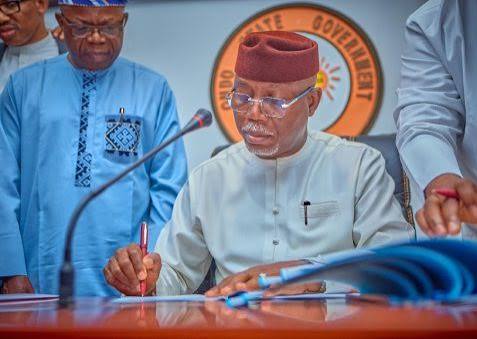
Aiyedatiwa Signs New Electricity Bill
-

 Oil & Energy4 days ago
NLNG Commissions Research And Innovation Centre In RSU
-

 Maritime4 days ago
Marine Minister Commends President Tinubu On NPERA Bill Assent
-

 News4 days ago
KenPoly Holds Eight Convocations, August 29
-

 News4 days ago
RSG Begins Another Phase of Projects Commissioning Today
-

 News4 days ago
RMAFC Completes Revenue Sharing Review, Proposes New Pay
-

 Maritime4 days ago
NAGAFF Petitions IGP Over Alleged Maritime Police Harassment