
Nation
THE STATES

Adamawa
Teachers in Mubi Local Government of Adamawa State has resumed work, following the suspension of the seven-week old strike by the chapter’s NLC.
The workers had in September embarked on an indefinite strike to press for the implementation of the N18, 000 minimum wage.
The strike had paralysed government business and closed down public schools and clinics.
Our correspondent, who went round various schools in Mubi, reports that most teachers had reported to work as early as 7:30 a.m.
The situation was the same at the General Hospital, Mubi as doctors and other health personnel were seen attending to patients.
However few workers reported to work at the Mubi Local Government Secretariat and other government’s offices in the area.
At Sabon-Pegi Primary School, teachers and pupils were seen cleaning classrooms and the school premises.
Some of the teachers, who spoke to newsmen, commended the state government and NLC for amicably resolving the crisis.
Bauchi
Bauchi Radio Corporation (BRC) has opened training workshop for pioneer staff on the management of community radio stations in the state.
The Managing Director, Alhaji Muhammed Ahmed, said that the creation of the radio stations was aimed at educating the citizens of the state and to inform them appropriately.
He added:”The creation of the stations is a courageous act by the state government under Gov. Isa Yuguda to raise the socio-political consciousness of the rural communities through effective broadcasting at the grass roots.’’
He said that five stations were already selected to be inaugurated and that they had produced a comprehensive documents with details on structure and schedules of duties of each worker on a community radio station.
He added that the training was also a stepping stone for the series and continuous training and re-training of the staff that would manage the stations.
He said that the participants would be exposed to the rudiments of leadership and management, programmes production, news gathering techniques at the grass roots, as well as appreciation of local cultures and cultivating good public relations.
Borno
The Borno Sector Commander of FRSC, Mr Christopher James, in Maiduguri on Thursday advised motorists to drive with caution throughout the ‘ember months’.
James, who gave the advice in an interview with newsmen noted that most of the road accidents recorded across the country took place during the ember months.
“Many people want to travel for celebration at this period and drivers do not consider their vehicle loading capacity and overload them which often resulted in accidents,” he said.
He also attributed lack of maintenance as one of the causes of road accidents, pointing out that some drivers did not examine and service their vehicles before putting them on the road.
FCT
The Independent National Electoral Commission (INEC) says the door to the central store of its Lagos office where some Direct Data Capture (DDC) machines and other items got missing was not broken.
Chief Press Secretary to INEC Chairman,Mr Kayode Idowu told newsmen on telephone that the stealing might have been carried out in the night.
INEC on Tuesday uncovered the theft of 1,388 DDC machines, 2, 986 internal hard discs and 644 computer batteries.
Idowu said indications of the theft were first noticed on Oct. 16 while the quantity of items involved was determined through an in-house audit concluded on October .24.
Gombe
A lawmaker, Alhaji Manu Swa, has pledged to support Gov. Ibrahim Dankwambo in reactivating the Balanga Dam to enhance development in the state.
Swa, who won last Saturday’s by-election for the Balanga/Billiri Constituency , made the promise while speaking with newsmen in Gombe.
He noted that the dam, built for irrigation purposes, had been under-utilised for a long period of time, hence the decision by the state governor to extend water supply to Balanga, Billiri, Kaltungo and Kumo towns.
Kano
The National Emergency Management Agency (NEMA), has donated relief materials worth millions of naira to victims of this year’s flood disaster in 14 local government areas of Kano State.
The items donated included 1, 200 bundles of roofing sheets, 1, 800 bags of cement, 4,000 pieces of plants, 200 package of zinc nails and 200 bags of nails.
Others were 1, 200 bags of rice, 600 bags of maize, 300 bags of guinea corn, 200 bags of millet, 200 bags of beans, 800 cartons of cereals and 2,000 pieces of blankets.
Speaking while presenting the items to victims of the disaster in Tarauni local government area in Kano, the Director-General of the agency, Alhaji Sani Sidi, said the gesture was to alleviate the sufferings of the affected persons.
Represented by his Chief Press Secretary, Alhaji Yusha’u Shu’aibu, the Sidi said the items were donated based on the assessment conducted by NEMA officials in the zone in August.
Kwara
The Kwara House of Assembly on Wednesday decried the deplorable condition of federal and other feeder roads within the state.
The Assembly, in a resolution on a matter of urgent public importance raised by Mr Kamal Fagbemi
(Oke-Ogun constituency), noted that the Ajase-Ipo/Offa/Erin-Ile federal road had become a nightmare for road users due of its deplorable state.
He said that the condition of the road leading to Osun boundary, had provided undue advantage for armed robbers to harass motorists and travellers.
He urged the lawmakers to summon the Federal Road Maintenance Agency (FERMA) to explain the reason for the delay in rehabilitating the road for which funds had been released to them.
“The road is in a sorry state and has crippled the economic activities of people of the affected areas,” he said.
Lagos
General Manager, Technical Services, Lagos Waste Management Authority (LAWMA) Mr Jeleel Olubori has suggested partnership among state governments to ensure effective waste management.
Olubori made the call in a paper he presented at the two-day conference tagged “Sustainable City Development, Waste Management and Waste-to-Energy,” jointly organised by the Federal Ministry of Environment and the Embassy of Sweden in Abuja.
In his paper, titled ‘Waste Management in Developing Countries’, Olubori said that Lagos State had a lot to offer other states in terms of technical support and human capacity development on best practises in waste management.
He said that the state operated an integrated waste management system that has made it a model in the country.
Oyo
The Oyo State Commissioner for Education, Mrs Tokunboh Fayokun, has urged technological institutions to assist in developing solar energy to complement government’s efforts at resolving the energy crisis facing the nation.
He made the call in Ibadan at a “Distinguish Service Award” ceremony in commemoration of the 40th anniversary of The Polytechnic, Ibadan.
Fayokun said technological institutions should be able to develop a cheap solar energy that would not only serve their need, but also serve their immediate neighbours.
He said if the institutions were able to develop their own energy supply, it would open the door of economic prosperity, and make them less dependant on government for financial support.
Fayokun commended the founding fathers of the polytechnic for their foresight, saying that the institution had become an octopus in educational matters in the country.
Sokoto
Sokoto State Police Command has arrested two people, Anas Aliyu, 24, and Bilyaminu Tafida, 23, of the state Polytechnic for allegedly stealing one Honda civic car with registration number AY 696 BWR.
The suspects were paraded at Marina Police station by ASP Mustapha Isa, the command’s Public Relations Officer (PPRO) last Wednesday.
He said that the car was stolen at Dan Fili in Sokoto metropolis and taken to Argungu in Kebbi State.
Isa explained that the command had adopted sensitive security measures to ensure the arrest and prosecution of criminals in the state.
He added that the suspects would be charged to court after investigation of the case.
Zamfara
A Gusau Magistrate Court handling a case of alleged missing genitals, heard on Wednesday that the accused had made a false claim.
Testifying before Magistrate Umar Abdulnasir, Dr. Adebiyi Adewale, who conducted the medical examination, told the court that the accused, Idowu Olatunji, was tested twice and found that he had had intercourse twice with his wife after the alleged incident.
Ola conducted the examination told the Olatunji, a banker, had on September 2, alleged that Saminu Turaki, a journalist, formerly reporting for the National Life newspapers, mysteriously stole his manhood shortly after the two of them had a handshake in the banking hall.
Turaki escaped being lynched due to the quick intervention of a combined team of the police, civil defence and the bank’s security.
He was later taken to the Gusau Police Station while the banker was taken to the Gusau Federal Medical Centre for examination.



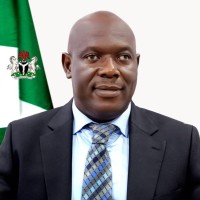
The Hydrocarbon Pollution Remediation Project (HYPREP) has commemorated the 15th anniversary of the release of the United Nations Environment Programme (UNEP) Environmental Assessment Report on Ogoniland, reaffirming its commitment to restoring the environment and improving the livelihoods of affected communities.
In a statement signed by the Project Coordinator, Prof Nenibarini Zabbey, to commemorate the anniversary, HYPREP described the anniversary as a significant milestone in Nigeria’s environmental restoration efforts, noting that the project has made remarkable progress in implementing the recommendations of the landmark UNEP report released on August 4, 2011.
The UNEP report had revealed extensive oil pollution across Ogoniland, severe environmental degradation, and serious public health risks resulting from decades of petroleum operations. It also recommended an initial $1 billion fund to commence the cleanup of the affected communities.
According to HYPREP, the Federal Government formally launched the Ogoni clean-up in 2016, while the Project Coordination Office was established in 2017 to drive the implementation of UNEP’s recommendations.
Zabbey said the current administration has continued to prioritise the project under the Renewed Hope Agenda.
Providing an update on the cleanup, the Project Coordinator disclosed that 30 of the 65 contaminated sites identified by UNEP have been fully remediated, while work is ongoing at several medium- and high-risk locations. It also stated that more than 1.5 million mangrove seedlings have been planted as part of what it described as the world’s largest restoration of oil-degraded mangroves, with over 1,000 hectares of shoreline already rehabilitated.
Zabbey further revealed that 49 Ogoni communities have been connected to potable water schemes through multiple water projects and booster stations aimed at providing safe drinking water across the region.
In the health sector, he said the 100-bed Ogoni Specialist Hospital in Kpite and the 43-bed Cottage Hospital in Buan are nearing completion, adding that several existing health facilities have been upgraded with modern medical equipment, while five ambulances have been donated to improve emergency healthcare services. The Project Coordinator also disclosed that a three-year human health biomonitoring study is being conducted in collaboration with the World Health Organization’s International Agency for Research on Cancer (IARC).
On economic empowerment, Zabbey stated that the Project has created more than 8,000 direct jobs and trained thousands of Ogoni youths and women in various vocational and technical skills, including software development, cybersecurity, aviation, commercial diving, seafaring, mechatronics, and creative arts. The project also reported awarding scholarships to more than 1,000 students, providing grants to small businesses, and supporting persons living with special needs through skills acquisition programmes.
The statement further highlighted ongoing legacy projects, including the Ogoni Power Project and the Centre of Excellence for Environmental Restoration, which it said is about 96 per cent complete. HYPREP also welcomed the recent designation of the Ogoni Wetland as a Ramsar Site of International Importance and pledged to continue promoting biodiversity conservation and sustainable management of the ecosystem.
Marking the anniversary, Zabbey said the progress achieved over the past 15 years demonstrates the collective commitment of government, development partners, stakeholders, and local communities to restoring Ogoniland. He called for renewed collaboration to sustain the cleanup effort, promote environmental sustainability, and support the long-term development of the region. 3
-

 News2 days ago
RSG Targets Nine Million Residents in Mosquito Net Distribution Campaign
-

 Oil & Energy1 day ago
Aiyedatiwa Signs New Electricity Bill
-

 Oil & Energy1 day ago
NLNG Commissions Research And Innovation Centre In RSU
-

 Maritime1 day ago
Marine Minister Commends President Tinubu On NPERA Bill Assent
-

 News2 days ago
KenPoly Holds Eight Convocations, August 29
-

 News2 days ago
RSG Begins Another Phase of Projects Commissioning Today
-

 News2 days ago
RMAFC Completes Revenue Sharing Review, Proposes New Pay
-

 Maritime1 day ago
NAGAFF Petitions IGP Over Alleged Maritime Police Harassment