
Politics
RSHA And Task Of Debt Management

The Rivers State Government recently obtained a revolving loan of N200bn from banks for project execution in the State, with a plan of repayment through Internally Generated Revenue on an agreed interest rate.
The decision of the State Government is in apparent conformity with the desire of the Rivers State Governor, Rt Hon. Chibuike Amaechi to complete all projects initiated by his administration. In seeking the loan through a request of approval by the State House of Assembly, the Governor explained that it does not imply that Rivers State was broke, rather it became necessary to meet up targets by ensuring that money is not a constraint to speedy delivery of ongoing projects.
In the course of its deliberation and subsequent approvals of the two loan requests, the Rivers State House of Assembly, certified that the internally Generated Revenue, (IGR) profile of the state was buoyant enough to service the loans on agreeable terms. The State lawmakers also consented to the necessity of the loan in view of the “many people oriented project embarked upon by the Governor”. The Assembly therefore gave the governor smooth ride to stave off all distractions through its legislative backing.
Pundits and virulent critics of the Government has however expressed reservation over its decision to obtain the loans, referring to it as “a booby trap for fiscal impropriety and profligacy in the State”.
In the general estimation of analysts, the propensity for loan is a predisposition to mortgaging the economic future of the state to serving of accruing interest of accumulated loans.
Analysts believes that Rivers State by all standard is disposed financially to carry out projects without recourse to borrowing, and as such accuse the State Assembly of a tacit connivance to squander the state resources.
But the Rivers State House of Assembly Stand by its decision and as a follow up is exploiting its legislative will to augment governments decision and to get it appropriately channeled towards accountable governance. Recently the State Assembly initiated a bold move to forestall the looming prospect of a debt burden for the State.
The initiative came at the instance of the leader of the Assembly Hon Chidi Iloyd through a privately sponsored bill, calling for the establishment of a debt management office in the state. The bill referred to as “Rivers State Debt management office (Establishment) bill 2011”, is an initiative of the Emohua born lawmaker to strengthen the Rivers State Government on borrowing and debt management to forestall a crippling debt burden in the State.
Introducing the bill on the floor of the House, Hon Chidi Iloyd, said “the law is to provide for the raising of loans through the issuance of bonds, notes and other debt securities and for connected purposes”.
He said the bill when passed as law; “will serve as a legal framework to guide the government in the raising of bond and loan for pursuance of projects, building of infrastructure for the economic development of the State”.
Reacting to public criticism of the bill, Hon Chidi Iloyd denied allegations that the bill stands to institutionalized profligacy in the spending of public fund, by giving limitless powers to the Governor to Squander the state. Hon Ilyod said the bill was part of the process of consolidating the state revenue based.
The bill had undergone its first and second readings on the floor of the house and it is presently been debated upon by members of the state Assembly.
The bill which has 27 clauses and 28 citations, came under debate on the floor of the House after members gave it proper perusal and digesting it details for proper deliberation.
While the lawmakers appreciated the fact that Government’s decision to borrow, presupposes the fact that there must be proper management of the loan obtained for fiscal propriety in the state, some of them expressed reservation on the workability of the bill.
In his contribution on the floor of the House, Hon Victor Ihunwo representing Port Harcourt constituency III called for the withdrawal of the bill on the grounds that it demerits out-weights it merits. Hon Ihunwo reasoned that beyond creating employment opportunities for Rivers people, “the bill did not include how the debt management will brief the House periodically to avert the temptation of borrowing by subsequent governments. He also argued that the state do not require more borrowing.
Debating on the issue, Hon Golden Chioma kicked against the recommendation that the Rivers State Commissioner for finance should be the head of the debt management office.
He called for an independent chairman for the office arguing that the state commissioner for finance was already saddled with executive functions. He called for fresh nominees to appear before the House for screening for appointment as directors of the debt management office, while the Hon Commissioner for finance, the secretary to the State Government, (SSG) and the Accountant General of the state should serve as members.
Hon Chioma who supported the bill, said it was in line with ‘the federal government act which made provision for the establishment of debt management office” while calling for the domestication of the bill in Rivers State, he said the five years duration of tenure recommended for the directorate should be reduced to four years.
Hon Ikunyi Ibani of Andoni Constituency, supported the bill and stated that “if the government is committed to borrowing it should also have a modified means of repayment.
He thanked the leader for sponsoring the bill and tasked the Assembly on the need for proper monitoring of the loan facilities.
His words: “If the Assembly has power to grant the executive request to borrow it also has the power to regulate the mode of repayment”. Hon Ibani also suggested that the debt management office should be established as a department in the Rivers State Ministry of Finance.
Hon Augustine Ngo of Abua Odual constituency who also supported the bill said it was timely and also provided the opportunity for “the Assembly to put the records straight and wade off criticism and media hypes over alleged endorsement of profligacy in public spending”. Hon Ngo also shared the same view with Hon Chioma that the directors should be fresh nominees to be screened by the Assembly.
Hon (Dr) Innocent Barikor of Gokana Constituency also supported the bill on the ground that it will check the tendency of abuse of public fund. He said people with proven integrity and the right technical expertise should be appointed in the directorate.
Also contributing, Hon Belema Okpokiri, of Okrika constituency said the establishment of the debt management office was necessary but suggested that “overriding powers should be vested in the Assembly on the activities of the office”.
Hon Michael Chinda representing Obio/Akpor Constituency I, described the establishment of the debt management office as “part of Government planning strategy on debt management.”
Hon Chinda called for the inclusion of a clause in the bill stipulating that “all debts incurred by a particular government should be zeroed to bearest minimum, by ensuring that all such debts are liquidated within the last lapse of the administration.” He also suggested that the Attorney General of the State should be a member of the board of directorate of the debt management office.
Hon Gift Nwokocha of Ogba Egbema Ndoni Constituency I, supported the bill and pointed out that, “issues of debt management is necessary but it is important to know when it is necessary for the state to borrow and when not to borrow”.
The deputy speaker of the State House of Assembly, Hon Leyii Kwane who presided over the session, said the bill debated on the floor of the house was critical to the development of the state, and added that members will be given due opportunities to contribute on the issue.
The Rivers State debt management office (establishment) bill 2011, is the first privately sponsored bill since the resumption, of the 7th House of Assembly in Rivers State. Subsequent deliberation of the House will determine if the bill will scale through as law.
Taneh Beemene



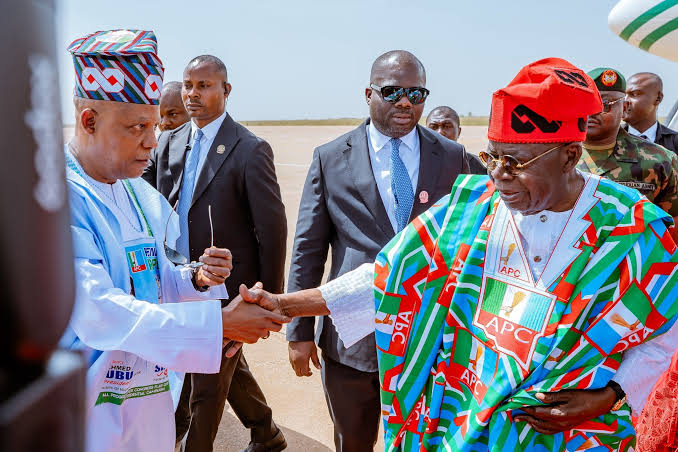
The campaign rally, held at the Kaduna Township Stadium, attracted Vice-President Kashim Shettima, APC governors, party leaders, federal and state lawmakers, political stakeholders and supporters from across the country.
The flag-off marks the beginning of the APC’s drive to secure a second presidential term for President Tinubu, with the party expected to promote its achievements, defend its economic reforms and outline its policy priorities under the proposed Renewed Hope 2.0 agenda.
Kaduna’s selection for the campaign launch underscores the strategic importance of the North-West, a region with a substantial voting population and considerable influence on presidential election outcomes.
The APC faces a significant challenge in Kaduna, where the Peoples Democratic Party’s presidential candidate, Alhaji Atiku Abubakar, defeated President Tinubu in the 2023 election. The rally therefore provides the ruling party an opportunity to strengthen its grassroots structures and regain electoral support in the state.
Addressing supporters, Vice-President Shettima appealed to Northern voters, highlighting President Tinubu’s political relationships with prominent Northern leaders, including Alhaji Abubakar, Mallam Nuhu Ribadu and the late President Muhammadu Buhari.
The Vice-President’s appeal reflects the APC’s determination to consolidate its support in the North as the party intensifies preparations for the presidential contest.
The Renewed Hope 2.0 agenda is expected to feature prominently in the campaign, providing a platform for President Tinubu to explain his administration’s economic policies and outline plans for another term.
However, the President’s record on economic reforms, rising living costs, petrol prices, employment, infrastructure and insecurity is expected to attract considerable scrutiny during the electioneering period.
-
 Education2 days ago
FCE Yola Graduates 3,555 Teachers , Seeks Upgrade to University
-

 Sports2 days ago
Nigerian Trio Target Titles At PFL Africa Finals
-
 Niger Delta2 days ago
Diri Restates Stance On Lagos-Calabar Coastal Highway
-
 Niger Delta2 days ago
C’River, NUJ Pay Tribute To Late Guardian Editor
-

 News2 days ago
NDLEA Recovers Tons Of Illicit Drug Consignments In Nine States
-
 Opinion2 days ago
Checking Voter Apathy In Nigeria’s Electoral Process
-
 Politics2 days ago
2027: DICKSON’S EX-ALLY VOWS TO WORK AGAINST NDC INTEREST IN BAYELSA
-
 Politics2 days ago
2027: GROUP PLEDGES 40,000 SUPPORTERS FOR COALITION CANDIDATES IN RIVERS