
Nation
THE STATES

Adamawa
The Bank of Agriculture has dragged more than 200 farmers in Adamawa to court for allegedly defaulting in the repayment of loan given to them by the bank.
The Branch Manager of the bank, Hajiya Asabe Gurama, made this known in Yola on Thursday.
“It is true that we have taken some of our customers numbering over 200 to court for defaulting in the repayment of loan disbursed to them since 2004”, Asabe said.
Asabe explained that the outstanding loan was about N100 million, adding that the bank had no option than to take all necessary legal action to recover the loan.
She decried the lukewarm attitude of some farmers in repaying loan.
Bauchi
The Bauchi State Deputy Governor, Alhaji Aminu Saleh, has warned border communities in the state against any act of upheaval that will cause a breach of the peace.
Saleh issued the warning Thursday in Bauchi during a meeting with traditional rulers living along borders of Bauchi and Jigawa states.
He announced that the meeting was to enable them review resolutions earlier arrived at between the two states presided over by officials of the National Boundary Commission (NBC).
Saleh urged the rulers to embrace peace and dialogue for peaceful co-existence among the communities living along the border.
According to the deputy governor, doing so will pave way for the development of the areas.
FCT
A 43-year old trader, Felix Okafor, of Dagbanna village, has been sentenced to three weeks imprisonment by an Abuja Upper Area Court for causing grievous harm to his co-tenant.
The Police Prosecutor, Cpl. Pascal Ujoko, told the court that the matter was reported on July 20 at the Jikwoyi Police Station by one Mrs Oteeto Ngozi of the same address.
Ujoko said that the convict sent his child on an errand but the child refused to go because his mother supported him. This action annoyed the convict, the prosecutor said.
He said the convict brought out a stick from the burning firewood to beat the child, but as he was chasing him, the convict unfortunately hit the complainant on her face, injuring her on the left eye.
Kaduna
A university teacher, Prof. Yahaya Bambale says the appointment of Local Government Interim Management Committees by some state governors in the country is a clear violation of the nation’s constitution.
Bambale, a Professor of Law at the Ahmadu Bello University, Zaria, told journalists in Zaria last Thursday that there was no such provision in the Nigerian Constitution.
“What is enshrined in the constitution is an elected chairman and a particular time is being specified for him after which another election is supposed to be conducted.
“But I think what some of the state governors are doing is that the same constitution gave them a leeway that where a leadership vacuum exists it could be filled before election is conducted.
Kano
Niger Republic Nationals resident in Kano, have donated assorted relief materials and money to the victims of the recent flood disaster at Fage in Kano Municipal Area Council.
The materials included 40 bags of rice, 20 bags of maize, 10 bags of salt, 30 mattresses, 30 bundles of roofing sheets, and N200,000 cash.
Presenting the items, the country’s consul in Kano,Hajiya Rabi Dodo, said that the gesture was aimed at assisting the victims, who, she described, as “our brothers and sisters”, to cushion the effects of the flood.
She said it was also aimed at sympathising with the victims, because “whatever affects the people of Nigeria affects us also, as we are from the same roots’’.
Kebbi
The Kebbi government has called on NAPEP to partner with the state for the expansion of its poverty reduction investment programme in rural areas.
The Deputy Governor of the state, Alhaji Ibrahim Aliyu, made the call in Birnin Kebbi last Wednesday when the NAPEP Director of Coordination and Programme, Mrs Godiya Yohanna, led a delegation of officials to visit him.
“We will fulfil any conditionalities with NAPEP for the expansion of the programme that will enhance the living conditions of our rural dwellers,” Aliyu said.
He said the first phase of the programme reduced the poverty level of many households in 2009, stressing that expansion of the programme would assist in the rapid development of the state.
Yohanna, on her part, said the launch of the second phase of the poverty reduction investment would benefit 1,000 households and that 60 per cent of the beneficiaries would be women.
Nasarawa
Nasarawa State Government says it has so far evacuated a total of 150 of its citizens from Maiduguri, the Borno State capital, following increasing threat posed by the Boko Haram.
Malam Mahmud Zubairu, the Permanent Secretary in the state Ministry of Education, disclosed this while briefing newsmen on efforts the government was making to evacuate its citizens from Borno.
He said that there had been growing concerns by many people in the state “who are worried about the safety of their relations and friends in Maiduguri since the crisis in the state began’’.
Zubairu said the state governor had directed that all indigenes of the state still trapped in Maiduguri should be evacuated without further delay.
He said this was part of the government’s efforts to protect the lives and property of its citizens wherever they might be.
Ogun
Goveronor Ibikunle Amosun of Ogun has set up a six-member committee to review the cases of 2,000 workers whose appointments were recently terminated by the state government. The workers, employed at the twilight of the Gbenga Daniel administration, were sacked because the government claimed that their appointments did not follow due process.
The affected workers had staged a protest march to the Governor’s Office, the House of Assembly, the NUJ Secretariat and major streets in Abeokuta.
The state chapter of the Nigeria Labour Congress (NLC) had also intervened on their behalf, by appealing to the state government to reinstate them.
Plateau
The Special Task Force (STF) maintaining security in Plateau has debunked claims that members of the dreaded Boko Haram sect had invaded Jos.
“No Boko Haram member has invaded Jos or anywhere in Plateau; the rumours are simply baseless,” STF spokesman Charles Ekeocha said in Jos.
The STF was reacting to rumours that members of the sect were in Jos and could attack anytime.
Ekeocha, in a statement, advised the people to go about their normal activities as the STF and other security agencies were fully prepared to keep the peace.
Taraba
The Taraba Government has released N200 million for the payment of pensions and gratuities of retired civil servants in the 16 local government areas of the state.
Alhaji Marafa Bashir, the Special Adviser to the Governor on Local Government and Chieftaincy Affairs, said 76 pensioners and relations of 136 dead pensioners would benefit.
Bashir explained that the money would be paid to all retired local government staff while the entitlements of the deceased pensioners would be paid to their next of kin on presentation of relevant documents.
He told newsmen that a list of another batch of beneficiaries was being compiled as government intended to set aside funds for the settlement of pension and gratuity of pensioners based on a time table.
Bashir described pension and gratuities as a social security that should not be denied the retirees, pointing out that the state government would continue to work round the clock to ensure immediate payment of such funds to pensioners.
Yobe
The National Emergency Management Agency (NEMA) said last Thursday it would create five zonal distribution centres in Yobe for easy distribution of relief materials to persons displaced by the Boko Haram crisis in Maiduguri. The North-East Zonal Coordinator of NEMA, Alhaji Aliyu Sambo, made the announcement in Damaturu while answering questions from newsmen.
According to him, the centres will be established in the Potiskum, Jakusko, Nangere Fika, Gashua and Nguru Local Government Areas.
“We learnt there are not less than 200 fleeing persons in each of these areas,” he said.
Sambo said that materials had been distributed to more than 250 displaced persons in Potiskum under the supervision of security personnel while the remaining four centres would soon receive materials for distribution.



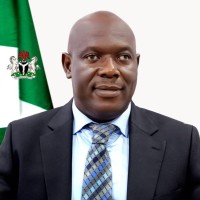
The Hydrocarbon Pollution Remediation Project (HYPREP) has commemorated the 15th anniversary of the release of the United Nations Environment Programme (UNEP) Environmental Assessment Report on Ogoniland, reaffirming its commitment to restoring the environment and improving the livelihoods of affected communities.
In a statement signed by the Project Coordinator, Prof Nenibarini Zabbey, to commemorate the anniversary, HYPREP described the anniversary as a significant milestone in Nigeria’s environmental restoration efforts, noting that the project has made remarkable progress in implementing the recommendations of the landmark UNEP report released on August 4, 2011.
The UNEP report had revealed extensive oil pollution across Ogoniland, severe environmental degradation, and serious public health risks resulting from decades of petroleum operations. It also recommended an initial $1 billion fund to commence the cleanup of the affected communities.
According to HYPREP, the Federal Government formally launched the Ogoni clean-up in 2016, while the Project Coordination Office was established in 2017 to drive the implementation of UNEP’s recommendations.
Zabbey said the current administration has continued to prioritise the project under the Renewed Hope Agenda.
Providing an update on the cleanup, the Project Coordinator disclosed that 30 of the 65 contaminated sites identified by UNEP have been fully remediated, while work is ongoing at several medium- and high-risk locations. It also stated that more than 1.5 million mangrove seedlings have been planted as part of what it described as the world’s largest restoration of oil-degraded mangroves, with over 1,000 hectares of shoreline already rehabilitated.
Zabbey further revealed that 49 Ogoni communities have been connected to potable water schemes through multiple water projects and booster stations aimed at providing safe drinking water across the region.
In the health sector, he said the 100-bed Ogoni Specialist Hospital in Kpite and the 43-bed Cottage Hospital in Buan are nearing completion, adding that several existing health facilities have been upgraded with modern medical equipment, while five ambulances have been donated to improve emergency healthcare services. The Project Coordinator also disclosed that a three-year human health biomonitoring study is being conducted in collaboration with the World Health Organization’s International Agency for Research on Cancer (IARC).
On economic empowerment, Zabbey stated that the Project has created more than 8,000 direct jobs and trained thousands of Ogoni youths and women in various vocational and technical skills, including software development, cybersecurity, aviation, commercial diving, seafaring, mechatronics, and creative arts. The project also reported awarding scholarships to more than 1,000 students, providing grants to small businesses, and supporting persons living with special needs through skills acquisition programmes.
The statement further highlighted ongoing legacy projects, including the Ogoni Power Project and the Centre of Excellence for Environmental Restoration, which it said is about 96 per cent complete. HYPREP also welcomed the recent designation of the Ogoni Wetland as a Ramsar Site of International Importance and pledged to continue promoting biodiversity conservation and sustainable management of the ecosystem.
Marking the anniversary, Zabbey said the progress achieved over the past 15 years demonstrates the collective commitment of government, development partners, stakeholders, and local communities to restoring Ogoniland. He called for renewed collaboration to sustain the cleanup effort, promote environmental sustainability, and support the long-term development of the region. 3
-

 News2 days ago
RSG Targets Nine Million Residents in Mosquito Net Distribution Campaign
-

 Oil & Energy1 day ago
Aiyedatiwa Signs New Electricity Bill
-

 Maritime1 day ago
Marine Minister Commends President Tinubu On NPERA Bill Assent
-

 Oil & Energy1 day ago
NLNG Commissions Research And Innovation Centre In RSU
-

 News2 days ago
KenPoly Holds Eight Convocations, August 29
-

 News2 days ago
RSG Begins Another Phase of Projects Commissioning Today
-

 News2 days ago
RMAFC Completes Revenue Sharing Review, Proposes New Pay
-

 Maritime1 day ago
NAGAFF Petitions IGP Over Alleged Maritime Police Harassment