
Opinion
Addressing The Boko Haram Nightmare

Indeed, many parts of the northern states of Nigeria, especially Borno, Bauchi, Gombe, and to some extent, Niger and Kaduna states, recently turned axis of terror. The Boko Haram sect – haters of western education and civilisation have unleashed untold hardship and wanton destruction of lives and properties on innocent Nigerians, and there seems to be no end in sight.
With the indiscriminate spate of bombings in Borno, Bauchi and the Federal Capital Territory, Abuja, which has claimed many lives and properties, leaves much to be desired. Really, terrorism has arrived on the shores of Nigeria.
Before now, such incidents used to be heard of in other countries, and one hardly believed it will occur in this country. But Nigeria surprisingly is now facing the stark reality of insecurity and lawlessness, threat to lives and properties.
Interestingly, the Boko Haram sect claims that western education and civilisation are a taboo, but uses vehicles to convey their weapons of mass destruction, even though these are creations and inventions of modernity – western education. Also, the very bombs themselves were invented by those who obtained western education and are ultimately driven by the call of civilisation.
Even the mobile phones which the Boko Haram group uses to plan their sinister attacks and or operations, and communicate with their gang members, were made possible by western education. The group has not bombed or attacked any educational institution or government establishment since their clandestine activities began. They have rather targeted government officials, security operatives, and persons they suspect to be against their political, social and or economic interests. What an irony?
Perhaps, the Boko Haram sect seems to have entrenched a wave of terrorism never before witnessed since independence into the nation’s body polity. The ‘maitasine’ disturbances that shook the very foundations of the country in the 1980s have been surpassed by this bunch of renegades. It has, indeed, taken an international dimension because the group has incorporated suicide bombing into its operation, and it is glaring that some of them are trained in foreign countries such as Somalia, Libya, Sudan, among others. Even the recent discovery that a Somali citizen was among the gang that bombed the Police Force Headquarters makes the matter more worrisome.
What is more? The brand of Islamic fundamentalism and extremism exhibited and perpetrated by these hoodlums and misguided elements is aimed at nothing but to impose their will and wrong interpretation of the Holy Koran or Hadith on other innocent Nigerians. Although these holy books encourage peaceful co-existence and good neighbourliness, these bandits have interpreted the intents and purposes of these books upside down. And they need to be re-orientated and re-educated on the teachings of the holy books, especially at this time of the Ramadan.
It is imperative to draw the attention of these disgruntled elements to the following facts. First is that they should allow people live peacefully irrespective of their religious beliefs, opinions, backgrounds or affiliations because the Constitution of the country has guaranteed that. Besides, these are fundamental and basic human rights already enshrined in the Universal Declaration of Human Rights by the United Nations in 1948, which of course, Nigeria is a signatory to. Even the domesticated African Charter of the same declaration compels Nigeria and Nigerians to observe all the rights contained therein. And it should be clear to the Boko Haram group that all these provisions hold that people are free to hold opinions of their choice, free to associate with whoever they choose, free to live and work anywhere they choose, and free to worship whatever they believe in.
It is therefore inconceivable, anti-people and wrong doctrine for the Boko Haram members to think that their phoney reasoning has any good intentions for Nigerians. They should know that electricity, motor cars, motorcycles, aeroplanes, mobile phones, medicines, including the guns and ammunition they have used to cause mayhem are inventions of western education and civilisation. If they believe that western education and civilisation are a taboo, then they should abstain from using these products of modern civilisation. They should rather resort to deploying primitive forms of warfare in their effort to be heard, and let us see whether they would be heard at all.
Incidentally, these criminals have attacked fellow Muslims, constituted authorities, and security operatives whose responsibility it is to protect lives and property of law-abiding Nigerians. For instance, the recent attacks on the police, customs as well as prisons service and other paramilitary agencies are evidence that the Boko Haram sect has misplaced priorities. In fact, they appear to be a group set out to destabilise the nation and cause anarchy and lawlessness in the land. For this reason, they should not be taken lightly or treated with levity.
For me, the joint military task force set up by the Federal Government to quell the situation is appropriate and should be supported by all well-meaning Nigerians to succeed. The onus now lies on the security apparatus to take absolute control of the situation in order to secure lives and property as well as to guarantee free movement and safety of all Nigerians irrespective of tribe, religion or ethnicity. This, they should do to enable people to carry out their lawful and legitimate duties and businesses freely without fear or molestation.
Already, many people, especially citizens from other parts of the country have vacated Maiduguri, the Borno State capital and other parts of the state affected by this unwanted catastrophe in the name of Boko Haram. The consequence of this situation is better imagined than felt. In fact, it is clear that the toll on the revenue of the state has been monumental, as social, economic and political activities have been stalled. Some residents, companies have relocated. Even planned investments have been diverted to other more peaceful states. And who is the loser? The state!
In order to correct this anomaly and return the state to the league of progressive states in Nigeria, the Federal Government and relevant agencies should take more stringent and pragmatic measures in arresting the insecurity and lawlessness occasioned by activities of these hoodlums. Steps to mitigate this Boko Haram challenge must entail identifying their grievances and the root cause of the angst. This is with a view to countering the spread of their phoney and false teachings and doctrine. There needs to be mass education and enlightenment of the people about the dangers and disadvantages of this group of misguided elements.
In fact, the Federal Government committee set up to negotiate the way forward as a result of this Boko Haram menace should focus on areas where they can achieve social and economic integration of all strata of the society in the North East, and not Borno State alone. The committee must identify the root cause of this present threat, the group’s sources of weapons, sponsors, and their motives, and make bold and decisive recommendations to government.
I also think it is time for the people to expose those responsible for this orgy of destruction and deaths as they are human beings who live among us in both urban and rural communities and city neighbourhoods. This is why I appeal that peace loving Nigerians should be alert and vigilant at all times, and report any suspicious gathering or activity to security agents.
Security, indeed, is everybody’s business. Therefore, law enforcement agencies need to redouble their efforts in investigation, detection and combating this challenge, as Nigerians are ready to support and cooperate with them to ride this nation of criminals anywhere they may be hiding. Nigerians expect the riddle and nightmare wrought by the Boko Haram crusade addressed frontally, once and for all.
Ayooso, a public affairs analyst, resides in Port Harcourt.
Samson Ayooso



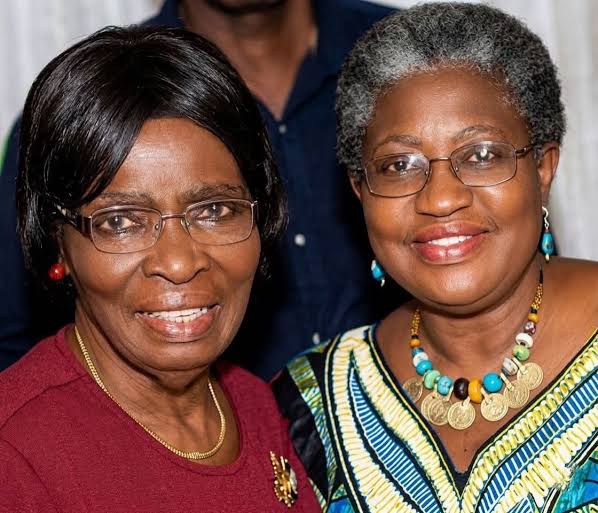
Quote “Professor Kamene Okonjo
Some women leave behind more t
Yet, to remember Professor Kam
Professor Okonjo was the belov
one of the most dramatic chapt
On December 14, 2012, the then
She leaves behind children, gr
Professor Kamene Okonjo deserv
By: Sylvia ThankGod-Amadi

Quote: An African who invokes
This is the concluding part
… Given the fact that I was
At the end of the visit by the
Back to my apartment, at abo
Under normal circumstances, yo
That all she asks is that Chie
For some reason that I do not
I believe that everyone in hu
Our ancestors have not gone fa
By: Jason Osai
The Federal Government’s approval of a N70,000 monthly transport intervention for public service workers for six months, beginning in November 2026, offers hope to employees struggling with the rising cost of living. The agreement with the Nigeria Labour Congress (NLC), reached at a conciliation meeting in Abuja on October 27, is intended to cushion transport costs and ease pressure on workers’ incomes. But for public servants in Rivers State, it raises a familiar question: will the State Government key into the intervention and ensure that its workers benefit? The agreement provides for N70,000 monthly across all levels, for six months. The Federal Government also approved peculiar allowance arrears effective from May 1, 2026, to be paid in three equal instalments beginning in November.
The parties agreed to reconvene after one month to assess implementation. Ultimately, the value of these resolutions will be measured not by announcements but by whether eligible workers receive the money. Transport costs consume a substantial share of many civil servants’ earnings before they can meet household needs. Support for commuting is therefore not a luxury or political favour; it is temporary assistance to help workers remain at their jobs without sinking further into hardship. For lower-paid employees, transport costs can turn modest salaries into a daily exercise in difficult choices and sacrifice.
The agreement also urges State and Local Governments to participate and unions to press for implementation. The federal agreement does not automatically guarantee that every State and Local Government employee will receive the support. State authorities must clarify how it will apply to their workforce, make the necessary arrangements and publish a payment timetable. Rivers State must approach the arrangement with urgency and transparency. The Government should State whether it will implement the intervention and when payments will begin. Any administrative or financial question should be addressed promptly with organised labour, not allowed to become excuses for delay.
The concern is sharpened by the earlier N35,000 monthly wage award introduced by the Federal Government in 2023 after petrol subsidy removal. It was intended as temporary relief pending a new national minimum wage. While several States negotiated and paid wage awards or related sums, implementation nationwide was uneven. Reports in 2024 indicated that many States had failed to pay the federal award, while others provided different amounts. In Rivers, labour and media reports raised concerns about implementation of the N35,000 award for State workers, amid separate announcements and arrangements concerning Local Government employees.
The wage award was meant to ease the immediate effects of subsidy removal, yet workers faced uncertainty over whether the promised relief would reach them. In February 2024, the Rivers State Government announced approval of the N35,000 award for local government workers, but subsequent reports showed that implementation across worker categories remained a concern. The lesson is clear: approval and implementation are not the same. A declaration at a meeting offers little comfort to a worker whose account does not reflect the promised payment. For workers who travel to their offices daily, the implications of delayed support are significant. Transportation expenses compete with food, rent, school fees, healthcare and other essential household needs.
As fares rise, employees may be forced to reduce spending on necessities or borrow to sustain their families. A timely transport intervention would therefore provide practical relief and demonstrate that government understands the economic pressures confronting its workforce. Its temporary nature makes prompt implementation even more important. It is fair to acknowledge that this transport intervention is a new agreement and that its administrative details may require clarification. Rivers State should not be condemned in advance for a failure that has not occurred. Nevertheless, the earlier experience gives workers legitimate grounds to seek assurances before the November commencement date. The State should avoid allowing uncertainty to persist until workers begin asking why the promised assistance has not arrived.
The NLC and unions in Rivers State should engage the State Government immediately and seek a written commitment, an implementation plan and a process for reporting missed payments. If clarification from the Federal Government is needed, the State should seek it without abandoning the goal of providing relief. Labour leaders must also keep members informed about progress and insist that any agreed arrangements are applied fairly and transparently. The Rivers State Government should treat this intervention as an opportunity to rebuild confidence. Timely support would show that workers’ welfare is more than a talking point and that the State recognises the economic realities confronting its employees.
Silence, delay or selective implementation, by contrast, would revive frustration over earlier relief measures and weaken trust between government and labour. Every month lost to administrative delay leaves workers facing the same transport burden without the intended assistance. The State should consult labour, publish arrangements and pay eligible workers on time. Rivers workers should not have to wonder whether federal relief will reach them. The Federal Government has announced the support; now the State must make its position clear. We hope the N70,000 monthly transport intervention will not follow the troubling path of the earlier wage award. Rivers State should learn from that experience and ensure that this time, relief is not merely promised but delivered.
Sylvia ThankGod-Amadi
-
Rivers3 days ago
NUJ Set To Attend UNIPORT’s 217th Inaugural Lecture
-
 News3 days ago
NJC Suspends Three Judges, Sanctions Eight Others
-
Politics3 days ago
Atiku Kicks-Off 2027 Campaign, Promises To Tackle Nigeria’s Challenges
-
 Featured3 days ago
APC Presidential Campaign Storms PH, ‘Morrow
-
News3 days ago
FG Explains Supply Disruption As Power Generation Drops To 3,659MW
-
Metro3 days ago
Port Harcourt Prepares For 10,000 Runners As International Marathon Returns
-
 News3 days ago
Bille Gas Leak: Coalition Tasks FG On Proactive Measures
-

 News3 days ago
IGP Orders Arrest, Prosecution Of Campaign Billboard Vandals