
Business
Arms Importation: Fashola Urges FG To Summon Countries’ Reps

Gov. Babatunde Fashola of Lagos State says representatives of the country where arms seized at Apapa Port were imported from, should be summoned to explain their role in the process.
Fashola made the remarks on Saturday in Lagos, while speaking with journalists after inspecting the seized arms and ammunition at the Apapa Port.
He suggested that the Ministry of Foreign Affairs should summon officials of the country concern immediately to serve as a deterrent to others.
Fashola also implored the Federal Government to order the suspension of imports from the country where the deadly weapons originated.
He said that unless the government wanted to play politics with the criminal act, the arrests already made and the names of the importers were enough evidence to bring those behind the act to book.
He said that the seizure was not different from what happened on December 25, 2009 when a Nigerian, Abdul Mutallab was allegedly caught trying to bomb a U.S.-bound aircraft.
The alleged incident resulted in Nigeria being de-categorised and its airport reclassified.
“Our seaport is not different and now that we have succeeded in seizing some magnitude of arms and ammunition at our seaport, we must build on this success.
“We should send the strongest international message out that we will not have our ports used for moving, selling or to convey arms,’’ he said.
“First of all, I think we must start to imagine what would have happened or the potential for destruction that this store of arms would have done if it had gone into wrong hands.
“The possibility is there that if this thing got out there to the wrong hands it would have been clearly unimaginable,’’ Fashola added.
The governor asked: “What do we do with this success; do we want to climb the slope or do we want to climb a hill.
“I think we must use this success to climb a slope and progress from here,” he said.
Fashola said he was sure that investigations were going on and that serious questions must be asked about where the consignment came from.
“We must use this discovery, this success to send the strongest possible message outside of this country of our commitment to national security and to the protection and safety of the lives of our citizens,’’ he said.
Fashola said that this was the time to find out where the cargoes originated from and summon the diplomatic representatives of the concerned country “if we have not done so’’.
“This is where we should be considering whether or not we should suspend imports from that country to send the strongest signal to every other country that ship goods to Nigeria.
“They should be told that our ports are for the prosperity of Nigeria and Nigerians and not for agents of destruction,” he said.
Fashola, flanked by the Commissioner of Police in the state, Mr Marvel Akpoyibo and other service chiefs, said the interception by the security operatives must be commended.
“The success recorded by the security operatives should not be wasted by delays and foot-dragging but we should apply the appropriate sanctions and punishment,” he said.
On October 26 men of the Nigeria Customs Service (NCS) and other security agencies intercepted 13 containers of arms and ammunition at the Apapa Port.



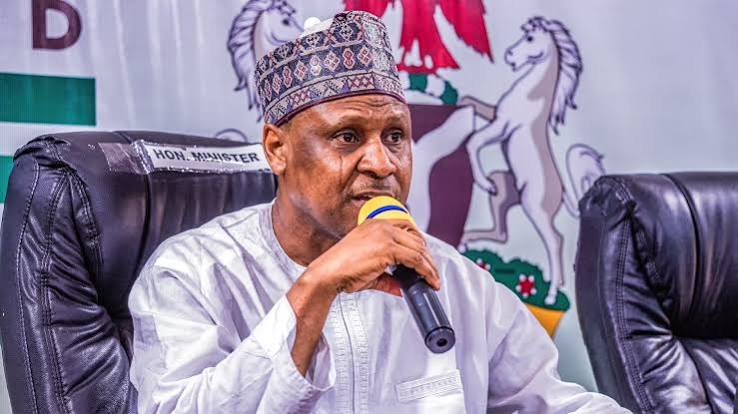
The Minister of State for Industry, Trade and Investment, John Enoh said this at the 8th annual induction and conference of the Chartered Institute of Project Managers of Nigeria (CIPMN).
He explained that abandoned projects continue to lock up public funds that could have been used for infrastructure development, industrial growth, job creation and essential social services.
Represented by the ministry’s Permanent Secretary, Chris Osa Isokpunwu, he said the impact goes beyond financial losses, as incomplete projects affect communities and limit access to important public services
He cited examples of that remain unopened, schools that cannot accommodate students, roads that fail to connect communities and electricity projects that have not delivered their intended benefits.
The Registrar-General and Chief Executive Officer of CIPMN, Henry Ifeanyi Mbadiwe, also identified poor project management as a major challenge affecting development in Nigeria.
He revealed that the institute had developed a project management curriculum for Nigerian universities, which has received approval from the National Universities Commission (NUC). The programme is expected to enable universities to offer project management as a bachelor’s degree.
Mbadiwe further referenced findings by the Presidential Projects Assessment Committee, which identified 11,886 ongoing federal capital projects in 2011, with an estimated financial commitment of ?7.78 trillion.
He noted that inadequate planning, supervision, accountability and implementation were among the factors contributing to the abandonment of projects across the country.
The minister called for stronger project management structures across ministries, departments and agencies to improve planning, monitoring and evaluation.
He added that the Federal Ministry of Industry, Trade and Investment had introduced a 90-day implementation reporting cycle to strengthen transparency and monitor the progress of government programmes.

Ikenga said the company remained committed to Nigeria’s power sector and would continue investing in its operations despite the challenging business environment.
He spoke in Lagos at the third edition of the Shell Power Conference, themed “Powering Nigeria’s Progress: Turning Ambition and Action into Sustainable Impact”.
The Transcorp Power chief said the company would sustain electricity generation, invest in its facilities and deliver value to shareholders.
“Transcorp Power is a long-term player, not a short-term player. This year has been challenging, but what is important is getting power to schools, hospitals and businesses to power progress,” he said.
Ikenga said the company’s focus on operational efficiency and investment had strengthened its contribution to Nigeria’s electricity supply.
He disclosed that since acquiring the Ughelli Power Plant in Delta State in 2013, Transcorp Power had quadrupled its available generation capacity.
He also said the company became the first privatised power generation firm to receive a post-privatisation discharge certificate after fulfilling all its privatisation obligations.
The company’s unaudited results for the nine months ended September 30, 2026, showed a profit before tax of N83.1 billion, while its profit-before-tax margin rose to 31.2 per cent from 29.6 per cent recorded in the corresponding period of 2025.
Its total assets rose to 11.7 per cent amounting to N629.5 billion, while shareholders’ funds grew 8.9 per cent to N199.8 billion. Cash and cash equivalents also rose to N10.3 billion, supported by improved collections.
On the company’s contribution to grid stability, Ikenga said Transcorp Power’s black-start capability enabled it to restart operations without relying on electricity from the national grid.
He explained that the capability allowed the company to support power restoration following grid disturbances, helping to restore electricity supply to homes, businesses and industries.
Ikenga noted that Nigeria had an installed electricity generation capacity of about 13,000 megawatts, with an estimated potential of 50 gigawatts, adding that realising the potential would require effective coordination across the entire value chain.
“Everything in the value chain has to work,” he said.
He called for stronger collaboration among federal and state governments, regulators and private-sector operators, alongside increased private investment, to build a sustainable electricity market.
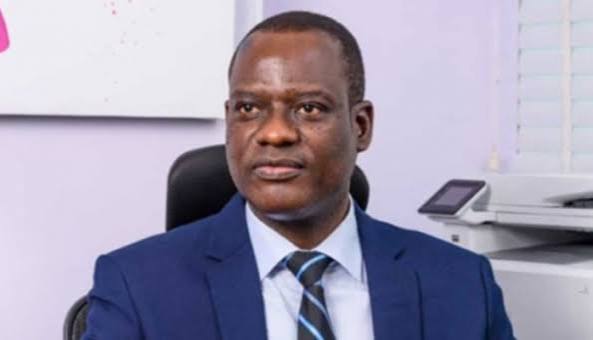
This was contained in a statement issued on Thursday by his Senior Special Assistant on Communications and Press Secretary, Maryann Duke.
The statement said Oyedele pointed to “improved digital systems, including electronic invoicing, as a key driver behind a record of N33tn in government revenue collected between January and October 2026.”
The minister said the performance demonstrated the potential of technology to improve revenue administration, strengthen compliance and increase efficiency across government institutions.
Speaking on the theme, ‘Digital Sovereignty and Ethics: Guarding the Economy for the Next Generation,’ Oyedele warned that Nigeria risked losing substantial economic opportunities if it continued to depend heavily on foreign digital infrastructure.
Citing Nigerian Communications Commission figures, he disclosed that the country recorded more than 157 million active internet subscriptions as of May 2026.
He explained that these connections generated significant volumes of information through financial transactions, healthcare, education and taxation.
However, citing estimates from the Nigeria Data Protection Commission, Oyedele said as much as 90 per cent of the country’s data was hosted abroad.
According to him, the situation has implications for foreign exchange expenditure, employment opportunities, technological skills and Nigeria’s control over information generated by its citizens.
He compared the country’s reliance on foreign digital infrastructure with its historical dependence on imported refined petroleum products, warning against a situation where Nigerian data would be processed abroad and the resulting services sold back to domestic users.
The minister consequently advocated greater investment in local data infrastructure, technical expertise, cybersecurity and predictable regulations to enable Nigerian businesses to capture more value from the digital economy.
He clarified that digital sovereignty should not translate into technological isolation but should strengthen Nigeria’s capacity to participate competitively in international markets.
Addressing graduating students, Oyedele urged young Nigerians to become developers of technological solutions rather than remain primarily consumers of products created elsewhere.
He identified artificial intelligence as both a disruptive force and an opportunity for innovation, advising graduates to acquire relevant digital skills alongside critical thinking, creativity, sound judgement and integrity.
The minister also cautioned against irresponsible online behaviour, explaining that digital footprints increasingly influence employment prospects, commercial relationships and professional credibility.
Oyedele outlined five priorities for graduates, including continuous learning, value creation, integrity, responsible digital citizenship and active participation in national development.
“Your degree is evidence of what you have learned. Your competence will demonstrate what you can do. Your character will reveal who you truly are,” he told the graduating students.
-

 Politics3 days ago
LG CITY BOY COORDINATOR HAILS WIKE’S SUPPORT FOR ONYESOH, TINUBU
-
Politics3 days ago
DIRI INAUGURATES APC CAMPAIGN COUNCIL, SETS MILLION VOTES TARGET FOR TINUBU
-

 Politics3 days ago
NDC Candidate Urges Oborevwori To Probe Asaba Political Violence
-

 News4 days ago
Army Recovers X Account After Hack Attempt
-
 Business3 days ago
Nigeria Loses N17tr Yearly To Abandoned Projects
-
Politics3 days ago
2027: Oborevwori Tasks Media On Fair, Accurate Reporting
-
Politics3 days ago
2027: AKPABIO ENVISAGES TINUBU’S VICTORY IN SOUTH SOUTH REGION
-
Politics3 days ago
Asaba Political Violence: Police Confirm One Dead, Delta Govt Urges Probe