
Nation
THE STATES

Ondo
Governor Olusegu Minimko is to be honoured by the people of Ondo town during this year’s Ekimogun day celebration.
The event will take place at the Oba Adesanoye civic centre, Ondo state and unlike part editions, Miniko is sole awardees this year, a statement said, Tuesday.
According to the organisers: The 2009 Ekimogun Day celebration has been specially dedicated to Mimiko to appreciate and honour God for his election as the indigene even to become governor of the Sunshine State since its creation in 1976.
Ekimogun Day is a yearly event which started since 1987 as special day set aside by the Ondo people to celebrate their common heritage, industry and achievements.
Oyo
The Nigerian Civil Service Union (NCSU) has invited a campaign for a special salary scale for its members in the service of state government nationwide.
The union also said that ongoing labour’s demand for N52,000 minimum wage will not affect its campaign for the special salary scale.
This was disclosed by the national president of the union, Comrade Shuaib Mohammed, at the delegate’s conference of the Oyo State Council of union in Ibadan at the weekend.
New members of State Executive of the union at the conference.
His comment came as the new Oyo State Council chairman, Comrade Kehinde Oporiude, called on aggrieved members to return to the fold.
Just as medical workers, teachers and others deserve special salary scale, Mohammed said members of his union deserved special pay in view of strategic role they perform in government service delivery.
Mohammed also described the wide desparity between the salary of permanent secretaries and directors in various state ministries, saying it is a clear case of imbalance.
The union leader said a situation where permanent secretaries earn over N400,000 while their fellow directors a paltry N80,000create a feeling of cheating and dissatisfaction among senior government workers.
Ekiti
All the six South West Governors and prominent traditional rulers will meet again to fashion out means of collectively developing the zone Governor Olusegun Oni is hosting other members of the council next Tuesday at the Government House, Ado-Ekiti.
The meeting which at one time or the other had had in attendance the Ooni of Ife, the Alaafin of Oyo and chairman of traditional councils of states of the south west will at this gathering set out the modalities and programmes that can allow the political and natural rulers of the zone create a common pattern of development that would, at the end, become a vital contribution to the growth of the country.
According to the coordinator of the council, Alao Adedayo who is also the publisher of Alaroye Group of Newspaper, attempt to always bring the royal fathers together with the governor is borne out of the desire to ensure that the leaders come together, plan together and work together for the development of Yoruba land, irrespective of their political or religious differences.
Sokoto
The Sultan of Sokoto, Alhaji Sa’adAbubakar has frowned at mass failure of examination organised by the West African Examination Council (WAEC0 and National Examination Council (NECO) for students across the country and urged the federal government to reintroduce the Teachers Colleges and reorganise the National Teachers Institute (NTI).
The Sultan made this call in Sokoto to during his address to the nation in the occasion of Eid-el-Kabir.
Alhaji Abubakar described the situation is very disturbing, “we have taken note of the mass failure of students at this year’s WAEC and NECO examinations. The situation is disturbing and we are calling on the federal government to find out reason for this.
“Since we are optimistic that the problem might not be unconnected to the failing standard of primary education in the country, w e therefore appealed to the Federal Government to reintroduce Teachers College and the re-organisation of the National Teachers Institute (NTI) in order to improve the quality of education.
Plateau
A businessman, Alexander Ejukorlem has petitioned the Pleateau State Police Command over the alleged invasion of his house by some gun wielding policemen who supervised the removal of roofing zinc, doors and other fittings they carted away.
Mr Ejukorlem alleged that the policemen numbering 14 and who claimed to be citing on instructions invaded his company’s premises located at No. 26 Jengre Road in the afternoon of October 27 to carry out the action.
“The men were fully armed intimidated all the residents of the premises and ordered everybody out of the premises. They were in company of some men and boys who we did not immediately know their identity.
“The boys climbed the roof under the watchful eyes of the policemen and removed the zinc, doors windows netting, burglary proof electrical cables, fitting and other items of the property where we lived with my brothers and officers of the company” the petition said.
Abuja
The conference of Nigerian Political Parties (CNPP) has condemned the presidency over comment that President Umaru Musa Yar’Adu is full committed to the implementation of the Justice Mohammed Uwais committee report.
Special Advisers to the president on media and publicity, Mr olusegun Adeniyi on Sunday last week in a publication on pages of newspapers not (The Nation) captioned “who is afraid of the Uwais Report? Said even before the enactment of the enabling legislation on electoral reforms, President Yar’Adua has clearly demonstrated his unwavering commitment to the reform agenda.
His words: “But it would appear that with his conceptions about the Uwais Report (which many of the critics have not even bothered to read) the public is being misled into believing that this government is not committed to electoral reform. Nothing can be farther from the truth.
“This same report has been placed in its entirety by the President before the National Assembly which clearly is not a rubber-stamp institution.”
CNPP furious about this in a statement recalled that contrary to the twist from the presidency, the Uwais Report against the rules of the both chambers of the National Assembly did not accompany the seven tepid Executive Electoral Bills adding that it shows clearly that the presidency handled the Uwais Report with a “long spoon.”
It said in the defence of president Yar’Adua’s demonstration of practical commitment to Electoral Reform. Adeniyi rolled out series of court ordered bye-elections conducted by Independent National Electoral Commission (INEC) but failed to note that the retention of Professor Maurice Iwu as an axe-man, after his record of gross misconduct in the 2007 sham elections is less than honourable.
Niger
The Anglican Bishop of Bida Diocese, Right Reverend Jonah Kolo, has blamed the fall in moral and academic standard in public schools on the forceful take over of missionary schools over thirty years ago by government.
Making a call for the return of such schools back to the original owners, the clergyman said that for the on-going reform in the education sector to produce the desired result, concerted efforts should be made to revive the moral and academic standard of students from our schools.
Kolo who was speaking in Minna ahead of today’s thanksgiving service to round off the 10th anniversary of the Diocese, maintained that it was time for the government to shed off some of the self inflicted burden on itself, by returning schools owned by the missions to the original owners.
Aside from these, the Bishop also observed that most of the schools taken over by government are in bad shape.
He said, “government has a lot to cater for; hence the attention given to these schools have failed to produce the desired result. Let government handover the schools back to the church.”
The Bishop attributed the current intervention of the church in the establishment of schools from primary to tertiary levels to the deplorable condition and standard of the sector.
Kano
Statement of the People’s Democratic Party (PDP) in Kano State, Alhaji Sidi Ali has said that the war against corruption in Nigerian cannot be left to the government alone.
Alhaji Ali who said this in an interview with newsmen in Kano, also called on the National Assembly to pass the freedom of information bill.
According to him, government need the collective effort of all to prosecute the war against corruption, stressing that until this is done, the situation will continue to remain the same.
“Government is prosecuting corruption but with the individuals that are put in leadership, is difficult to know what is in the heart of somebody.
“The government cannot prosecute itself, the government appoint people and these people have to go by government,” he said.
The PDP chieftain, also denied that there is division between the Northern Union (NU) and Arewa Consultative Forum (ACF), stressing that the ACF which is the apex organisation in North is a cultural organisation and it non political.
“In his word, I am a member of the Northern Union, I am also a member of the ACF, and I can tell you that there is no division.
“The ACF that we all belong to, is a cultural organisation and non-political. However, with the Northern Union, we failed that there not much action you can do without politics.”
Kwara
It will amount like covering the moon with the palm of the arm for some state governments to implement the new tax regime in Nigeria, as many are yet to deliver the dividends of democracy to their people.
The chairman of the Northern Union, Dr Olusola Saraki has stated, just as he said the northern union was toying with the idea of making the group have national spread.
The strongman of Kwara politics, who told reports in Ilorin, the state capital said the issue of taxation has become imperative to engender more positive growth in the economy, lamented that with poor performance from some political leaders, it will be difficult to implement the policy.
On his opinion on the agitation for the creation of more states and local government area, he said it would be difficult to create new states and councils under a democratic dispensation more so as the Nigerian federalism was not the type practiced elsewhere across the globe.
Lagos
Nigeria has been urged to gear up for the post-oil era if the country wants to continue to be relevant in the scheme of things globally.
This is the subject of the lecture delivered recently in Lagos and organised by leadership watch in collaboration with science medicine research institute based on the United States.
The lecture tagged: Nigeria in a post oil era delivered by a team of American based Nigerian investors, with representatives of government in attendance said that Nigeria is reminded that these are the last days of the oil era.
The guest speaker, Dr Alphonsus Ekwerike said Nigeria has a lot of other things to offer the world outside oil.
“Nigeria in a post oil regime will be a vibrant era because a door will be opened for the people to go into innovations.
“Oil is not the only mineral we have in this country. We have other minerals, we have solid minerals” he said.



As the world marked the 2026 International Day of the Girl Child on Sunday, October 11, 2026, a non-governmental organisation, Stand Up for Women Society (SWS) has intensified its campaign against child marriage, urging schoolgirls to prioritise education, protect their rights and develop skills for a better future.
The organisation joined the global observance of the day under the theme, “International Day of the Girl Child: End Child Marriage and Invest in Girls’ Rights,” with a sensitisation programme at Government Girls Secondary School, Oromenike, D-Line, Port Harcourt, Rivers State.
Led by its Vice Chairperson, Daba Benebo, the group engaged the students in discussions on the dangers of early marriage, teenage pregnancy, sexual abuse and other challenges that threaten the education, safety and development of the girl child.
Speaking during the programme, Benebo urged the students to reject early marriage and remain focused on their studies, stressing that education would empower them to make informed decisions about their lives and future.
She cautioned the girls against allowing anyone to deprive them of their right to education and dignity, advising them to report cases of harassment, abuse and other violations of their rights to the appropriate authorities.
Benebo assured the students that SWS remained available to support them whenever they encountered violations of their rights.
She also encouraged them to maintain discipline and responsible conduct while avoiding behaviours that could expose them to negative influences and jeopardise their future.
Beyond formal education, the SWS vice chairperson urged the students to acquire vocational skills that could provide additional opportunities for economic independence and help them navigate future challenges.
The sensitisation programme, enlivened by singing, dancing and to share their views and experiences on issues affecting the girl child interactive sessions, provided an opportunity for the students to share their views and experiences on issues affecting the girl child.
One of the major issues raised during the discussion was the appropriate age for marriage. While some participants maintained that 18 years was the constitutionally approved age, the discussion highlighted the need to consider not only age but also the maturity, preparedness and responsibilities associated with marriage.
The speaker stressed that marriage required adequate mental and emotional preparation, as well as the capacity to shoulder its responsibilities.
She therefore advised the students to concentrate on acquiring a sound education before considering marriage, noting that education would equip them with the knowledge and skills needed to make responsible decisions and manage family life.
The issue of teenage pregnancy also featured prominently during the question-and-answer session.
In addressing the subject, the speaker explained that pregnancy could occur even at the age of 12, using the example to underscore the vulnerability of young girls to the consequences of early sexual activity.
She advised the students to avoid sexual intercourse and prioritise their education, personal safety and future aspirations.
The discussion also examined the difficulties some girls encounter when living with hostile spouses, relatives or guardians.
Benebo encouraged the students to cultivate patience, humility and diligence, noting that these qualities could help them navigate difficult situations and build a brighter future.
However, she warned that patience and humility should never be interpreted as an obligation to endure violence, abuse or degrading treatment.
She urged girls experiencing hostile or abusive living conditions to seek help from their parents, trusted adults or appropriate support services rather than remain in environments that could expose them to physical or emotional trauma.
“When such happens, please return to your parents and engage in petty trade or learn a skill to support your education rather than stay in a hostile environment,” Benebo stressed.
The programme also underscored the importance of protecting girls from early marriage and other harmful practices that can disrupt their education, compromise their well-being and limit their opportunities in life.
It also reinforced the need for families, schools, communities and relevant organisations to work together to ensure that girls have access to education, vocational training, protection and the support they need to realise their potential.
For SWS, the message was clear: empowering the girl child begins with protecting her rights, investing in her education and equipping her with the confidence and skills to make informed choices about her future.
Stories by Kevin Nengia
The Egberipapa Foundation has unveiled a mass transit scheme aimed at easing transportation difficulties and improving connectivity among communities in the three Kalabari local government areas of Asari-Toru, Degema and Akuku-Toru in Rivers State.
The initiative, established by former Caretaker Committee Chairman of Akuku-Toru Local Government Council, High Chief Sobomabo Jackrich, popularly known as Egberipapa, is designed to make transportation more accessible and affordable for residents across the Kalabari area.
The scheme was launched on Monday, October 12, 2026, and is expected to address longstanding transportation challenges confronting residents, particularly those in riverine and hard-to-reach communities.
Communities expected to benefit from the initiative include Krakrama, Minama, Angulama, Sangama, Omekwe-Tariama and Omekwe-Ama.
The project is expected to ease movement within and beyond the Central Group area, while providing residents with a more convenient means of transportation for their daily activities.
For decades, transportation difficulties have posed significant challenges to several Kalabari communities, making movement between settlements both cumbersome and expensive. These challenges have also affected commercial activities, social interactions and access to essential services.
The introduction of the mass transit scheme is therefore expected to provide relief to residents, strengthen inter-community connections and stimulate economic activities across the benefiting communities.
Beyond improving mobility, the initiative could contribute to community development by facilitating the movement of people and goods, supporting local businesses and enhancing social and economic interactions within the Kalabari area.
As the scheme gets underway, attention will be focused on its implementation, accessibility and sustainability, as well as its capacity to deliver lasting transportation benefits to the target communities.
The initiative represents a potentially significant step towards addressing transportation challenges and promoting grassroots development across the Kalabari Kingdom.
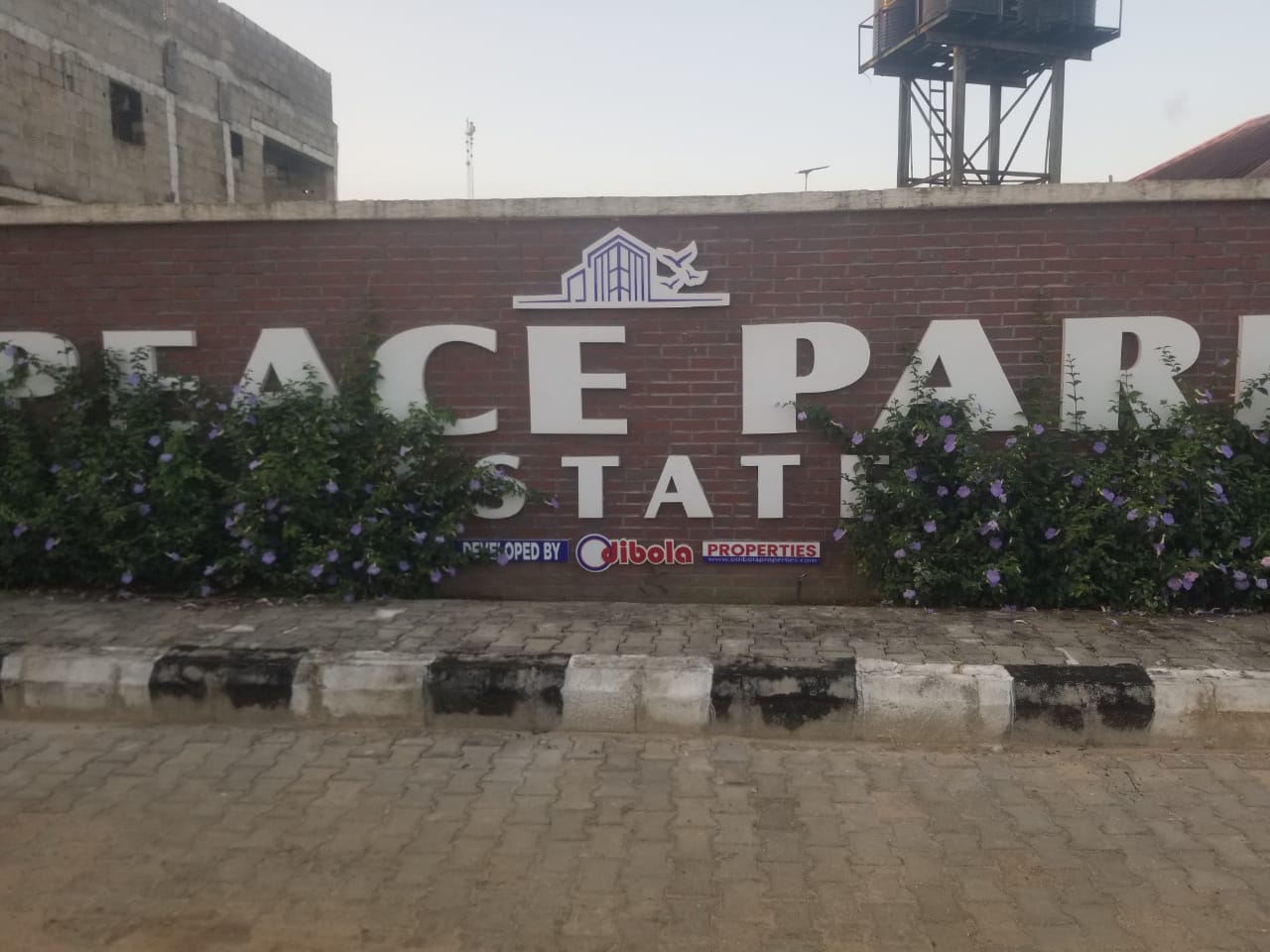
The Amaewhule family of mbodo Aluu in Ikwerre Local Government Area of Rivers State has cautioned members of the public against entering into any land transaction involving a disputed property known as “Ada Oro Fam Land,” located behind the OPM Church along Airport Road.
The family, through its legal counsel, Barrister Ndubuisi Agumagu, issued the warning amid an ongoing legal dispute over the ownership and control of the property, which is said to comprise more than 900 plots of land.
The matter is currently before the Isiokpo High Court of Rivers State in a suit numbered IHC/246/CS/2026, presided over by Justice Sobere Biambo.
The claimants in the suit include Chief Green Amaewhule and others, while Fabulous Amaewhule and Odibola Properties are listed among the respondents.
Counsel to the Amaewhule family, Barr Ndubuisi Agumagu, advised prospective land buyers and members of the public to exercise caution and refrain from purchasing any portion of the disputed property pending the determination of the case by the court.
According to the legal counsel, the property is a family estate belonging collectively to the Amaewhule family, and no individual member of the family has the authority to unilaterally dispose of portions of the land.
The counsel specifically maintained that Fabulous Amaewhule, one of the respondents in the suit, does not have the legitimate authority, according to the family’s position before the court, to sell portions of the disputed property.
The family further warned that anyone who proceeds to purchase land from the respondents while the matter remains before the court would be doing so at their own risk.
It stressed that such buyers could potentially lose their investments should the court eventually deliver judgment against the validity of the transactions.
The legal team said the warning became necessary to prevent unsuspecting members of the public from committing their resources to a property whose ownership and right of disposition are currently the subject of judicial determination.
The family also urged prospective investors, developers and land buyers to conduct proper legal inquiries and obtain independent verification of the status of the property before committing funds to any transaction relating to it.
The Amaewhule family said its position was intended to protect members of the public from possible financial losses and further legal complications while the case remains sub judice, stressing that interested parties should await the final determination of the court.
Akujobi Amadi