
Editorial
Repentant Militants In Niger Delta: What Yar’Adua Must Do

 In line with his promise to personally receive Militants that whole-heartedly embrace the federal government’s Amnesty, Nigerian President Umaru Musa Yar’Adua last week played host to the First set of repentant insurgents at Aso Rock, Abuja.
Expectedly, a jubilant duo of Yar’Adua and Vice President, Goodluck Jonathan warmly received each of the more than 30 members of the movement for the Emancipation of the Niger Delta (MEND), in what seemed the first real take-off of the amnesty package.
More importantly, the Abuja event underscored the very important role South-South Governors could play in the success of the amnesty package, because, without their support and involvement very little could have been achieved, least of which was the weekend, “surrender ceremony.”
Commendable as the take-off appears and the prospect it holds for many more, to step forward, embrace the truce and subsequently lay-down their weapons, there are still issues President Yar’Adua should not take for granted.
Key more such worries is the apparent lack of a holistic development agenda that would put to rest the near frequent cases of unrest in the Niger Delta.
Speaking recently as Guest of The Tide Round Table, weekly personality interview programme of the Rivers State Newspaper Corporation, a former President of the Nigeria Bar Association (NBA), Mr. Onueze C.J. Okocha (SAN) questioned the honesty of the federal government in its repeated promises to address the Niger Delta problem.
In the learned Senior Advocate’s informed opinion, the key issues to address are those of equity and justice in the allocation of funds accruing from oil and a bold political decision that would grant oil producing states 50 per cent derivation, as obtained in pre and post independence Nigeria.
That indeed is the key point to note in addressing the Niger Delta problem, if indeed, President Yar’Adua meant it when he included the region as a key part of his Seven-Point Development Agenda.
The Tide finds it very disturbing that more than two years into his four-year tenure, President Yar’Adua’s actions have not translated into any positive change in the fluctuating fortunes of the area, a reason that has in many ways, contributed to the volatility in the region.
Instead, as it has always been in the past, the federal government seems interested more in interventionist measures, rather than addressing, in a lasting manner, the near frequent cases against marginalization.
What is indeed required is a holistic handling of the problem which many stakeholders agree, the much trumpeted amnesty for Niger Delta militants and the temporary suspension of hostilities by the insurgents will not be enough; it instead, will amount to postponing the dooms day.
This is why The Tide calls on President Yar’Adua to take the bold step forward and stand on the side of truth and precedence by proposing an upward review of the derivation fund to, not more than 50 percent, as spelt out by the 1999 Nigerian Constitution. That way, every state of the federation will explore more economically viable ways of developing their own resources and pay the requisite taxes to the centre; rather than depend solely on windfall from the Niger Delta.
Happily, that is partly the spirit behind the federal system Nigeria has chosen to operate, a system where, states are allowed considerable independence in managing the resources.
We say so because the argument by some that oil is a natural gift that should not be considered as any particular state’s heritage falls flat on the face of international law on land. Clearly, whoever owns land, owns whatever is beneath. Period.
This is the kind of truth and justice, Niger Deltans expect of President Yar’Adua, if, he genuinely seeks to address the problems of the region. In taking that bold step, what must be considered first and foremost are the hazards of oil production, the denial of arable land for agricultural purposes and the destruction of marine life which was hitherto, a major source of fishing activities.
Perhaps, it must be emphasized that the environmental and ecological impact of oil prospection and production activities pose an even more mortal danger to the people of the region, which remedial needs can hardly be met by the pea nuts grudgingly given to interventionist bodies, like NDDC and the Niger Delta Ministry.
The Tide agrees with the learned Senior advocate that the best solution to the Niger Delta problem are the implementation, without further delay, of the Leedum Mitee Technical Committee Report and the granting of 50 percent Derivation to oil bearing areas.
This is what the peoples of the Niger Delta thought that Yar’Adua would give them, when he made the region part of his 7-Point Agenda. Repeated assurances about timely release of funds are hardly enough. That is the truth.



As Nigeria moves toward the 2027 general elections and campaign activities intensify, violence against opposition politicians has become an issue that can no longer be overlooked. What should be a season of competing ideas is increasingly turning into a test of intimidation, and early signs suggest that those challenging the ruling establishment are the primary targets.
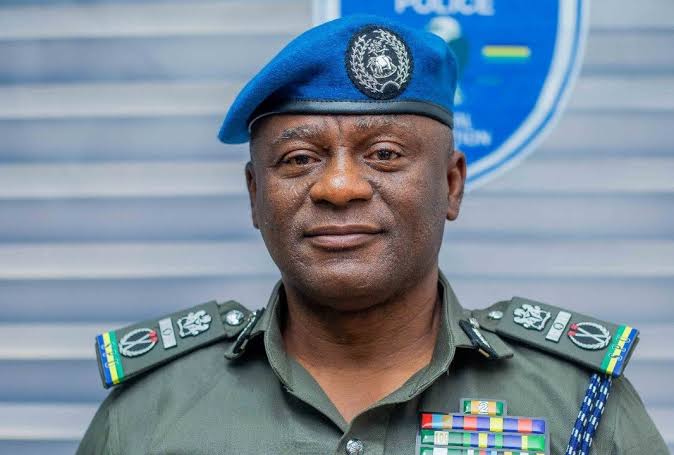
It was, therefore, welcome news when the Inspector-General of Police, Olatunji Disu, warned politicians, political thugs and others against destroying, defacing or removing campaign posters, banners and billboards. In a statement issued in Abuja by the Force Public Relations Officer, CSP Ani Iniedu, the police condemned such acts as political intolerance, directed Commissioners of Police in all 36 States and the Federal Capital Territory to take preventive measures, and warned that sponsors would also face prosecution. The police rightly described such vandalism as a criminal act that undermines parties’ and candidates’ freedom to canvass for votes.
But billboards are replaceable; human lives are not. While applauding the IGP’s stance, we urge him to extend the same stern warning and enforcement zeal to thugs who assault opposition members during campaigns. A police force that punishes the tearing of a poster but ignores the breaking of a skull will have its priorities questioned. Allowing such attacks to continue could erode the foundations of our democracy.
Consider the African Democratic Congress (ADC) presidential campaign flag-off in Sokoto State on November 4, 2026. The party alleged that the State Government denied it access to public facilities, sealed its campaign venue and pressured hotels to reject its delegates, forcing it to hold the rally at its secretariat. The Sokoto authorities, however, denied instructing hotels to turn guests away. More seriously, two suspected ADC supporters were reportedly shot along the Sokoto–Wurno Road while travelling to the venue, allegedly by operatives of the Sokoto State Community Guards.
Whatever the truth of these competing accounts, a shooting demands more than press statements. It requires a transparent, independent investigation and prosecution where warranted. Sokoto was not an isolated incident. The following day in Birnin Kebbi, the ADC presidential campaign convoy was reportedly attacked by armed gangs. Amnesty International said vehicles were vandalised, people assaulted with cutlasses and roads blocked, while the party’s Kebbi governorship candidate, Abubakar Malami, alleged that media equipment was destroyed and tear gas deployed. His convoy had suffered a similar attack in the city in September 2025.
The Nigeria Democratic Congress (NDC) has suffered similar attacks. On November 4, hoodlums stoned the motorcade of its presidential candidate, Peter Obi, and running mate, Rabiu Musa Kwankwaso, at Watt Market roundabout in Calabar, Cross River State. Police reported arresting a 27-year-old suspect, Victor Edet, although it remains unclear whether he has been arraigned. The State Government has denied suggestions that ruling-party supporters were responsible. Worse, in Asaba, Delta State, one person was killed and five injured when suspected thugs attacked an NDC rally. A death at a political rally is no longer a warning; it is a damning indictment of the prevailing political climate.
Even critics of the establishment who are not frontrunners have not been spared. Omoyele Sowore, presidential candidate of the African Action Congress (AAC), was attacked by suspected thugs at a restaurant in Ado-Ekiti on October 30. He alleged that the assailants were linked to the Ekiti State Government House and that the Department of State Services leaked his location. Both the State Government and the security service denied involvement, while the police reported a minor injury and a discreet investigation. These conflicting accounts make an independent, publicly reported inquiry indispensable.
What deepens the concern is the Federal Government’s apparent silence. We are unaware of any specific, forceful condemnation of these assaults, even as All Progressives Congress (APC) rallies appear to proceed nationwide without incident. Such silence can easily be misconstrued as complicity, regardless of intent.
According to the Centre for Democracy and Development, 109 election-related deaths were recorded in the build-up to the 2023 polls. The Kimpact Development Initiative separately documented 238 incidents and 24 deaths during the general elections. Beyond Nigeria, Kenya’s 2007–08 post-election violence claimed more than 1,000 lives, according to the Waki Commission. Ghana, by contrast, enacted the Vigilantism and Related Offences Act in 2019 to curb party vigilante groups, a model worth studying.
The remedies are neither exotic nor expensive. The IGP should extend his directive to cover assaults on individuals and disruptions of rallies, while establishing a dedicated investigative unit to probe the Sokoto shooting and the attacks in Kebbi, Calabar, Asaba and Ado-Ekiti. It should publish the status of each case within a fixed period. Suspects must be prosecuted and their sponsors, regardless of party or position, brought to justice. State-backed security outfits, including the Community Guards, should be audited and barred from partisan duties.
The Federal Government must speak and act unequivocally. President Tinubu should specifically condemn attacks on opposition candidates and direct all security agencies to guarantee equal protection for every party. Governors must ensure equal access to public facilities for registered parties. The Independent National Electoral Commission (INEC), which has warned of fines and imprisonment under the Electoral Act 2026 for inflammatory campaign conduct, should enforce the Code of Conduct for Political Parties. Working with the Inter-Agency Consultative Committee on Election Security, it should publish a joint security plan covering campaigns, polling, and collation. Parties must discipline their supporters, courts expedite electoral-violence trials, and civil society and the media maintain a public record of incidents and their outcomes.
The credibility of the 2027 elections is at stake. An election is credible only when every contender can campaign, travel, assemble and speak freely, without fear. Without a free opposition, there can be no meaningful democracy. Nigeria is not a one-party State, and law enforcement agencies must demonstrate their neutrality through action, not communiqués. The campaign atmosphere is too tense to be left to chance. Billboards deserve protection, certainly, but citizens deserve it far more.

-
News2 days ago
RSG Reaffirms Commitment To STEM Education, Technological Advancement
-
Business2 days ago
‘NUJ, NPA’s Partnership Would Boost Port Producrivity, Economic Growth’
-

 News2 days ago
IGP Warns Police Officers Against Partisanship …Directs Regular Engagement With Journalists
-
Business2 days ago
Fire Threat Interrupts Asaba Air Peace Flight
-
 News2 days ago
Customs To Deploy AI, Scanners Against Snuggling
-
Business2 days ago
Fish Production Deficit, A Major Investment Opportunity – Minister
-
Business2 days ago
NCDMB, NLNG Unveil $9m For Professorial Endowment Research Chairs In Six Varsities
-
 Politics2 days ago
2027: INEC Begins Deployment Of Non-Sensitive Materials