
Opinion
Nigeria: What With Budget Failure?

Vincent Ochonma
According to media reports, the House of Representatives, on Tuesday July 14, 2009 threatened to commence impeachment proceedings against President Umaru Musa Yar’Adua over his alleged poor and selective implementation of the 2009 Appropriation Act. Similarly, the Senate on Thursday July 23, 2009 expressed anger against President Yar’Adua’s led executive regarding the non-implementation of constituency projects for which N60 billion had been provided in the 2009 budget.
Budget failure has become the country’s development albatross. A country, even an individual family or an organisation, that does not spend by budget cannot grow.
Budget is the key instrument through which elected officials and the power elite are expected to choose what services are to be provided by government and which areas are to be left to the private sector of the economy. It is also the principal instrument of fiscal policy used to encourage stable growth, sustainable development, prosperity, and optimum employment in the economy. The budget spells out the degree of activities and costs, as well as the specific programmes required for the implementation of the programmes.
The earlier the Senate acts out its resolution to interface with the executive to find out the actual reason for the poor implementation of the 2009 budget the better for the nation. As promised by the chairman, Senate Committee on Information and Media, Senator Ayogu Eze: “We will like to find out what the problems are, why they are not implementing other aspects of the budget…”
The problems or reasons are not far fetched. When the 2009 budget proposal was presented in December 2008, it was hoped that the managers of the economy would have 12 full months (January-December) to implement it. But to the dismay of Nigerians, the budget was signed by the president on March 10, 2009, more than three months after its presentation to the National Assembly. The trading of blames between the executive and legislature over the delay in passing the budget does not make much meaning to Nigerians. Why should it take the National Assembly more than three months to deal with the in-consistencies, ambiguities, general irregularities, and other fundamental flaws which they associated with the budget proposal? And why did the executive wait till the month of December before presenting the budget proposal to the National Assembly, recognising the fact that it must undergo a long and labourious process and scrutiny to pass the budgetary test? After all, President Yar’Adua, an apostle of Due Process should expect the passing of the budget to follow due process.
Besides, President Yar’Adua’s reservation over government’s capacity to fund the N3.1018 trillion budget revealed that the budget was already in imminent grave peril of failure. The factors that would be held responsible for the failure were already identified. These include the $40 per barrel price of crude oil in the international market, at the time, which was below the $45 per barrel used by the National Assembly and the reduction of official output by the Organisation of Petroleum Exporting Countries (OPEC).
In fact, it was reported that some members of the National Assembly that passed the bill had started, from the onset, to express some doubts about the realities of their projections even before its (budget) implementation, based on the failing revenue.
But budget failure is not new in Nigeria. It cannot, therefore, be blamed on the global economic crisis. The fact is that since the country gained independence, the funds approved for project execution have not been judiciously utilised, and the executive, both at the federal and State levels, has hardly complied with budget provisions.
Worse still, proper planning regarding how budgets are to be effectively implemented are usually not made before their preparation and presentation to the legislature.
The implementation of the 2008 budget put at between 20 per cent and 40 per cent was not a consequence of the global economic meltdown which has adversely affected the country’s oil revenue. The woeful implementation of the budget was blamed on among other things, the delay in the passage of the Appropriation Bill by the National Assembly and the failure of the various Ministries, Departments, and Agencies (MDAs) to understand, early enough, the Public Procurement Act introduced by the government.
Budget is a veritable vehicle not only for propelling national growth and development, but also for stimulating participatory democracy. It therefore goes without saying that if its preparation and implementation are bungled, the country’s economy is destroyed and its development efforts are stifled.
To solve the problem of budget failure in Nigeria, the managers of the economy must learn to translate policy objectives into the budget, make a realistic assessment of the resources likely to be available to the government, and ensure conformity of actual expenditure with the budget.



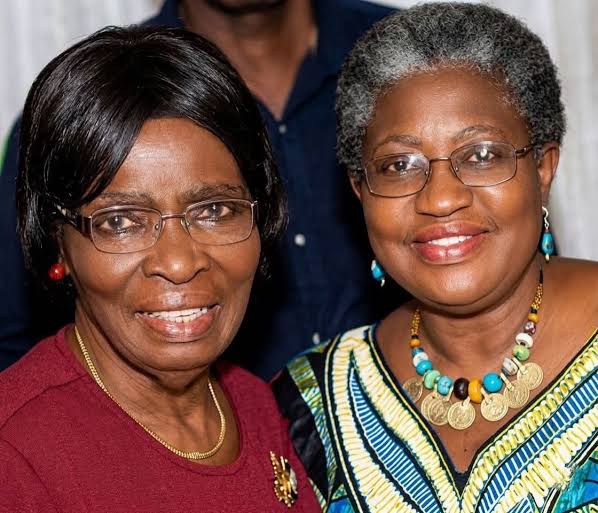
Quote “Professor Kamene Okonjo
Some women leave behind more t
Yet, to remember Professor Kam
Professor Okonjo was the belov
one of the most dramatic chapt
On December 14, 2012, the then
She leaves behind children, gr
Professor Kamene Okonjo deserv
By: Sylvia ThankGod-Amadi

Quote: An African who invokes
This is the concluding part
… Given the fact that I was
At the end of the visit by the
Back to my apartment, at abo
Under normal circumstances, yo
That all she asks is that Chie
For some reason that I do not
I believe that everyone in hu
Our ancestors have not gone fa
By: Jason Osai
The Federal Government’s approval of a N70,000 monthly transport intervention for public service workers for six months, beginning in November 2026, offers hope to employees struggling with the rising cost of living. The agreement with the Nigeria Labour Congress (NLC), reached at a conciliation meeting in Abuja on October 27, is intended to cushion transport costs and ease pressure on workers’ incomes. But for public servants in Rivers State, it raises a familiar question: will the State Government key into the intervention and ensure that its workers benefit? The agreement provides for N70,000 monthly across all levels, for six months. The Federal Government also approved peculiar allowance arrears effective from May 1, 2026, to be paid in three equal instalments beginning in November.
The parties agreed to reconvene after one month to assess implementation. Ultimately, the value of these resolutions will be measured not by announcements but by whether eligible workers receive the money. Transport costs consume a substantial share of many civil servants’ earnings before they can meet household needs. Support for commuting is therefore not a luxury or political favour; it is temporary assistance to help workers remain at their jobs without sinking further into hardship. For lower-paid employees, transport costs can turn modest salaries into a daily exercise in difficult choices and sacrifice.
The agreement also urges State and Local Governments to participate and unions to press for implementation. The federal agreement does not automatically guarantee that every State and Local Government employee will receive the support. State authorities must clarify how it will apply to their workforce, make the necessary arrangements and publish a payment timetable. Rivers State must approach the arrangement with urgency and transparency. The Government should State whether it will implement the intervention and when payments will begin. Any administrative or financial question should be addressed promptly with organised labour, not allowed to become excuses for delay.
The concern is sharpened by the earlier N35,000 monthly wage award introduced by the Federal Government in 2023 after petrol subsidy removal. It was intended as temporary relief pending a new national minimum wage. While several States negotiated and paid wage awards or related sums, implementation nationwide was uneven. Reports in 2024 indicated that many States had failed to pay the federal award, while others provided different amounts. In Rivers, labour and media reports raised concerns about implementation of the N35,000 award for State workers, amid separate announcements and arrangements concerning Local Government employees.
The wage award was meant to ease the immediate effects of subsidy removal, yet workers faced uncertainty over whether the promised relief would reach them. In February 2024, the Rivers State Government announced approval of the N35,000 award for local government workers, but subsequent reports showed that implementation across worker categories remained a concern. The lesson is clear: approval and implementation are not the same. A declaration at a meeting offers little comfort to a worker whose account does not reflect the promised payment. For workers who travel to their offices daily, the implications of delayed support are significant. Transportation expenses compete with food, rent, school fees, healthcare and other essential household needs.
As fares rise, employees may be forced to reduce spending on necessities or borrow to sustain their families. A timely transport intervention would therefore provide practical relief and demonstrate that government understands the economic pressures confronting its workforce. Its temporary nature makes prompt implementation even more important. It is fair to acknowledge that this transport intervention is a new agreement and that its administrative details may require clarification. Rivers State should not be condemned in advance for a failure that has not occurred. Nevertheless, the earlier experience gives workers legitimate grounds to seek assurances before the November commencement date. The State should avoid allowing uncertainty to persist until workers begin asking why the promised assistance has not arrived.
The NLC and unions in Rivers State should engage the State Government immediately and seek a written commitment, an implementation plan and a process for reporting missed payments. If clarification from the Federal Government is needed, the State should seek it without abandoning the goal of providing relief. Labour leaders must also keep members informed about progress and insist that any agreed arrangements are applied fairly and transparently. The Rivers State Government should treat this intervention as an opportunity to rebuild confidence. Timely support would show that workers’ welfare is more than a talking point and that the State recognises the economic realities confronting its employees.
Silence, delay or selective implementation, by contrast, would revive frustration over earlier relief measures and weaken trust between government and labour. Every month lost to administrative delay leaves workers facing the same transport burden without the intended assistance. The State should consult labour, publish arrangements and pay eligible workers on time. Rivers workers should not have to wonder whether federal relief will reach them. The Federal Government has announced the support; now the State must make its position clear. We hope the N70,000 monthly transport intervention will not follow the troubling path of the earlier wage award. Rivers State should learn from that experience and ensure that this time, relief is not merely promised but delivered.
Sylvia ThankGod-Amadi
-
Rivers3 days ago
NUJ Set To Attend UNIPORT’s 217th Inaugural Lecture
-
 News3 days ago
NJC Suspends Three Judges, Sanctions Eight Others
-
Politics3 days ago
Atiku Kicks-Off 2027 Campaign, Promises To Tackle Nigeria’s Challenges
-
 Featured3 days ago
APC Presidential Campaign Storms PH, ‘Morrow
-
News3 days ago
FG Explains Supply Disruption As Power Generation Drops To 3,659MW
-
Metro3 days ago
Port Harcourt Prepares For 10,000 Runners As International Marathon Returns
-
 News3 days ago
Bille Gas Leak: Coalition Tasks FG On Proactive Measures
-

 News3 days ago
IGP Orders Arrest, Prosecution Of Campaign Billboard Vandals