
Editorial
Still On Constitution Review


Like every Senate before it since 1999, the Ninth Senate recently set up a 56-member
committee for the amendment of the 1999 Constitution. The committee, headed by Deputy Senate President, Obarisi Ovie Omo-Agege, may be the Senate’s response to objections and continual whines of the constitution for containing some ambivalence that impede harmony and development of Nigeria.
As the review process starts up, Omo-Agege of the All Progressives Congress (APC, Delta Central) said recommendations of the 2014 National Conference chaired by late former Chief Justice of Nigeria, Idris Kutigi, and the Committee on Restructuring headed by the Kaduna State Governor, Nasir el-Rufai, would be evaluated and used as working documents.
Speaking further, the Deputy Senate President said the alteration of the Sixth Schedule, the establishment of National and State Houses of Assembly Pre-election Matters Tribunal, Governorship Pre-election Matters Tribunal and Presidential Pre-election Matters Tribunal including time limits for the disposal of all pre-election matters before the conduct of the general election would be considered as well.
Also to be examined, according to the committee chairman, are devolution of powers, full local government fiscal autonomy, full autonomy of the judiciary, youth inclusiveness in governance, and gender parity, among others.
“In carrying out this national assignment, this committee will, no doubt, consider the alteration of the Sixth Schedule to make provision for new items, the establishment of National and State Houses of Assembly Pre-election Matters Tribunal, Governorship Pre-election Matters Tribunal and Presidential Pre-election Matters Tribunal including time limits for the disposal of all pre-election matters before the conduct of the general election,” Omo-Agege said.
It is reasonable that the Senate has, for once, pledged to study the reports of the 2014 National Constitutional Conference and the el-Rufai Restructuring Committee. There were far-reaching deliberations and resolutions on moving the country forward in those reports. We believe it will be wise to initiate relevant bills based on their recommendations in this constitution review activity.
Indeed, the items contemplated for amendment are what Nigerians have always clamoured for in previous constitution modifications. But will anything change with this fresh initiative? Will the outcome be acceptable and assented to by the President? This ritual was performed four times in the Fourth Republic, all of which failed woefully to address the crucial issues undermining the country’s corporate existence.
For instance, there are many recurring issues like local government autonomy, devolution of powers, rotation of power at federal and state levels, full autonomy for state Houses of Assembly, electronic voting, state police, and the likes, which had the sanction of majority of Nigerians during previous exercises, but they failed to make it to the amended Constitution. It is for this reason Nigerians have always found fault with the 1999 Constitution.
This has led to the screaming advocacy for the complete rejection of the present document in favour of an autochthonous one. The campaign is based on the opprobrious fact that it is dubious and a product of the military regime of Abdulsalami Abubakar, with the counterfeit claim that it was the creation of the people.
Nigeria is eclectic in ethnicity, culture and religion. Therefore, it should be run with deference for these sensibilities through pristine federalism. If this model works for the United States of America (USA), Canada, India and Australia with diversities as ours, why can’t it work for us?
It is explicit that lack of a home-grown constitution has made nation-building complicated; economic growth and development evasive; and social harmony a sisyphean task. Consequently, ethnicity and religion have become divergent points in the Nigerian state.
It was to prevent chaos that the country’s founding fathers adopted the 1963 Constitution entrenched in true federalism. The four regions at the time: West, North, East and Mid-West were the federating units with their own constitutions. Revenue was not shared at the centre. Rather, every region was a wealth creator; developed at its own pace; had its police, controlled its resources and paid royalties to the Federal Government.
We need a return to this archetype, not a constitutional amendment. So, the National Assembly should begin a process that will hand down a brand new constitution to Nigeria, which would bring it to self-rediscovery. Having borrowed the presidential system from the United States, we ought to have replicated its constitution. Is it not astonishing that while Nigeria has 68 items in the Exclusive Legislative List, the US has only 12 items in its exclusive list, known as Enumerated Powers?
Today, Nigeria has been transformed into a valley of death, largely because of the notorious activities of terrorist groups, bandits, kidnappers and armed robbers, among others. That is why the nation must undertake urgent political restructuring and enthronement of true federalism through the ongoing constitution amendment exercise.



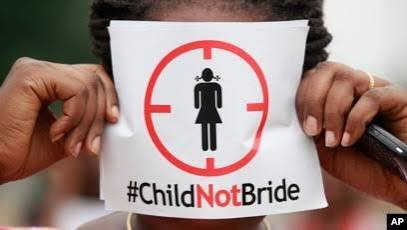
Nigeria joined the world in commemorating the International Day of the Girl-Child on 11 March 2026, an observance dedicated to advancing girls’ rights and amplifying their voices. This year’s theme, “End Child Marriage and Invest in Girls’ Rights,” confronts a deep-rooted injustice and demands an end to sacrificing girls’ futures to prejudice and expediency.
The focus is child marriage, not as an unavoidable misfortune but as a preventable injustice. Though prevalent in many societies, the practice remains particularly troubling in parts of northern Nigeria, where it has become normalised. Reports of girls aged 10 to 13 being married off are disturbing. The controversy surrounding a Nigerian senator and former governor who married a 13-year-old girl further exposed the practice to global scrutiny, yet accountability at home appeared limited. When lawmakers disregard the law, society’s moral compass is compromised.
UNICEF’s statistics reveal the scale of the crisis. Globally, an estimated 650 million women and girls alive today were married before turning 18, while more than 12 million girls enter marriage annually before adulthood. In Nigeria, about 33 per cent of girls marry before 18 and 11 per cent before 15. The prevalence reportedly reaches 63 per cent in Jigawa and Zamfara States and 61 per cent in Sokoto and Katsina. These figures represent millions of childhoods interrupted and futures imperilled.
These statistics explain why the United Nations continues to campaign against child marriage and advocate investment in girls. The consequences are devastating. Girls whose bodies are not fully developed face increased risks of maternal death, obstetric fistula, sexually transmitted infections and psychological trauma. The economic cost is equally significant. A 2017 World Bank and International Centre for Research on Women Study estimated that ending child marriage could generate an additional $7.6 billion in earnings and productivity for Nigeria, as early marriage deprives girls of education, skills, and opportunities to contribute to national development.
Educating a woman benefits the entire society. As a mother, she often becomes her children’s first teacher and a vital influence on their character. An educated mother helps raise enlightened children, just as one candle can light many others without losing its flame. Denying women education undermines families and communities. To expect wisdom while deliberately withholding knowledge is to demand the impossible.
Several reasons are offered for marrying off young girls, including economic hardship, cultural practices and religious beliefs. In some households, daughters are treated as commodities, married early so that their bride price can finance their brothers’ education. While boys enter classrooms, their sisters are sent to matrimonial homes. This discriminatory practice is shortsighted, depriving the nation of half its human potential. A country cannot expect to run effectively after deliberately crippling one side of its capacity.
Beyond these justifications lies the entrenched belief that women ultimately belong in the kitchen, regardless of their education. This outdated notion is demonstrably false. Countries where women lead governments, businesses, research institutions and other sectors show what investment in female talent can achieve. Rwanda’s substantial female parliamentary representation is one example. Confining women to domestic roles limits not only their ambitions but also the nation’s progress.
A girl-child must not surrender her childhood to poverty or prejudice. Some traditions discourage women from attaining educational heights comparable to or greater than those of men, driven by the baseless fear that educated women will disrespect their husbands. Such thinking equates enlightenment with insubordination and empowerment with threat. This patriarchal mindset perpetuates inequality and keeps society trapped in backwardness.
Consequently, some parents consider educating their daughters a waste of resources, likening it to watering another man’s garden. This attitude is deeply misguided. Every girl deserves the opportunity to learn, grow and pursue her dreams. Early marriage mortgages her future, stifles her potential and traps her in circumstances she might otherwise overcome. No society can justify sacrificing a child’s prospects to outdated customs or immediate financial gain.
Ending child marriage must, therefore, go hand in hand with investing in girls’ education, safety and rights. Every girl should have the opportunity to realise her potential. This requires more than annual declarations, billboards, posters and seminars held in air-conditioned halls. Awareness without action is like a cloud without rain: promising, yet incapable of nourishing the ground.
The campaign must move beyond tokenism to practical intervention, particularly at the state level, where the problem is acute. Governments should formulate policies that protect girls and make education accessible. Scholarships, bursaries, conditional cash transfers, school feeding programmes and other incentives can help keep girls in school. When education is affordable and adequately supported, more girls can choose the classroom over the bridal chamber.
Civil society organisations, faith-based groups, and traditional institutions must intensify efforts to challenge child marriage and dismantle harmful beliefs disguised as religious or cultural obligations. Parents must also uphold their responsibility to protect and educate their daughters, despite economic pressures. A society that educates its girls invests in its future; one that marries them off in childhood mortgages that future at an incalculable cost.

The prolonged suffering of Rivers State pensioners who have remained unpaid since retiring in July 2025 demands urgent executive and legislative intervention. The Nigeria Labour Congress (NLC) has rightly put its finger on the Contributory Pension Scheme (CPS) as the root cause of this crisis. The state government must now bite the bullet, dismantle this failed experiment, and bring the pensioners’ protracted ordeal to an end.
Since July 2025, the affected retirees have been left high and dry, their monthly pensions unpaid, and their dignity worn away. The NLC, under the leadership of Comrade Alex Agwuanwon, has also linked this deplorable situation to the political storm that engulfed the state, while expressing cautious optimism that the prevailing calm will pave the way for the payment of outstanding arrears. The Tide shares that optimism. However, optimism alone will not put food on the table for men and women who gave the best years of their lives to the service of the state.
The genesis of this crisis is not shrouded in mystery. The CPS was introduced in Rivers State in 2012 under the administration of former Governor Chibuike Rotimi Amaechi, pursuant to the Rivers State Pension Reform Law of that year. The scheme was ostensibly designed to bring the state into line with the federal Pension Reform Act of 2004, which had established a contributory framework for retirement benefits across the country. What was sold as a progressive reform has, in truth, become a millstone round the neck of the very workers it was meant to protect.
The CPS has failed in the state, and it has failed spectacularly. Its fundamental flaw lies in the government’s chronic inability, or unwillingness, to honour its counterpart funding obligations. The arrangement was meant to be a joint endeavour: employees contribute a portion of their salaries, and the employer matches it. But the state has consistently failed to keep its side of the bargain, leaving the pension fund anaemic and unable to meet its obligations. The result is as predictable as it is unconscionable. Retirees are left with only their own contributions to fall back on, a mere pittance that cannot see them through their twilight years.
The human cost of this institutional failure is staggering. Men and women who devoted decades to the civil service now find themselves cast adrift, their legitimate expectation of a secure retirement shattered. The psychological toll of such betrayal is beyond measure. A pension is not an act of charity. It is a contractual obligation, a deferred wage for services already rendered. To withhold it is to break a sacred trust. The authorities must understand that every delay in resolving this crisis costs lives, both in the literal sense as elderly retirees struggle to pay for healthcare and sustenance, and in the figurative sense as the social contract between the state and its workforce wears thinner with each passing month.
This development does not show the government in a favourable light. For a state to allow people who served it with dedication and integrity to languish in penury after retirement is morally indefensible. It sends a chilling message to serving civil servants that loyalty will be repaid with abandonment. This is precisely why organised labour must not rest on its oars. The NLC’s call for the termination of the CPS is not mere grandstanding. It is a necessary corrective. The scheme, as presently administered, is irredeemably broken and must be done away with.
The most damning indictment of the CPS since its inception is its one-sidedness. The government has failed to pay its counterpart funding, reducing the scheme to a hollow shell. Of what use is a contributory arrangement when only one party contributes? Retirees cannot be expected to live on the meagre sums they themselves set aside, sums which have been steadily eroded by inflation and administrative charges. Workers have been short-changed, left to carry the can while the government looked the other way. It is a quiet expropriation of their future.
The time to put this right is now in the interest of justice, equity, and fairness. The NLC should push harder for the swift implementation of its committee’s report to Governor Siminalayi Fubara. That report contains a sensible and pragmatic recommendation: that the CPS should apply only to those employed in the year it was enacted, thereby allowing existing civil servants to remain under the Defined Benefit Scheme (DBS) to which they were originally entitled. This is not a radical proposal. It is a reasonable compromise that recognises the legitimate expectations of long-serving workers and rights the wrongs of the past.
The authorities must act with dispatch. Governor Fubara should, without further ado, send a draft amendment of the Pension Law to the House of Assembly for passage into law. With such legislative intervention, those who retired from July 2025 to date would be returned to the DBS, receiving pensions calculated on their terminal salaries and years of service rather than the paltry sums available under the failed contributory arrangement. The NLC, for its part, should keep its foot on the pedal through dialogue, advocacy, and, if necessary, peaceful protest. Pensioners deserve not just fine words but concrete action.
Rivers State cannot lay claim to be progressive while its retirees are forced to go cap in hand for their rightful entitlements. The measure of any civilised society is how it treats its elderly. By that yardstick, the present situation is a blot on the state’s escutcheon. The government must clear the backlog of arrears, scrap the CPS for the category of workers it should never have applied to, and restore the DBS in full. Nothing less will suffice.
-

 Education1 day ago
FCE Yola Graduates 3,555 Teachers , Seeks Upgrade to University
-

 Sports1 day ago
Nigerian Trio Target Titles At PFL Africa Finals
-

 Niger Delta1 day ago
Diri Restates Stance On Lagos-Calabar Coastal Highway
-

 Niger Delta1 day ago
C’River, NUJ Pay Tribute To Late Guardian Editor
-

 News1 day ago
NDLEA Recovers Tons Of Illicit Drug Consignments In Nine States
-

 Opinion1 day ago
Checking Voter Apathy In Nigeria’s Electoral Process
-

 Politics1 day ago
2027: DICKSON’S EX-ALLY VOWS TO WORK AGAINST NDC INTEREST IN BAYELSA
-

 Politics1 day ago
2027: GROUP PLEDGES 40,000 SUPPORTERS FOR COALITION CANDIDATES IN RIVERS