
Opinion
2019 And the Rest Of Us

Each passing day takes us closer to the all-promising general election in 2019. The frenzy is palpable and the polity already saturated with tales of the good, bad and the ugly. The gladiators have made it so. With the commencement of campaigns by the various political parties, the reality of 2019 is becoming clearer.
The Federal Government, under the watch of the All Progressives Congress (APC), is leaving nothing to chance. The internal wrangling that beset the party before, during and even after the primaries, notwithstanding, the primary task before the party is to retain power at the centre and, if possible, “capture” more states come 2019. The foot soldiers are becoming restless and restive and upbeat in their games. At every opportunity, they churn out achievements of the administration in all manners they deem fit.
Incumbent state chief executives, bidding for second term in 2019 are also proclaiming their achievements; at the same time teasing the electorate on things under their sleeves. To their counterparts who have made the constitutional eight years in office, the desperation to have their own succeed them is so glaring, sometimes assuming worrisome dimensions.
Others who have a date with history in 2019, are some representatives (State/National) who desire another term, including some high profile politicians turned candidates. They have become more visible and accessible and reaching out to their constituents/supporters in much more better ways. ,
The rest of us, some willingly or unwillingly, are also caught up in the frenzy that is 2019. The dissatisfaction and pervasive apathy are gradually giving way to a new hope, as some of us have been part of the ongoing political process. It is, however, necessary that we put on good scale the candidates that have emerged who will rule and represent us from 2019 to 2023.
There is no doubt that some of the candidates seeking re-election, including the new entrants, have touched lives in more ways than one. In terms of provision of municipal infrastructure and delivery of social and economic services, few of them, particularly the governors, have made reasonable marks. And if media reports are anything to rely on, the story on infrastructural provision in some states in the federation is nothing to cheer about. They are also saddled by mounting arrears of unpaid workers’ salaries, and months of indebtedness to pensioners.
As we inch closer to 2019, it is worthy to state that some of the candidates bestriding the political landscape are pretenders. Our political history (with no apology) is replete with them. People with a primitive mindset and in perpetual pursuit of vain glory; who take undue advantage of the lapses in a weak system. They behold us in utter disdain, take us for granted and see in us an ignorant and unthinking people.
Amanze Obi, a columnist with the Sun Newspaper, was forced to observe recently that “our politics is peopled by a lot of opportunists and smart alecs who see politics as a gold mine that must be explored and exploited to their advantage”. This predatory disposition or mentality and lack of commitment and sustenance of progressive policies grossly accounts for the present sad socio-economic state we are in. Not too long, the Brookings Institution declared Nigeria the poverty capital of the world, with 87 million people, out of an estimated population of 193.3 million people, living in extreme poverty. How the Institution came about its position on this crucial matter and the defence from the authorities for now, should not bother us much. The truth is poverty and misery in contemporary Nigeria is real. It walks on all fours.
As we march towards 2019, we should be careful of the choices we make. Above all, ask ourselves some critical questions; such as what are the credentials or antecedents of the candidate. In other words, where are they coming from. Are they people with the right capacity in handling challenges?
In 2019, therefore, we need men and women with the right attitude; not opportunists who will behave like heirs to a throne; men who will not only appease God with their offerings but have genuine fear of Him in them.
In 2019, we must shed the mundane traits and perceptions that perpetually tie us to their apron strings and participate in the process that will play a crucial role in our tomorrow.
In 2019, we deserve credible election. The Independent National Electoral Commission (INEC) must prove to be truly independent. The last election in Ekiti and Osun States and bye-elections in other places created some doubts in the neutrality of the electoral body.
In 2019, we expect an election free from brigandage and unnecessary interference by the powers that be.
In 2019, it shall be well with all of us.
Ezekiel-Jenewari wrote in from Port Harcourt.



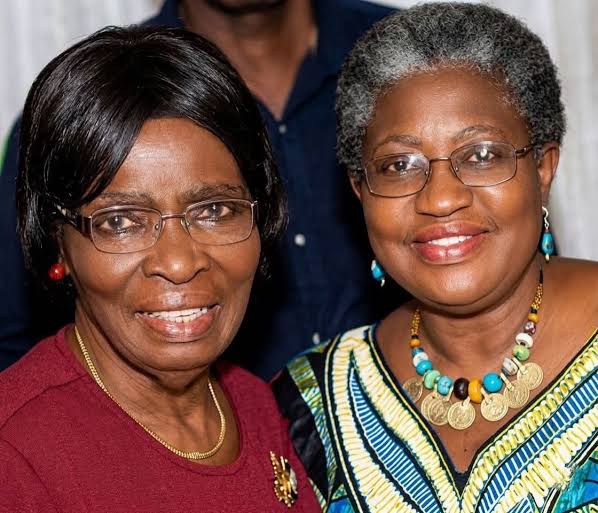
Quote “Professor Kamene Okonjo
Some women leave behind more t
Yet, to remember Professor Kam
Professor Okonjo was the belov
one of the most dramatic chapt
On December 14, 2012, the then
She leaves behind children, gr
Professor Kamene Okonjo deserv
By: Sylvia ThankGod-Amadi

Quote: An African who invokes
This is the concluding part
… Given the fact that I was
At the end of the visit by the
Back to my apartment, at abo
Under normal circumstances, yo
That all she asks is that Chie
For some reason that I do not
I believe that everyone in hu
Our ancestors have not gone fa
By: Jason Osai
The Federal Government’s approval of a N70,000 monthly transport intervention for public service workers for six months, beginning in November 2026, offers hope to employees struggling with the rising cost of living. The agreement with the Nigeria Labour Congress (NLC), reached at a conciliation meeting in Abuja on October 27, is intended to cushion transport costs and ease pressure on workers’ incomes. But for public servants in Rivers State, it raises a familiar question: will the State Government key into the intervention and ensure that its workers benefit? The agreement provides for N70,000 monthly across all levels, for six months. The Federal Government also approved peculiar allowance arrears effective from May 1, 2026, to be paid in three equal instalments beginning in November.
The parties agreed to reconvene after one month to assess implementation. Ultimately, the value of these resolutions will be measured not by announcements but by whether eligible workers receive the money. Transport costs consume a substantial share of many civil servants’ earnings before they can meet household needs. Support for commuting is therefore not a luxury or political favour; it is temporary assistance to help workers remain at their jobs without sinking further into hardship. For lower-paid employees, transport costs can turn modest salaries into a daily exercise in difficult choices and sacrifice.
The agreement also urges State and Local Governments to participate and unions to press for implementation. The federal agreement does not automatically guarantee that every State and Local Government employee will receive the support. State authorities must clarify how it will apply to their workforce, make the necessary arrangements and publish a payment timetable. Rivers State must approach the arrangement with urgency and transparency. The Government should State whether it will implement the intervention and when payments will begin. Any administrative or financial question should be addressed promptly with organised labour, not allowed to become excuses for delay.
The concern is sharpened by the earlier N35,000 monthly wage award introduced by the Federal Government in 2023 after petrol subsidy removal. It was intended as temporary relief pending a new national minimum wage. While several States negotiated and paid wage awards or related sums, implementation nationwide was uneven. Reports in 2024 indicated that many States had failed to pay the federal award, while others provided different amounts. In Rivers, labour and media reports raised concerns about implementation of the N35,000 award for State workers, amid separate announcements and arrangements concerning Local Government employees.
The wage award was meant to ease the immediate effects of subsidy removal, yet workers faced uncertainty over whether the promised relief would reach them. In February 2024, the Rivers State Government announced approval of the N35,000 award for local government workers, but subsequent reports showed that implementation across worker categories remained a concern. The lesson is clear: approval and implementation are not the same. A declaration at a meeting offers little comfort to a worker whose account does not reflect the promised payment. For workers who travel to their offices daily, the implications of delayed support are significant. Transportation expenses compete with food, rent, school fees, healthcare and other essential household needs.
As fares rise, employees may be forced to reduce spending on necessities or borrow to sustain their families. A timely transport intervention would therefore provide practical relief and demonstrate that government understands the economic pressures confronting its workforce. Its temporary nature makes prompt implementation even more important. It is fair to acknowledge that this transport intervention is a new agreement and that its administrative details may require clarification. Rivers State should not be condemned in advance for a failure that has not occurred. Nevertheless, the earlier experience gives workers legitimate grounds to seek assurances before the November commencement date. The State should avoid allowing uncertainty to persist until workers begin asking why the promised assistance has not arrived.
The NLC and unions in Rivers State should engage the State Government immediately and seek a written commitment, an implementation plan and a process for reporting missed payments. If clarification from the Federal Government is needed, the State should seek it without abandoning the goal of providing relief. Labour leaders must also keep members informed about progress and insist that any agreed arrangements are applied fairly and transparently. The Rivers State Government should treat this intervention as an opportunity to rebuild confidence. Timely support would show that workers’ welfare is more than a talking point and that the State recognises the economic realities confronting its employees.
Silence, delay or selective implementation, by contrast, would revive frustration over earlier relief measures and weaken trust between government and labour. Every month lost to administrative delay leaves workers facing the same transport burden without the intended assistance. The State should consult labour, publish arrangements and pay eligible workers on time. Rivers workers should not have to wonder whether federal relief will reach them. The Federal Government has announced the support; now the State must make its position clear. We hope the N70,000 monthly transport intervention will not follow the troubling path of the earlier wage award. Rivers State should learn from that experience and ensure that this time, relief is not merely promised but delivered.
Sylvia ThankGod-Amadi
-
Rivers2 days ago
Don Seeks Repositioning Of Tech Education For Dev
-

 Education2 days ago
PAMO MEDICAL UNIVERSITY -Nullifies Arrest warrant on VC
-
Niger Delta2 days ago
PANDEF Seeks 50% Oil Derivation Allocation Increase
-

 Education2 days ago
IAUE MOVES TO END GHOST WORKERS SYNDROME AS 400 NEW NON-TEACHING STAFF UNDERGO MANDATORY ETHICS TRAINING
-

 News2 days ago
Fresh Ebola Scare As NCDC Records Two Cases
-
News2 days ago
Customs Partners EFCC, NDLEA, Others To Tackle Money Laundering, Terrorism Financing
-
 Politics2 days ago
2027: South-East Govs Insist On Tinubu’s Re-election
-
 Politics2 days ago
2027: RIVERS GUBER CANDIDATES SIGN CHARTER TO PRIORITIZE CITIZENS’ DEMANDS