
Opinion
Arms Trade And Terrorism

Economists would tell us that demand and supply go together. Similarly Sharkespeare’s King John would say: “How oft the sight of means to do ill deeds makes ill deeds done!” Global conflicts, terrorism, local wars and regional conflicts are fueled by global arms trade and proliferation of weapons. Arms trade is as lucrative as oil business. Many nations depend on them.
The eight great countries of the world, known as G8, have 87 per cent share of the world export of arms (by 1998-2000 statistics) and they make the most money in arms trade. The permanent members of the United Nations’ Security Council are together responsible for 81 per cent of conventional arms export, with the United States of America alone having about 50 per cent of the world’s total sales.
President Muhammadu Buhari’s recent “Canterburg Tale” where he told the world that Boko Haram terrorism in Nigeria has something to do with Gadafi’s Libyan stragglers was quite instructive. But that is a different story from the issue of availability of arms for ill deeds. Recent statistics show that more than 68 per cent of arms exports come to developing countries, with African nations taking the lead. If marauding armed herdsmen in Nigeria are indeed foreigners, then there is a local war!
Political and economic instability in developing countries result in capital flight whereby public treasury looters deposit such loots in the developed countries. To receive and protect looted funds from leaders of poor countries where the masses live in hunger and insecurity is not considered as a crime in the eyes of the Western World. Western powers, by such actions, subvert and undermine democracy and security in developing countries. Is it not true that the economy of Western countries would be undermined if looted funds deposited in and protected by their banks are repatriated to the countries where such money rightly belonged? Yet, Nigerians can be described as “fantastically corrupt”!
When Kofi Annan, as Secretary-General of the United Nations, proposed a global ban on illicit arms trade, it was United States of America that opposed the proposal most vehemently. To protect their investments and interests in developing countries, do Western nations not screen, select and install such African leaders who can protect and guard their interests? Global war against terrorism is more of an intimidation of weaker terrorists by sophisticated and tyrannical ones who can pose as police of the world.
Any attempt by African leaders to press for reparation from Western nations for past abuses on the continent would be suppressed. But Britain made a similar demand from Libya over terrorist act of bombing an aircraft. Human civilization should not be allowed to degenerate into a state where might always becomes right; where the strong would swallow the weak. Neither must the worldview of world powers become the common creed for all humanity.
Common interpretation of the globalization movement points towards a possibility of ideological cloning, whereby human unity is interpreted as uniformity. The war against global terrorism is not meant to usher in conformity whereby the rest of humanity would become mere robots under the control of some Big Brothers. Global justice can hardly be brought about via the means of gun-culture.
Proliferation of arms, terrorism and militarism are aberrations and abnormalities which wear the false garb of might. In reality, gun-culture is an evidence of human rascality. The growing culture of violence which has been glamorized in films and macho-sports is nothing but harbinger of social decay. Violence, insecurity, instability and communal tensions are usually fueled by the availability of small arms. Efforts to control firearms already in circulation would achieve little result if those who produce and trade in arms are not controlled.
Developing countries are ready markets for arms as well as recruiting grounds for new converts into all kinds of creeds and ideologies. Publication of names of treasury looters, without publishing names of arms dealers and allottees of oil-blocks in Nigeria, would lead to more tensions in the land. Big thieves usually know the links and strategies of other accomplices.
Recipients of stolen property are as guilty as the thieves themselves, and those who reloot recovered looted funds, who aid and abet injustice and conflicts are as guilty as those who commit crimes against humanity. Injustices and violence go together.
Dr. Amirize is a retired lecturer, Rivers State University, Port Harcourt.
Bright Amirize




Quote: “The Flamingos have conquered the world; Nigeria must now rise to its responsibility of nurturing the next generation of champions.”
Sometimes, sporting victories
More significantly, they
Umejiaku deserves special
Umejiaku received the award
Nigeria has now broken into
For too long, young girls in
But beyond the reward, this
As Nigerians celebrate this
By; Calista Ezeaku
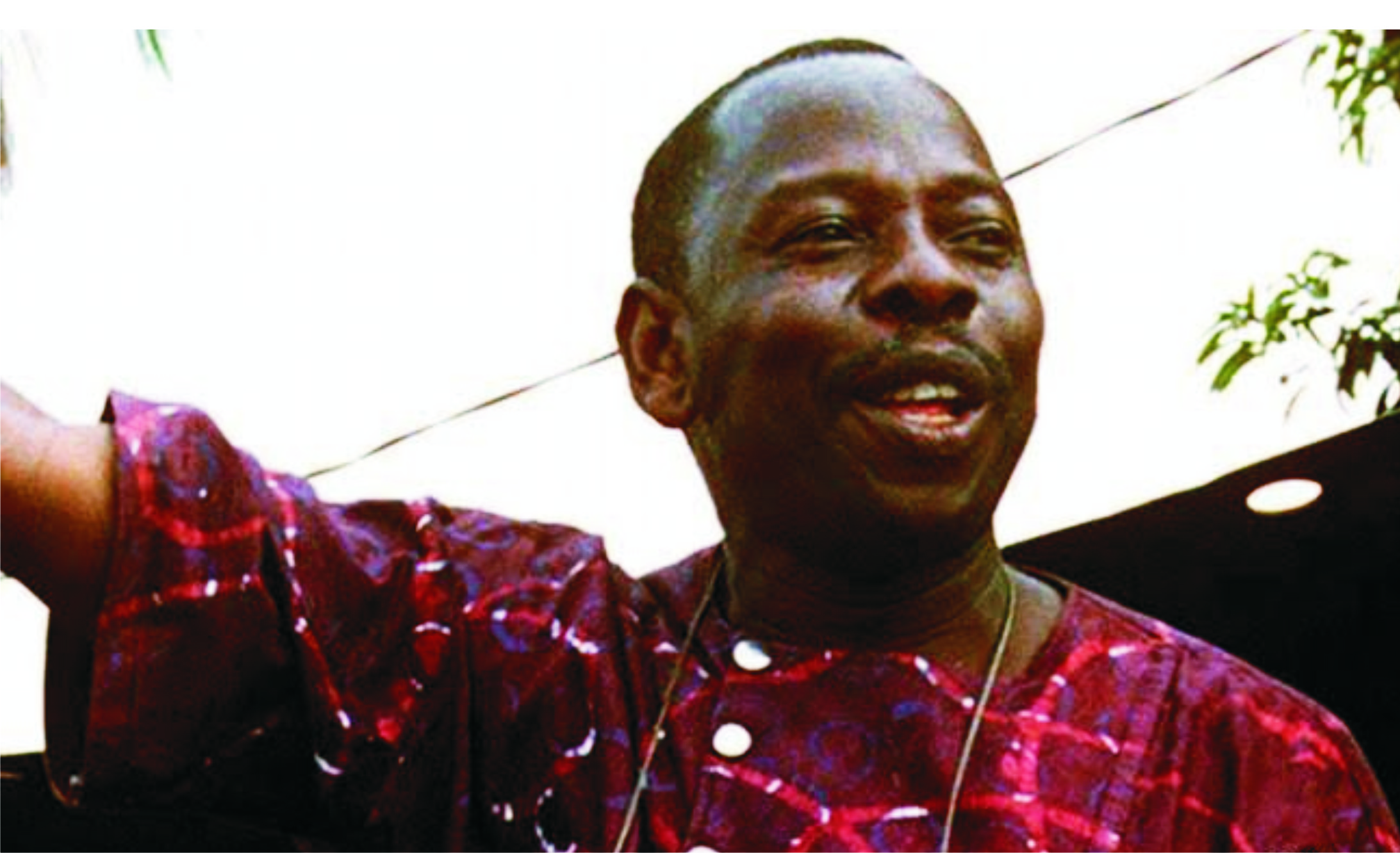
On November 10, 1995, the Nigerian military government of General Sani Abacha executed Ken Saro-Wiwa and eight other Ogoni leaders after a deeply controversial trial. Their deaths marked one of the darkest chapters in Nigeria’s history. At a time when fear silenced citizens and sycophancy flourished around military power, Saro-Wiwa chose to confront tyranny. Many Nigerians retreated into silence, while others praised the regime to secure favour. He knew the risks, yet refused to abandon a people whose land had been devastated by oil exploration and whose lives remained trapped in poverty. His courage arose from the conviction that public responsibility sometimes demands resistance to authority. Saro-Wiwa understood that speaking against a military government could lead to imprisonment or death.
Nonetheless, he believed the suffering of the Ogoni people demanded a courageous response. While oil was extracted from their land, they were left with polluted rivers, damaged farmland, declining livelihoods and an environment hostile to human survival. Fishing grounds and sources of livelihood were threatened, while the people struggled to secure basic amenities. The wealth beneath their soil brought neither adequate development nor a fair share of national resources. For him, silence in the face of injustice would have amounted to complicity. Through the Movement for the Survival of the Ogoni People (MOSOP), he organised a peaceful campaign that took the Ogoni question to the international community. MOSOP gave ordinary people an organised platform through which to express their grievances and insist on recognition.
The Ogoni Bill of Rights, presented to the Federal Government in 1990, demanded political autonomy, economic justice, environmental protection and control over the people’s resources. The campaign exposed the human and ecological costs of oil operations, particularly those associated with Shell, and challenged the apparent alliance between corporate interests and an unresponsive State. The Ogoni struggle became a defining expression of minority rights and environmental justice in Nigeria and Africa. Saro-Wiwa’s writings and mobilisation drew attention to communities treated as expendable because of their limited population and political influence. He argued that numerical strength should never determine a people’s value or rights.
A minority community does not become less deserving of justice because it cannot command electoral numbers or political power. In Nigeria, every ethnic group deserves dignity, protection and a fair opportunity to benefit from the commonwealth. Rather than respond to peaceful agitation with dialogue, the Abacha regime resorted to repression. Ogoni leaders were harassed, detained and killed; others fled into exile. The crisis intensified after four Ogoni chiefs were killed in May 1994. Saro-Wiwa and other MOSOP leaders were arrested, tried by a special tribunal and executed despite international appeals for clemency and serious concerns about the trial’s fairness. The executions drew worldwide condemnation and intensified scrutiny of Nigeria’s human-rights record and oil companies in the Niger Delta.
They demonstrated the danger of using State institutions to suppress peaceful demands. The proceedings remain a reminder of the need for judicial independence and due process. Saro-Wiwa’s courage rested on the conviction that justice must be pursued despite the cost. His method combined non-violent resistance, public education and grassroots organisation. His struggle recalled the civil-rights campaign of Martin Luther King Jr. and the power of peaceful mobilisation against injustice. Saro-Wiwa linked environmental degradation to political exclusion, economic exploitation and the denial of democratic rights. Oil-producing communities, he insisted, should not remain zones from which wealth is removed to develop other parts of the country.
Their people must benefit through roads, schools, healthcare, jobs and clean water. Resource extraction carries a duty to protect host communities. His argument extended to the structure of the Nigerian federation. He challenged a revenue-allocation system that made oil-producing communities bear the environmental and social costs of extraction without commensurate benefits. Like advocates of fiscal federalism, he believed resources should be managed and shared equitably. He envisaged a society in which no community would be disadvantaged by its size, ethnicity, political affiliation, culture or religion. His vision was a country bound together by justice and equal citizenship. Saro-Wiwa was also a gifted writer, dramatist and public intellectual.
Through books, essays, plays and television, he documented Nigerian society’s contradictions and challenged abuses of power. His popular television series, Basi and Company, demonstrated his creative range, while his leadership of the Association of Nigerian Authors encouraged writers to engage national questions. He believed literature should not be detached from society’s struggles. His pen exposed environmental injustice, political repression and the dangers of silencing courageous voices. He used storytelling, satire and drama to shape public consciousness and expose social contradictions. His literary achievements gave his activism wider reach and made the Ogoni experience part of national conversation. His commitment to the Ogoni people extended beyond the oil question.
During the Civil War, he worked to protect his vulnerable community. He urged younger generations to reject subservience and complacency and pursue change through lawful, peaceful means. Citizens, he believed, must not surrender their responsibility to challenge wrong doing. An injury to one community threatens the rights and security of all. The return to democratic government in 1999 and the establishment of the Niger Delta Development Commission, the Ministry of Niger Delta Affairs and the Hydrocarbon Pollution Remediation Project (HYPREP) are among developments that have kept the region’s demands in public view. Saro-Wiwa did not create these institutions, but his movement helped expose the urgency of intervention and sustain pressure for redress.
His death made it harder to ignore the Niger Delta’s environmental and political grievances. Yet, interventionist institutions do not prove that the original demands have been met. Their effectiveness depends on competent leadership, transparent spending, measurable outcomes and community participation. Yet, thirty-one years after his execution, the central concerns of the Ogoni struggle remain unresolved. The HYPREP-led clean-up has offered hope, but many residents await meaningful improvements. Questions persist about the programme’s pace, quality and transparency, and whether its benefits reach ordinary people. A clean-up should be judged not by ceremonies or contracts, but by restored land and waterways, safe drinking water, improved livelihoods and better public health.
It must include long-term monitoring to ensure treated sites remain safe. Residents deserve information about contamination, remediation methods and completion timelines. Reports that water projects in Gwara and Ebubu Communities, in Khana and Eleme Local Government Areas respectively, failed weeks after commissioning have raised further concerns. If confirmed, the failures would indicate weaknesses in supervision, procurement and quality control.
To be continued in our next edition.
Taneh Beemene
-
News4 days ago
RSG Reaffirms Commitment To STEM Education, Technological Advancement
-
Business4 days ago
‘NUJ, NPA’s Partnership Would Boost Port Producrivity, Economic Growth’
-

 News4 days ago
IGP Warns Police Officers Against Partisanship …Directs Regular Engagement With Journalists
-

 Oil & Energy1 day ago
FG To Double Oil, Gas Reserves, Moves To Intensified fresh Exploration
-
Business4 days ago
Fire Threat Interrupts Asaba Air Peace Flight
-
 News4 days ago
Customs To Deploy AI, Scanners Against Snuggling
-
Business4 days ago
Fish Production Deficit, A Major Investment Opportunity – Minister
-
Sports4 days ago
CAF Awards 2026 Gets A New Date