Connect with us

Education

Model Schools: Head Teachers Laud Rivers Initiative

Published

on

The Association of Primary School Headteachers of Nigeria (AOPSHON) has described the Rivers State educational system as world-class which other states of the federation are silently emulating.

The Chairman of the Association, Rivers State Chapter, Comrade Tennyson Amadi, stated this in an address at the 10th Annual National Workshop for Headteachers and Teachers in Port Harcourt, Wednesday.

Comrade Amadi, who described school building renovation in Rivers State as a taboo, said that it is total pulling down of old and dilapidated buildings and erecting a world-class edifice with state-of-the-arts facilities that cannot be compared with any primary school in Nigeria.

He recalled that in 2008, the Governor of Rivers State, Rt Hon Chibuike Amaechi, enlivened the lives of primary school teachers by taking over the payment of all salaries and allowances from the local government councils.

The Chairman of AOPSHON acknowledged that the training and retraining of about 3000 teachers in Rivers State has improved the teaching and managerial skills of teachers.

He expressed optimism that primary school teachers would attain the status of Permanent Secretary since they also possess Bachelors, Masters and Doctorate Degrees.

He explained that “Rivers 2011 with its theme: “Basic Education: Place in the National Transformation Agenda – The Head Teachers Challenges,” was very apt because most of the teachers are yet to comprehend which direction Nigerian educational system is heading to in transformation agenda of the present administration.

He maintained that the theme also became necessary concerning the roles the Head teachers have to play in the current dispensation especially where they are faced with so much challenges ranging from unstable school cumculum, non-engagement of head teachers in policy formulation and massive politicisation of education which the end product is mass failure at the upper level of our educational system, as well as the use of ICT.

His words: “We have chosen to practise teaching at the lowest rungs of service to humanity, the lowest of education profession, the sorriest in incentive and motivational encouragements, yet the most noble of all the professions world over”.

He, therefore, appealed to the government to release the domesticated curriculum for use in primary schools as well as reconstitution of local government education authorities to properly manage schools as provided in the edict establishing UBEB.

The AOPSHON chairman, who is also the Head teacher of State Primary School, Rumueme, said the challenge encountered last September was the influx of pupils from private schools from that area.

He disclosed to our  correspondent that he recorded population of about 1000 pupils while the facilities available were meant for 300 only, stressing that the rest were asked to leave.

He, therefore, urged the government to put up storey buildings to utilise the available spaces since good things must attract more people.

Another challenge he maintained, was the reformation of the children since some of them come from poor background. He recalled a situation where some pupils come to school even at 9.00am when first lesson might have been taught.

He advised government to evolve a policy where children would be picked up while loitering during school periods, keep them somewhere while their parents / guardians would be meant to pay fines or be prosecuted, because according to him, “It is child abuse”.

He emphasised that provision of car loans to head teachers would also ease their mobility stressing that government should have confidence in the head teachers by giving imprest grants and duty post allowances for minor expenses instead of running to the ministry for every little maintenance.

“To the head teachers and workshop participants, he said, it is pertinent to know that our challenges and added responsibilities  which gave supervisory role over our teachers and the academic performance of our pupils lie squarely on our ability to manage both human and material resources at our disposal.

“The teaching profession is our treasure and heritage that we need to guard jealously from crumbling. We must show the way with our wealth of experience,” he emphasised.

Mr Amadi enjoined the headteachers to guide their teachers aright urging them to strive for high ethical standard and good work ethics.

Eunice Choko-Kayode

Continue Reading

Education

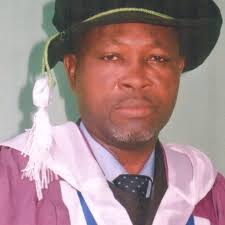
Uniport Appoints Prof. Princewill R. Chike as 10th Vice-Chancellor

Published

on

The Governing Council of the University of Port Harcourt has approved the appointment of Professor Princewill R. Chike as the 10th Vice-Chancellor of the University.
Prof. Chike, a former Commissioner for Health in Rivers State, will succeed Prof. Georgewill Owunari whose tenure ends on July 13, 2026.
A statement signed by the University’s Public Relations Officer, Dr. Sam Kpenu and made available to _The Tide_, said the appointment was made by the 17th Governing Council following the successful conclusion of the selection process.
“The process was conducted in strict compliance with the provisions of the Universities (Miscellaneous Provisions) Act and the University of Port Harcourt Act,” the statement read.
It added that the process involved the constitution of a Search Team and a Joint Council-Senate Selection Board. Both bodies carried out their responsibilities in accordance with extant laws and regulations governing the appointment of Vice-Chancellors in Nigerian universities.
According to the statement, the Pro-Chancellor and Chairman of the Governing Council, Senator Mao Ohuabunwa, congratulated Professor Chike on his appointment.
Senator Ohuabunwa expressed confidence in Prof. Chike’s ability to provide visionary leadership for the continued growth and development of the University.
Professor Princewill R. Chike is expected to formally assume office as the 10th Vice-Chancellor of the University of Port Harcourt on July 13, 2026.
By: Akujobi Amadi
Continue Reading

Education

Education commissioner Commends WAEC Conduct in Rivers ,, Vows Sanctions for Malpractice

Published

on

The Rivers State Commissioner for Education, Dr. Peters Nwagor, has commended the orderly conduct of the ongoing 2026 West African Senior School Certificate Examination in the state and urged schools to sustain the standard.
 Dr. Nwagor gave the commendation recently during a monitoring tour of selected secondary schools in Port Harcourt and environs where the WAEC exam is ongoing.
The commissioner, who was accompanied by directors and monitors from the Ministry of Education, said he was impressed with the peaceful atmosphere at the centres visited.
“The students conducted themselves properly and wrote their papers under conducive conditions. Invigilators and supervisors also performed their duties professionally,” he stated.
Nwagor noted that the Rivers State Government had invested heavily to ensure the smooth and credible conduct of the examination across the state
 He urged candidates to reciprocate government’s effort by shunning all forms of examination malpractice and focusing on their studies.
 “Government has done so much to ensure successful examinations in our schools. Students should take advantage of it by remaining focused,” the commissioner said.
While no case of malpractice was recorded in the centres inspected, Dr. Nwagor warned that any principal, teacher, invigilator, or official caught aiding malpractice would face strict sanctions in line with regulations.
 He also commended school administrators, teachers, WAEC officials, and security personnel for upholding the integrity of the process. Centres visited included County Grammar School, Ikwerre/Etche; Government Comprehensive Secondary School, Borokiri; Government Secondary School, Borokiri; and Pabod Model Secondary School.
By: Akujobi Amadi
Continue Reading

Education

RSU Law Professor Calls for Periodic Review of Nigeria’s Criminal Laws

Published

on

A Professor of Criminal Justice and Law at the Faculty of Law, Rivers State University, Nkpolu-Oroworukwu, Port Harcourt, Prof. Clifford Anaele Nwanyanwu, has advocated for periodic review of the nation’s criminal justice administration laws to reflect current societal needs and challenges.
Prof. Nwanyanwu noted that many of the criminal justice laws in use today date back to the pre-colonial era. He questioned their efficiency in addressing modern criminal justice administration, adding that the complex nature of adjudication often allows crime to thrive.
He made the call while delivering the university’s 132nd Inaugural Lecture on Wednesday at the Senate Conference Auditorium titled: “Society as Criminal Enterprise: Unravelling a Complex Justice System.”
The erudite legal scholar clarified that the lecture was not meant to condemn the country’s justice system. Instead, he said it was intended to highlight areas that require urgent attention.
He expressed concern that criminal justice practice in Nigeria is more dysfunctional than functional, and stressed that he wants to see a system that works effectively for all citizens.
“The essence of criminal justice administration is due process, and anything contrary is not it. Plea bargains help to fast-track trial processes and reduce delays,” he stated.
However, Prof. Nwanyanwu expressed worry that the sums recovered through plea bargain arrangements are often meagre compared to the wealth looted, noting that this contradicts the purpose of the arrangement.
To strengthen the system, he recommended merit-based recruitment of judicial officers with proven character and integrity. He also called for adequate funding, infrastructure development, removal of political interference, and ethical reorientation within the judiciary.
The law professor further recommended that the state should pay compensation to citizens when security officers are found culpable for arbitrary killings, in line with the principle of vicarious liability.
In his remarks, Vice-Chancellor of the university, Prof. Isaac Zeb-Obipi, commended the lecturer. He described the lecture as timely and relevant to addressing the nagging challenges of crime in society.
Prof. Zeb-Obipi expressed concern over the justice system’s inability to curb the rising rate of criminal activities in the state. He added that through inaugural lectures, the university continues to provide solution-based approaches to societal challenges.
Our correspondent reports that the thought-provoking lecture was attended by stakeholders in the judicial system, judges, magistrates, scholars, and members of the university community.
By: Akujobi Amadi
Continue Reading

Trending