
Opinion
Whither Dividends of Democracy?

Universally, democracy is defined as government of the people, by the people and for the people. It is a representative, participatory and consultative government. It is about due process, rule of law and respect for the fundamental human rights. It is about transparency, accountability and good governance.
Democracy recognises and respects human dignity and freedom, such as freedom of speech, freedom of worship, freedom of movement and freedom of association. It is about service and not leadership. It is about welfare and well being of the people. It is about provision of social amenities such as pipe borne water, electricity supply, healthcare, education, housing, employment, food, transportation, good roads, job creation, security, and so on. All these are the fruits of democracy, common known as the dividends of democracy.
Dividends of democracy is also enjoyed when the masses who democracy assign huge responsibility of electing their representatives in the three tiers of government are allowed to exercise their responsibility and their choice respected by the so-called Godfathers and money bags. We have no portable drinking water. We still make do with untreated bore hole water and yet every year huge amount of money is budgeted for water.
Electricity is in short supply in the country. Steady supply of electricity would have been a source of joy to small scale entrepreneurs whose businesses such as tailoring, barbing, dry cleaning, hair dressing, selling of minerals and pure water depends on it. But it is painful that electricity supply has not improved for the past 10 years despite billions of dollars budgeted for it by government on yearly basis.
Nigeria has not fared better in the area of education. Some years ago, Nigerian slogan was education for all by the year 2000. Now year 2000 has come and gone, education for all is not yet in sight. We still have thousands of children who cannot find their ways to school for one reason or the other. a School fees at all levels of education are expensive and in some cases unaffordable. And what is more, teachers and lecturers are not receiving better treatment from government in terms of salaries and working conditions. Indeed, our education system is in mess.
Our healthcare system is in comatose. Many hospitals have no drugs and modern equipments. There are no well qualified and experience medical personnel. Despite the efforts of NAFDAC, fake drugs from India and other countries still find their way into the country. As a results of these, many Nigerians travel abroad for medical attention.
Despite abundant human resources, vast lands and billions of naira generated from oil, Nigerian leaders have refused to invest in agriculture. This has increased the prices of food stuff and general cost of living in Nigeria, with thousand of youths roaming about the streets for lack of nothing to engage in. In fact, unemployment in the country has become the biggest problem of Nigerian youths and challenge to the federal government. Millions of Nigerian youths who graduated from various universities and other higher institutions every year are without jobs. Inability to ensure jobs and indeed reasonable paid jobs has lured many into various crimes.
It is the same sad story in the area of transportation. Rail transportation used to be cheap in those days. It is the cheapest means of transportation for the common man. But today, rail transport is completely dead. Billions of naira earmarked for its rehabilitation with Chinese firm as a contractor has developed wings. This situation is exacerbated by the deplorable condition of roads in Nigeria, particularly those in the eastern part of the country. Anybody who passes through our road would weep for Nigerians who pas through this road on daily basis. The question is: what happened to the trillions of naira that Olusegun Obasanjo’s government budgeted for this sector. Down the drain as usual?
So, where are the dividends of democracy? Unfortunately what we have as dividends of democracy in Nigeria are political thuggery, violence, militancy in the Niger Delta, public harassment and extortion, election rigging, embezzlement of public funds etc.
It is against this backdrop that I call on President Umar Musa Yar’Adua to pursue his seven-point agenda with much vigour so that by the time he would be leaving office, he would be able to boast of god legacies.
As for Rivers State, Governor Rt. Hon. Chibuike Rotimi Amaechi is doing an appreciable and commendable work, especially in the areas of roads network, education, healthcare, transportation, environmental sanitation, urban renewal and beautification. We only hope he would not be derailed by political consideration.
Ogbuehi, a commentator on current affairs. resides in Port Harcourt
Prince Ike Ogbuehi




Quote: “The Flamingos have conquered the world; Nigeria must now rise to its responsibility of nurturing the next generation of champions.”
Sometimes, sporting victories
More significantly, they
Umejiaku deserves special
Umejiaku received the award
Nigeria has now broken into
For too long, young girls in
But beyond the reward, this
As Nigerians celebrate this
By; Calista Ezeaku
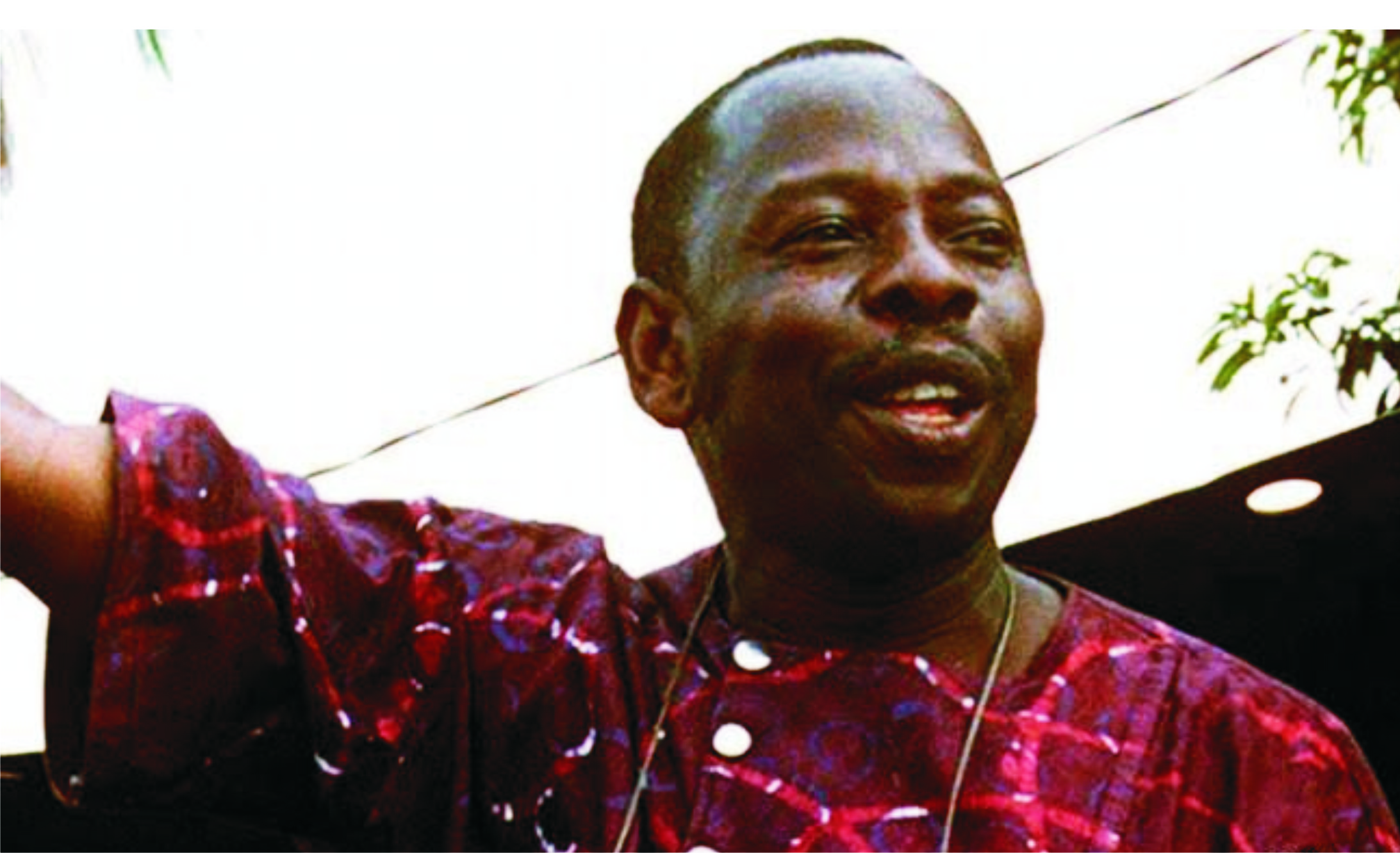
On November 10, 1995, the Nigerian military government of General Sani Abacha executed Ken Saro-Wiwa and eight other Ogoni leaders after a deeply controversial trial. Their deaths marked one of the darkest chapters in Nigeria’s history. At a time when fear silenced citizens and sycophancy flourished around military power, Saro-Wiwa chose to confront tyranny. Many Nigerians retreated into silence, while others praised the regime to secure favour. He knew the risks, yet refused to abandon a people whose land had been devastated by oil exploration and whose lives remained trapped in poverty. His courage arose from the conviction that public responsibility sometimes demands resistance to authority. Saro-Wiwa understood that speaking against a military government could lead to imprisonment or death.
Nonetheless, he believed the suffering of the Ogoni people demanded a courageous response. While oil was extracted from their land, they were left with polluted rivers, damaged farmland, declining livelihoods and an environment hostile to human survival. Fishing grounds and sources of livelihood were threatened, while the people struggled to secure basic amenities. The wealth beneath their soil brought neither adequate development nor a fair share of national resources. For him, silence in the face of injustice would have amounted to complicity. Through the Movement for the Survival of the Ogoni People (MOSOP), he organised a peaceful campaign that took the Ogoni question to the international community. MOSOP gave ordinary people an organised platform through which to express their grievances and insist on recognition.
The Ogoni Bill of Rights, presented to the Federal Government in 1990, demanded political autonomy, economic justice, environmental protection and control over the people’s resources. The campaign exposed the human and ecological costs of oil operations, particularly those associated with Shell, and challenged the apparent alliance between corporate interests and an unresponsive State. The Ogoni struggle became a defining expression of minority rights and environmental justice in Nigeria and Africa. Saro-Wiwa’s writings and mobilisation drew attention to communities treated as expendable because of their limited population and political influence. He argued that numerical strength should never determine a people’s value or rights.
A minority community does not become less deserving of justice because it cannot command electoral numbers or political power. In Nigeria, every ethnic group deserves dignity, protection and a fair opportunity to benefit from the commonwealth. Rather than respond to peaceful agitation with dialogue, the Abacha regime resorted to repression. Ogoni leaders were harassed, detained and killed; others fled into exile. The crisis intensified after four Ogoni chiefs were killed in May 1994. Saro-Wiwa and other MOSOP leaders were arrested, tried by a special tribunal and executed despite international appeals for clemency and serious concerns about the trial’s fairness. The executions drew worldwide condemnation and intensified scrutiny of Nigeria’s human-rights record and oil companies in the Niger Delta.
They demonstrated the danger of using State institutions to suppress peaceful demands. The proceedings remain a reminder of the need for judicial independence and due process. Saro-Wiwa’s courage rested on the conviction that justice must be pursued despite the cost. His method combined non-violent resistance, public education and grassroots organisation. His struggle recalled the civil-rights campaign of Martin Luther King Jr. and the power of peaceful mobilisation against injustice. Saro-Wiwa linked environmental degradation to political exclusion, economic exploitation and the denial of democratic rights. Oil-producing communities, he insisted, should not remain zones from which wealth is removed to develop other parts of the country.
Their people must benefit through roads, schools, healthcare, jobs and clean water. Resource extraction carries a duty to protect host communities. His argument extended to the structure of the Nigerian federation. He challenged a revenue-allocation system that made oil-producing communities bear the environmental and social costs of extraction without commensurate benefits. Like advocates of fiscal federalism, he believed resources should be managed and shared equitably. He envisaged a society in which no community would be disadvantaged by its size, ethnicity, political affiliation, culture or religion. His vision was a country bound together by justice and equal citizenship. Saro-Wiwa was also a gifted writer, dramatist and public intellectual.
Through books, essays, plays and television, he documented Nigerian society’s contradictions and challenged abuses of power. His popular television series, Basi and Company, demonstrated his creative range, while his leadership of the Association of Nigerian Authors encouraged writers to engage national questions. He believed literature should not be detached from society’s struggles. His pen exposed environmental injustice, political repression and the dangers of silencing courageous voices. He used storytelling, satire and drama to shape public consciousness and expose social contradictions. His literary achievements gave his activism wider reach and made the Ogoni experience part of national conversation. His commitment to the Ogoni people extended beyond the oil question.
During the Civil War, he worked to protect his vulnerable community. He urged younger generations to reject subservience and complacency and pursue change through lawful, peaceful means. Citizens, he believed, must not surrender their responsibility to challenge wrong doing. An injury to one community threatens the rights and security of all. The return to democratic government in 1999 and the establishment of the Niger Delta Development Commission, the Ministry of Niger Delta Affairs and the Hydrocarbon Pollution Remediation Project (HYPREP) are among developments that have kept the region’s demands in public view. Saro-Wiwa did not create these institutions, but his movement helped expose the urgency of intervention and sustain pressure for redress.
His death made it harder to ignore the Niger Delta’s environmental and political grievances. Yet, interventionist institutions do not prove that the original demands have been met. Their effectiveness depends on competent leadership, transparent spending, measurable outcomes and community participation. Yet, thirty-one years after his execution, the central concerns of the Ogoni struggle remain unresolved. The HYPREP-led clean-up has offered hope, but many residents await meaningful improvements. Questions persist about the programme’s pace, quality and transparency, and whether its benefits reach ordinary people. A clean-up should be judged not by ceremonies or contracts, but by restored land and waterways, safe drinking water, improved livelihoods and better public health.
It must include long-term monitoring to ensure treated sites remain safe. Residents deserve information about contamination, remediation methods and completion timelines. Reports that water projects in Gwara and Ebubu Communities, in Khana and Eleme Local Government Areas respectively, failed weeks after commissioning have raised further concerns. If confirmed, the failures would indicate weaknesses in supervision, procurement and quality control.
To be continued in our next edition.
Taneh Beemene
-
News4 days ago
RSG Reaffirms Commitment To STEM Education, Technological Advancement
-
Business5 days ago
‘NUJ, NPA’s Partnership Would Boost Port Producrivity, Economic Growth’
-
 News4 days ago
IGP Warns Police Officers Against Partisanship …Directs Regular Engagement With Journalists
-

 Oil & Energy1 day ago
FG To Double Oil, Gas Reserves, Moves To Intensified fresh Exploration
-
Business5 days ago
Fire Threat Interrupts Asaba Air Peace Flight
-
 News4 days ago
Customs To Deploy AI, Scanners Against Snuggling
-
Business1 day ago
BSG Partiner American Coy To Invest $100m In Gas Processing
-
Business1 day ago
Seme Customs Intercepts Live Pacific Ridley Sea Turtle