
Nation
THE STATES

Adamawa
The Adamawa government has approved N35 million for the purchase of meat vans to transport meat from abattoirs to markets within the state.
The Commissioner for Livestock Production, Dr Lawan Hamidu, said this in Yola, during an interactive session with the peer review team of the Nigeria Governors’ Forum (NGF).
The team was in the state to inspect government’s developmental projects and their impact on the people, an exercise which it began last year.
Hamidu said that the decision to purchase the vans was to meet the challenges of transporting meat from abattoirs and to ensure the consumption of healthy and wholesome meat as well as disease free animals.”
Bauchi
The Church of Christ in Nigeria (COCIN) in Bauchi State has said that it will resist any attempt to use the church to cause disorder in Tafawa Balewa Local Government Area of the state.
The Church stated this in a statement made available to The Tide’s source in Bauchi.
The statement, which was signed by Rev. Yusuf Waziri and Rev. Yakubu Saidu, said that the clarification became necessary following allegations that some people were planning to use the Church to cause mayhem in the state.
It said that the principal aim of the Church worldwide was the salvation of souls, adding that the objective could only be achieved through peaceful means.
“The spirit of God, through Christ, vests upon all Christians and enjoins all believers an existence of peace and not violence, good neighbourliness and not acrimony, peaceful co-existence and love, not war or hatred.
Ekiti
The Ekiti State Government at the weekend disbursed N50 million loans to 250 farmers under the first phase of its newly introduced Peasant Farmers Programme.
The Tide’s source reports that each of the farmers drawn from the 177 political wards in the state received N200,000.
Speaking at the ceremony in Ado-Ekiti, Governor Segun Oni, who said the loan would be interest-free, noted that the scheme was designed to assist each of benefiting farmers to cultivate a minimum of two hectares of both annual and perennial crops this farming season.
Oni, who identified lack of funds as a major problem militating against the agricultural sector in the country, said that the state government decided to pioneer direct funding of agriculture with the aim of enhancing food security.
He urged the beneficiaries to make judicious use of the loans and ensure repayment within four years to enable others to have access to the funds.
The governor announced that 250 peasant farmers would benefit from the programme annually.
FCT
Dr Nafisatu Muhammad, the Executive Secretary of the National Commission for Nomadic Education, said 60 per cent improvement on girl-child education had been achieved through Gender Education Project (GEP).
GEP is an empowerment programme of the Federal Ministry of Education to give educational access to boys and girls in the southern and northern parts of the country respectively.
Muhammad made this known in Abuja recently in an interview with newsmen.
“In the current data, you still find girls still hawking although it has improved with a lot of sensitisation and mobilisation that is going on under the GEP”, he said.
Kaduna
Kaduna State Police Commissioner, Alhaji Mohammed Tamberi, has linked the high prevalence of rape cases to multiple tenancy.
Tamberi said this in Kaduna while parading three rape suspects.
The police chief noted that while incidence of rapes were uncommon in high brow areas, their frequency was on the increase in places with shared tenancy.
According to him, the highest incidence of rapes were recorded in Rigassa and Tudun Wada areas of the town.Tamberi regretted the incidences, but assured the public that the police was not relenting in the efforts to rid the state of criminals.
He said the three suspected rapists entered the houseof one Mohammed Salihu and defiled the housemaid.
Kano
Sheikh Salisu Muhammad, an Islamic scholar, has called for special prayers over the persisting crisis in Jos, the Plateau State capital.
Muhammad made the call recently at a monthly lecture delivered at the Sanabiyyatul Nisa’iyyatul Islamic Institute in Kano.
He said that there was need for both Muslims and Christians in the country to offer special prayers for peace to be restored in Jos.
“It is very strange and uncomfortable to witness that a place like Jos, which is blessed with so many natural and human resources is in crisis,” Muhammad said.
He described the crisis as political, saying that some group of people were benefiting from the blood shed that was taking place in the area.
Mohammed, therefore, urged the Federal Government to find a lasting solution to “the endless bloodshed’’, and pleaded with the elders to come to the rescue of the “weeping land of Jos’’
Kogi
The Kogi State Government is to construct two new modern markets in Lokoja to complement the existing International Market located in the state capital.
Mr Mohammed Sule, the State Commissioner for Environment and Physical Development, disclosed this in Lokoja in an interview with newsmen.
He said that the two markets, one of which would be sited in Ganaja and the other in Dogondaji areas of Lokoja, were expected to accommodate traders who could not secure stalls at the International Market.
Ogun
The Ogun State Government has appointed Prof. Segun Awonusi as the new Vice Chancellor of the state-owned Tai Solarin University of Education.
The appointment is contained in a statement signed by Mr Shina Kawonise, the Commissioner for Information and Orientation, a copy of which was made available to The Tide’s source in Abeokuta .
The source reports that Awonusi is to take over from Prof Kayode Oyesiku, whose five-year tenure expires on March 31.
The new vice chancellor is currently the Commissioner for Education, Science and Technology.
According to the statement, “Gov Gbenga Daniel of Ogun has approved the appointment of Prof Olusegun Awonusi as the new Vice Chancellor of the Tai Solarin University of Education, Ijebu-Ode.
“Otunba Daniel who is also the Visitor to the University, authorised the appointment following the recommendation of the Governing Council of the University which sanctioned his appointment as a replacement for the pioneer Vice Chancellor, Prof Kayode Oyesiku, whose five-year tenure ends on March 31, 2010.”
Yobe
The Yobe College of Agriculture in Gujba has introduced veterinary services to reduce the mortality rate in animals in the host community.
The Provost of the college, Alhaji Mulima Mato, told The Tide’s source in Gujba that animals, including goats, sheep and cattle, which were slaughtered or died of common ailments, had been treated and saved by the college.
He explained that “the clinic had provided medical services to animals with complications arising from polythene materials eaten by the animals which were very common.
“We have also carried out surgery on animals with birth complications,” he said.
The provost added that the community had in the past lost many animals to curable ailments due to the lack of medical attention.
He said that “quacks visiting the farmers had exploited the situation, providing sub-standard drugs and services and causing economic loss to the farmers”.



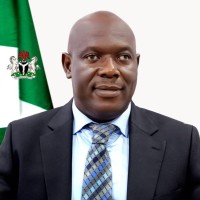
The Hydrocarbon Pollution Remediation Project (HYPREP) has commemorated the 15th anniversary of the release of the United Nations Environment Programme (UNEP) Environmental Assessment Report on Ogoniland, reaffirming its commitment to restoring the environment and improving the livelihoods of affected communities.
In a statement signed by the Project Coordinator, Prof Nenibarini Zabbey, to commemorate the anniversary, HYPREP described the anniversary as a significant milestone in Nigeria’s environmental restoration efforts, noting that the project has made remarkable progress in implementing the recommendations of the landmark UNEP report released on August 4, 2011.
The UNEP report had revealed extensive oil pollution across Ogoniland, severe environmental degradation, and serious public health risks resulting from decades of petroleum operations. It also recommended an initial $1 billion fund to commence the cleanup of the affected communities.
According to HYPREP, the Federal Government formally launched the Ogoni clean-up in 2016, while the Project Coordination Office was established in 2017 to drive the implementation of UNEP’s recommendations.
Zabbey said the current administration has continued to prioritise the project under the Renewed Hope Agenda.
Providing an update on the cleanup, the Project Coordinator disclosed that 30 of the 65 contaminated sites identified by UNEP have been fully remediated, while work is ongoing at several medium- and high-risk locations. It also stated that more than 1.5 million mangrove seedlings have been planted as part of what it described as the world’s largest restoration of oil-degraded mangroves, with over 1,000 hectares of shoreline already rehabilitated.
Zabbey further revealed that 49 Ogoni communities have been connected to potable water schemes through multiple water projects and booster stations aimed at providing safe drinking water across the region.
In the health sector, he said the 100-bed Ogoni Specialist Hospital in Kpite and the 43-bed Cottage Hospital in Buan are nearing completion, adding that several existing health facilities have been upgraded with modern medical equipment, while five ambulances have been donated to improve emergency healthcare services. The Project Coordinator also disclosed that a three-year human health biomonitoring study is being conducted in collaboration with the World Health Organization’s International Agency for Research on Cancer (IARC).
On economic empowerment, Zabbey stated that the Project has created more than 8,000 direct jobs and trained thousands of Ogoni youths and women in various vocational and technical skills, including software development, cybersecurity, aviation, commercial diving, seafaring, mechatronics, and creative arts. The project also reported awarding scholarships to more than 1,000 students, providing grants to small businesses, and supporting persons living with special needs through skills acquisition programmes.
The statement further highlighted ongoing legacy projects, including the Ogoni Power Project and the Centre of Excellence for Environmental Restoration, which it said is about 96 per cent complete. HYPREP also welcomed the recent designation of the Ogoni Wetland as a Ramsar Site of International Importance and pledged to continue promoting biodiversity conservation and sustainable management of the ecosystem.
Marking the anniversary, Zabbey said the progress achieved over the past 15 years demonstrates the collective commitment of government, development partners, stakeholders, and local communities to restoring Ogoniland. He called for renewed collaboration to sustain the cleanup effort, promote environmental sustainability, and support the long-term development of the region. 3
-

 News2 days ago
RSG Targets Nine Million Residents in Mosquito Net Distribution Campaign
-

 Oil & Energy1 day ago
Aiyedatiwa Signs New Electricity Bill
-

 Maritime1 day ago
Marine Minister Commends President Tinubu On NPERA Bill Assent
-

 Oil & Energy1 day ago
NLNG Commissions Research And Innovation Centre In RSU
-

 News2 days ago
KenPoly Holds Eight Convocations, August 29
-

 News2 days ago
RSG Begins Another Phase of Projects Commissioning Today
-

 News2 days ago
RMAFC Completes Revenue Sharing Review, Proposes New Pay
-

 Maritime1 day ago
NAGAFF Petitions IGP Over Alleged Maritime Police Harassment