
Nation
THE STATES

Abuja
The Abuja Environmental Protection Board (AEPB) says it will build 20 public toilets in some strategic places in the FCT to stop the practice of open defecation.
Mr. Tony Efechiyi, the board’s Deputy Director, Liquid Waste Management Department, disclosed this in an interview on Saturday in Abuja during the Longest Toilet Queue Campaign organised to mark the 2010 World Water Day.
The UN World Water Day is celebrated annually on March 22.
Efechiyi said two toilets would be built in strategic places such as markets, hospitals, filling stations and motor parks to promote good sanitation practice.
“We have already included the project in the 2010 budget; latest by June, we would have completed the project and we are targeting those places because those are the areas where we have the highest level of waste disposal.
“This will be the first phase of the project. As soon as we finish in June we may still build more depending on our budget . We intend to make it a yearly thing to increase access to toilet facilities.
“AEPB is committed to the provision of sanitation facilities until we achieve our target of building 10 public toilets in each district in the FCT city,” he said.
Efechiyi said the board would partner with civil society organistations to have a prototype of the type of toilet that would take care of the needs of special people such as the physically challenged, the elderly as well as sick people who may be too weak to use the ordinary toilets.
Adamawa
Memebers of vigilance group in Mubi town, Adamawa have called for the settlement of their outstanding four months allowance by the Mubi North local government.
The leader of the group, Mallam Usman Banga , who made the call in an interview with newsmen in Mubi, lamented that the N2000 monthly allowance being paid to each member had not been forthcoming.
“I want to appeal to Mubi North local government to pay us our outstanding allowance for four months so that we will continue to contribute to security in the area.
“It is unfortunate that in spite of our contribution to fighting crime in the area we have to be subjected to this long neglect,” Usman lamented.
He said there were 50 members of the group in the area but only 35 of them were entitled to the N2000 monthly allowance.
“We, however, have to share it among all of us so that everyone would benefit,” Usman said.
When contacted, an official of Mubi North council, who preferred anonymity, said the council was aware and would do something “very soon about it”.
Bauchi
A member of the House of Representatives, Alhaji Mustafa Chali (ANPP-Bauchi), has donated drugs worth more than N5 million to Tashan-Babiye Comprehensive Primary Healthcare Centre in Bauchi metropolis.
He said at the presentation of the items that the gesture was part of the constituency projects he initiated to enhance healthcare delivery to the people of the area.
Chali, represented by Alhaji Yakubu Yerima, said additional drugs would be soon distributed to all primary healthcare facilities in the area .
He announced that he had also established a skill acquisition centre at Liman-Katagum to train youths in various trades to reduce poverty, create job opportunities and enhance wealth creation.
He said he had also executed various school and other community development projects in the last two years to improve the socio-economic wellbeing of the electorate.
Kaduna
The Kaduna State Government has offered its shares in the Unity Bank for sale to interested citizens of the state.
The government on Saturday announced the divestment of 867,668,759 units of the shares in a statement issued by the Special Adviser to Gov. Namadi Sambo on Media, Malam Umar Sani.
The statement stated that the offer would be through the Kaduna Investment and Finance Company (KIFC) Limited.
“The decision of the government is as a result of current regulation which does not allow for ownership of banks by government beyond 10 per cent.
“The current structure of the bank gives 70 per cent ownership to government,’’ it explained.
It recalled that commissioners of finance of owner states and the management of the bank had met and reviewed the report of the CBN and the Nigeria Deposit Insurance Corporation (NDIC).
The government added that stakeholders also agreed that the states should renounce their rights to subscribe to the shares of the bank in favour of citizens of the respective states.
“However, Unity Bank is to wisely publicise the renunciation of the rights of the state governments to the citizens and request the citizens to take up those rights through their state investment companies.’’
Katsina
The North-West Zone of the Consumer Protection Council (CPC) has embarked on an enlightenment campaign to educate consumers on their rights to quality products, and safety of goods and services.
The zonal coordinator of the council, Alhaji Mohammed Yahaya, disclosed this to participants at a one-day interactive forum in Katsina on Thursday to mark the World Consumer Rights Day 2010.
He explained that the campaign became necessary because many people in the zone were not aware of their rights as consumers.
“Some consumers do not even know that an organisation like the CPC exists to protect their rights, hence, we resolved to embark on this aggressive campaign,” he said.
He said that the CPC would undertake visits to various stakeholders, while young consumer clubs in schools would be formed and encouraged in the zone.
Yahaya appealed to consumers in the zone who felt unsatisfied with any products to always lodge their complaints to the CPC.
Kebbi
The Arewa Local Government Area of Kebbi said it had spent about N1.1 billion on rehabilitation of road and health facilities within the last two years.
The Sole Administrator of the council, Alhaji Nura Usman, made this known in Kangiwa in Kebbi on Thursday in an interview with newsmen.
He said that N840 million was spent on construction of rural roads covering 32 kilometres, saying that “the roads will be completed in three months”.
He said N200 million was provided by the state government for the construction of all township roads and drainage in Kangiwa town.
“We were able to provide eight Primary Health Care Centres, 26 boreholes and five earth dams within the period and we intend to surpass past efforts,” he said.
He said N109 million was spent on the provision of the rural health care centres.
According to him, the sum of N850,000 has been set aside for each round of immunisation, in addition to accommodation, transport and welfare of personnel.
Gombe
Alhaji Mohammad Doho, Gombe State Commissioner for Water Resources, Town Planning and Environment, has called for the harnessing of the abundant solar energy in the country for cooking purposes.
In an interview with newsmen in Gombe on Thursday, the commissioner said that if properly harnessed, solar energy could serve as an alternative to firewood.
He added that solar would also help in reducing the rampant felling of trees, thereby curtailing deforestation and preserving the environment.
“Converting solar energy as alternative to firewood will contribute immensely by reducing the felling of trees, especially in the northern part of the country,” he said.
Doho said that apart from the solar energy, wind in the northern part of the country could also be easily tapped to provide energy that could be used for cooking.
He added that the problem of desert encroachment had been an issue of concern in the north and therefore needed to be addressed squarely.
“Forest reserves are being tampered with, resulting in deforestation and overgrazing of farm lands,” he added.
The commissioner said that the state government had been taking measures to arrest the situation, adding that one of such measures was the seizure of firewood generated through illegal felling of trees.
Lagos
The National Coordinator, National Parent-Teacher Association of Nigeria (NAPTAN), Chief Babs Animashaun, has hinged improved performance of students in national examinations on funding.
In an interview with newsmen in Lagos on Saturday, Animashaun said the poor performance of secondary school students in the last West African Examination Council (WAEC) and National Examination Council (NECO) examinations was due under-funding of education.
“The under funding has resulted in the poor quality output in the nation’s educational sector.
“At no time had government invested 26 per cent of its annual budget on education as stipulated by the United Nations Education, Social and Cultural Organisation (UNESCO).
“The cumulative effect of this is the poor quality of education we give our children and the quality of leadership at all strata of life in the country,’’ he said.
Animashaun called for increased budgetary allocations by the Federal and State Governments to shore up the standard of education.
Mr. Olusoji Adams, the Chairman, Parents Forum Association (PFA), Lagos Mainland Local Government Chapter, also said that urgent steps should be taken to reverse the trend.
He said government should partner with the stakeholders in a bid to restore the country’s lost glory and standard of education.
Oyo
No woman lost her life in childbearing in 2009 in Igboora community of Oyo State, reputed for multiple births.
Statistics from Ibarapa Community and Primary Health Care Programme showed that a total of 601 live births were recorded in the community in 2009, out of which 18 were twins.
The statistics also showed that three still births were recorded in the community that year.
It showed further that no woman was lost to childbearing in the community in 2006, 2007 and 2008.
According to the statistics, Igboora community has 713 live births in 2006, 534 in 2007 and 617 in 2008.



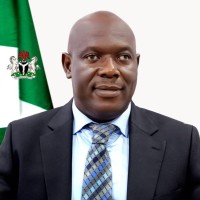
The Hydrocarbon Pollution Remediation Project (HYPREP) has commemorated the 15th anniversary of the release of the United Nations Environment Programme (UNEP) Environmental Assessment Report on Ogoniland, reaffirming its commitment to restoring the environment and improving the livelihoods of affected communities.
In a statement signed by the Project Coordinator, Prof Nenibarini Zabbey, to commemorate the anniversary, HYPREP described the anniversary as a significant milestone in Nigeria’s environmental restoration efforts, noting that the project has made remarkable progress in implementing the recommendations of the landmark UNEP report released on August 4, 2011.
The UNEP report had revealed extensive oil pollution across Ogoniland, severe environmental degradation, and serious public health risks resulting from decades of petroleum operations. It also recommended an initial $1 billion fund to commence the cleanup of the affected communities.
According to HYPREP, the Federal Government formally launched the Ogoni clean-up in 2016, while the Project Coordination Office was established in 2017 to drive the implementation of UNEP’s recommendations.
Zabbey said the current administration has continued to prioritise the project under the Renewed Hope Agenda.
Providing an update on the cleanup, the Project Coordinator disclosed that 30 of the 65 contaminated sites identified by UNEP have been fully remediated, while work is ongoing at several medium- and high-risk locations. It also stated that more than 1.5 million mangrove seedlings have been planted as part of what it described as the world’s largest restoration of oil-degraded mangroves, with over 1,000 hectares of shoreline already rehabilitated.
Zabbey further revealed that 49 Ogoni communities have been connected to potable water schemes through multiple water projects and booster stations aimed at providing safe drinking water across the region.
In the health sector, he said the 100-bed Ogoni Specialist Hospital in Kpite and the 43-bed Cottage Hospital in Buan are nearing completion, adding that several existing health facilities have been upgraded with modern medical equipment, while five ambulances have been donated to improve emergency healthcare services. The Project Coordinator also disclosed that a three-year human health biomonitoring study is being conducted in collaboration with the World Health Organization’s International Agency for Research on Cancer (IARC).
On economic empowerment, Zabbey stated that the Project has created more than 8,000 direct jobs and trained thousands of Ogoni youths and women in various vocational and technical skills, including software development, cybersecurity, aviation, commercial diving, seafaring, mechatronics, and creative arts. The project also reported awarding scholarships to more than 1,000 students, providing grants to small businesses, and supporting persons living with special needs through skills acquisition programmes.
The statement further highlighted ongoing legacy projects, including the Ogoni Power Project and the Centre of Excellence for Environmental Restoration, which it said is about 96 per cent complete. HYPREP also welcomed the recent designation of the Ogoni Wetland as a Ramsar Site of International Importance and pledged to continue promoting biodiversity conservation and sustainable management of the ecosystem.
Marking the anniversary, Zabbey said the progress achieved over the past 15 years demonstrates the collective commitment of government, development partners, stakeholders, and local communities to restoring Ogoniland. He called for renewed collaboration to sustain the cleanup effort, promote environmental sustainability, and support the long-term development of the region. 3
-

 News2 days ago
RSG Targets Nine Million Residents in Mosquito Net Distribution Campaign
-

 Oil & Energy2 days ago
Aiyedatiwa Signs New Electricity Bill
-

 Oil & Energy2 days ago
NLNG Commissions Research And Innovation Centre In RSU
-

 Maritime2 days ago
Marine Minister Commends President Tinubu On NPERA Bill Assent
-

 News2 days ago
KenPoly Holds Eight Convocations, August 29
-

 News2 days ago
RSG Begins Another Phase of Projects Commissioning Today
-

 News2 days ago
RMAFC Completes Revenue Sharing Review, Proposes New Pay
-

 Maritime2 days ago
NAGAFF Petitions IGP Over Alleged Maritime Police Harassment