
Features
Involving Youths In Agriculture To Boost Food Production

Ministers of Agricul
ture rose from the 28th Food and Agricultural Organisation(FAO) regional conference, held recently in Tunis, with a recommendation that member countries should allocate dedicated financial resources to boost youth employment in agricultural.
The conference theme was “Youth in Agriculture and Rural Development.’’
A report by the FAO indicated that half of Africa’s population is below 25 years, and estimated that in the next decade, 11 million people are expected to enter its labour market every year.
Against this background, FAO Director-General José Graziano da Silva, told participants at the conference that getting more African youths involved in agriculture, would boost food security and economic growth.
A side event at the conference was dedicated to “Youth and Development of Aquaculture and Livestock”.
Graziano da Silva said at that event that it would be impossible to speak of a sustainable and inclusive growth for Africa without speaking of youth and agriculture.
He said it had become imperative to fashion out incentives for youths to engage in rural activities, in farming, and especially in livestock production and aquaculture.
Mr Bukar Tijani, the FAO Assistant Director-General and Regional Coordinator for Africa, corroborated his director-general’s position when he said that evolving fiscal policies that would allow youths access to finance was the best way to attract them to agriculture.
“It is not the governments in Nigeria or other governments in Africa that will employ the youths directly. It is the jobs that will be available in the agriculture sector which include the crops sector – horticulture, livestock, and fishery (aquaculture) and forest products.’’
According to him, ICT can also be deployed in the agriculture sector which contributes about 40 per cent of the GDP in many African countries, as people are looking for information, research, and market price kiosks, and where best prices are and best technologies they can use.
He advised youths clamouring for government jobs to have a re-think, saying “the jobs are not in government but outside the government.’’
Nigeria and many other African countries have embarked on robust transformation programmes since the 2008 flooding that destroyed farmlands in Asia and other countries in order to avoid food shortages.
These reforms, observers say, have yielded positive results in the agriculture sector.
For instance, the 2012 United Nations Millennium Development Goals (MDGs) Report stated that Africa is 41 per cent “off” the first MDG poverty target, as against 25 per cent in South Asia and 6.1 per cent in Latin America.
Furthermore, 11 African countries, including Nigeria, have already met the first MDG hunger target to reduce by half the proportion of hungry people between 1990 and 2015.
In addition, three countries – Djibouti, Ghana, and São Tomé and Príncipe – have also met the even more ambitious 1996 World Food Summit goal to reduce by half the total number of hungry people.
However, Africa, according to the FAO, still remains the world’s most food insecure continent, with relatively low levels of agricultural productivity, low rural incomes, and high rates of malnutrition.
Tijani, noted that Africa has recorded steady economic growth since 1999.
“Africa has recorded continuous economic growth since 1999, accompanied by improved governance and human development indicators.
“Currently, seven out of the top 10 fastest growing economies in the world are situated in Africa, and the International Monetary Fund estimates that economic growth in sub-Saharan Africa will be 6.1 per cent in 2014.
“Africa’s annual total GDP grew on average by 4.8 per cent in 2000-2010, up from 2.1 per cent in the previous decade, and the agricultural sector’s growth rates in the same period were 3.2 per cent and 3 per cent respectively.
“The continent has achieved a series of agricultural successes in major areas, including the intensification of staple food production, improved varieties of banana in eastern and central Africa, high-yielding varieties of maize in east and southern Africa, and productivity gains in cotton production in Burkina Faso and Mali and in tea and floriculture in East Africa.
“The question is how African leaders can build on this progress by providing stable agriculture and fiscal policies that encourage investment, as committed 10 years ago in the Maputo Declaration, and strengthen governance and accountability mechanisms that contribute to more systemic implementation of policies and programmes.”
According to Tijani, “these actions are critical to triggering a transformation in the capacity of countries to deliver sustained and broad-based agricultural growth and development.”
In their final declaration at the Tunis conference, the ministers expressed concern that 25 per cent of Africa’s population was still malnourished.
They reaffirmed their commitment to work closely with FAO towards the achievement of the common goals and objectives in Africa, especially, the 2025 ‘Zero Hunger’ target.
The zero hunger target is an initiative of UN Secretary-General Ban ki Moon, which African leaders will formally adopt at the AU Summit in July.
The UN General Assembly in 2013 declared 2014 as the Year of Family Farming, while the African Union declared 2014 as the Year of Agriculture and Food Security
Experts believe that the AU Year of Agriculture and Food Security which coincides with the UN International Year of Family Farming will lead to new impetus in the efforts at transforming subsistence farming.
Mr Modibo Traore, FAO Sub-regional Coordinator for Eastern Africa and Representative to the AU and ECA, explains the reason behind this declaration.
“The Year of Agriculture is aimed at consolidating commitments towards new priorities, strategies, and targets for achieving results and impacts, with special focus on sustained Africa-led growth, propelled by stronger private sector investments and public-private partnerships.”
Accordingly, three priority areas of actions were discussed at the conference as key to accelerating agricultural transformation and eradicating hunger in Africa.
It include enhancing the enabling environment for investment by the domestic private sector, including smallholder farmers; investing in the enhancement of agricultural productivity and constructive engagement of youths, smallholder farmers and family farming,
Also discussed was determining how the Comprehensive African Agricultural Development Programme (CAADP), could contribute to building systemic capacity for monitoring and evaluation.
Three priority regional initiatives were also identified and endorsed by the ministers at the conference.
They include renewed partnership for a Unified Approach to End Hunger in Africa by 2025 under the framework of the CAADP; sustainable production, intensification and commercialisation through integrated management of agricultural landscapes, and building resilience in dry lands of Africa.
The FAO director-general urged African leaders to adequately fund agriculture in order to boost food security on the continent.
He commended the establishment of the Africa Solidarity Trust Fund for Food Security.
The fund is an Africa-led innovative mechanism of mobilising resources from Africa for Africa, which currently has 40 million dollars in its kitty.
Six countries – Central African Republic, Ethiopia, Malawi, Mali, Niger and South Sudan, signed agreements at the conference with the FAO, the administrator of the fund, for the implementation of various projects.
The fund’s contributors so far are Equatorial Guinea and Angola, with 30 million dollars and 10 million dollars contributions respectively.
Graziano da Silva reminded participants at the conference that the African Year of Agriculture and Food Security is “a golden opportunity to further advance in the direction of the hunger free future we want for Africa.
“The millions of people that suffer from hunger in Africa do not belong only to Africa. They are not ‘your hungry’. They belong to humanity as a whole.’’
Nkechi Okoronkwo
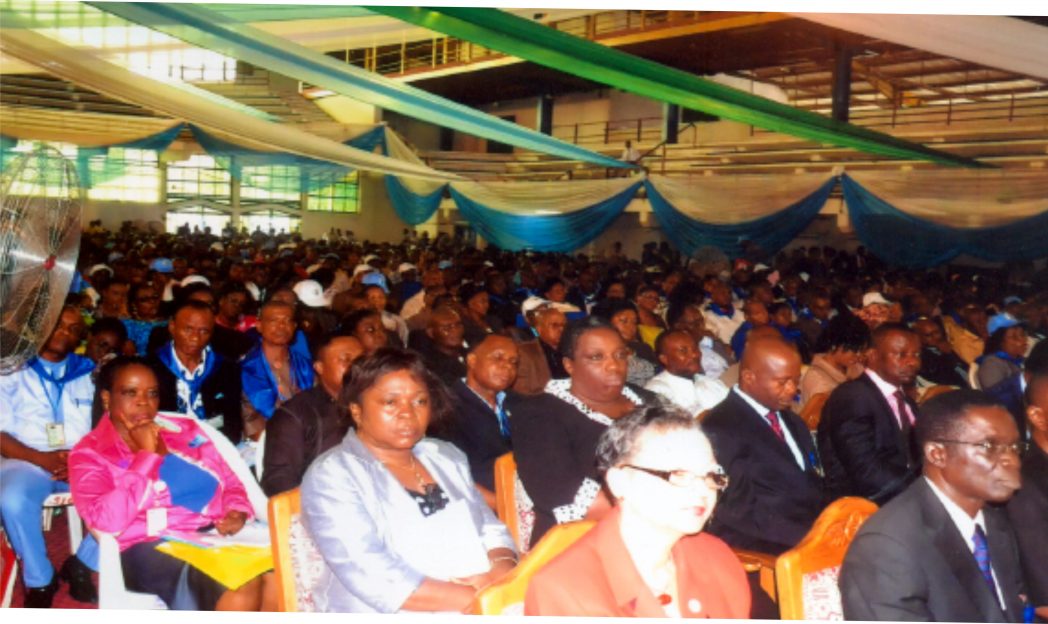
Civil Servants during the Civil Service Week in Port Harcourt, recentl. Photo: Obinna Prince Dele




The reported selection of 16
The incident reportedly
Traditional institutions have
The ministry should also
Fiona Kogbara
Aba Road, PH.
As Governance Takes A Back
Across the country,
Nigerians face deteriorating
Those seeking re-election
Political parties and
Salma Ibrahim
Rumuokoro, PH.
Ebola In Abuja?
Reports of a possible Ebola
The Federal Ministry of
Ebola requires early
The media must verify reports
Tonia Iweka
Ogbor Hill, Aba
Every girl deserves the opportunity to learn, the freedom to dream, the right to live without fear and the chance to determine the course of her own future.
Yet, for millions of girls around the world, these opportunities remain difficult to access. Some struggle to obtain quality education, while others face discrimination, early marriage, gender-based violence and social expectations that limit their ambitions. For many, the challenge begins in childhood, when decisions about their lives are made without giving their voices the attention they deserve.
October 11, observed annually as the International Day of the Girl Child, provides an opportunity to reflect on these challenges and renew the commitment to protecting girls’ rights and empowering them to reach their full potential.
The day also raises an important question: how can societies talk about a better future for girls while some of them continue to face barriers to education, safety, equality and opportunity?
For Nigeria, where girls are growing up in communities with different social, economic and cultural circumstances, the occasion offers an opportunity to examine the progress made, recognise the challenges that remain and consider the responsibilities of families, communities and government in securing a better future for every girl.
From Recognition to Action
The International Day of the Girl Child was established by the United Nations and first observed on October 11, 2012. It was created to recognise the rights of girls and draw attention to the particular challenges they face across the world.
Its significance extends beyond a yearly celebration. It highlights the need for societies to address the inequalities that prevent girls from enjoying the same opportunities, protection and dignity as their male counterparts.
Girls have the right to education, healthcare, safety, participation and equal treatment. They also have the right to express their opinions, develop their abilities and make decisions about their futures in accordance with their age and evolving capacities.
These rights are not privileges to be granted only when families can afford them or when communities consider them convenient. They are part of the wider commitment to protecting the dignity and development of every child.
The observance also recognises that girls are not simply beneficiaries of development programmes. They are potential scientists, teachers, journalists, entrepreneurs, doctors, engineers, public servants and community leaders whose contributions can shape the future of their societies.
When girls are given the opportunity to develop their abilities, the benefits extend beyond individual achievement to families, communities and the wider economy.
The Nigerian Girl Child
In Nigeria, the experiences of girls differ considerably depending on their family circumstances, location, access to education and the opportunities available within their communities.
Some girls attend well-equipped schools, participate in extracurricular activities and receive support to pursue their ambitions. Others face difficulties that threaten their ability to complete their education or develop their full potential.
Poverty remains a significant concern for families struggling to meet basic needs. In some households, girls may be expected to undertake extensive domestic responsibilities, care for younger siblings or contribute to family income at the expense of their education.
For girls in rural and underserved communities, the distance to school, inadequate facilities, limited access to learning materials and other practical barriers may make education difficult to sustain.
Insecurity can create additional risks, particularly where families fear sending their children to school or where displacement interrupts their education.
These challenges do not affect every Nigerian girl in the same way. However, they demonstrate why protecting the rights of girls requires more than general statements about equality. It requires practical action that addresses the circumstances preventing them from accessing opportunities.
A girl who cannot attend school because her family cannot afford the necessary expenses needs support that makes education accessible. A girl exposed to abuse needs protection and access to appropriate services. A girl whose ambitions are dismissed simply because of her gender needs an environment that recognises her abilities.
The responsibility is to ensure that the circumstances of a girl’s birth do not determine the limits of her future.
Education: Opening the Door to Opportunity
Education remains one of the most important ways to empower the girl child.
Through education, girls acquire knowledge, develop critical thinking skills and gain a better understanding of their rights and responsibilities. Schooling can also expand their employment opportunities and help them make informed decisions about their lives.
An educated girl is better positioned to understand the choices available to her, participate in community life and contribute to social and economic development.
However, access to education alone is not enough. Girls must also be able to learn in safe environments, receive quality instruction and complete their education without discrimination or unnecessary barriers.
Parents and guardians have an important role in ensuring that girls are encouraged to attend school and are given the support needed to continue learning.
Schools, in turn, must provide environments where girls are protected from harassment, bullying and discrimination. Teachers can help by treating students fairly, encouraging participation and challenging assumptions that certain subjects or careers are suitable only for boys.
Government also has a responsibility to strengthen educational infrastructure, improve learning conditions and address the financial and social barriers that keep children out of school.
The goal should not simply be to enrol more girls in classrooms. It should be to ensure that every girl has a genuine opportunity to learn, complete her education and use the knowledge she acquires to build a meaningful future.
When Tradition Becomes a Barrier
Culture and tradition are important parts of community identity. They preserve history, strengthen relationships and provide a sense of belonging.
However, certain practices and social expectations can restrict girls’ rights and opportunities when they place greater value on gender than on individual ability and well-being.
In some communities, girls may be discouraged from pursuing higher education because marriage and domestic responsibilities are considered more important. Others may face pressure to abandon their ambitions or accept decisions made without their participation.
Child marriage remains another serious concern in Nigeria. When a girl is married before adulthood, her education, health, safety and personal development may be placed at risk.
Such situations highlight the importance of protecting children while encouraging communities to examine practices that undermine their rights.
Empowering girls does not require rejecting every cultural tradition. It requires preserving what strengthens communities while addressing practices that expose children to harm or deny them opportunities.
Community leaders, parents, educators and religious institutions can contribute by promoting the value of girls’ education, supporting their development and speaking against harmful practices.
A community’s strength should not be measured by how effectively it restricts the ambitions of its girls, but by how well it protects its children and prepares them for the future.
Protecting Girls from Violence and Abuse
A discussion about empowering girls cannot be complete without addressing their right to safety.
Girls may face different forms of abuse, including sexual violence, physical punishment, exploitation, bullying, harassment and harmful treatment within homes, schools and communities.
Some incidents remain unreported because victims fear blame, retaliation or public humiliation. Others may lack access to trusted adults or services capable of helping them.
The consequences can be serious, affecting a girl’s physical health, emotional well-being, education and ability to trust others.
Protecting girls requires adults and institutions to take reports of abuse seriously and respond in ways that prioritise the child’s safety and dignity.
Parents and guardians should encourage open communication so that girls feel able to report situations that make them uncomfortable or unsafe. Schools need clear procedures for reporting and responding to abuse, while relevant authorities must ensure that children can access appropriate protection and support.
Girls should also receive age-appropriate information about personal safety, boundaries and where to seek help.
Importantly, the responsibility for preventing abuse belongs to those who commit it and to the institutions responsible for protection. Girls must never be blamed for violence or exploitation directed against them.
A society that celebrates the girl child must also be prepared to defend her rights when those rights are threatened.
Health, Confidence and the Freedom to Dream
Empowerment also means ensuring that girls can grow up healthy, confident and informed about their bodies and well-being.
Access to healthcare, adequate nutrition, clean water, sanitation and accurate health information is essential to their development.
For adolescent girls, menstrual health is particularly important. Where sanitary products, private toilets or reliable information are unavailable, menstruation can create practical difficulties that affect attendance at school and participation in daily activities.
Families, schools and relevant institutions can help by providing accurate information, challenging harmful misconceptions and ensuring that girls have access to appropriate facilities and support.
Emotional well-being also deserves attention. Girls who experience discrimination, bullying, abuse or constant pressure to meet unrealistic expectations may struggle with confidence and self-worth.
Encouragement from parents, teachers and trusted adults can help them recognise their abilities and develop the confidence to pursue their goals.
A girl should not have to choose between being accepted by society and believing in her own potential.
She should be able to explore her interests, develop her talents and imagine a future that reflects her abilities, values and ambitions.
The Role of Parents, Schools and Government
Empowering the girl child is a shared responsibility.
Parents and guardians are often the first people who shape a girl’s understanding of her worth and potential. Their encouragement can influence whether she feels confident enough to pursue education, express her views and aspire to leadership.
Providing equal encouragement to girls and boys, sharing household responsibilities fairly and listening to girls’ concerns are practical ways families can promote equality at home.
Schools must ensure that girls have equal opportunities to learn, participate in activities and develop leadership skills. Teachers should challenge gender stereotypes and encourage girls to explore subjects and careers based on their interests and abilities.
Government institutions also have a responsibility to protect children’s rights through effective laws, policies, educational support and accessible protection services. Laws must be implemented, and families should be able to seek help when a child’s safety or rights are threatened.
Communities, civil society organisations and the media can support these efforts by educating the public, drawing attention to harmful practices and highlighting positive examples of girls overcoming barriers.
The media, in particular, can help change public attitudes by portraying girls as active participants in development rather than limiting their stories to vulnerability and suffering.
Together, these efforts can create an environment in which girls are protected, heard and given the opportunity to contribute meaningfully to society.
Beyond October 11
The International Day of the Girl Child is an important reminder, but the protection and empowerment of girls cannot be achieved through a single day’s activities.
It requires sustained action in homes, schools, workplaces, communities and public institutions.
It means ensuring that a girl from a low-income family has access to education, that a girl living in a rural community is not forgotten in development planning, and that a girl who reports abuse receives appropriate protection rather than blame.
It also means listening to girls when decisions affect their lives and including their perspectives in discussions about education, healthcare, safety and development.
The measure of progress is not simply the number of speeches delivered or campaigns organised. It is whether girls are safer, better educated, healthier and more able to make meaningful choices about their futures.
Every girl deserves the opportunity to grow without violence, learn without discrimination and pursue her ambitions without being limited by harmful expectations.
A Future Where Every Girl Can Thrive
The future of any society is closely connected to the opportunities available to its children.
When girls are educated, protected and encouraged to develop their abilities, they are better positioned to contribute to their families, communities and the wider society. When their rights are neglected, the consequences can extend far beyond the individual child.
As the world marks October 11, the message to Nigeria and the international community is clear: empowering girls begins with recognising their rights and continues through the practical steps taken to protect them.
It begins with a parent who encourages a daughter to remain in school, a teacher who recognises her potential, a community that rejects harmful practices and institutions that respond seriously when her rights are violated.
It also requires a willingness to question beliefs and practices that deny girls the freedom to learn, grow and participate in society.
A girl’s future should not be determined by poverty, discrimination or the assumption that her ambitions matter less than those of a boy.
Every girl deserves the chance to discover what she can become.
On this International Day of the Girl Child, the call is not merely to celebrate girls, but to protect their rights, invest in their education, listen to their voices and create a society where every girl has the freedom and opportunity to thrive.
Because empowering a girl is not simply about changing her life today. It is about helping to build a future in which her dignity is respected, her potential is recognised and her rights are protected every day.
Davies Christian Nelson & Dominic Emediong Emmanuel
Dr Davies is the Director of Publications, Rivers State Ministry of Information and Communications.
For generations, Female Genital Mutilation(FGM) has remained one of the most deeply entrenched harmful traditional practices affecting women and girls across many societies.Sustained largely by cultural beliefs, misconceptions and long-standing norms, the practice has continued despite increasing global awareness of its severe health, psychological and human rights consequences.
In Nigeria, however, growing public awareness, stronger legal frameworks and coordinated interventions by government institutions and development partners are gradually changing the narrative.Although significant progress has been recorded, experts insist that achieving the complete eradication of female genital mutilation requires more than legislation. It demands sustained collaboration, continuous public enlightenment, community ownership and the willingness to challenge harmful practices that have endured across generations.
To this end, stakeholders in Rivers State have renewed calls for stronger collaboration, sustained public enlightenment and community ownership in the fight against Female Genital Mutilation (FGM), warning that the harmful practice cannot be completely eradicated through legislation alone.
The call was made during the Third Quarter State Technical Committee Meeting on the Elimination of Female Genital Mutilation in Rivers State, organised by the Rivers State Ministry of Health with support from the United Nations Children’s Fund (UNICEF) and other development partners.
The meeting brought together representatives of the Ministries of Health, Social Welfare and Rehabilitation, Information and Communications, civil society organisations, child protection advocates, development partners and other stakeholders committed to protecting women and girls from harmful traditional practices.
The engagement provided an opportunity for participants to review progress recorded in the state, examine persistent challenges and develop practical strategies for accelerating the elimination of FGM through stronger partnerships, coordinated interventions and evidence-based advocacy.
A major focus of the meeting was the need to broaden public understanding of what constitutes FGM. Participants noted that the practice extends beyond the commonly recognised cutting or removal of parts of the female genitalia and includes other harmful procedures that can cause lasting physical and psychological damage.
Setting the tone for the technical discussions, the Reproductive Health Coordinator, Rivers State Ministry of Health, Dr. Ebere Smith, described FGM as both a reproductive health concern and a social injustice that violates the bodily integrity, dignity and wellbeing of women and girls.
According to her, although FGM has historically been sustained by cultural beliefs and traditions in many communities, medical evidence has established that the practice exposes women and girls to avoidable health complications and psychological trauma.
“It is an injustice to the female anatomy. It is not just a reproductive injustice; it is also a social one. It affects a woman’s emotional well-being, childbirth, marriage and overall quality of life,” Dr. Smith said.
She explained that FGM can involve the use of unsterilised razor blades, knives, scissors and needles, while drawing attention to less recognised practices, including the repeated pressing of a baby girl’s genital area with hot water, which she identified as a form of Type IV FGM.
Dr. Smith noted that survivors could suffer excessive bleeding, infections, chronic pain, complications during childbirth, sexual dysfunction and emotional trauma, among other long-term health consequences.
She therefore stressed the importance of providing families and communities with accurate information to dispel misconceptions that have allowed harmful practices to persist across generations.
“Having the right information at the right time for the right people is essential,” she said, emphasising the roles of healthcare workers, parents, caregivers, traditional institutions, educators, journalists and community leaders in preventing FGM.
Speaking on progress made in Rivers State, the UNICEF Desk Officer in the Rivers State Ministry of Social Welfare and Rehabilitation, Dr. Victor Iseberetonma, expressed optimism over the impact of sustained advocacy and community sensitisation.
He disclosed that sensitisation structures established in about 60 communities were conducting house-to-house campaigns, church outreaches and market engagements aimed at educating residents on the dangers of FGM.
Iseberetonma also noted that an increasing number of traditional rulers and community leaders were demonstrating commitment to ending the practice within their domains.
He described the willingness of some monarchs to formally abolish FGM in their communities as an important milestone, stressing, however, that the ultimate objective remained the complete eradication of the practice across Rivers State.
In his technical presentation, UNICEF Facilitator, Mr. Uchenna Unah, cited findings from the 2024 Nigeria Demographic and Health Survey (NDHS), which showed that the prevalence of FGM among women aged 15–49 had declined from 20 per cent in 2018 to 14 per cent in 2024.
Despite the decline, Unah said FGM remained a significant public health and human rights concern, noting that 85 per cent of girls and women who underwent the practice experienced it before the age of five.
He further highlighted encouraging changes in public attitudes, stating that 71 per cent of women and 74 per cent of men surveyed believed that FGM should not continue, while a similar majority affirmed that no religion requires the practice.
He urged stakeholders to sustain evidence-based advocacy, strengthen community engagement and intensify public enlightenment to ensure that the declining prevalence ultimately translates into the complete elimination of FGM.
Also contributing to the discussions, the State Coordinator of the Child Protection Network (CPN), Rivers State, Inyinyi Irimagha, challenged the continued use of the term “female circumcision”, describing it as medically inaccurate.
She explained that circumcision refers to the removal of the male foreskin and should not be used to describe harmful procedures carried out on the female genitalia.
Irimagha said collaboration between the Rivers State Ministry of Social Welfare and Rehabilitation, Child Protection Network, UNICEF and other partners had strengthened community advocacy through survivor groups, adolescent networks, male champions and traditional rulers.
She also highlighted the need to increase awareness of Type IV FGM, particularly practices that communities may not recognise as forms of genital mutilation.
According to her, the absence of cutting does not mean that such practices are harmless, as damage to delicate tissues and nerves can result in long-term health and reproductive complications.
Beyond the formal presentations, discussions with participants revealed that misconceptions about FGM remain widespread.
Some participants admitted that they had previously associated FGM exclusively with the physical cutting or removal of parts of the female genitalia and were surprised to learn that other harmful practices are also recognised internationally as forms of FGM.
The discussions further highlighted the influence of culture and intergenerational traditions on perceptions of women’s health. Some participants recalled practices that had been passed down for generations without sufficient consideration of their medical implications.
One cultural practice mentioned during the engagement involved placing a snail between the legs of a woman after childbirth based on the belief that its slimy nature could help control bleeding.
Participants agreed that while cultural traditions remain important to communities, practices that pose risks to human health should be subjected to scientific scrutiny and discontinued where necessary.
A resident, Sampson, described the enlightenment as an eye-opener, noting that many people had traditionally believed that applying hot water to a newborn girl’s genital area was simply a routine hygiene practice.
He said greater public awareness was needed to ensure that families did not unknowingly expose their children to harmful practices.
Another participant, DollyPur, stressed the importance of creating safe spaces for community dialogue, saying that people often continue harmful practices because “everyone else” appears to be doing the same thing.
She noted that open discussions involving parents, community leaders and other stakeholders could help communities understand the health consequences of harmful traditional practices and encourage behavioural change.
The stakeholders consequently agreed that the elimination of FGM requires sustained cooperation among government institutions, healthcare professionals, traditional rulers, religious leaders, civil society organisations, development partners, the media and communities.
They emphasised that continuous public enlightenment, accurate health information and community-led interventions remain critical to correcting misconceptions, changing attitudes and protecting the health, dignity and rights of women and girls across Rivers State.
Christian Nelson Davies & Ekemini Victor Sunday
Dr Davies is the Director of Publications, Rivers State Ministry of Information and Communications, and Ekemini, an intern
-
Business5 days ago
BSG Partiner American Coy To Invest $100m In Gas Processing
-

 Oil & Energy5 days ago
FG To Double Oil, Gas Reserves, Moves To Intensified fresh Exploration
-
Business5 days ago
Seme Customs Intercepts Live Pacific Ridley Sea Turtle
-
News16 hours ago
Parents Protest Scholarship Scheme Suspension At PAMO Varsity
-
 News13 hours ago
US Hails Nigerian Military For Rescuing 125 Kidnap Victims
-
Sports5 days ago
Fernandes Turns Down Man Utd Offer
-
Business5 days ago
159m small businesses registered on database in three years – SMEDAN boss
-
Sports4 days ago
Rivers To Host National Table Tennis Championship