
Nation
THE STATES

Bauchi
The Bauchi State Government says it has spent
N425 million for the payment of local and foreign scholarships for the 2011/2012 academic session.
The Executive Chairman, Alhaji Kulloma Hardawa, Bauchi State Scholarship Board, said this in Bauchi in an interview with newsmen.
Hardawa said the amount had been released by the state government to effect the payments to local and foreign students in both tertiary and religious institutions across the world.
According to him, 48,075 students studying different courses in various tertiary institutions across the country have been paid.
“Additional 35 students studying in over 20 foreign countries were also paid.
FCT
The President, Federation of Africa Journalists
(FAJ), Mallam Mohammed Garba has called on the Egyptian Government to release the four Al Jazeera reporters detained without conditions.
Garba, who is also the President of the Nigeria Union of Journalists (NUJ), made the call at a rally organised by the NUJ in Abuja to press for the release of the detained journalists.
Our correspondent reports that the names of the detained journalists are: Abdalla Elshamy, Peter Creste, Mohammed Fahmy and Mohammed Baher.
Gombe
The Gombe State Muslim Pilgrims Welfare Board
has advised intending pilgrims to stop making payments for Hajj seats through individuals.
The Executive Secretary of the board, Alhaji Usman Gurama, gave the advice in an interview with newsmen in Gombe.
He said that the advice became necessary following reports that some of the intending pilgrims had started paying for the seats through unauthorised persons.
According to him, some of intending pilgrims during last year’s Hajj have also fallen victims of the fraudsters.
Jigawa
The Education Sector Reform in Nigeria
(ESRIN) said in Dutse, Jigawa State, that it had sunk 87 boreholes and provided toilet facilities in primary and junior secondary schools across the state.
The representative of the organisation, Mr John Kay, said this in his speech at the inauguration and handing over of the facilities to the State Universal Basic Education Board (SUBEB).
Kay added that the boreholes were constructed to provide safe drinking water for the teachers, pupils and students in those schools.
He also said that the toilet facilities were provided for both the students and their teachers so that they could always defecate and urinate in a hygienic environment.
Kaduna
The National Agency for Food and Drugs Ad
ministration and Control (NAFDAC) has cautioned motorists against patronising drug peddlers.
The Kaduna State Coordinator of NAFDAC, Mrs Mukosolu Nzekwe gave the warning at a sensitisation campaign against drug abuse held at Kawo motor park in Kaduna.
“The drug hawkers are not pharmacist or doctors, when you stop patronising them there will be no market for them and they will fade away.
“If these drugs are exposed to the sun, they become poisonous, and when people take them, they are subjected to various health conditions due to consumption of these low-quality drugs.
Kebbi
A Kebbi-based Non -Governmental Organisation
(NGO), Youth Advancement Organisation (YAO) of Nigeria, said it had inaugurated a campaign on child survival and malaria prevention in the state.
The Project Director, Alhaji Haruna Alkassim, told newsmen in Birnin Kebbi that the campaign was focused on communities in Yauri and Bagudo.
He said the campaign would later spread to seven local government areas in the state.
Alkassim said the initiative was supported by the United States Agency for International Development (USAID), Population Services International and the Society for Family Health.
Lagos
The Fertiliser Suppliers Association of Nigeria
(FEPSAN) has said that about one million tonnes of fertilisers would be distributed in 2014
The FEPSAN Executive Secretary, Mr Ahmed Rabiu, told newsmen in Lagos that in 2013, about 900,000 tonnes of the commodity were distributed.
Rabiu said that two private investors had begun work to produce more ammonia and urea.
“Presently, two private investors Dangote Fertiliser plant and Indorama Eleme Petrochemicals Limited have started work to produce more ammonia and urea fertilisers this year.
Ondo
The Deputy Speaker of Ondo State House of
Assembly, Mr Dare Emiola, has promised a befitting state burial for the late Speaker, Mr Samuel Adesina.
Emiola made the promise when he led the lawmakers to the Alagbaka residence of the late speaker to commiserate with the family of the deceased.
Our correspondent reports that Adesina, 61, died last Tuesday.
He said the house would not forget the wisdom and knowledge which the late speaker deployed in conducting the affairs of the house in the last four years.
Ogun
The Ogun State Government has issued a warning to
11 parents state whose children were caught hawking during school hours.
The state Commissioner for Women Affairs and Social Development, Mrs Elizabeth Sonubi, gave the warning in Abeokuta.
It would be recalled that the state government recently banned street hawking by children of school age.
According to the commissioner, the ban on street hawking and trading is still in force.
She said any child caught violating the order twice would be warned through the issuance of “yellow card.’’
Osun
The Osun State House of Assembly has urged the
people of the State not to allow the location of headquarters of the proposed Local Council Development Areas (LCDAs) to ignite crisis among them.
The Chairman of the House Committee on Local Government and Chieftaincy Affairs, Mr Wasiu Adebayo, made the appeal during a tour of the headquarters of the proposed LCDAs.
Our correspondent reports that Gov. Rauf Aregbesola had on December 16, 2013 presented a bill for the creation of 27 LCDAs.
Adebayo said since the creation of the new councils was awaiting the approval of the lawmakers, the people must promote the economic development of their areas and not engage in violence.
Plateau
A Jos Upper Area Court has sentenced a 28-year-
old carpenter, John Taiwo, to six months imprisonment for breaking into the shop of one Mr Kelvin Egomoles.
The court did not give the convict an option of fine as he was said to be a habitual criminal.
It also ordered the convict to pay Egomoles N2, 000 as compensation for damaging the shop doors.
In his judgment, the Presiding Judge, Malam Mustapha Hassan, said the prosecution had convinced the court that the accused committed the offence.
Sokoto
The Sultan of Sokoto, Alhaji Sa’ad Abubakar III, has
urged the Standards Organisation of Nigeria ( SON) to establish mobile courts to prosecute producers of fake and sub-standard products.
Abubakar made the call o in Sokoto when the Director-General of SON, Dr Joseph Odumodu, paid him a courtesy visit.
The Sultan said “such a court will close all companies producing fake and sub-standard products in the country’’.
“It will also prosecute proprietors of these companies as they are wrecking havoc on Nigerians and the nation’s economy.

L-R: Executive Secretary, Nigerian Christian Pilgrim Commission, Mr John Kennedy Opara, Ambassador of Israel to Nigeria, Mr Uriel Palti, Israeli Minister of Agriculture, Mr Yair Shamir and Minister of Agriculture, Dr Akinwumi Adesina during a cocktail in honour of the Israeli Minister of Agriculture in Abuja last Saturday



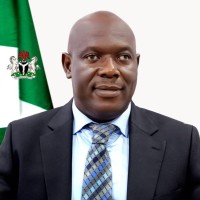
The Hydrocarbon Pollution Remediation Project (HYPREP) has commemorated the 15th anniversary of the release of the United Nations Environment Programme (UNEP) Environmental Assessment Report on Ogoniland, reaffirming its commitment to restoring the environment and improving the livelihoods of affected communities.
In a statement signed by the Project Coordinator, Prof Nenibarini Zabbey, to commemorate the anniversary, HYPREP described the anniversary as a significant milestone in Nigeria’s environmental restoration efforts, noting that the project has made remarkable progress in implementing the recommendations of the landmark UNEP report released on August 4, 2011.
The UNEP report had revealed extensive oil pollution across Ogoniland, severe environmental degradation, and serious public health risks resulting from decades of petroleum operations. It also recommended an initial $1 billion fund to commence the cleanup of the affected communities.
According to HYPREP, the Federal Government formally launched the Ogoni clean-up in 2016, while the Project Coordination Office was established in 2017 to drive the implementation of UNEP’s recommendations.
Zabbey said the current administration has continued to prioritise the project under the Renewed Hope Agenda.
Providing an update on the cleanup, the Project Coordinator disclosed that 30 of the 65 contaminated sites identified by UNEP have been fully remediated, while work is ongoing at several medium- and high-risk locations. It also stated that more than 1.5 million mangrove seedlings have been planted as part of what it described as the world’s largest restoration of oil-degraded mangroves, with over 1,000 hectares of shoreline already rehabilitated.
Zabbey further revealed that 49 Ogoni communities have been connected to potable water schemes through multiple water projects and booster stations aimed at providing safe drinking water across the region.
In the health sector, he said the 100-bed Ogoni Specialist Hospital in Kpite and the 43-bed Cottage Hospital in Buan are nearing completion, adding that several existing health facilities have been upgraded with modern medical equipment, while five ambulances have been donated to improve emergency healthcare services. The Project Coordinator also disclosed that a three-year human health biomonitoring study is being conducted in collaboration with the World Health Organization’s International Agency for Research on Cancer (IARC).
On economic empowerment, Zabbey stated that the Project has created more than 8,000 direct jobs and trained thousands of Ogoni youths and women in various vocational and technical skills, including software development, cybersecurity, aviation, commercial diving, seafaring, mechatronics, and creative arts. The project also reported awarding scholarships to more than 1,000 students, providing grants to small businesses, and supporting persons living with special needs through skills acquisition programmes.
The statement further highlighted ongoing legacy projects, including the Ogoni Power Project and the Centre of Excellence for Environmental Restoration, which it said is about 96 per cent complete. HYPREP also welcomed the recent designation of the Ogoni Wetland as a Ramsar Site of International Importance and pledged to continue promoting biodiversity conservation and sustainable management of the ecosystem.
Marking the anniversary, Zabbey said the progress achieved over the past 15 years demonstrates the collective commitment of government, development partners, stakeholders, and local communities to restoring Ogoniland. He called for renewed collaboration to sustain the cleanup effort, promote environmental sustainability, and support the long-term development of the region. 3
-

 News2 days ago
RSG Targets Nine Million Residents in Mosquito Net Distribution Campaign
-

 Oil & Energy2 days ago
Aiyedatiwa Signs New Electricity Bill
-

 Oil & Energy2 days ago
NLNG Commissions Research And Innovation Centre In RSU
-

 Maritime2 days ago
Marine Minister Commends President Tinubu On NPERA Bill Assent
-

 News2 days ago
KenPoly Holds Eight Convocations, August 29
-

 News2 days ago
RSG Begins Another Phase of Projects Commissioning Today
-

 News2 days ago
RMAFC Completes Revenue Sharing Review, Proposes New Pay
-

 Maritime2 days ago
NAGAFF Petitions IGP Over Alleged Maritime Police Harassment