
Nation
THE STATES

Benue
Governor Gabriel Suswam of Benue State has urged people of the state to indulge in writing in order to preserve their culture and tradition for generations yet unborn.
Suswam, who was represented by his deputy, Chief Steve Lawani, made the call on Tuesday in Makurdi during the public presentation and launching of two books.
The books are entitled: “Retirement: Management Challenges and Strategies” and Lessons for a Christian Woman,” written by Mrs Rhoda Tor-Agbidye.
The governor said people’s culture and tradition could only be preserved through books which could be documented for posterity.
FCT
The Chairman, Senate Committee on Rules and Business, Sen. Ita Enang (PDP-Akwa Ibom) said the 7th Senate recorded “tremendous achievements’’ from June 6, 2012 when it was inaugurated till date.
Speaking to senate correspondents in Abuja, Enang said that the Senate passed 17 bills, took landmark resolutions, confirmed appointments and carried out effective oversight on the executive and judiciary.
He named some of the bills passed to include; the Terrorism Act Amendment Bill, the Money Laundering Act Amendment Bill, the 2013 Appropriation Bill of the FCT, the State of the Nation Address Bill and Bills establishing 10 universities.
The rules and business chairman hinted that the National Assembly might invoke its veto power on the Nation Address Bill if President failed to assent to it.
Gombe
A Gombe-based Non-Governmental Organisation (NGO), Hope For the Lonely, has constructed a maternity home worth N3.5 million in Ponguru village of Billiri Local Government Area of the state.
The Programme Manager of the organisation, Mr Bachama Yusuf said in Gombe on Monday that the project was aimed at reducing the maternal mortality rate in the community.
He said the community was far from the local government headquarters and had neither access roads nor health facilities, hence the need to construct a maternity there.
Yusuf said the organisation constructed the building while the local government would equip it and deploy staff to it adding that by June 27, the organisation would officially hand over the structure to the local government.
Jigawa
The Rector of Jigawa Institute of Informatics, Alhaji Aliyu Kiri, said the school had spent about N168.5 million ocapital projects in the last two years.
Kiri said on Monday in Kazaure that the money was spent on different infrastructure development projects between 2011 and 2012.
He said that the projects executed include the expansion of administrative blocks, purchase of lecture rooms’ furniture, and construction of metal fencing of the institution.
The rector noted that the school was affiliated to Informatics Academic International, Singapore.
Kiri said the institution trained students to specialise on network cabling-copper based system, fibre optic system and integrated voice and message.
Kano
The Kano State Hisbah Board, has arrested a middle-aged man, who allegedly specialises in trafficking of children and selling children at between N30,000 and N60,000 each.
The Director-General of the board, Alhaji Abba Sufi, who made the development known to the in Kano on Monday who said the suspect was arrested on Wednesday by staff of the board in Gwale Local Government Area and had since been handed over to the police for further investigation.
Sudi said the suspect was arrested after selling a three-year-old girl at N60,000 to his customer at Rijiyar Lemo quarters in Kano metropolis.
Kaduna
Governor Mukhtar Yero of Kaduna State last Monday urged the Nigerian Army to manufacture its equipment and armaments locally.
Yero made this known at the opening ceremony of the Combat Arms Training Week of the Nigerian Army at the Infantry Corps Centre, Jaji, in Kaduna.
The governor, represented by his Chief of Staff, Alhaji Aminu Yahaya, said the military could not continue to rely on foreign arms for its operations.
He said that the success of any warfare did not depend on the number of soldiers deployed, rather on the sophistication of training received and the capability to operate modern arms and ammunition.
“Wars today are not only fought in the battle field, many wars are now won or lost from the confines of control rooms; from where men direct sophisticated unmanned equipment to wreck havoc on the enemy side,” he said.
Nasarawa
A Mararaba Upper Area Court in Nasarawa State last Monday sentenced a 22-year-old student, Huseni Sumalia, to four years in prison for stealing a motorcycle.
The convict, of Orange Market Mararaba, was sentenced to three years in prison for theft and one year for trespass.
The presiding judge, Mr Vincent Gwahemba, however, gave the convict the option of paying N10, 000 in fine for theft and N5, 000 in fine for trespass.
Gwahemba, who sentenced Sumalia after he pleaded guilty to stealing the motorcycle, ordered that the sentences should run concurrently.
Earlier, the prosecutor, Mr Jospeh Ahwa , told the court that Yusuf Butus of Aku Village, Mararaba, on behalf of Ayuba Yusuf of the same address, reported the matter at Sani Abacha Police Station on June 7.
Ogun
The Judicial Commission of Enquiry set up by the Ogun State Government to look into the crisis that engulfed Ado-Odo community began hearing last Monday at the premises of the Abeokuta High Court.
The state government had on May 8 inaugurated a five-man panel to look into the crisis that occurred in the area between April 13 and April 14.
The crisis led to the physical assault launched on the town’s monarch, Oba Lateef Akanni, and his wife as well as the setting ablaze of his palace by some irate youths.
Speaking at the inaugural sitting, the Chairman of the commission, Justice Elizabeth Osinuga, said the commission had received several petitions on the matter.
According to her, the commission will among others, establish the remote and immediate causes of the crisis.
Osun
The Osun House of Assembly on Tuesday confirmed, Justice Adepele Ojo, as the new Chief Judge of the state with a charge to promote justice at all times.
The Speaker of the house, Mr Najeem Salaam, said her confirmation was based on seniority, adding her earlier rejection was because of the pending legal action on the issue.
Salaam urged Ojo to “promote substantive justice over technicality and to allow justice roll down like water and righteousness, like a mighty stream.”
According to him, the judiciary must be united and act as one body to fight crime and corruption and advised him, to work as a team for enthronement of justice and maintain the name of judiciary.
Salaam advised the new chief judge to digitalise the judiciary and cooperate with the state government to move the state forward.
Sokoto
The Vice Chancellor, Usmanu Danfodiyo University, Sokoto, Prof. Riskuwa Shehu, has decried the low level of research funding in Nigeria.
Shehu, said in Sokoto on Tuesday, noted that funding of researches had not been adequately catered for.
He said this trend should be reversed to uplift the quality of tertiary education in the country. “Universities must be able to conduct researches relevant to the society. Such researches should be aimed at providing solutions to the problems in the society,” he added.
Shehu, however, stressed that researchers in the universities should not solely depend on the government for research funding, but should seek additional funding from stakeholders.
He said that the university lecturers should tap their myriad of sources of funding of researches locally, nationally and internationally.
Taraba
The Taraba State Government has directed that only genuine local government workers should be paid the 18 per cent minimum wage.
The Special Adviser to the Governor on Local Government and Chieftaincy Affairs Alhaji Bashir Marafa made this known in Jalingo on Tuesday.
Marafa announced government’s directive at the inauguration of the committees for the payment of the minimum wage, urged the committees to justify the enormous resources spent in the biometric staff verification of the 16 Local Government by discharging their duties without or favour. staff to show understanding during the exercise and report all grievances to the committees’ chairmen for appropriate action.
The state Chairman, Nigerian Labour Congress (NLC), Mr Mark Ishaku, commended the state government for fulfilling its promise on the implementation of minimum wage for the local councils and warned the committees against dishonesty in their duties, saying that the NLC would monitor their activities.



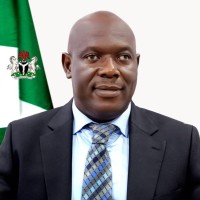
The Hydrocarbon Pollution Remediation Project (HYPREP) has commemorated the 15th anniversary of the release of the United Nations Environment Programme (UNEP) Environmental Assessment Report on Ogoniland, reaffirming its commitment to restoring the environment and improving the livelihoods of affected communities.
In a statement signed by the Project Coordinator, Prof Nenibarini Zabbey, to commemorate the anniversary, HYPREP described the anniversary as a significant milestone in Nigeria’s environmental restoration efforts, noting that the project has made remarkable progress in implementing the recommendations of the landmark UNEP report released on August 4, 2011.
The UNEP report had revealed extensive oil pollution across Ogoniland, severe environmental degradation, and serious public health risks resulting from decades of petroleum operations. It also recommended an initial $1 billion fund to commence the cleanup of the affected communities.
According to HYPREP, the Federal Government formally launched the Ogoni clean-up in 2016, while the Project Coordination Office was established in 2017 to drive the implementation of UNEP’s recommendations.
Zabbey said the current administration has continued to prioritise the project under the Renewed Hope Agenda.
Providing an update on the cleanup, the Project Coordinator disclosed that 30 of the 65 contaminated sites identified by UNEP have been fully remediated, while work is ongoing at several medium- and high-risk locations. It also stated that more than 1.5 million mangrove seedlings have been planted as part of what it described as the world’s largest restoration of oil-degraded mangroves, with over 1,000 hectares of shoreline already rehabilitated.
Zabbey further revealed that 49 Ogoni communities have been connected to potable water schemes through multiple water projects and booster stations aimed at providing safe drinking water across the region.
In the health sector, he said the 100-bed Ogoni Specialist Hospital in Kpite and the 43-bed Cottage Hospital in Buan are nearing completion, adding that several existing health facilities have been upgraded with modern medical equipment, while five ambulances have been donated to improve emergency healthcare services. The Project Coordinator also disclosed that a three-year human health biomonitoring study is being conducted in collaboration with the World Health Organization’s International Agency for Research on Cancer (IARC).
On economic empowerment, Zabbey stated that the Project has created more than 8,000 direct jobs and trained thousands of Ogoni youths and women in various vocational and technical skills, including software development, cybersecurity, aviation, commercial diving, seafaring, mechatronics, and creative arts. The project also reported awarding scholarships to more than 1,000 students, providing grants to small businesses, and supporting persons living with special needs through skills acquisition programmes.
The statement further highlighted ongoing legacy projects, including the Ogoni Power Project and the Centre of Excellence for Environmental Restoration, which it said is about 96 per cent complete. HYPREP also welcomed the recent designation of the Ogoni Wetland as a Ramsar Site of International Importance and pledged to continue promoting biodiversity conservation and sustainable management of the ecosystem.
Marking the anniversary, Zabbey said the progress achieved over the past 15 years demonstrates the collective commitment of government, development partners, stakeholders, and local communities to restoring Ogoniland. He called for renewed collaboration to sustain the cleanup effort, promote environmental sustainability, and support the long-term development of the region. 3
-

 News1 day ago
RSG Targets Nine Million Residents in Mosquito Net Distribution Campaign
-

 Oil & Energy1 day ago
Aiyedatiwa Signs New Electricity Bill
-

 Maritime1 day ago
Marine Minister Commends President Tinubu On NPERA Bill Assent
-

 Oil & Energy1 day ago
NLNG Commissions Research And Innovation Centre In RSU
-

 News1 day ago
KenPoly Holds Eight Convocations, August 29
-

 News1 day ago
RSG Begins Another Phase of Projects Commissioning Today
-

 News1 day ago
RMAFC Completes Revenue Sharing Review, Proposes New Pay
-

 Maritime1 day ago
NAGAFF Petitions IGP Over Alleged Maritime Police Harassment