
Oil & Energy
Nigerian Banks Unable To Fund Oil, Gas Deals –Shell

Shell Nigeria Exploration and Production Company (SNEPCO) has bemoaned inability of banks in the country to fund large oil and gas transactions, saying that all the companies that bought its divested interests had to source their financing from banks outside the country.
This was contrary to claims by banks in the country of their ability to fund such transactions, bringing to the fore the huge amount the country is losing in capital flight in terms of interest paid on the loans.
Speaking at a deepwater interactive workshop, Commercial Integration and Business Value Manager, SNEPCO, Mr Taaj Shobayo, said Nigerian banks are indisposed to lending to oil companies, especially companies engaged in deepwater oil field production.
According to him, this has made oil companies in Nigeria to source funds from banks oversees. He blamed the development on the short-term focus of Nigerian banks, especially their lack of capacity to finance projects with longer gestation period.
He said, “Financing for oil projects are sourced overseas. Companies that brought our assets secured their funds overseas.
“The choice offshore funding is because of the long lead time of deepwater oil field projects. Nigerian banks can not wait for such long period before recouping their funds.”
He, however, highlighted the cost intensive nature of deepwater projects, saying about $ 960 million is expended between exploration and production.
He noted that it takes between 10 and 50 years from the award of licence to actual production, a factor which has made it difficult for local financial institution to finance such projects.
However, unless Nigeria banks change their strategy, the country might lose further as Mr Chike Onyejekwe, Managing Director, SNEPCO, said internation oil companies one set invest about $ 165 billion in the Nigerian oil and gas industry in the nex five years, when is twice the value of the Nigeria stock exchange.
Onyejekwe, further disclosed that Nigeria has recorded about & 48 billion investments in deepwater oil field projects across the country since 1993.
He said this investment is a pointer to the enormous opportunities presented by deepwater field, especially in growing Nigeria economy.
He further stated that shell has recorded tremendous success in its Bonga deepwater oil field, saying as at December 2012, it has exported about 450 million barrels of crude oil. In the same year, Shell produced about 33 percent of Nigeria’s oil production.
He added that the company is considering acquiring another production, storage and off loading vessel to help in production in its Bonga South West field.




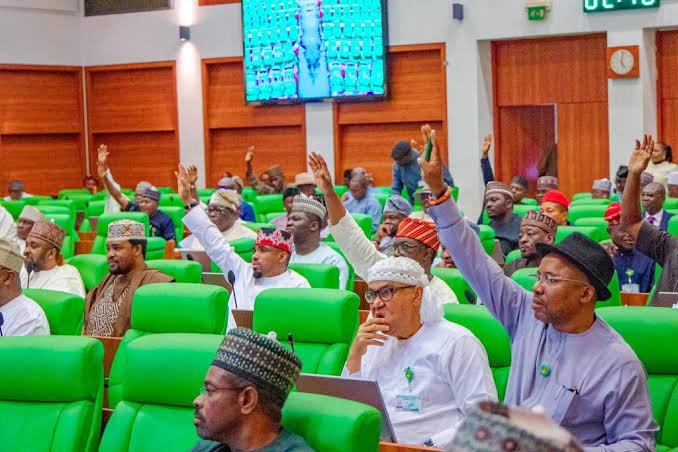
The decision followed a review by the House Sub-Committee on the Petition concerning NIPCO Plc, which rejected the complaint filed by the Nigerian Energy Security Watch Group (NESWG) for lacking substance and evidential support.
The petition had called for an investigation into, and the suspension and cancellation of, gas distribution licences issued by the Nigerian Midstream and Downstream Petroleum Regulatory Authority (NMDPRA) to NIPCO for Lagos, Ogun, Oyo and Osun states, as well as the Lagos and Lekki Free Trade Zones.
Announcing the decision last Thursday, the Chairman of the Sub-Committee, Peter Aniekwe, said the petitioners relied on hearsay and failed to establish any wrongdoing in the licensing process.
“At its sitting today, the Sub-Committee resolved not to proceed with the investigation, and the petition is accordingly dismissed,” Aniekwe said.
The committee, which also includes Dahaltu Shehu, was constituted in October to examine the petition. It was granted an additional 14 days on October 26 to conclude its assignment.
Aniekwe said the issuance and regulation of gas distribution licences were statutory responsibilities of the NMDPRA under the Petroleum Industry Act, while stressing that the National Assembly would continue to exercise oversight over the process.
He disclosed that the regulator had committed to completing and rolling out gas distribution licensing in the fourth quarter of 2026, adding that the committee would monitor the implementation.
“Nigerians deserve a gas market that is open, competitive and safe, and investors deserve rules that are clear and stable,” he said.
The lawmaker reaffirmed the House’s commitment to considering petitions from individuals and organisations with genuine concerns about the petroleum sector, saying “each complaint would be assessed on its merits”.
-
News2 days ago
RSG Reaffirms Commitment To STEM Education, Technological Advancement
-
Business2 days ago
‘NUJ, NPA’s Partnership Would Boost Port Producrivity, Economic Growth’
-

 News2 days ago
IGP Warns Police Officers Against Partisanship …Directs Regular Engagement With Journalists
-
Business2 days ago
Fire Threat Interrupts Asaba Air Peace Flight
-
 News2 days ago
Customs To Deploy AI, Scanners Against Snuggling
-
Business2 days ago
Fish Production Deficit, A Major Investment Opportunity – Minister
-
 Politics2 days ago
2027: INEC Begins Deployment Of Non-Sensitive Materials
-
Business2 days ago
NCDMB, NLNG Unveil $9m For Professorial Endowment Research Chairs In Six Varsities