
Nation
THE STATES

Borno
The Borno State Government has shut down 20 private schools in the state for failing to meet the minimum standard set by government.
The state’s Commissioner for Education, Malam Inuwa Kubo, made the disclosure in Maiduguri on Sunday, saying that government took the action after several warnings by the inspectorate unit of the ministry of education for the proprietors to meet up with set standards.
Kubo said that the schools would, however, be re-opened once the proprietors complied with the government’s regulations on standards, stressing that the government was disturbed over the proliferation of schools without standards.
The commissioner noted that the government had in the last two years overhauled the education sector in its quest to address the long years of decay.
“The state governor set up a high-powered committee on the transformation of the education sector shortly after assuming office in 2011. “I am happy to say that 95 per cent of the committee’s recommendations have been implemented, leading to numerous successes in the sector,’’ he said.
FCT
The Executive Director of the Civil Society Legislative Advocacy Centre (CISLAC), Malam Auwal Rafsanjani, has urged Nigerian leaders to build strong democratic institutions to ensure transparency and accountability in governance.
Rafsanjani said in Abuja last Sunday, that strong institutions were needed in the governance of the country in order to deepen democracy.
The director advised the political class to rise against personal interest in the course of discharging their responsibilities, adding that it was imperative for leaders to give special attention to strengthening institutions than advancing the interest of any individual or groups.
Rafsanjani urged the Federal Government to renew its commitment in the fight against corruption, with a view to enhancing public confidence in governance, and urged the National Assembly to strengthen its oversight function with a view to checking duplication of funds in budget making and implementation.
Jigawa
Governor Sule Lamido of Jigawa State, has said that collaboration between the executive and the judiciary will facilitate good governance and enhance political stability of Nigeria.
Lamido, who made the remarks during the swearing-in of the state’s Acting Chief Judge, Justice Aminu Sabo, in Dutse last Friday, described the judiciary as a pillar of democracy.
He said that achieving transparency in democratic governance for the common good, would require the executive, legislature and judiciary working in harmony.
The governor said that the workings of the judiciary had been enhanced after his administration had executed various projects and refrained from undue interference.
“I know you are a man of integrity and you should put your wealth of experience in promoting good working relations with us to move the state forward,” Lamido said.
Kaduna
Former Head of State, retired Major.-General Muhammadu Buhari, has said the recent merger of opposition parties was key to the stability of the country.
Buhari, who made the remarks at a National Conference of Opposition Parties held in Kagoro in Kaura local government area of Kaduna State last Saturday, said the only way to effect positive change is for opposition parties to make concerted efforts to guarantee the success of the merger.
Senator Mohammed Sale (CPC-Kaduna Central), held that corruption had been elevated to the height where the citizens considered it to be a virtue rather than a vice, stressing the imperative of curbing the menace.
Chairman of the occasion and former Chief of Naval Staff, retired Vice Admiral Ibrahim Iko, urged the stakeholders in the merger to shun tendencies that will impede the country’s progress.
The Guest Speaker, Mr Tom Maiyashi, said in spite of the availability of enormous resources, the nation’s industries were still comatose, noting that the growing number of unemployed youths in the country posed a danger for the future.
Kano
The Kano State Government has urged security agents in the state to cooperate with it to ensure compliance with sanitation laws and regulations.
The state Commissioner for Environment, Alhaji Abdullahi Abbas, made the call on Saturday during the monthly environmental sanitation in Kano. He noted that this would encourage other people to obey the policy and described as disheartening the way security personnel who were not on duty flout sanitation restrictions.
“On many occasions, these security personnel will come out doing commercial services with their vehicles as you can see this one is engaging in commercial transportation. “We should all know that this duty is to ensure good health and sanitation for all residents,’’ he said.
Kebbi
The Kebbi State chapter of the National Council of Ulamas on Saturday urged local government areas in the state to organise special prayers for peaceful co-existence in the country.
The Chairman of the council, Malam Ibrahim Ika, made the call in Birnin Kebbi during an interview with newsmen after an Islamic lecture organised by the state government.
He urged members of the public to be steadfast in prayers and remain vigilant to complement the state’s and federal governments’ efforts at securing the nation. The chairman also advised parents to ensure proper upbringing of their children to make them law-abiding leaders of tomorrow.
Lagos
Archbishop Adewale Martins, Archbishop of Catholic Archdiocese of Lagos, said last Saturday that Nigerians must work collectively to build a solid foundation for the children. Martins, who spoke at a press briefing to mark his 54th birthday at the Holy Cross Cathedral, Lagos, noted that such a solid foundation was essential for the growth of the nation’s future leaders.
The cleric urged the three tiers of government to invest in educational institutions, create more job opportunities and enact relevant laws to protect children from all forms of exploitation. “Children are our future; we cannot afford to toy with their future, and government should invest more in our educational institutions.
Niger
The Vice Chancellor, Federal University of Technology (FUT), Minna, Prof. Musibau Akanji, last Friday, appealed to the National Assembly to consider granting special fund to the Federal Universities of Technology for research and teaching.
Akanji made the appeal in Minna, while playing host to members of Senate Committee on Education led by the Chairman of the committee, Senator Uche Chukwumerije on oversight function visit to the institution.
Akanji, who was represented by the Deputy Vice Chancellor, Administration, Prof. Suleiman Sadiku, said that such universities needed funds to boost the nation’s quest for technological breakthrough and advancement
Ogun
Former President, Chief Olusegun Obasanjo, last Saturday in Abeokuta, urged Nigerians and civil society groups to partner with the Federal Government to tackle flood in the country.
The former president said this at a one-day workshop on “Building a Coordinated Approach to Flood Disasters in Nigeria’’, organised by the Centre for Human Security (CHS), an arm of Olusegun Obasanjo Presidential Library (OOPL).
He said, “We are here to find a lasting solution to flood disasters in this country; I will not say that we are fools because already we are learning from our mistakes. The good thing about flood is that even though it’s a natural occurrence, it is reasonably predictable and it’s seasonal and you also can predict places that may be affected”.
“Normally, flood should not be a disaster; it is only when we are caught unawares that it becomes a disaster since it is seasonal and reasonably predictable. Why not therefore adequately prepare ourselves for it; I believe that the aspect of how to prepare for it is what brought us here,’’ Obasanjo added.
Oyo
Governor Abiola Ajimobi of Oyo State has said that the state government was set to construct the Ibadan Circular road awarded at the cost of N52 billion.
Ajimobi said this last Friday in Ibadan, at the Inter-Denominational Service organised by the state government to commemorate the Democracy Day celebration and his second year in office.
He said that the state government would also inaugurate the Cargo Airport, which it was presently vying for, before the end of the present administration.
The governor also said that the present administration had expended at lest nothing less than N90 billion on all the projects it had executed, adding that the state was one of the three states in the country that owed no debt.
Plateau
The General Manager of the Plateau State Radio Television Corporation (PRTVC), Mr Sunday Rogo, said last Sunday that journalists covering the lingering crises in Plateau were “not being fair’’ to the state.
He said that most of the reports on the crises are not correct and certainly not fair to the government and inhabitants of Plateau State. When one person is killed, for instance, the reporters will say 50, such reports had often demonised the state, as the reports and the reality on ground were never the same”.
“Sometimes too, a skirmish could occur in one obscure location in a local government very far away from the state capital but the journalists will report that the incident took place in Jos,’’ he added
Rogo blamed the situation on journalists, whom he said, stayed far from Jos and who were basing their reports on hear-say and rumours, describing the development as “very sad’’.
He said that the international media was particularly guilty of such “inaccuracies’’ and advised people seeking to report correctly to visit the state so as not to feed the public with wrong information.



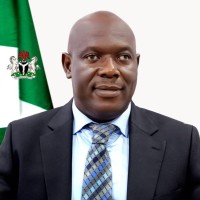
The Hydrocarbon Pollution Remediation Project (HYPREP) has commemorated the 15th anniversary of the release of the United Nations Environment Programme (UNEP) Environmental Assessment Report on Ogoniland, reaffirming its commitment to restoring the environment and improving the livelihoods of affected communities.
In a statement signed by the Project Coordinator, Prof Nenibarini Zabbey, to commemorate the anniversary, HYPREP described the anniversary as a significant milestone in Nigeria’s environmental restoration efforts, noting that the project has made remarkable progress in implementing the recommendations of the landmark UNEP report released on August 4, 2011.
The UNEP report had revealed extensive oil pollution across Ogoniland, severe environmental degradation, and serious public health risks resulting from decades of petroleum operations. It also recommended an initial $1 billion fund to commence the cleanup of the affected communities.
According to HYPREP, the Federal Government formally launched the Ogoni clean-up in 2016, while the Project Coordination Office was established in 2017 to drive the implementation of UNEP’s recommendations.
Zabbey said the current administration has continued to prioritise the project under the Renewed Hope Agenda.
Providing an update on the cleanup, the Project Coordinator disclosed that 30 of the 65 contaminated sites identified by UNEP have been fully remediated, while work is ongoing at several medium- and high-risk locations. It also stated that more than 1.5 million mangrove seedlings have been planted as part of what it described as the world’s largest restoration of oil-degraded mangroves, with over 1,000 hectares of shoreline already rehabilitated.
Zabbey further revealed that 49 Ogoni communities have been connected to potable water schemes through multiple water projects and booster stations aimed at providing safe drinking water across the region.
In the health sector, he said the 100-bed Ogoni Specialist Hospital in Kpite and the 43-bed Cottage Hospital in Buan are nearing completion, adding that several existing health facilities have been upgraded with modern medical equipment, while five ambulances have been donated to improve emergency healthcare services. The Project Coordinator also disclosed that a three-year human health biomonitoring study is being conducted in collaboration with the World Health Organization’s International Agency for Research on Cancer (IARC).
On economic empowerment, Zabbey stated that the Project has created more than 8,000 direct jobs and trained thousands of Ogoni youths and women in various vocational and technical skills, including software development, cybersecurity, aviation, commercial diving, seafaring, mechatronics, and creative arts. The project also reported awarding scholarships to more than 1,000 students, providing grants to small businesses, and supporting persons living with special needs through skills acquisition programmes.
The statement further highlighted ongoing legacy projects, including the Ogoni Power Project and the Centre of Excellence for Environmental Restoration, which it said is about 96 per cent complete. HYPREP also welcomed the recent designation of the Ogoni Wetland as a Ramsar Site of International Importance and pledged to continue promoting biodiversity conservation and sustainable management of the ecosystem.
Marking the anniversary, Zabbey said the progress achieved over the past 15 years demonstrates the collective commitment of government, development partners, stakeholders, and local communities to restoring Ogoniland. He called for renewed collaboration to sustain the cleanup effort, promote environmental sustainability, and support the long-term development of the region. 3
-

 News2 days ago
RSG Targets Nine Million Residents in Mosquito Net Distribution Campaign
-

 Oil & Energy2 days ago
Aiyedatiwa Signs New Electricity Bill
-

 Oil & Energy2 days ago
NLNG Commissions Research And Innovation Centre In RSU
-

 Maritime2 days ago
Marine Minister Commends President Tinubu On NPERA Bill Assent
-

 News2 days ago
KenPoly Holds Eight Convocations, August 29
-

 News2 days ago
RSG Begins Another Phase of Projects Commissioning Today
-

 News2 days ago
RMAFC Completes Revenue Sharing Review, Proposes New Pay
-

 Maritime2 days ago
NAGAFF Petitions IGP Over Alleged Maritime Police Harassment