
Features
Ibori’s Show Of Shame

The quest for transparency and unmitigated honesty in carrying out government affairs did not start today. That government officials, saddled with the privilege and responsibilities of public office are expected to exhibit unquestionable integrity and openness in the conduct of government affairs is not debatable.
Trust is expensive. When one is entrusted with the power to act on behalf of others the former must eschew cheating corrupt practices in all ramifications to gain the confidence of the followers in order to move society forward. Afterall, the essence of good governance is the delivery of social amenities, potable water, good roads, security, affordable housing, to mention these, to enable the generality of the public go about their lawful businesses without much distraction.
But there are not so many indications that tend to show that some elements who may have found themselves in power, through hook or crook, are not working towards achieving our collective socio-economic goals. I recall that these lapses on the part of those entrusted with public office informed the raising of the Failed Banks and the Failed Contracts tribunals by the late Head of State, Gen. Sani Abacha. Perhaps, if he had stayed longer in power, official kleptomanics, would have fled Nigeria for good. Every well meaning citizen is bothered as to why Nigerians see cheating, corruption and broad day-light robbery as a way of life. Could this be as a result of the lame duck attitude of our law towards sundry crimes and criminals that permeate all spheres of our social lives?
In 2009, determined to reverse the trend in despicable governance, the Forum of Serving Governors in Nigeria signed a Memorandum of Understanding (MoU) with the Kennedy University, United States to undergo training in governance.
Explaining the objective of this plan, Governor Godswill Akpabio of Akwa Ibom State who was in US with his counterparts, Comrade Adams Oshiomoshile of Edo, former Kwara State governor, Dr Burkola Saraki and Bauchi governor, Alhaji Isa Yuguda explained that the training would expose them to the ethics of governance and help to deepen democracy in Nigeria and for transparency and more result-oriented delivery. But it is sad to read in our newspapers that despite efforts like this, some of our leaders still smear themselves with the indelible mud of thievery and corrupt practices with the aim of enriching themselves stupendously.
Take the Halliburton scandal as an example of one scam that has refused to be put to rest because of the caliber of Nigerians fingered in the deal, not to talk of the amount of bribe involved in the vexations bribery saga.
It was about three years ago in 2009 or thereabouts that the news broke. The story was that a Halliburton subsidiary, Kellogs Brown and Root (KBR) had admitted giving $180m bribes to some high-ranking Nigerian government officials to facilitate the award of gas contracts. The bribes were alleged to have passed hands between 1994 and 2004 during the administrations of the late General Sani Abacha, Abdulsalami and Obasanjo. Consequently, some foreigners fingered in the bribes were tried and convicted in the United States.
Following public outcry, the then Attorney General of the Federation and Justice Minister, Micheal Aondoaka revealed that $150m of the $180m had been lodged in a Swiss bank by unknown depositors. As a result of this revelation late President Umaru Musa Yar’Adua raised the Okiro panel to unearth those involved in the dirty deal. There are so many dirty deals involving top Nigerians, like the Transcorp affair and many others before the current Ibori show of shame. The Ibori saga is a classic case of “many days are for the thief, one day for the owner of the house.”
This analogy stems from the fact that Ibori had had series of convictions before this recent case. For example, Ibori was in 1991 convicted for stealing from Diy Sharp, Wickes and in 1992 he was again convicted of credit card fraud. But being lucky and from a country where corruption has a place of pride, Ibori became an elected governor of Delta State in 1999. But with the sudden twist of fate after his fall from the lofty heights of a State governor in Nigeria, and his arraignment in court for money laundering, in 2007 his assets worth over $35m were frozen in the United Kingdom. He was later arrested in Dubai in May 2010 and extradited UK in 2011 to face the law.
It is sad to know that Ibori is from the most impoverished part of Nigeria, the Niger Delta from where he stole the money meant for the development of his part of the Niger Delta and for the empowerment of his compatriots. A lawyer who does not want his name mentioned lamented that most Niger Deltans, not the least, those in power and position of authority do not seem to have the interest of the area at heart. He said that some Niger Delta leaders cry wolf about low revenue accruals from the Federation account while they device ingenuous means to siphon the little that come their way, for their private use.
Ibori is not alone in this character trait, as reports of malfeasance by some in authority in Niger Delta, rubbishes the shout of those calling for resource control. For some, the ample justification by magnitude of looting of public treasury by our leaders, is our detractors who claim that we have not tasked our leaders enough on accountability. So what lesson could be learned from the Ibori case?
This development is indicative of the fact that the people of the Niger Delta do not hold their leaders accountable for the resources that accrue to the region. Is it not a surprise that Ibori could hoodwink the people of Delta State “The Big Heart” for eight years, during which he stole over $120m? Even if the money recovered from Ibori is returned to Delta State the fact remains that his people may have suffered deprivation of some sort in the health, education and security sectors, during his tenure.
The Nigerian Bar Association put it succinctly when it said recently that the Ibori conviction is a signal to politicians especially governors who are in the habit of plundering the peoples’ wealth that justice will one day come their way.
Thomas Abbey



For generations, Female Genital Mutilation(FGM) has remained one of the most deeply entrenched harmful traditional practices affecting women and girls across many societies.Sustained largely by cultural beliefs, misconceptions and long-standing norms, the practice has continued despite increasing global awareness of its severe health, psychological and human rights consequences.
In Nigeria, however, growing public awareness, stronger legal frameworks and coordinated interventions by government institutions and development partners are gradually changing the narrative.Although significant progress has been recorded, experts insist that achieving the complete eradication of female genital mutilation requires more than legislation. It demands sustained collaboration, continuous public enlightenment, community ownership and the willingness to challenge harmful practices that have endured across generations.
To this end, stakeholders in Rivers State have renewed calls for stronger collaboration, sustained public enlightenment and community ownership in the fight against Female Genital Mutilation (FGM), warning that the harmful practice cannot be completely eradicated through legislation alone.
The call was made during the Third Quarter State Technical Committee Meeting on the Elimination of Female Genital Mutilation in Rivers State, organised by the Rivers State Ministry of Health with support from the United Nations Children’s Fund (UNICEF) and other development partners.
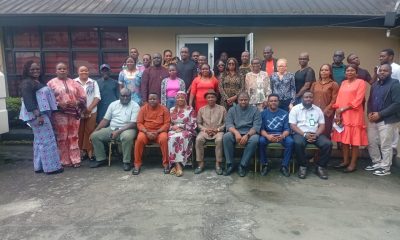
The meeting brought together representatives of the Ministries of Health, Social Welfare and Rehabilitation, Information and Communications, civil society organisations, child protection advocates, development partners and other stakeholders committed to protecting women and girls from harmful traditional practices.
The engagement provided an opportunity for participants to review progress recorded in the state, examine persistent challenges and develop practical strategies for accelerating the elimination of FGM through stronger partnerships, coordinated interventions and evidence-based advocacy.
A major focus of the meeting was the need to broaden public understanding of what constitutes FGM. Participants noted that the practice extends beyond the commonly recognised cutting or removal of parts of the female genitalia and includes other harmful procedures that can cause lasting physical and psychological damage.
Setting the tone for the technical discussions, the Reproductive Health Coordinator, Rivers State Ministry of Health, Dr. Ebere Smith, described FGM as both a reproductive health concern and a social injustice that violates the bodily integrity, dignity and wellbeing of women and girls.
According to her, although FGM has historically been sustained by cultural beliefs and traditions in many communities, medical evidence has established that the practice exposes women and girls to avoidable health complications and psychological trauma.
“It is an injustice to the female anatomy. It is not just a reproductive injustice; it is also a social one. It affects a woman’s emotional well-being, childbirth, marriage and overall quality of life,” Dr. Smith said.
She explained that FGM can involve the use of unsterilised razor blades, knives, scissors and needles, while drawing attention to less recognised practices, including the repeated pressing of a baby girl’s genital area with hot water, which she identified as a form of Type IV FGM.
Dr. Smith noted that survivors could suffer excessive bleeding, infections, chronic pain, complications during childbirth, sexual dysfunction and emotional trauma, among other long-term health consequences.
She therefore stressed the importance of providing families and communities with accurate information to dispel misconceptions that have allowed harmful practices to persist across generations.
“Having the right information at the right time for the right people is essential,” she said, emphasising the roles of healthcare workers, parents, caregivers, traditional institutions, educators, journalists and community leaders in preventing FGM.
Speaking on progress made in Rivers State, the UNICEF Desk Officer in the Rivers State Ministry of Social Welfare and Rehabilitation, Dr. Victor Iseberetonma, expressed optimism over the impact of sustained advocacy and community sensitisation.
He disclosed that sensitisation structures established in about 60 communities were conducting house-to-house campaigns, church outreaches and market engagements aimed at educating residents on the dangers of FGM.
Iseberetonma also noted that an increasing number of traditional rulers and community leaders were demonstrating commitment to ending the practice within their domains.
He described the willingness of some monarchs to formally abolish FGM in their communities as an important milestone, stressing, however, that the ultimate objective remained the complete eradication of the practice across Rivers State.
In his technical presentation, UNICEF Facilitator, Mr. Uchenna Unah, cited findings from the 2024 Nigeria Demographic and Health Survey (NDHS), which showed that the prevalence of FGM among women aged 15–49 had declined from 20 per cent in 2018 to 14 per cent in 2024.
Despite the decline, Unah said FGM remained a significant public health and human rights concern, noting that 85 per cent of girls and women who underwent the practice experienced it before the age of five.
He further highlighted encouraging changes in public attitudes, stating that 71 per cent of women and 74 per cent of men surveyed believed that FGM should not continue, while a similar majority affirmed that no religion requires the practice.
He urged stakeholders to sustain evidence-based advocacy, strengthen community engagement and intensify public enlightenment to ensure that the declining prevalence ultimately translates into the complete elimination of FGM.
Also contributing to the discussions, the State Coordinator of the Child Protection Network (CPN), Rivers State, Inyinyi Irimagha, challenged the continued use of the term “female circumcision”, describing it as medically inaccurate.
She explained that circumcision refers to the removal of the male foreskin and should not be used to describe harmful procedures carried out on the female genitalia.
Irimagha said collaboration between the Rivers State Ministry of Social Welfare and Rehabilitation, Child Protection Network, UNICEF and other partners had strengthened community advocacy through survivor groups, adolescent networks, male champions and traditional rulers.
She also highlighted the need to increase awareness of Type IV FGM, particularly practices that communities may not recognise as forms of genital mutilation.
According to her, the absence of cutting does not mean that such practices are harmless, as damage to delicate tissues and nerves can result in long-term health and reproductive complications.
Beyond the formal presentations, discussions with participants revealed that misconceptions about FGM remain widespread.
Some participants admitted that they had previously associated FGM exclusively with the physical cutting or removal of parts of the female genitalia and were surprised to learn that other harmful practices are also recognised internationally as forms of FGM.
The discussions further highlighted the influence of culture and intergenerational traditions on perceptions of women’s health. Some participants recalled practices that had been passed down for generations without sufficient consideration of their medical implications.
One cultural practice mentioned during the engagement involved placing a snail between the legs of a woman after childbirth based on the belief that its slimy nature could help control bleeding.
Participants agreed that while cultural traditions remain important to communities, practices that pose risks to human health should be subjected to scientific scrutiny and discontinued where necessary.
A resident, Sampson, described the enlightenment as an eye-opener, noting that many people had traditionally believed that applying hot water to a newborn girl’s genital area was simply a routine hygiene practice.
He said greater public awareness was needed to ensure that families did not unknowingly expose their children to harmful practices.
Another participant, DollyPur, stressed the importance of creating safe spaces for community dialogue, saying that people often continue harmful practices because “everyone else” appears to be doing the same thing.
She noted that open discussions involving parents, community leaders and other stakeholders could help communities understand the health consequences of harmful traditional practices and encourage behavioural change.
The stakeholders consequently agreed that the elimination of FGM requires sustained cooperation among government institutions, healthcare professionals, traditional rulers, religious leaders, civil society organisations, development partners, the media and communities.
They emphasised that continuous public enlightenment, accurate health information and community-led interventions remain critical to correcting misconceptions, changing attitudes and protecting the health, dignity and rights of women and girls across Rivers State.
Christian Nelson Davies & Ekemini Victor Sunday
Dr Davies is the Director of Publications, Rivers State Ministry of Information and Communications, and Ekemini, an intern


It has been 25 years of impactful development of the Niger Delta region, facilitated by theNiger Delta Development Commission. NDDC. Without doubt, it has been a remarkable journey, marked by significant milestones and daunting challenges.
For the past week, the NDDC has been celebrating its achievements, beginning with a thanksgiving service in Akure, Ondo State, on July 6, drawing stakeholders and Niger Deltans to express gratitude to God for the Commission’s journey so far.
Taking off on the wings of the Oil Minerals Development Commission, OMPADEC, in 2000, the NDDC has grown into a symbol of federal presence in the oil-rich Niger Delta region.
The celebration moved from spiritual reflection and thanksgiving to strategic communication, with a World Press Conference held in Asaba, Delta State, on Monday, the 7th of July. There, members of the Fourth Estate across all media gathered in what was perhaps the most extensive media engagement of its kind. The NDDC Managing Director and Chief Executive Officer, Dr. Samuel Ogbuku, reaffirmed the Commission’s commitment to its motto of “making a difference.”
Dr. Ogbuku stated, “The President gave us a matching order during our inauguration to positively turn things around in the Niger Delta region.” That presidential directive, he noted, continues to guide the Board and Management as they pursue legacy projects across the region.
From electricity restoration in Ondo to road linkages in Bayelsa and Akwa Ibom, the NDDC’s impact was showcased in clear, tangible terms. “We commissioned the 45-km double-circuit 33KV feeder line from Omotosho Power Station to Okitipupa in Ondo State,” Dr. Ogbuku recalled, “bringing electricity back to 25 local governments after 15 years in darkness.” This was just one of several landmark interventions highlighted during the press briefing, underscoring the Commission’s renewed vigour under the current leadership.
The Managing Director spoke candidly about the setbacks caused by years of instability in leadership. “Frequent changes in management and boards have slowed our progress,” he admitted. “But today, we are targeting legacy projects. Our mandate is to complete those critical projects.” He emphasised that the Commission had transitioned from a transactional mindset to one of transformation, including the digitisation of procurement processes to ensure transparency and accountability.
Other top executives echoed similar sentiments. The Chairman of the Governing Board, Mr. Chiedu Ebie, stressed the importance of collaboration, particularly with the media, whom he described as “critical stakeholders” in advancing development. Alabo Boma Iyaye, the Executive Director of Finance and Administration, noted that the celebrations would run until Saturday, July 12, culminating in a gala night and plenary session in Port Harcourt.
Perhaps, the most significant message from the silver jubilee celebration is the renewed hope that the Niger Delta can finally experience holistic and sustainable development.
According to Ogbuku, “Through the initiative of the Board and Management, we have restructured the administrative architecture of the Commission to its 13 statutory Directorates, introduced robust Corporate Governance protocols… This formalised a value- driven institutional culture anchored on ethics and performance.”
As the weeklong celebrations continue across different states in the region, the NDDC appears determined not just to celebrate its past but to chart a bold course for the future.
The people of the Niger Delta are watching, hopeful that the next 25 years will be defined not by promises, but by lasting progress that transforms lives and communities, truly making a difference.
The celebration also featured a movie premiere titled “Making a Difference”, which traced the Commission’s journey and told stories of transformation in communities once plagued by underdevelopment. For many observers, the film served as both an emotional tribute and a powerful reminder of the NDDC’s role in shaping the destiny of the region.
The Governing Board and management of the NDDC have again proven to Nigerians, particularly the people of the oil-bearing Niger Delta region, that history does matter. They have also shown clearly that extraordinary personalities can upturn calculations and permutations. The above assertion was evidenced by the torrents of praises, accolades, and commendations poured on the Commission and its management and board by critical stakeholders during its week-long 25th anniversary celebration.
Beginning with Ondo State, one of the NDDC mandate states, Ondo Governor, Lucky Aiyedatiwa, hailed the management of the NDDC for the peace and development currently prevailing in the Niger Delta region. He said the Commission, under the current management and board, has succeeded in bridging developmental gaps in the region, noting that NDDC’s emphasis on partnerships and collaboration aimed at driving sustainable development across the Niger Delta has ushered in unprecedented progress.
Aiyedatiwa, who spoke at the Thanksgiving Service of the NDDC held at St Thomas’s Anglican Church, Akure, the Ondo State capital, stressed that the commission has undoubtedly lived up to its established mandate, commending the Board and Management for their exemplary leadership and commitment.
The Governor hailed the commission’s commitment and dedication to project conception, implementation, and completion, noting that the NDDC has established a culture of delivery and the region would no longer witness abandonment of projects as was the case in the past.
He said, “As we celebrate the Silver Jubilee of the NDDC, we must acknowledge the progress we have made and also recognise that there is still much work to be done as the Niger Delta region continues to face significant development challenges and we must work together to address these issues. “I urge the NDDC to continue to improve on its activities, ensuring that projects are tailored to the needs of the communities we serve. Let us work together to unlock the potential of our region, promote economic growth and enhance the lives of our people. We are partners in progress, unity and development.”
From Ondo State to Asaba, the Delta State capital, it was the same rain of praises. The Asaba monarch, the Asagba of Asaba, Obi Epiphany Azinge, on his part, was full of praises for the NDDC for its achievements in the past 25 years.
Obi Azinge spoke when Ebie led a delegation of the Commission’s Board and Management to pay a courtesy visit to him in his palace in Asaba, the Delta State capital. The Royal Father commended the NDDC for its intervention in several sectors across the Niger Delta region.
He expressed delight with the foreign postgraduate scholarship programme, which had helped many youths from the Niger Delta upgrade their knowledge.
He also acknowledged the contributions of the NDDC Chairman, whom he said had served the Delta State Government in different capacities. He noted that Ebie served meritoriously as Delta State Commissioner for Basic and Secondary Education and later, Secretary to the State Government. The monarch thanked the NDDC for selecting Asaba as the venue for some of the activities marking its 25th anniversary, such as a press conference and the movie premiere.
Earlier, the NDDC Board Chairman congratulated Asagba on his ascension to the throne of his forefathers, saying he was eminently qualified for the position. Ebie expressed optimism that the Asagba’s reign would bring good tidings to Asaba, which serves as both a Kingdom and the capital of Delta State.
He stated that the NDDC had come of age and was now a big brother to the new development agencies in Nigeria’s geo-political zones. Ebie disclosed that as part of the silver jubilee celebration, the Commission was going around the nine States of the Niger Delta.
The NDDC Chief Executive Officer pledged that the NDDC’s commitment to adhering strictly to the President’s directive to the Commission to complete all ongoing projects in the region, including roads, bridges, schools, and healthcare facilities. He disclosed that the Commission was engaging all stakeholders to ensure harmony and cooperation in the task of developing the hitherto neglected Niger Delta region.
He noted that, ”It is not only by our efforts; it is the collaborative efforts from all the stakeholders who believe the time has come when there should be stability in the NDDC and that stability is a challenge to us to ensure that we deliver development to the people of the Niger Delta region.”
Ifeatu Agbu
Agbu wrote in from Port Harcourt.
-

 News4 days ago
Tinubu Appoints Enitan As New Head Of Federal Civil Service
-
Rivers4 days ago
Philanthropist Cautions Youths Against Ignoble Acts Donates Building To Musician
-
Sports4 days ago
Arsenal Want Osimhen To Take Pay Cut
-
Sports4 days ago
Nnadozie, Osimhen Lead Highest-Rated Nigerian Players
-
Politics4 days ago
Yari Emerges DG As Tinubu Unveils 2027 Presidential Campaign Council
-
 Rivers4 days ago
Rivers SSP ’ll Enhance Equitable Access To HIV Services – RIVSACA Boss ….As Govt Urges Tireless Commitment
-
Education4 days ago
Rivers Wins 2026 Presidential Inter-School Debate: Govt Pledges To Institutionalise Competition
-
News4 days ago
23,000 Lawyers Storm PH As NBA Begins Conference