
Features
NEXIM’s Sea-Link Project Promotes West African Trade

Advocates of increased trade among West African countries always stress the need to put in place reliable international transport systems to facilitate the movement of goods and services in particular.
In the commercial city of Aba, for instance, many traders emphasise the need for alternative means of transportation to ferry their products from the city to different locations in West African countries.
They argue that road transportation cannot support the growing volume of trade with their business partners in these countries.
“If we have alternative means of transporting our goods, it will go a long way in aiding our goods to get into the markets of many countries,’’ says Chidi Umeafor, a shoe manufacturer at Ariara market in Aba.
Umeafor is one of several young Nigerian manufacturers who are desirous of attaining a smooth flow of business transactions within the West African sub-region.
Economic experts, however, note that the economies of most African countries are growing steadily in spite of the current global crisis which has negatively affected the economies of many developed countries.
The experts argue that the effective collaboration of every sector of the national economies of African nations is, nonetheless, required to reposition the economies to engender any meaningful national development.
They, nonetheless, note that international trade in the West African sub-region has been fraught with various challenges, thereby stunting the countries’ economic development.
However, several efforts have been initiated to facilitate and deepen intra-regional trade within West Africa, in line with the ECOWAS Protocols on Free Movement of Persons, Goods and Services.
As part of these efforts, the Nigeria Export Import Bank (NEXIM) recently initiated a sea-link project to boost trade within West Africa, while deepening payment systems and improving the access of traders and exporters to credit facilities.
Mr Roberts Orya, Managing Director of NEXIM, says that the bank embarked on the project to deepen trade within the West African sub-region, in particular.
“The project is geared towards setting up a maritime shipping company that would link seaports on the West African coast in order to facilitate trade and ensure smooth transportation of goods among ECOWAS member states,” he says.
Mr Traore Tidiane, the Project Consultant, argues that maritime trade within the sub-region has been largely dominated by inadequate, unsafe and old vessels, without due regard for passenger safety.
He says that that the sea-link initiative is designed to offer a safe, secure and modern fleet with experienced international management, adding that shipping service will also have the capacity to compete effectively with the fleets in other regions.
“The service will offer a combination of passenger and cargo services that are attractive to traders,” he says, adding: “The capital outlay for the project is around 61.5 million dollars and the funds will be raised through 60 per cent equity and 40 per cent debt.”
Orya explains the rationale behind the project succinctly, saying: “The primary objective of the NEXIM project is to deepen trade among West African states, while reducing the current high costs of shipping goods along the West African and Central African coastlines.’’
He adds: “This is because movement of goods between West African destinations are often carried out through Europe or South Africa due to the non-existence of direct coastal sea links in West Africa.”
Orya stresses that the project initially involves the setting up of Sea-link Promotional Company Ltd., a Special Purpose Vehicle (SPV) created to promote the establishment of a maritime shipping service that would connect West African coastal ports, including those of Central Africa, to boost trade within the region.
He says that the project will later involve the process of raising equity, adding that at that stage, the private sector will come in and buy shares.
“We have identified that one of the barriers to deepening trade within the ECOWAS sub-region is how to move goods within the region; if we have to increase the flow of trade in the region, we have to set up a vehicle to drive this,” Orya says.
“That explains the raison d’être behind our initiative. We need to have an efficient transportation system for the movement of goods from one country to another, while creating jobs for the teeming youths,” he adds.
In spite of the fact that NEXIM initiated the sea-link initiative, it is, nonetheless, collaborating with the ECOWAS Commission, the Federation of West African Chamber of Commerce and the region’s private sector.
Orya says that the hub of the sea-link project is in Nigeria, reiterating that the project was initiated to scale down the hurdles associated with the transportation of goods within the West African sub-region.
Sharing similar sentiments, Mr Bashir Wali, NEXIM’s Director of Corporate Services, stresses that the initiative will particularly facilitate the growth of trade in West Africa.
He says that the project will also promote the fulfilment of ECOWAS integration schemes, as it is aimed at ensuring the free flow of trade within the West African sub-region.
Experts are of the view that the sea-link project will aid the efforts of Nigerian manufacturers and exporters to have a structured access to the West African and Central African markets.
This is because most of the consumer products and raw materials in the ECOWAS markets originate from Nigeria, some of the experts say.
The initiative is, therefore, expected to boost efforts to actualise the aspirations of Nigerian traders and manufacturers to gain access to regional markets, thereby boosting manufacturing, foreign exchange earnings and job creation in the country.
Prof. Wilson Attah, the former President of Ghana National Chamber of Commerce, says that the initiative will promote regional integration and bring about economic development.
He notes that the West Africa has been losing about 45 per cent of its cargoes to European shipping lines because of poor maritime services in the sub-region.
“Apart from the fact that shipping of goods is going to be cheap in the region, the introduction of the initiative will also boost the development of the region’s tourism sector.
“We are grateful to NEXIM for the initiative and the major role it is playing in the project,” he says.
The President of ECOWAS Commission, Mr James Gbeho, says that the sea-link initiative is laudable, pledging the Commission’s support for the project that is aimed at boosting trade within the sub-region.
He particularly pledges the support of ECOWAS Commission for the company that was set up to oversee the sea-link project.
“We will support the company not only because it is an indigenous West African company but also because the initiative’s objectives are aimed at facilitating transportation of persons and goods within West Africa, which falls within the ECOWAS vision for the region,” he says. “It is also in line with our integration efforts,” he adds.
Gbeho stresses that ECOWAS has shifted its focus from its member states to the people since 2007 so as to speed up efforts to integrate the economies and infrastructure of West African countries, while initiating people-oriented development plans.
“Unless we are able to reach that point, we are not going to develop fast enough and we need to develop the continent.
“Since NEXIM’s vision conforms to our own vision in ECOWAS, there is nothing we can do than to support the initiative,” he adds. Gbeho emphasises that the maritime industry in West Africa is one of the sectors which could meaningfully promote ECOWAS integration aspirations.
Apart from the myriad economic benefits of the sea-link project, maritime experts believe that the initiative will also improve the capacity of West Africa’s maritime industry, while providing alternative sea transport routes for modern and multi-purpose vessels.
Besides, the project will foster inter-regional maritime passenger and freight services, while serving as a catalyst to trade development in and between Africa’s sub-regions.
“The sea-link project will certainly stimulate the economic growth of West African countries,” some of the experts say.
Nnaji writes for NAN.
Edith Nnaji



For generations, Female Genital Mutilation(FGM) has remained one of the most deeply entrenched harmful traditional practices affecting women and girls across many societies.Sustained largely by cultural beliefs, misconceptions and long-standing norms, the practice has continued despite increasing global awareness of its severe health, psychological and human rights consequences.
In Nigeria, however, growing public awareness, stronger legal frameworks and coordinated interventions by government institutions and development partners are gradually changing the narrative.Although significant progress has been recorded, experts insist that achieving the complete eradication of female genital mutilation requires more than legislation. It demands sustained collaboration, continuous public enlightenment, community ownership and the willingness to challenge harmful practices that have endured across generations.
To this end, stakeholders in Rivers State have renewed calls for stronger collaboration, sustained public enlightenment and community ownership in the fight against Female Genital Mutilation (FGM), warning that the harmful practice cannot be completely eradicated through legislation alone.
The call was made during the Third Quarter State Technical Committee Meeting on the Elimination of Female Genital Mutilation in Rivers State, organised by the Rivers State Ministry of Health with support from the United Nations Children’s Fund (UNICEF) and other development partners.
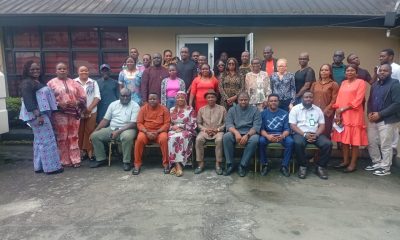
The meeting brought together representatives of the Ministries of Health, Social Welfare and Rehabilitation, Information and Communications, civil society organisations, child protection advocates, development partners and other stakeholders committed to protecting women and girls from harmful traditional practices.
The engagement provided an opportunity for participants to review progress recorded in the state, examine persistent challenges and develop practical strategies for accelerating the elimination of FGM through stronger partnerships, coordinated interventions and evidence-based advocacy.
A major focus of the meeting was the need to broaden public understanding of what constitutes FGM. Participants noted that the practice extends beyond the commonly recognised cutting or removal of parts of the female genitalia and includes other harmful procedures that can cause lasting physical and psychological damage.
Setting the tone for the technical discussions, the Reproductive Health Coordinator, Rivers State Ministry of Health, Dr. Ebere Smith, described FGM as both a reproductive health concern and a social injustice that violates the bodily integrity, dignity and wellbeing of women and girls.
According to her, although FGM has historically been sustained by cultural beliefs and traditions in many communities, medical evidence has established that the practice exposes women and girls to avoidable health complications and psychological trauma.
“It is an injustice to the female anatomy. It is not just a reproductive injustice; it is also a social one. It affects a woman’s emotional well-being, childbirth, marriage and overall quality of life,” Dr. Smith said.
She explained that FGM can involve the use of unsterilised razor blades, knives, scissors and needles, while drawing attention to less recognised practices, including the repeated pressing of a baby girl’s genital area with hot water, which she identified as a form of Type IV FGM.
Dr. Smith noted that survivors could suffer excessive bleeding, infections, chronic pain, complications during childbirth, sexual dysfunction and emotional trauma, among other long-term health consequences.
She therefore stressed the importance of providing families and communities with accurate information to dispel misconceptions that have allowed harmful practices to persist across generations.
“Having the right information at the right time for the right people is essential,” she said, emphasising the roles of healthcare workers, parents, caregivers, traditional institutions, educators, journalists and community leaders in preventing FGM.
Speaking on progress made in Rivers State, the UNICEF Desk Officer in the Rivers State Ministry of Social Welfare and Rehabilitation, Dr. Victor Iseberetonma, expressed optimism over the impact of sustained advocacy and community sensitisation.
He disclosed that sensitisation structures established in about 60 communities were conducting house-to-house campaigns, church outreaches and market engagements aimed at educating residents on the dangers of FGM.
Iseberetonma also noted that an increasing number of traditional rulers and community leaders were demonstrating commitment to ending the practice within their domains.
He described the willingness of some monarchs to formally abolish FGM in their communities as an important milestone, stressing, however, that the ultimate objective remained the complete eradication of the practice across Rivers State.
In his technical presentation, UNICEF Facilitator, Mr. Uchenna Unah, cited findings from the 2024 Nigeria Demographic and Health Survey (NDHS), which showed that the prevalence of FGM among women aged 15–49 had declined from 20 per cent in 2018 to 14 per cent in 2024.
Despite the decline, Unah said FGM remained a significant public health and human rights concern, noting that 85 per cent of girls and women who underwent the practice experienced it before the age of five.
He further highlighted encouraging changes in public attitudes, stating that 71 per cent of women and 74 per cent of men surveyed believed that FGM should not continue, while a similar majority affirmed that no religion requires the practice.
He urged stakeholders to sustain evidence-based advocacy, strengthen community engagement and intensify public enlightenment to ensure that the declining prevalence ultimately translates into the complete elimination of FGM.
Also contributing to the discussions, the State Coordinator of the Child Protection Network (CPN), Rivers State, Inyinyi Irimagha, challenged the continued use of the term “female circumcision”, describing it as medically inaccurate.
She explained that circumcision refers to the removal of the male foreskin and should not be used to describe harmful procedures carried out on the female genitalia.
Irimagha said collaboration between the Rivers State Ministry of Social Welfare and Rehabilitation, Child Protection Network, UNICEF and other partners had strengthened community advocacy through survivor groups, adolescent networks, male champions and traditional rulers.
She also highlighted the need to increase awareness of Type IV FGM, particularly practices that communities may not recognise as forms of genital mutilation.
According to her, the absence of cutting does not mean that such practices are harmless, as damage to delicate tissues and nerves can result in long-term health and reproductive complications.
Beyond the formal presentations, discussions with participants revealed that misconceptions about FGM remain widespread.
Some participants admitted that they had previously associated FGM exclusively with the physical cutting or removal of parts of the female genitalia and were surprised to learn that other harmful practices are also recognised internationally as forms of FGM.
The discussions further highlighted the influence of culture and intergenerational traditions on perceptions of women’s health. Some participants recalled practices that had been passed down for generations without sufficient consideration of their medical implications.
One cultural practice mentioned during the engagement involved placing a snail between the legs of a woman after childbirth based on the belief that its slimy nature could help control bleeding.
Participants agreed that while cultural traditions remain important to communities, practices that pose risks to human health should be subjected to scientific scrutiny and discontinued where necessary.
A resident, Sampson, described the enlightenment as an eye-opener, noting that many people had traditionally believed that applying hot water to a newborn girl’s genital area was simply a routine hygiene practice.
He said greater public awareness was needed to ensure that families did not unknowingly expose their children to harmful practices.
Another participant, DollyPur, stressed the importance of creating safe spaces for community dialogue, saying that people often continue harmful practices because “everyone else” appears to be doing the same thing.
She noted that open discussions involving parents, community leaders and other stakeholders could help communities understand the health consequences of harmful traditional practices and encourage behavioural change.
The stakeholders consequently agreed that the elimination of FGM requires sustained cooperation among government institutions, healthcare professionals, traditional rulers, religious leaders, civil society organisations, development partners, the media and communities.
They emphasised that continuous public enlightenment, accurate health information and community-led interventions remain critical to correcting misconceptions, changing attitudes and protecting the health, dignity and rights of women and girls across Rivers State.
Christian Nelson Davies & Ekemini Victor Sunday
Dr Davies is the Director of Publications, Rivers State Ministry of Information and Communications, and Ekemini, an intern


It has been 25 years of impactful development of the Niger Delta region, facilitated by theNiger Delta Development Commission. NDDC. Without doubt, it has been a remarkable journey, marked by significant milestones and daunting challenges.
For the past week, the NDDC has been celebrating its achievements, beginning with a thanksgiving service in Akure, Ondo State, on July 6, drawing stakeholders and Niger Deltans to express gratitude to God for the Commission’s journey so far.
Taking off on the wings of the Oil Minerals Development Commission, OMPADEC, in 2000, the NDDC has grown into a symbol of federal presence in the oil-rich Niger Delta region.
The celebration moved from spiritual reflection and thanksgiving to strategic communication, with a World Press Conference held in Asaba, Delta State, on Monday, the 7th of July. There, members of the Fourth Estate across all media gathered in what was perhaps the most extensive media engagement of its kind. The NDDC Managing Director and Chief Executive Officer, Dr. Samuel Ogbuku, reaffirmed the Commission’s commitment to its motto of “making a difference.”
Dr. Ogbuku stated, “The President gave us a matching order during our inauguration to positively turn things around in the Niger Delta region.” That presidential directive, he noted, continues to guide the Board and Management as they pursue legacy projects across the region.
From electricity restoration in Ondo to road linkages in Bayelsa and Akwa Ibom, the NDDC’s impact was showcased in clear, tangible terms. “We commissioned the 45-km double-circuit 33KV feeder line from Omotosho Power Station to Okitipupa in Ondo State,” Dr. Ogbuku recalled, “bringing electricity back to 25 local governments after 15 years in darkness.” This was just one of several landmark interventions highlighted during the press briefing, underscoring the Commission’s renewed vigour under the current leadership.
The Managing Director spoke candidly about the setbacks caused by years of instability in leadership. “Frequent changes in management and boards have slowed our progress,” he admitted. “But today, we are targeting legacy projects. Our mandate is to complete those critical projects.” He emphasised that the Commission had transitioned from a transactional mindset to one of transformation, including the digitisation of procurement processes to ensure transparency and accountability.
Other top executives echoed similar sentiments. The Chairman of the Governing Board, Mr. Chiedu Ebie, stressed the importance of collaboration, particularly with the media, whom he described as “critical stakeholders” in advancing development. Alabo Boma Iyaye, the Executive Director of Finance and Administration, noted that the celebrations would run until Saturday, July 12, culminating in a gala night and plenary session in Port Harcourt.
Perhaps, the most significant message from the silver jubilee celebration is the renewed hope that the Niger Delta can finally experience holistic and sustainable development.
According to Ogbuku, “Through the initiative of the Board and Management, we have restructured the administrative architecture of the Commission to its 13 statutory Directorates, introduced robust Corporate Governance protocols… This formalised a value- driven institutional culture anchored on ethics and performance.”
As the weeklong celebrations continue across different states in the region, the NDDC appears determined not just to celebrate its past but to chart a bold course for the future.
The people of the Niger Delta are watching, hopeful that the next 25 years will be defined not by promises, but by lasting progress that transforms lives and communities, truly making a difference.
The celebration also featured a movie premiere titled “Making a Difference”, which traced the Commission’s journey and told stories of transformation in communities once plagued by underdevelopment. For many observers, the film served as both an emotional tribute and a powerful reminder of the NDDC’s role in shaping the destiny of the region.
The Governing Board and management of the NDDC have again proven to Nigerians, particularly the people of the oil-bearing Niger Delta region, that history does matter. They have also shown clearly that extraordinary personalities can upturn calculations and permutations. The above assertion was evidenced by the torrents of praises, accolades, and commendations poured on the Commission and its management and board by critical stakeholders during its week-long 25th anniversary celebration.
Beginning with Ondo State, one of the NDDC mandate states, Ondo Governor, Lucky Aiyedatiwa, hailed the management of the NDDC for the peace and development currently prevailing in the Niger Delta region. He said the Commission, under the current management and board, has succeeded in bridging developmental gaps in the region, noting that NDDC’s emphasis on partnerships and collaboration aimed at driving sustainable development across the Niger Delta has ushered in unprecedented progress.
Aiyedatiwa, who spoke at the Thanksgiving Service of the NDDC held at St Thomas’s Anglican Church, Akure, the Ondo State capital, stressed that the commission has undoubtedly lived up to its established mandate, commending the Board and Management for their exemplary leadership and commitment.
The Governor hailed the commission’s commitment and dedication to project conception, implementation, and completion, noting that the NDDC has established a culture of delivery and the region would no longer witness abandonment of projects as was the case in the past.
He said, “As we celebrate the Silver Jubilee of the NDDC, we must acknowledge the progress we have made and also recognise that there is still much work to be done as the Niger Delta region continues to face significant development challenges and we must work together to address these issues. “I urge the NDDC to continue to improve on its activities, ensuring that projects are tailored to the needs of the communities we serve. Let us work together to unlock the potential of our region, promote economic growth and enhance the lives of our people. We are partners in progress, unity and development.”
From Ondo State to Asaba, the Delta State capital, it was the same rain of praises. The Asaba monarch, the Asagba of Asaba, Obi Epiphany Azinge, on his part, was full of praises for the NDDC for its achievements in the past 25 years.
Obi Azinge spoke when Ebie led a delegation of the Commission’s Board and Management to pay a courtesy visit to him in his palace in Asaba, the Delta State capital. The Royal Father commended the NDDC for its intervention in several sectors across the Niger Delta region.
He expressed delight with the foreign postgraduate scholarship programme, which had helped many youths from the Niger Delta upgrade their knowledge.
He also acknowledged the contributions of the NDDC Chairman, whom he said had served the Delta State Government in different capacities. He noted that Ebie served meritoriously as Delta State Commissioner for Basic and Secondary Education and later, Secretary to the State Government. The monarch thanked the NDDC for selecting Asaba as the venue for some of the activities marking its 25th anniversary, such as a press conference and the movie premiere.
Earlier, the NDDC Board Chairman congratulated Asagba on his ascension to the throne of his forefathers, saying he was eminently qualified for the position. Ebie expressed optimism that the Asagba’s reign would bring good tidings to Asaba, which serves as both a Kingdom and the capital of Delta State.
He stated that the NDDC had come of age and was now a big brother to the new development agencies in Nigeria’s geo-political zones. Ebie disclosed that as part of the silver jubilee celebration, the Commission was going around the nine States of the Niger Delta.
The NDDC Chief Executive Officer pledged that the NDDC’s commitment to adhering strictly to the President’s directive to the Commission to complete all ongoing projects in the region, including roads, bridges, schools, and healthcare facilities. He disclosed that the Commission was engaging all stakeholders to ensure harmony and cooperation in the task of developing the hitherto neglected Niger Delta region.
He noted that, ”It is not only by our efforts; it is the collaborative efforts from all the stakeholders who believe the time has come when there should be stability in the NDDC and that stability is a challenge to us to ensure that we deliver development to the people of the Niger Delta region.”
Ifeatu Agbu
Agbu wrote in from Port Harcourt.
-

 News3 days ago
Tinubu Appoints Enitan As New Head Of Federal Civil Service
-
Rivers3 days ago
Philanthropist Cautions Youths Against Ignoble Acts Donates Building To Musician
-
Sports3 days ago
Arsenal Want Osimhen To Take Pay Cut
-
Sports4 days ago
Nnadozie, Osimhen Lead Highest-Rated Nigerian Players
-
Politics4 days ago
Yari Emerges DG As Tinubu Unveils 2027 Presidential Campaign Council
-
 Rivers3 days ago
Rivers SSP ’ll Enhance Equitable Access To HIV Services – RIVSACA Boss ….As Govt Urges Tireless Commitment
-
Education4 days ago
Rivers Wins 2026 Presidential Inter-School Debate: Govt Pledges To Institutionalise Competition
-
Politics4 days ago
2027: ADC Candidate Tasks INEC On Integrity, Intensifies Consultations