
Business
Afreximbank targets over $540m deals at Lagos Canex

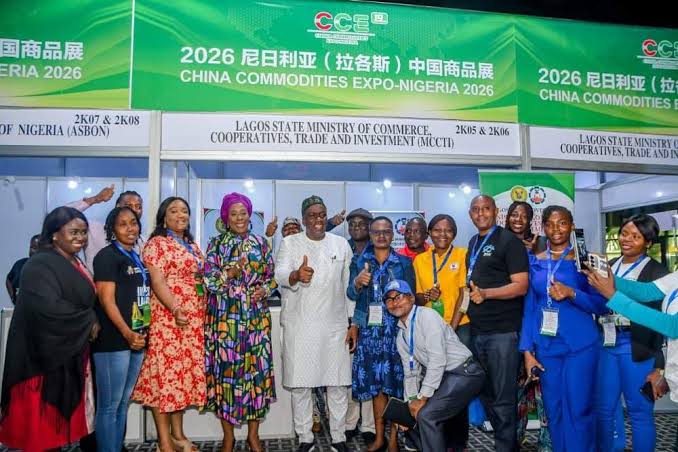
The President and Chairman of the Board of Directors of Afreximbank, Dr George Elombi, disclosed this during the event, expressing confidence that transactions concluded in Lagos would surpass those recorded at the previous gathering.
Referring to the 540m, he added, “Lagos has to be several multiples of 540. So let Lagos set the mark, and I’m sure that mark will be hard to catch up elsewhere.”
The event, hosted by the Federal Government and organised by Afreximbank, runs from November 5 to 8 under the theme, “One People, United in Culture, Creating for the World.”
According to a statement issued by the bank during the event, the CANEX Deal Room and Creative Pitch Sessions connected entrepreneurs directly with financiers and investors seeking opportunities across film, television, music, fashion, sport, publishing, gastronomy, visual arts and creative infrastructure.
The statement explained that the Creative Economy Finance Summit, organised in partnership with the Creative Economy Practice at Co-Creation Hub, would examine how creative industry transactions could be structured, financed and de-risked.
Elombi said the initiative was intended to address a longstanding imbalance in which African creators achieved international recognition but received a disproportionately small share of the financial returns.
Citing estimates attributed to the United Nations Economic Commission for Africa, he valued Africa’s creative economy at approximately $`60bn, representing only two per cent of the global creative industry.
“So too often, the African creators make the hits, and someone else makes the money,” he lamented.
He identified foreign control of distribution networks, branding, marketing platforms, intellectual property rights and content catalogues as major obstacles preventing African creators from retaining more earnings.
“Our talent is global, but our share of the value is not,” he said.
Elombi also warned that digital algorithms increasingly determined which African songs and films reached international audiences, while artificial intelligence threatened creators through the unauthorised reproduction of their works.
He argued that financing production alone would not resolve the problem unless African businesses also controlled distribution, marketing and other profitable activities along the creative value chain.
“We must therefore focus on building a creative ecosystem, focusing not just on the idea generation, on the creation of the concept and the production, but on value capture,” he stated.
The bank president disclosed that Afreximbank had progressively increased its creative industry financing commitment from an initial $500m to $1bn, before raising it to `$2bn in 2024.
The accompanying statement confirmed that the expansion was intended to help African creators build scalable businesses, strengthen intellectual property ownership and retain more economic value.
Elombi said the bank had also established a Pan-African Film Fund to support production and distribution, alongside investments in recording studios, fashion manufacturing, entertainment venues and creative infrastructure.
Through CANEX Creations Inc., the institution has additionally invested in African intellectual property, including film projects and music catalogues.
Elombi urged African governments to protect cultural budgets during periods of fiscal pressure, warning that funding reductions could undermine employment creation and economic opportunities.
He also called for intellectual property to receive greater recognition as collateral, citing Nigeria’s Secured Transactions in Movable Assets Act of 2017.
According to him, linking collateral registries with copyright and trademark databases under the African Continental Free Trade Area would enable creators to access financing across national borders.
“The right that is not on record cannot be financed. And the royalty no one can audit cannot be priced,” he warned.
He encouraged financial institutions to consider lending against royalties while advising creators to register their intellectual property and maintain reliable earnings records.
Looking ahead to the Intra-African Trade Fair scheduled for Lagos in 2027, Elombi said Afreximbank would assess the contracts signed, studios established, intellectual property acquired and livelihoods created through the current gathering.
“Afreximbank will not stand as a spectator at Africa’s cultural renaissance. Afreximbank will be the banker of Africa’s creative industry,” he pledged.



Ikenga said the company remained committed to Nigeria’s power sector and would continue investing in its operations despite the challenging business environment.
He spoke in Lagos at the third edition of the Shell Power Conference, themed “Powering Nigeria’s Progress: Turning Ambition and Action into Sustainable Impact”.
The Transcorp Power chief said the company would sustain electricity generation, invest in its facilities and deliver value to shareholders.
“Transcorp Power is a long-term player, not a short-term player. This year has been challenging, but what is important is getting power to schools, hospitals and businesses to power progress,” he said.
Ikenga said the company’s focus on operational efficiency and investment had strengthened its contribution to Nigeria’s electricity supply.
He disclosed that since acquiring the Ughelli Power Plant in Delta State in 2013, Transcorp Power had quadrupled its available generation capacity.
He also said the company became the first privatised power generation firm to receive a post-privatisation discharge certificate after fulfilling all its privatisation obligations.
The company’s unaudited results for the nine months ended September 30, 2026, showed a profit before tax of N83.1 billion, while its profit-before-tax margin rose to 31.2 per cent from 29.6 per cent recorded in the corresponding period of 2025.
Its total assets rose to 11.7 per cent amounting to N629.5 billion, while shareholders’ funds grew 8.9 per cent to N199.8 billion. Cash and cash equivalents also rose to N10.3 billion, supported by improved collections.
On the company’s contribution to grid stability, Ikenga said Transcorp Power’s black-start capability enabled it to restart operations without relying on electricity from the national grid.
He explained that the capability allowed the company to support power restoration following grid disturbances, helping to restore electricity supply to homes, businesses and industries.
Ikenga noted that Nigeria had an installed electricity generation capacity of about 13,000 megawatts, with an estimated potential of 50 gigawatts, adding that realising the potential would require effective coordination across the entire value chain.
“Everything in the value chain has to work,” he said.
He called for stronger collaboration among federal and state governments, regulators and private-sector operators, alongside increased private investment, to build a sustainable electricity market.
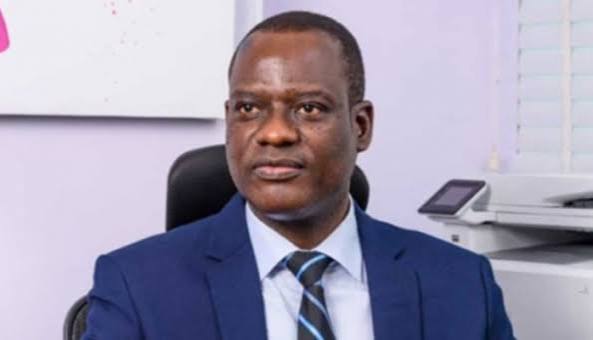
This was contained in a statement issued on Thursday by his Senior Special Assistant on Communications and Press Secretary, Maryann Duke.
The statement said Oyedele pointed to “improved digital systems, including electronic invoicing, as a key driver behind a record of N33tn in government revenue collected between January and October 2026.”
The minister said the performance demonstrated the potential of technology to improve revenue administration, strengthen compliance and increase efficiency across government institutions.
Speaking on the theme, ‘Digital Sovereignty and Ethics: Guarding the Economy for the Next Generation,’ Oyedele warned that Nigeria risked losing substantial economic opportunities if it continued to depend heavily on foreign digital infrastructure.
Citing Nigerian Communications Commission figures, he disclosed that the country recorded more than 157 million active internet subscriptions as of May 2026.
He explained that these connections generated significant volumes of information through financial transactions, healthcare, education and taxation.
However, citing estimates from the Nigeria Data Protection Commission, Oyedele said as much as 90 per cent of the country’s data was hosted abroad.
According to him, the situation has implications for foreign exchange expenditure, employment opportunities, technological skills and Nigeria’s control over information generated by its citizens.
He compared the country’s reliance on foreign digital infrastructure with its historical dependence on imported refined petroleum products, warning against a situation where Nigerian data would be processed abroad and the resulting services sold back to domestic users.
The minister consequently advocated greater investment in local data infrastructure, technical expertise, cybersecurity and predictable regulations to enable Nigerian businesses to capture more value from the digital economy.
He clarified that digital sovereignty should not translate into technological isolation but should strengthen Nigeria’s capacity to participate competitively in international markets.
Addressing graduating students, Oyedele urged young Nigerians to become developers of technological solutions rather than remain primarily consumers of products created elsewhere.
He identified artificial intelligence as both a disruptive force and an opportunity for innovation, advising graduates to acquire relevant digital skills alongside critical thinking, creativity, sound judgement and integrity.
The minister also cautioned against irresponsible online behaviour, explaining that digital footprints increasingly influence employment prospects, commercial relationships and professional credibility.
Oyedele outlined five priorities for graduates, including continuous learning, value creation, integrity, responsible digital citizenship and active participation in national development.
“Your degree is evidence of what you have learned. Your competence will demonstrate what you can do. Your character will reveal who you truly are,” he told the graduating students.
Business
NCDMB Fetes Nigeria’s Investment-Friendly Reforms At ADIPEC Strategic Leadership Roundtable In UAE
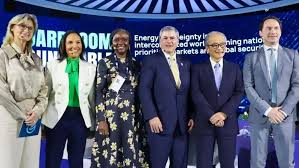
The Nigerian Content Development and Monitoring Board (NCDMB) has again feted Nigeria’s growing attractiveness as an oil and gas investments destination.
The Executive Secretary of the Board, Engr. Felix Omatsola-Ogbe last week highlighted recent policy reforms and Nigerian content initiatives that have helped secure major industry projects and investment commitments.
Represented by the NCDMB’S General Manager, Corporate Communications Division, Dr. Obinna Ezeobi, the Board’s Scribe reeled out some of the initiatives and achievements of the NCDMB during his remarks at a Strategic Leadership Roundtable briefing held at the instance of the Abu Dhabi International Petroleum Exhibition and Conference(ADIPEC), United Arab Emirates (UAE).
A Statement from the NCDMB’S Corporate Communications Division said the high-level roundtable was themed “Delivering the Energy the World Needs: Recalibrating Upstream Projects”.
The Statement noted the event brought together 21 global industry leaders to discuss critical issues shaping the future of the energy industry, with focus on investments, project delivery, financing, and sustainable growth.
In his presentation, Engr. Ogbe outlined NCDMB’S core mandate of developing Nigerian human and material capacities, ensuring compliance with the provisions of the Nigerian Oil and Gas Industry Content Development (NOGICD) Act, as well as enabling investments across the Nigerian oil and gas sector.
He noted that Nigeria’s oil and gas industry has attracted international oil and gas investments and projects valued at over $10 billion within the past three years, attributing this achievement to targeted Executive Orders and strategic incentives introduced by the administration of President Bola Ahmed Tinubu.
On final investment Decisions (FIDs), the Board’s Scribe said they were also enabled by policy reforms implemented by key agencies like the NCDMB, Nigerian Upstream Petroleum Regulatory Commission (NUPRC) and the Nigerian National Petroleum Company Limited (NNPC Ltd).
“These reforms have significantly enhanced investor confidence and improved the competitiveness of the Nigerian energy sector”, he said.
Engr. Ogbe noted that NCDMB’S sustained engagement and partnership with key industry stakeholders, particularly operating companies, were equally instrumental in achieving recent Final Investment Decisions (FIDs), and advancing major investments across the sector.
He cited some of the Board’s key initiatives that revitalised the sector, including the revised Nigerian Content Contracting Guidelines, which have streamlined project approval processes, as well as the Nigerian Content Equipment Certificate (NCEC) Guidelines.
“The latter is designed to eliminate the participation of non-performing intermediary companies in industry operations while enabling Original Equipment Manufacturers (OEMs) to provide services directly for deepwater projects”, he added.
He invited international operating and service companies to the Nigerian oil and gas industry, assuring that the NCDMB will continue to support an environment in which international investments thrive alongside Nigerian enterprise, where technology transfer leads to stronger domestic capability and major projects create opportunities for local manufacturing, and value addition and companies can compete beyond the nation’s borders.
According to the Board’s Statement, the Nigerian delegation to the roundtable include, the Managing Director of NNPC Exploration and Production (E&P) Ltd, Mr. Nicolas Foucart, and the Managing Director of NNPC 18 Operating Ltd, Ms. Ibiyemi Asaolu.
The Corporate Communications Division of the Board further added that discussions at the forum also examined investment opportunities, strategies for navigating complex operating environments, and approaches to supporting long-term industry growth and economic development.
Also, Participants recommended practical measures to diversify upstream financing, accelerate field assessments, strengthen project delivery mechanisms, increase hydrocarbon recovery, and build a more resilient energy future.
The Tide learnt that the ADIPEC Strategic Leadership Roundtable provided an important platform for global energy leaders to exchange insights and develop collaborative solutions aimed at meeting rising energy demand while ensuring sustainable industry development.
The Board’s Statement further read in parts: “NCDMB had set up an exhibition booth at the 2026 ADIPEC Conference, and used the platform to explain local content processes to global stakeholders, engage and attract potential investors to the Nigerian oil and gas industry.
“The Honourable Minister of State for Petroleum Resources (Oil), Senator Heineken Lokpobiri, accompanied by Chairman of the Petroleum Technology Association of Nigeria(PETAN), Engr. Wole Ogunsanya were some of the key Nigerian stakeholders that visited the NCDMB’S exhibition booth at the event.
“The Minister challenged the Board to partner with key agencies of the Nigerian oil and gas industry to stage an imposing showcase at major oil and gas conferences and positively project the Nigerian oil and gas industry as an attractive investment destination”.
By: Ariwera Ibibo-Howells, Yenagoa
-
Rivers3 days ago
NUJ Set To Attend UNIPORT’s 217th Inaugural Lecture
-

 News3 days ago
NJC Suspends Three Judges, Sanctions Eight Others
-
Politics3 days ago
Atiku Kicks-Off 2027 Campaign, Promises To Tackle Nigeria’s Challenges
-
 Featured3 days ago
APC Presidential Campaign Storms PH, ‘Morrow
-
News3 days ago
FG Explains Supply Disruption As Power Generation Drops To 3,659MW
-
Metro3 days ago
Port Harcourt Prepares For 10,000 Runners As International Marathon Returns
-
 News3 days ago
Bille Gas Leak: Coalition Tasks FG On Proactive Measures
-

 News3 days ago
IGP Orders Arrest, Prosecution Of Campaign Billboard Vandals