
Maritime
IMO Council: Oyetola Leads Nigeria’s Delegation In London

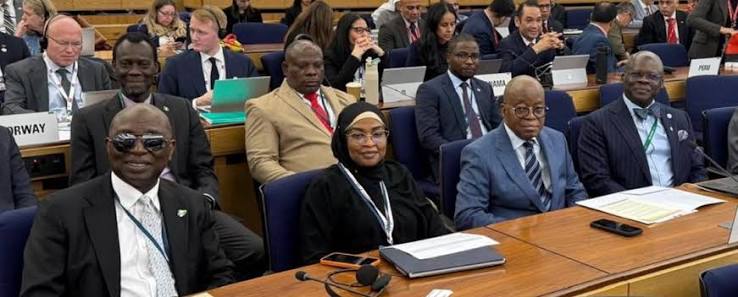
The Minister of Marine and Blue Economy, Dr Adegboyega Oyetola, CON, led a high-level Nigerian delegation to the 138th session of the International Maritime Organisation IMO, Council in London, as the country seeks to strengthen its influence in global maritime governance,
This was made known according to a statement by the Special Adviser to the Minister, Dr. Bolaji Akinola.
The five-day meeting, which commenced on November 2 and runs until November 6, 2026, at the IMO headquarters, brought together member states to deliberate on critical issues shaping international shipping, maritime security and the future of the global maritime industry.
Nigeria’s participation, under its Category C membership of the 40-member IMO Council, underscores the country’s commitment to contributing to international maritime policy and advancing the interests of developing maritime nations.
Oyetola’s presence at the meeting is particularly significant as the Council considers measures to protect vital shipping lanes, improve seafarer welfare, strengthen institutional governance and promote a sustainable maritime industry.
Speaking on Nigeria’s participation, Oyetola said the country remained committed to working with other maritime nations to promote safe, secure and sustainable international shipping.
“Nigeria recognises that the challenges confronting the global maritime industry require collective action, stronger international cooperation and effective regulatory frameworks.
“We are at the IMO Council to ensure that Nigeria’s interests are represented while contributing meaningfully to solutions that will strengthen maritime security, protect seafarers and promote sustainable shipping,” the minister said.
A major focus of the session is the protection of vital international shipping routes, particularly amid growing security concerns and threats to commercial vessels in high-risk maritime zones.
With deliberations under Agenda Item 11 addressing the protection of vital shipping lanes, Nigeria is expected to draw on its experience in combating piracy and maritime crime in the Gulf of Guinea to support stronger international cooperation and coordinated security responses.
Oyetola said Nigeria’s progress in improving maritime security demonstrated the importance of sustained collaboration among coastal states, international organisations and maritime stakeholders.
“Our experience in the Gulf of Guinea has shown that maritime insecurity can be addressed through political commitment, effective coordination and cooperation among regional and international partners. Nigeria will continue to support initiatives that safeguard shipping routes and protect seafarers and maritime assets,” he said.
Seafarer welfare is another major issue featuring prominently at the meeting, following IMO Secretary-General Arsenio Dominguez’s condemnation of the use of seafarers as pawns in geopolitical disputes.
Nigeria is backing measures aimed at preventing arbitrary detention and abandonment of seafarers, while promoting their fair treatment, safe repatriation and mental well-being.
The minister stressed that seafarers remained indispensable to global trade and deserved adequate protection, regardless of the geopolitical circumstances affecting the waters in which they operate.
“Seafarers are the lifeblood of international shipping. Their safety, dignity and welfare must never be compromised by geopolitical tensions. Nigeria supports stronger international measures to protect maritime workers and ensure that their rights are respected,” Oyetola said.
Oyetola also said the Council is also reviewing financial allocations for the 2026–2027 biennium and strategic priorities for 2028–2029, providing Nigeria with an opportunity to advocate greater technical cooperation and capacity-building support for developing maritime countries.
Oyetola said Nigeria would continue to advocate international partnerships capable of translating the IMO’s policies into practical benefits for developing maritime economies.
“Nigeria is committed to building a competitive and sustainable blue economy. We believe that developing maritime nations must have access to the technical expertise, institutional support and investment opportunities required to participate meaningfully in the evolving global shipping industry,” the Minister said.
By: Nkpemenyie Mcdominic, Lagos


Continue Reading
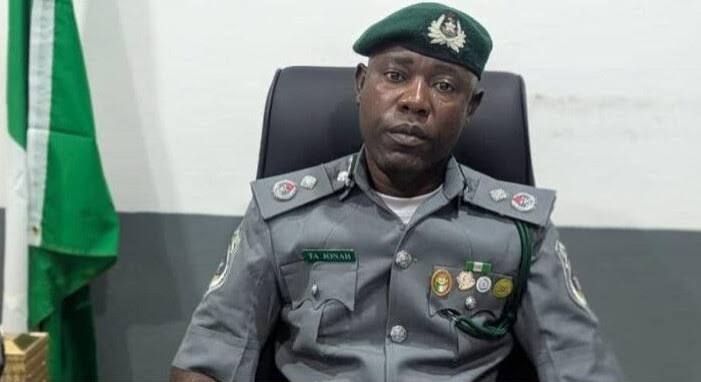
The Western Marine Command of the Nigeria Customs Service (NCS) has stepped up surveillance and enforcement operations across Nigeria’s waterways ahead of an anticipated year-end surge in smuggling activities, warning economic saboteurs that there will be no room for illicit operations.
The Command has placed officers across its operational outposts on heightened alert, strengthening its waterways surveillance network to prevent smugglers from exploiting the busy end-of-year period to move prohibited goods, unregistered products and illicit substances into Nigerian communities.
The Acting Controller of the Command, Deputy Comptroller Thomas Jonah, gave the assurance on Friday when he received executives of the Maritime Correspondents Organisation of Nigeria (MARCON) on a courtesy visit.
Jonah said the Command had activated measures to sustain vigilance across its operational areas, explaining that the end of the year traditionally witnesses increased smuggling activities as criminal networks seek to take advantage of heightened commercial activities and movements of goods.
He disclosed that he had issued a marching order to officers to intensify surveillance and enforcement, insisting that no operational outpost would be allowed to become a weak link in the fight against smuggling.
“As the year is winding up, there is always a surge in smuggling activities. We are not relaxing. We are alert at all our outposts. I have given a marching order. Our officers are on top of things, to ensure nowhere is left open for smugglers and economic saboteurs,” he said.
The Acting Controller stressed that the Command would not lower its guard, particularly across waterways that could be exploited by smugglers to circumvent established border controls and bring prohibited items into the country.
He explained that the intensified operations were aimed not only at protecting the nation’s economy from the damaging consequences of illicit trade but also at safeguarding public health and security.
According to him, preventing banned and unregistered goods, as well as psychoactive substances, from entering Nigerian communities remains a major priority of the Command, given the potential dangers such products pose to society.
Jonah further underscored the importance of inter-agency cooperation in tackling smuggling, noting that the Command was working with sister security agencies to strengthen intelligence gathering, surveillance and enforcement across its areas of responsibility.
He said the collaboration was critical to closing operational loopholes, improving the effectiveness of anti-smuggling operations and preventing criminal elements from using Nigeria’s waterways as escape routes or channels for illegal trade.
The Western Marine Command, which plays a strategic role in the NCS maritime enforcement architecture, is expected to sustain its presence across vulnerable waterways as the festive season approaches.
By: Nkpemenyie Mcdominic
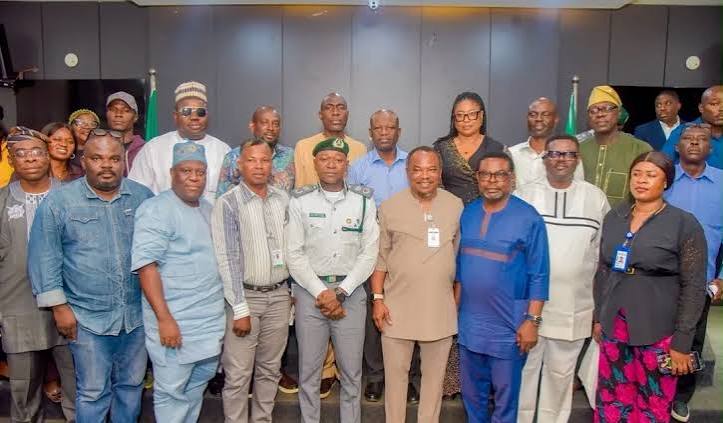
The Nigeria Customs Service (NCS), Apapa Area Command, collected ?302.95 billion in October 2026, representing a 7.13 per cent increase over the ?282.79 billion recorded in September.
The October revenue collection amounted to ?302,952,570,769.24, indicating an increase of ?20.16 billion month-on-month.
The performance marks another month in which the Command exceeded the ?300 billion revenue threshold, following its record collection of over ?323 billion in July 2026.
The development comes barely a month after Comptroller Murtala Mu’azu assumed office as Customs Area Controller on September 29, 2026.
According to a statement issued last week by the Command’s Public Relations Officer, Chief Superintendent of Customs Isah Sulaiman, the latest revenue performance reflects the Command’s efforts to strengthen revenue generation while facilitating legitimate trade.
Since assuming office, Mu’azu has prioritised stakeholder engagement, operational efficiency and improved service delivery in line with the Comptroller-General of Customs, Bashir Adewale Adeniyi’s policy thrust of Consolidation, Collaboration and Innovation.
As part of this approach, the new Area Controller convened a stakeholder engagement meeting on October 5, bringing together importers, exporters, licensed customs agents, shipping companies and terminal operators.
The meeting also addressed operational challenges affecting port users, including delays in Demand Notice processing, cargo clearance bottlenecks and other concerns associated with port operations.
The CAC has also embarked on courtesy visits to key stakeholders and strategic partners within the port community to strengthen institutional relationships and promote cooperation.
On operational reforms, he said the Command has intensified efforts to review and streamline the processing of Transaction to eliminate unnecessary bureaucratic bottlenecks, improve inter-departmental coordination and reduce processing time.
Mu’azu said the initiative was designed to ensure that officers discharged their responsibilities more efficiently without compromising compliance and control measures.
He stressed that traders should not suffer the consequences of avoidable administrative lapses and delays, adding that the Command was committed to identifying operational challenges and implementing practical solutions to improve service delivery.
The Area Controller has also directed that cargo examinations must strictly follow established procedures, with the required documentation and authorisation.
He warned officers against unwarranted, repetitive and unnecessary examinations capable of frustrating legitimate business transactions.
According to him, cargo examinations must not become a source of avoidable delays, while officers are expected to perform their duties promptly and professionally without compromising revenue protection, regulatory compliance and national security.
The directives, the statement noted, are aimed at improving cargo clearance and turnaround time in accordance with the Nigeria Customs Service Act 2023.
Meanwhile, the Command recorded significant enforcement successes during the period, intercepting 437 sachets of Cannabis Sativa weighing 392.5 kilogrammes in two separate containers.
The seizures comprised 162 sachets weighing 125 kilogrammes in container number MSKU0486747 and another 275 sachets weighing 267.5 kilogrammes in container number TEMU6149358.
The seized narcotics have a combined Duty Paid Value (DPV) of ?196.13 million.
The statement said the consignments were intercepted during joint examinations conducted with relevant sister agencies, underscoring the Command’s commitment to preventing the use of Nigeria’s maritime gateway for illicit trade.
By: Nkpemenyie Mcdominic, Lagos
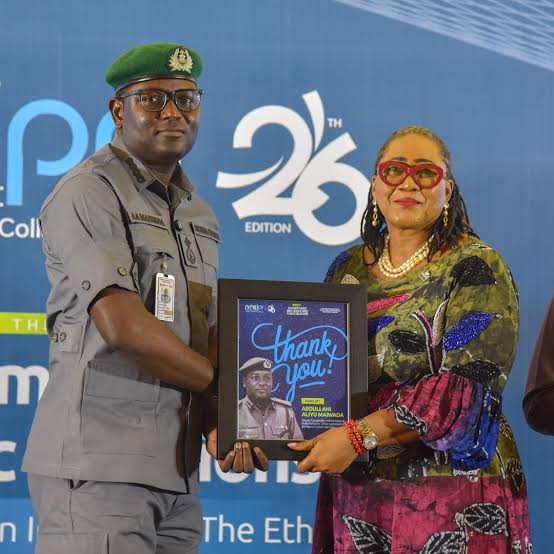
Worried by worsening cases of fake news and online scams that damage its image, the Nigeria Customs Service(NCS) is concluding plans to deploy Artificial Intelligence AI, data tracking tools to curb the menace.
To this end, NCS would involve integrating new-age digital data-tracking intelligence tools.
Comptroller-General of the Service, Bashir Adewale Adeniyi MFR, made the disclosure at the just concluded Neccipr Roundtable ’26 Edition held recently in Lagos, themed: “Algorithm Influence & Public Relations.
Represented by the National Public Relations Officer of the Service, Deputy Comptroller of Customs Abdullahi Maiwada, the Customs Chief explained that as a communicator, it is important to ensure the general public understands and accepts why officers carry out the duties of their offices.
“The role of AI cannot be over emphasised especially within our operations.
“Over the years AI has been deployed in our core operational duties as well as strategic communication. AI has also been deployed to aid risk management, which involves assessment of the risks in imported items so that they can be categorised according to their different levels of risk to enable appropriate customs interventions,” he said.
He explained that artificial intelligence can also analyse sentiment and understand how people perceive Customs activities, adding that the Service is using every available platform to establish facts while working with other agencies to arrest those behind misleading information.
Earlier, the convener of the Neccipr Roundtable ’26, Nkechi Ali-Balogun, said the programme began with a simple conviction: public relations professionals must not only manage messages but also lead national discourse.
“This year, we confront a question that touches every one of us. When machines decide what we see, who is really shaping the Nigerian mind? Who now controls the flow of information that shapes what Nigerians believe? We live in a rapidly changing world, powered by AI, where a single algorithm can shape political narratives, throw out conspiracy theories, and dictate what millions read, believe, and share,” she said.
A high point of the event was the delivery of goodwill speeches from the President/ Chairman of the Governing Council, the Nigerian Institute of Public Relations NIPR, Dr. Ike Neliaku, and former Minister of Education, Dr. Oby Ezekwesili, among other invited dignitaries, which signpost the professional readiness to sustain the standard of credible information.
By; Nkpemenyie Mcdominic, Lagos
-
Rivers3 days ago
NUJ Set To Attend UNIPORT’s 217th Inaugural Lecture
-
 News3 days ago
NJC Suspends Three Judges, Sanctions Eight Others
-
Politics3 days ago
Atiku Kicks-Off 2027 Campaign, Promises To Tackle Nigeria’s Challenges
-
 Featured3 days ago
APC Presidential Campaign Storms PH, ‘Morrow
-
News3 days ago
FG Explains Supply Disruption As Power Generation Drops To 3,659MW
-
Metro3 days ago
Port Harcourt Prepares For 10,000 Runners As International Marathon Returns
-
 News3 days ago
Bille Gas Leak: Coalition Tasks FG On Proactive Measures
-

 News3 days ago
IGP Orders Arrest, Prosecution Of Campaign Billboard Vandals